by tradespeopleinsights | Sep 16, 2009 | Marketing Tips, Social Marketing
 I’ve never been much for beating around the bush. I like to get to the point and move on. Much like a missile, which when programmed, is focused and keeps on track to its target…so should a good post. I guess that’s why I like Twitter so much, because it makes you choose your words carefully, not only to communicate the message, but to be impactful as well. I read a post recently on Copyblogger by Michelle Russell, How to write with a knife, that gives great insight into how to sharpen your message. She does an excellent job showing you how to get the wheat away from the chaff. So enjoy.
Here is some other interesting reading:
Why most Blogs Fail
5 Tips on How to Improve your Blog

by tradespeopleinsights | Sep 15, 2009 | Marketing Trends, Social Marketing
It’s always interesting to see which articles pull the best each month. Enclosed are the top ones from August ranked in the order of the amount of traffic each generated. Enjoy.
- 10 Engagement Tactics That Will Help B-to-B Marketers
- Social Media: Who Uses It and Why?
- Industrial and B-to-B Marketers Can’t Ignore Social Media Anymore
- 5 Tips for B-to-B Marketers to Get the Most out of Twitter
- 2009 Trends and Spending Strategies for B-to-B Marketers
- Social Media: 4 Signs Your Tradesman Wants to Hear From You
- 5 Tips For B-to-B Marketing Thought Leaders on How to Increase Your ROI.
- Forrester Report: Why Most B-to-B Blogs Fail
- 5 Quick Tips to Promote Your Post
- 5 Ways to Find Prospects on Twitter
by tradespeopleinsights | Sep 9, 2009 | Marketing Tips, Social Marketing
The answer is they don’t… they scan!
One of the main keys for an effective blog is to understand how people read on the web and tradesmen are no exception.
And how do users read on the web? The answer is, they don’t... they scan.
Nielsen Norman Group’s research found that 79 percent of their test users always scanned any new page they came across; only 16 percent read word-by-word.
For your blog to be effective, your text must be scannable.
Jakob Nielsen offers this advice:
- Highlighted keywords (hypertext links serve as one form of highlighting; typeface variations and color are others)
- Meaningful sub-headings (not “clever” ones)
- Bulleted lists
- One idea per paragraph (users will skip over any additional ideas if they are not caught by the first few words in the paragraph)
- The inverted pyramid style, starting with the conclusion
- Half the word count (or less) than conventional writing
Nielsen’s research also found that users detested “marketese;” the promotional writing style with boastful claims.
I’ve often said that…
“the moment you start to sell on your blog is when you will lose your audience.”
You need to understand how people read on the web and learn to write for them effectively. One of the best resources that I have found was Jakob Nielsen’s website. This is very dated material, 1997, but you will find that the top blogs follow Nielsen’s style guidelines remarkably well. How Users Read on the Web

Jakob Nielsen has been called:
Web users generally prefer writing that is concise, easy to scan, and objective (rather than promotional) in style.
There are additional, interesting findings about users’ detailed reading behavior in Nielsen’s eyetracking studies.
by tradespeopleinsights | Sep 8, 2009 | Marketing Tips, Social Marketing
If you’re just starting out with a blog, I know the scariest thing for me was wondering who in the world was going to find my blog, no less take the time to read it. If you’re passionate about a subject, market or cause, you may have more people than you think that would be interested in reading and sharing their thoughts. Ours is a passion to get to the Professional Tradesmen.
From a B-to-B perspective, here are some simple ways to get the ball rolling so you can become the super star blogger you always knew you could be. Don’t ignore the obvious. You already have a business network to tap into.
- Current customers
- Potential customers
- Suppliers
- Distributors
- Fellow employees
- Industry groups
- Associations
Here are some inexpensive ways to promote your blog:
- Add your URL to your email signature (have everyone in the company do it)
- Add your URL when printing letterhead, cards, invoices, etc.
- Make it very visible on your web site
- If you do trade ads, add to the signoff as one of the calls-to-action
- Promote through your social media pages
One of the best ways to identify readers is using LinkedIn, Facebook and Twitter. Most of my new readers come from one of these sources. Weekly I go up on my LinkedIn page and post a topic on either the discussion page or the news page that directs them to my blog. The key here is to have groups to link to, but that’s another post. Facebook is the same way — at least once a week I post something. With Twitter, I use socialoomph (formerly Tweetlater) to put out posts hourly. I have over 100 tweets a week going out automatically. The point is it’s no good having these social media pages if you don’t use them. Remember, the power of social lies in it being viral. All it takes is a few readers who have a big following to like what you’re saying and Bingo, they will introduce you to a whole new audience.
Enough about how I find readers. I’d like to know how you do it. Please share.
Other posts that might be helpful:
5 ways to improve your blog
Blogs: How to take advantage of them to reach Professional Tradesmen
by tradespeopleinsights | Sep 2, 2009 | Marketing Tips, Social Marketing
Everyone in the manufacturing sector is feeling the pressure from around them to get in on this social media phenomenon. So you open a LinkedIn account, set up Twitter and even get a Facebook page set up. Wow, that was easy, now all I have to do is to wait until somebody finds me. Unfortunately, this scenario is much truer than one would like to think. Social media is no different than any other marketing program you have. You have to have a strategy in place before you go and start implementing it. You need to determine why you’re on the social media scene before you implement the how. Here are some helpful hints:
- What’s your point? Do you want to build awareness, build loyalty or generate new leads?
- What’s your point of differentiation? You have to define a niche or specialty.
- Do some research into how your target audience uses Social. You may find contractors use Facebook more to try to promote their local business or maybe it’s Twitter. Do you know?
- How will you determine whether your social program will be successful? You need to determine expectations before starting a program.
Jason Baer wrote a great post recently, Develop a social media strategy in 7 steps, that you might find interesting reading.
by tradespeopleinsights | Sep 1, 2009 | Marketing Trends, Social Marketing
Everyone is trying to get the most out of what they’re spending this year and the manufacturing sector is no exception. With B-to-B leads from traditional sources slowing down, marketers are looking for other avenues. Many are shifting dollars to online options as they are less expensive and easily measurable.

According to a recent report from Global Spec, Trends in Industrial Marketing 2009: How Manufacturers are Marketing Today, the number-one focus of marketers is to keep the customers they have and generate new high quality leads. Marketers are under pressure to choose programs that are measurable. So where is the money coming from? Many industrial marketers are reducing trade shows and print ads. 29% of respondents said they already are spending more than half of their budget online. 48% said online will account for a bigger proportion of their budgets for the balance of ’09.

The top 3 online marketing channels for companies are:
- online directories/web sites
- e-marketing using in-house lists
- SEO
It looks like online and digital are going to become an ever-increasing portion of marketing budgets moving forward. Forrester Research predicts that by 2014, interactive spending will hit 55 billion ( pproximately 21% of total marketing spends). The Forrester study also indicated that much of the interactive dollars will come out of traditional spends.
What’s your feeling on this subject? Are you doing more online? I’d like to hear your thoughts.
by tradespeopleinsights | Aug 26, 2009 | Marketing Trends, Social Marketing
Would it surprise you to learn that the biggest gains in who’s using social media are among older users? According to a report in eMarketer, “consumer internet barometer” U.S. internet users who visited a social site in the 2nd quarter of ’09 rose 16% over last year. Females still lead males in usage and 70% of users were under the age of 35. The most popular sites in order were: Facebook, MySpace, LinkedIn and Twitter.

Now that we know who uses it, we can tackle the why.
According to a post in eMarketer, marketers surveyed by Marketing Sherpa in late 2008 found that increasing brand reputation and awareness, along with improved search engines, headed up the reasons why they thought social media was an effective tool. Blog or social media advertising, online news release distribution and blogging led the way as far as tactics they thought to be useful.

Now based on what you just read, what do you think business executives think of social media?
Sean Callahan from BtoB online reported recently on a survey conducted by Russell Herder and Ethos business law that business executives were grappling with social media. The online survey of 438 executives showed:
- 51% fear social media and that it could be detrimental to employee productivity
- 49% said social media could damage the company’s reputation
At the same time they said:
- 81% can enhance relationships with customers
- 69% can aid in recruiting
- 64% it could function as a customer service tool
About 70% say they are going to increase their social media, however only 33% had a social media policy in place.
I don’t know about you, but I think these guys are talking out of both sides of their mouth. The only thing they should do is support a social program. They should stick to what they know and do well and let the marketing departments do their jobs.
What are your thoughts?
by tradespeopleinsights | Aug 25, 2009 | Marketing Tips, Traditional Marketing
 Interesting fact about recessions – they end.
In our practice, most of our clients have been hit exceptionally hard in ’09 due primarily to their ties to the construction market. Some have opted to cut spending and ride out the storm. Others have reduced their budgets, but have continued to launch new products and support existing ones. It’s gratifying to see those that continued to promote themselves gained interest, inquiries and sales even in this downturn.
According to Industrial Supply, housing starts were up 2% in July. This was the 5th consecutive increase. Building permits for future projects climbed nearly 8%.You can read the entire USDH report here.
Here’s an interesting fact from some recent research from the Kauffman Foundation – More than half of the Fortune 500 companies were launched in economic downturns. For marketing purposes, if you don’t currently have something in the pipeline, this year is done.
All economic data indicates that the worst is over and we should start seeing an uptick as quickly as the 4th quarter for some industry segments.A recent online survey by StrongMail of 979 business executives in various industries show an optimism about the economy. The survey indicates that 85% are planning to maintain or increase their spending for the remainder of the year. But enough about ’09.
Yes, soon the trend lines will start to go up, but not as sharply as they came down. B-to-B marketers need to look forward and should be starting to crank up their plans for ’10. Inventory levels at distributors are at their lowest levels in years, and manufacturers need to be ready to respond. Spend smartly and monitor what you do. Try something new. If you haven’t added social media to the mix, consider it for ’10. Do something! There are contractors out there buying stuff!
by tradespeopleinsights | Aug 19, 2009 | Marketing Tips, Marketing Tools, Social Marketing
A lot of B-to-B marketers still find it hard to understand practical ways to use this marketing tool. Twitter can be used as a marketing tool to build your brand, build credibility by sharing your expertise and grow your network. Twitter is my number-one source for views to my posts. Here are a few ways you can capitalize on this powerful tool:
- Establish yourself as an expert in your field by authoring your thoughts on an industry topic, sharing tips and links to articles posted elsewhere.
- Grow your network by joining industry groups or forums
- Participate in Twit chats as they relate to your industry or expertise
- Use Twitter search to find out about competitors, trends or what people are saying about you
- Give -Get referrals
- Add your Twitter ID to all correspondence whether it’s your e-mail, business cards or even your sales material down near the corporate signature.
These are only a few ways. I recently read a post by Meryl Evans, 62 Ways to Use Twitter for Business, that you might find interesting.
Here are a few other posts you might find interesting:
5 ways to find prospects on Twitter
5 ways to use Twitter as a tool to reach the professional tradesman
use Twitter as a PR tool to help build long term relationships
by tradespeopleinsights | Aug 18, 2009 | Marketing Tips, Social Marketing
My blog focuses on helping manufacturers better communicate with contractors and professional tradesmen. We have three challenges: 1) identify our audience, 2) give them meaningful content, and 3) keep them coming back. One of the most important things I try to communicate is that to be successful, you must be able to engage and have a genuine relationship with your reader. I recently read a guest post on Problogger from Leo Babauta of Zen Habits on 7 steps to build a genuine relationship with your readers, which highlights ways he’s been able to engage and develop relationships.
Here are some highlights from his post:
- A genuine relationship starts with you – start with an open and positive mindset and be willing to work on the relationship.
- Make posts as helpful and useful as you can – it’s not about you, it’s about your readers’ problems and concerns.
- Be helpful and positive in all interactions – whether it’s on Twitter, Facebook or your blog…always be helpful, positive and upbeat.
- Encourage discussion in comments – you’re not the only one with good ideas. Make sure to engage on your response and ask their opinion.
- Give back on other blogs – link when appropriate to other blogs, visit their sites and make comments and write guest posts for them.
One of the most important points Leo makes is you can’t fake this stuff. If you are just pretending to care about your readers, if you don’t really want to talk to them, they’ll feel it and then you’ve lost them.
Leo is a best selling author of The Power of Less. He also just released a free report for bloggers called, How I Got 100,000 Subscribers in Two Years: Lessons from Zen Habits. Check out his report as it gives some insightful ways to help get and retain viewers
by tradespeopleinsights | Aug 12, 2009 | Marketing Tips, Social Marketing
Most of us think if we wanted to share a link to something of interest that the logical way to do that would be through e-mails. Not according to a recent article in the E-Marketer Newsletter that cites AddToAny, a creator of content sharing and web publishing tools, that Facebook accounts for 24% of uses of the widget to share links to articles, videos and other content. E-mail only accounts for 11.1%. Social media has overtaken e-mail in terms of worldwide reach.

What that means to B-to-B marketers is that they should reconsider how they deliver links. By using a social media outlet like Facebook or Twitter, you not only deliver your message and link, but you’re continuing to increase your awareness and improve your search rankings and site traffic.
Nice bonus don’t you think?
by tradespeopleinsights | Aug 11, 2009 | Marketing Tips, Social Marketing
 A forum is a group of like-minded people who share a common interest in a particular subject. It could be anything from fine wine to travel to the best ways an electrical contractor can make more money. What’s great about the internet is it’s one big database where you can search for virtually anything.
Use Google or any other search engine and type in your area of interest, e.g. fine wine, and add the word “forum” after it (there are 2,170,000 results on Google for this). If you type in electrical contractors forum, you get 2,270,000 results. The point is, there are plenty of people that share the same passions as you do.
Forums do have rules you need to follow them. Some are written and some not. If there are written rules, they are usually posted. Remember, this is a social site, not a sell site. Forums are a great place to listen, learn and grow trust with the audience. So how do you get the most out of forums?
Here are 5 of my favorite ones from tips from Nicky Jameson from a recent post .
- Register for a forum – then lurk. Get the feel for the tone, style and interaction of the group you joined.
- Slowly start posting – once you get the lay of the land, start by posting an introduction. Then you can move onto answering questions.
- Build a reputation – do the basic stuff, that is, make good posts. Seek to establish yourself as an expert.
- Answer questions – provide the most complete answer as possible with the appropriate links.
- Share your opinion – make sure they know it’s your opinion so folks don’t confuse it with facts. Contrary opinions can be useful in highlighting an alternative option.
You can read her entire post at: 11 Steps For Getting Free Traffic From Forums.
by tradespeopleinsights | Aug 6, 2009 | Marketing Tips, Social Marketing
 Sometimes in this busy world, we need to take a “time out” just like we make our kids and grandkids do to slow down and think about what we’re doing. I recently read a post by Valeria Maltoni, entitled, 100 thoughts on Marketing. After reading them, I wanted to share them with you. Valeria is a widely respected name in this social media arena, and I suggest you read her blog for some challenging and insightful posts.
Stop what you’re doing and have a cold or hot beverage and read the list. I’m sure you’ll get a few “golden nuggets” out of this list as I did. Enjoy and thanks to Valeria for her thoughts.
Stuff, especially marketing stuff, is due for a tune up. Let’s take the meaning challenge for marketing. Enjoy!
by tradespeopleinsights | Aug 5, 2009 | Marketing Tips, Social Marketing, Twitter, Uncategorized
 There are many traditional ways of generating leads, i.e. pay for click, list rentals, etc. But social lets you go beyond some of these typical methods and lets people find you. In my mind, one of the biggest benefits to social media is the ability to identify and start conversations in a low-key manner with potential contractors. The two top tools I use are LinkedIn and Twitter.
LinkedIn – I find that this is a very useful and friendly site for B-to-B users. The group section is a great way to join groups with common interests and start participating.
- I’ve joined groups like E-marketing Association Network and The Air Conditioning, Heating & Refrigeration Institute. Both are targeted and are great ways to see what the hot topic of the day is and how people are reacting to it. You can even start your own group and invite people to join.
- It’s a great spot to throw out a question to the group or put your two cents in on an area where you are an expert.
- I’ve also used these groups to do short surveys and I post at least once a week and sometimes twice a recent relevant post from my blog under the news section. This helps drive folks to my blog and hopefully position me as an expert.
- You also need to update your status regularly and make sure your co-workers do the same. We’re in the process of organizing a webinar and will not only post it on my page for folks to register, but also put it as a news item on my group pages.
Twitter – I use Twitter to communicate to my followers many times a day to promote my most recent posts.
- I use Tweetlater to schedule and manage my daily tweets. There are several other applications out there that do the same thing.
- If you want to reach people who don’t follow you, include relevant hashtags. Experienced users will search for those terms.
- Encourage re-tweets. In order to do so you need to keep your message shorter than the 140 characters so the person who is doing the re-tweet has room for their name and message.
These are some things I do to use social to generate leads. I’d like to hear from you on how you utilize social.
Here’s an article that might prove to be of interest, 5 Ways to Find Prospects on Twitter.
by tradespeopleinsights | Aug 4, 2009 | Marketing Trends, Social Marketing
According to an article on www.mashable.com by Adam Ostrow, a new report from Forrester Research shows the number of social networking users have doubled since 2007. There are 55.6 million adults (about 1/3rd of the U.S. population) that visit a social networking site at least once a month (up 15% from 2007 to 18% in 2009).

In the B-to-B community, a new report being unveiled this week at The B-to-B and ANA Conference in Chicago shows significant increases by B-to-B marketers in using social media. Marketers are using social as a marketing tactic for generating demand. Here are some highlights:
- 66% of marketers are now using social media up 20% from 2007.
- 57% are now using social media channels up from just 15% in the earlier survey.
- Among the newer media tactics, blogs top the list.
- 81% of B-to-B marketers are currently using LinkedIn compared to 25% in B-to-C.
- Twitter ranked highest among B-to-B (70%).
- Facebook is the most used overall site (74%) and among the B-to-B marketers (60%).
- Social media objectives have changed – brand building has decreased in favor of demand generation.
This is good news that the B-to-B community is getting their arms around social.
What are you doing?
by tradespeopleinsights | Jul 30, 2009 | Marketing Tips, Marketing Tools, Social Marketing
Before you answer that question, you first have to have something to measure it against. Set expectations and goals, then make a plan, execute it and then monitor it. Why are you even playing with social if you’re not looking to reach new prospects. You first need to identify your audience, make them aware of who you are and then engage them. Use metrics to keep you on track but don’t get obsessed with them.
Use measuring devices first of all to help you monitor what you’re doing and secondly to fend off the bean counters as to what are we getting out of this. Are you reaching the people? Are you engaging them and building a relationship? If you have a blog, how is your audience embracing your message? With social you have numerous tools that will help you monitor your progress from Google Analytics to Twitter Search, Technorati or BoardReader.com. With my blog, I know immediately if I’ve hit a home run with a post. With Twitter, you can monitor what people are saying about you or your competitors. LinkedIn lets you participate in groups that gives you the opportunity to gain visibility and credibility and hopefully start engaging new potentials.
Several folks have got their own processes in place. Bill Seaver has a L.A.C.E. method which stands for – Leads, Awareness, Customer Service and Engagement. Tarla Cumming’s method is called M.O.M. – Monitor, Outreach and Measure. The point is everyone’s circumstances are different. Try something and if it doesn’t work or it needs to be revised, then do it.
I’d like to hear what others are doing to measure their effectiveness and whether you’re doing it as a quality control issue for your content, or if you’re doing a numbers thing for management.
by tradespeopleinsights | Jul 29, 2009 | Marketing Trends, Social Marketing
 I’ve used Global Spec online marketing for several of our clients who target engineering, technical manufacturing and industrial professionals. They are well respected and a great source for qualified leads. During the 1st quarter of ’09, they surveyed marketing executives on trends and challenges facing them for the balance of year. 555 surveys were completed. There are really no big surprises here–marketers are going to have to do more with less and online is going to be used because of accountability. Here are some of the highlights:
- 73% stated that customer acquisition and lead generation is their primary goal.
- Top 3 challenges: 1-too few resources. 2-not enough qualified leads. 3-improve ROI
- Top 3 marketing channels: 1-online directories/websites. 2-e-mail marketing to house lists. 3-SEO
- 29% spend more than 50% of their budget online
- 48% will spend more of their budget online
You can read the entire white paper here.
by tradespeopleinsights | Jul 28, 2009 | Marketing Tips, Marketing Tools, Traditional Marketing
The answer is both depending on how you’re developing and nurturing prospects. Today both Drip Marketing and Closed Loop marketing are seen to be online strategies. Truth be known, these have been going on long before we had the use of the Internet tools. Effective marketing programs today should utilize both. We are fortunate to have these tools that help us monitor and measure our activities in infinite ways. Here are some suggestions on how to reach the Professional Tradesman using both Techniques:
Drip Marketing – I define this as an ongoing way to communicate and deliver product info and thought leadership to contractors and tradesmen who have identified themselves to us. It can use traditional methods like direct mail with things as simple as a series of postcards or other mailers to touch folks on a regular basis (monthly, weekly or daily). With the advent of the Internet we can add links to our e-mails to landing pages that can expand on content, offer incentives and interact with tradesmen.I’d suggest that to be effective, run and monitor these campaigns using an automated system.These automated systems will help you create and deliver messages and gives you the metrics to monitor open rates,click throughs and opt outs.They will also help reduce spam complaints and increase delivery.
Closed Loop Marketing – I define this as a more complex system that involves marketing working closely with sales to work a contractor through the sales process. It utilizes many if not most elements that are in a Drip program but goes beyond just delivering information based on a previous actions and their place in the buying cycle. Marketers literally “close the loop” by working with sales to provide the right info at the right time based on contractors responses. “Close the Loop” marketing provides feedback through reporting on each step and can adjust both timing and content based on feedback.

Both Drip and Closed Loop are great tools for B-to-B marketers. Deciding on which use or in what combination will be dependent on your own circumstances. If you’re trying to decide where to get started you might want to read a free white paper from DemandGen – calculating the return on lead nurturing.
by tradespeopleinsights | Jul 23, 2009 | Marketing Tips, Social Marketing
 With all the “noise” around you in the sea of posts, how do you stand out in the crowd? In a crowded marketplace, your “Brand” is what will make you stand apart from the other fish. Your brand involves the look and feel of your blog, the style in which it is written, the emotion and tone all are part of your Brand. Here are 5 tips that might help you differentiate yourself:
- Find a niche – Most successful blog including this one identifies a specific market or expertise that they build upon.
- Design page to be unique – Have a consistent look and feel and make the site easy to navigate.
- Define and refine a writing style – Be yourself. Make your comments conversational and consistent.
- Take a fresh approach – Look at the issue possibly through another angle or perspective.
- Quality over quantity – Make sure you post good stuff, not a lot of stuff. Remember, your brand is about your expertise.
These are some of the ways I try to stand out. What kinds of things do you do?
Here are some other posts that might be of interest:
5 Tips on How to Improve Your Blog
Blogging Has Come Too Far To Be Ignored By B-to-B Marketers
Blogs: How to Take Advantage of Them to Reach the Professional Tradesmen
by tradespeopleinsights | Jul 22, 2009 | Marketing Tips, Social Marketing
 I continue to be amazed sometimes as to which of my posts do better than others. Sometimes there is no rhyme or reason. Just as you check the other metrics on how you’re doing, I think it’s important as a part of your own self discipline to review the low performers and see if there are ways to improve. We are all guilty sometimes of not putting our best foot forward and our audience lets us know it. Darren Rowse, in a recent post titled, Why did your last blog post fail? 13 questions to ask, outlines a pretty good checklist for evaluating your posts. I’ve highlighted 5 of the most important ones that I make sure I use.
- Post title – Did it have enough zing to get people to stop? I’m in the ad business and no matter what medium you’re using, you only have a fraction of a second to get someone’s attention.
- Opening lines – Once you stop them with a great title, you’d better tell them quickly “WIIFM” (What’s In It For Me).
- Was the post to the point – Did you stay on point and make your point easily understood.
- Was there enough meat on the bones – Did your post have sufficient depth (both from content and links)
- Did it fulfill a need – Why would someone want to read it?
I’m sure you have other thoughts and I’d like to hear them.
by tradespeopleinsights | Jul 21, 2009 | Marketing Tips, Social Marketing, Traditional Marketing
 Social media has dominated the news lately, and many marketers are considering moving out of traditional e-mail programs and focusing more on social. My advice to them is that neither one is the answer by itself, especially when it comes to reaching professional tradesmen who are slower to jump on the social bandwagon.
Social elements are just more tools marketing can use to gain attention and begin a dialog. Until social media came along, a good e-mail campaign only had their web site to fall back on for support. Social media complements e-mail efforts. B-to-B marketers who want to stay on top of their game must learn how to make them work together.
Here are 4 tips to get the best out of both worlds:
- Create ONE strategy – Create the objective and then see how each element can help you meet those objectives. By working towards one goal, you’ll be much more effective in the long run.
- Create content simultaneously – You need to make sure messages are coordinated (and are using the same voice) and are working together and not against each other. You don’t want to be duplicating content.
- Utilize sites like Facebook and LinkedIn – These and other sites allow groups to their group members. Make sure when sending messages to these groups to target your message.
- Use e-mail to give them something special whether it’s a sneak preview of a new product, a discount on a current one or some scoop about an upcoming company event or trade show activity. Then make it easy for them to share. Encourage them to share the news with their friends on LinkedIn or Facebook.
Make the most out of your marketing program by making the elements work together.
I’d like to hear what you’re doing to maximize your efforts using social and e-mails.
Here are some other posts that might be of interest to you:
7 Ways to Combine Social Media with E-mail to Reach the Professional Tradesman
Stay Up on New Trends But Don’t Forget Old Friends
by tradespeopleinsights | Jul 16, 2009 | Marketing Tools, Social Marketing, Twitter
 Finding your best prospective client online audience is not yet an exact science. But for now you can be in the right ballpark. The same is true regarding Twitter. There are plenty of search applications out there, but all have their limitations. The following five sites have been the most helpful to me in locating prospective client “tweeps” to follow.
1. Twitter Search – Twitter’s built-in people search is the easiest place to start, but isn’t necessarily the best way to find people on Twitter. Twitter Search is much better, especially using their advanced search page. Be sure and check out their search operations pages for some handy examples for your search query.
2. Twellow – Is an excellent search tool for prospective clients with over 6.2 million Twitter user profiles now indexed in Twellow and placed into a huge number of categories. You can search the entire lot of profiles, or confine searches to a single category. Twellow also operates a local directory called the “Twellowhood.”
3. Tweepz – Allows you limited searches to specific parts of Twitter’s user information (such as name, bio and location). Through the advanced search filter results by follower/following numbers, location, and other extracted terms, enhances your search results.
4. Twitterel – You can search for prospective clients to follow by doing keyword searches of tweets. This service can update you by email, direct message, or @reply when it finds new people it thinks you might be interested in following. It’s similar to Google Alerts.
5. WeFollow – Is a Twitter user directory that organizes people by hashtags. WeFollow is user-generated and anyone can add themselves by tweeting @wefollow with three #hashtags that describe them.
If you have helpful search sites/directories that have been helpful to you, please share them in the comment section below.
by tradespeopleinsights | Jul 15, 2009 | Marketing Tools, Social Marketing, Twitter
 Social media is trying to be taken seriously, and in late 2008 came out with several tools to measure the effectiveness of Twitter. Two of the more popular tools are Twitter Grader (I scored 97.6 out of 100) and Twinfluence (I scored 98 out of 100).
How much credibility do you put into these type tools? I use them as a guidepost to make sure I keep on track.
It makes me:
- Check my network to get rid of non-contributing (spammers) followers.
- Re-evaluate my end game to make sure you’re still on target. You want to search for like-minded people (in my case, those looking to talk to tradesmen). You’re not looking for the biggest list of followers; you’re looking for the right ones!
- To make sure my messages are timely and rich in content for my target audience.
Twitter Grader bases its score on the number of followers you have, the power of your network, the frequency of your updates and how complete your profile is.
Twinfluence bases its criteria on Reach (what’s the maximum number of people that could get your tweet),Velocity (how fast are you adding followers), Social Capital (how many followers do your followers have) and Centralization (how dependent are you on a small number of followers who have big followings).
You may or may not agree on the metrics, but at least it’s a start. If it does nothing else but make you stop and evaluate your program at a 30,000-foot level, it has served a purpose.
So what are you waiting for? What’s your score?
by tradespeopleinsights | Jul 14, 2009 | Marketing Tips, Social Marketing
 I’ve been saying for some time now that B-to-B marketers, and especially those in the industrial section, need to start embracing social media. Recently BtoB magazine hosted a Netmarketing breakfast in New York. Among the panel members were: Paul Dunay – Avaya Inc., Robert DeRobertis – GP DSP division of Analog devices, Rick Short – Indium Corp. and Gary Spangler – Dupont Electronic and Communications Technologies. Here are some nuggets from the meeting for you to ponder on:
- Paul Dunay said, “You must bring valuable content that adds to the discussion. We’re using Twitter as a teaser channel, Facebook as a hub of information, Forums as a type of help desk and Blogs as our corporate voice.”
- Robert DeRobertis said, “You have to link your social marketing to financial results, noting that internal transparency helps guide both strategic and budgetary direction.” DeRobertis’ program is driven by an understanding of his customers’ buying process which means staying up on important influencers and offering “test drives” which are special offers to see how their audience reacts.
- Gary Spangler cautioned the audience to go slow and have a plan for social media. “The social train is coming, but you don’t have to get on all the cars at once.”
- Rick Short uses real employees in his outbound programs, making his company more human and approachable. “Turn your company inside out. Customers want transparency, they want the real deal.”
They all agreed that your strategy should include listening, supporting customers, embracing product ideas and energizing the communities that you serve.
See videos of the speakers
by tradespeopleinsights | Jul 9, 2009 | Marketing Tips, Social Marketing
It’s always interesting to see which posts create the most interest. Here’s a list of my top 10 posts. They’re ranked in order of the amount of traffic they generated. Enjoy!
- Industrial and B-to-B Marketers Can’t Ignore Social Media Anymore
- 5 Tips for B-to-B Marketers to Get the Most From Twitter
- 5 Tips From B-to-B Marketing Thought Leaders on How to Increase Your ROI
- Forrester Report: Why Most B-to-B Blogs Fail
- 10 Engagement Tactics That Will Help B-to-B Marketers
- 2009 Trends and Spending Strategies for B-to-B Marketers
- 2009: The Year of Social Media
- B-to-B Marketers Need to Use Social Media as a Branding Tool
- B-to-B Marketers: Why Should You Revisit Your Blog Posts?
- Manufacturers: Target Marketing to Tradesmen Maximizes Results
by tradespeopleinsights | Jul 8, 2009 | Marketing Tools, Social Marketing
Are you taking advantage of the numerous sites out there that can drive traffic back to you? If your online presence is limited to things like banner ads and blogging, you’re missing out on some great social media marketing opportunities.  Following is a link to 50 sites you may want to visit. Granted, they may not all be applicable, but I’ll bet you’ll find plenty to keep you busy for a while. Take your social media networking to the next level. Enjoy!
Inside CRM, 50 social sites that everybody needs a presence on.
Nicky Jameson, There’s more to social networking than LinkedIn, Facebook and Twitter.
by tradespeopleinsights | Jul 7, 2009 | Marketing Tips, Social Marketing
Everyone is looking for ways to improve their blog so they can increase readership as well as engaging those who read your posts  on a regular basis. Here are some tips I share with manufacturers who are trying to reach specific audiences like the professional tradesmen.
- Know what you want to accomplish. You need to ask, What objectives/goals are you identifying in order to strengthen your brand? If you have multiple channels, you may need to develop strategies and blogs for more than one.
- Content is king. Make sure once you’ve identified the market and your goals, you’ll need to deliver some useful information, whether it be product or industry issues, or helpful hints on how a tradesman could tackle a project.
- Listen, Listen, Listen. You get the idea. In order to deliver that valuable info in bullet point #2, you need to have a sense of what’s a buzz in your industry. This could come from sources like Google Alerts where you put in key words and follow them on a daily basis or joining groups on LinkedIn. In all cases, listen before you jump in on the conversation.
- Engage your audience by asking questions. Social media, by definition, should be engaging and you really want to have their input, comments and suggestions. It’s amazing. I get some of the best info from readers going back and forth discussing an issue, and I just sit back and LISTEN!
- Be the “go-to” resource for your readers. What that means is, as you do your homework, you share with them appropriate links on the subject at hand so all they have to do is click on the link. You don’t have to be an expert in everything, but you do have to be a good resource.
Darren Rowse has an interesting post, 13 tips for marketing your business with your blog , that you might find helpful. Also, Chris Brogan has a post, 23 essential elements of shareable blogs, that I suggest you read.
What things are you doing that are working that you can share with us?
by tradespeopleinsights | Jul 1, 2009 | Marketing Trends, Social Marketing
Why should B-to-B companies use Social media? Oliver Young from Forrester Research sums it up, “Marketers who embrace social media will outdistance competition, build community following and boost loyalty.” Is there a better time than now to start making that impression? People are still buying things, and with budgets being tight, decisions  are often made on relationships. I’m a firm believer that folks have to know, like and trust you before they start buying from you.
Laura Ramos, a marketing analyst for Forrester Research agrees in a recent interview with BtoB Online Marketing. She says today that most B-to-B buzz is around driving awareness, but it will ultimately have a bigger impact on things like customer loyalty and advocacy. With social media, you can give customers a way to engage with other customers and with like-minded individuals that can talk about the best products and services. Seeing a community like this is a much more compelling experience for prospective buyers than a case study or a pre-selected happy customer. Ramos went on to say that for B-to-B companies, social success will be about creating communities. The relationship is important, not the channel.
According to Lee Odden in a recent presentation at the Online Marketing Summit in Minneapolis, “Despite such optimism and benefits, social media is new territory for most companies. The notion of engaging customers in social is a new paradigm and will take a shift in thinking for most organizations to adopt. Companies that properly plan and implement social programs can reap a variety of benefits,” said Odden. These include:
- Building thought leadership
- Improving customer relationships
- Improving recruiting
- Reducing customer service costs
- Improving search engine results
- Increasing media coverage
- Influencing sales
So what’s a company supposed to do to take advantage of these opportunities?
- Identify a niche
- Make a plan
- Get senior management to buy in
- Get started by listening first
- When you do start communicating, make sure you always answer the question, what’s in it for them?
The opportunies are there for B-to-B marketers. Let’s make sure you take advantage of them.
Other posts that might interest you, Improving sales productivity and collaboration with social media – Laggards steps to success, by Nicky Jameson
by tradespeopleinsights | Jun 30, 2009 | Marketing Tips, Social Marketing

So, you’ve been reading about all this social media stuff…your friends have been talking about Facebook or Twitter, but you haven’t yet taken the plunge. Come on in, the water is fine. The longer you wait, the farther behind you’re going to be. Social media has made it to the mainstream which means businesses (you) need to get on board.
The best way to learn is by doing it yourself. Don’t worry, you can’t break anything. This whole social thing can be overwhelming, so I’d recommend you start off slow, and as you get comfortable, expand your horizons. If you want to get up to speed quicker, I’d recommend hiring a coach. When we decided to get into the social market, we wanted to be up and running in a short period of time, so we hired a coach that helped us identify our niche for a blog, and helped not only set up the basic accounts (Facebook, LinkedIn, Twitter), but helped us to get our networking going. Your timeline will be dependent on what you want to accomplish. If you are going after the professional tradesman or other industrial-type markets and want to ramp up your activity quickly, we do offer a program to help you do that, and if you want more information, you can click here.
Here’s what we are recommending to our clients who want to get started:
- LinkedIn. Beyond the basic profile info, make sure you link to your web site and eventually your blog (if you decide to do). Start inviting your friends and business associates to join (you might be surprised as to how many are already on). Join groups that are appropriate to your industry and start watching and participating in discussions, surveys, etc. Once you start getting a following, you can start asking for recommendations. Also consider starting your own group. Our agency started our own group, Sonnhalter.
- Facebook. You need to make a choice of either doing a personal or company profile. Once that’s determined, you need to fill out the profile making sure to include your web site and leave room for a link to your blog (again, if you plan on doing one). Facebook also offers pages, which are set up similar to profiles, except people are fans of pages making it a good option for companies, products or brands. You need a profile before you can create a page. On Facebook, you can also add photos (either personal or work-related depending on how you set up your site). Start inviting friends and engage in the conversations.
- Twitter. Sign up and start adding followers. Rule of thumb is if someone follows you, you should reciprocate. The idea is to have more people following you than you are them. Twitter has some useful tools, one of which I’d recommend you start off with is Twilert. This is a tool where you can put in search terms (about your company, its products or your competitor), and they will identify any tweets that have mentioned those terms.
- Google. Through Google, you can set up Google Alerts which again uses search terms and gives you daily updates on the latest web and news pages on the Google web search. They also have a tool called Google Reader which lets you assemble, in one place, all of your reading resources and links from various sources.
(Remember, our target audience is manufacturers who want to sell to the professional tradesmen, but these suggestions apply across the board.)
A link you will find interesting from Nicky Jameson, How to create your own social networking site on a shoe string.
Suggested reading, Monitoring the Social Web, by Larry Weber
Comic courtesy of Automation.com
by tradespeopleinsights | Jun 25, 2009 | Marketing Tips, Social Marketing, Twitter
 Beyond those who have signed up for your blog and those that reach you through organic searches, here are two ways I drive people to my blog.
1. Twitter. One of the applications, Tweetlater, allows you to pre-program when and what you want to tweet. I schedule tweets every hour during the business day and have got tremendous action. Twitter is by far my best source for page views.
2. LinkedIn Groups. One of the great advantages of LinkedIn, in my opinion, is that it’s more of a business site and you can join groups of like-minded folks. For example, I belong to the Industrial Marketing Mavens, E-Marketing Association and Sustainable Construction Groups. Each week I go up and post what I think is a relative subject to that audience under the news section. I get great feedback from them. I also use the group’s discussion option to get feedback on questions or issues.
We even put together a media schedule so we know what’s tweeting when and what posts were put onto LinkedIn. This gives us another way of monitoring what’s bringing in the best results.
These are some ways I try to maximize my posts. I’d like to hear yours.
eahisvyrbc
by tradespeopleinsights | Jun 24, 2009 | Marketing Tips, Social Marketing
 Social media is always talked about in the context of being a marketing tool. While I agree that social plays a big role in marketing, it can also help in the selling cycle. No, I’m not saying that social media is going to sell anything. That’s not its purpose.
Social can help in the sales process, and according to a recent post by Nicky Jameson, Do social media tools help B-to-B companies sell?, she points out that social can’t help close the sale. There are CRM tools out there that serve that function. Nicky says that by using social in conjunction with a CRM program, it will help the sales process forge new relationships and connections based on trust. She stresses that the relationship comes first. You must know, like and trust someone before you start doing business with them.
Social can, though, identify, evaluate, engage, promote, measure and improve relationships with potential customers. All valuable info that sales would love to have before talking to a professional tradesman. The competitive landscape has changed and users are more likely to know a great deal about solutions to their problems before they talk to anyone. In a recent BtoB magazine post, the DMA conducted an online survey to more than 3000 companies. Here’s what they found:
More than 70% of companies are currently using social networks for branding and collaboration purposes, with many viewing it as a key voice-of-the-customer tool, according to a new survey by the Direct Marketing Association.
According to DMA’s “Social Media Survey,” conducted by the organization’s Social Media Council, almost 60% of those surveyed think that social networking can have a high impact on brand awareness, with more than 45% viewing social outreach as important in providing customer insights.
So many times the marketing departments are so busy compiling all this info on your customers and potentials that they sometimes forget to share it with the front line guys in sales. According to Aberdeen Group research, top-performing companies are turning to social media as a way to connect their sales force to subject matter experts within the company so they will reduce time spent in preparation and more time selling.
The bottom line is a well-informed and educated sales force (not only on products, but on what’s happening in the social space that they play in) will represent you better and sell more!
How are you using social in conjunction with your sales force?
by tradespeopleinsights | Jun 23, 2009 | Marketing Tips, Social Marketing
 For manufacturers who are targeting the professional tradesman, we think creating a Facebook page instead of a group is the better choice. Facebook pages let you connect directly without having to connect to a personal account if you create a group. Think of your Brand as a rock star who wants to stay connected to your fans.
More importantly, you want to build a fan base. To create a fan page, go to fan and create a new page. Both you and your friends can post photos and comments, you can share updates, create upcoming events (or new product announcements) very easily. The whole idea of social media is networking and building relationships, so we need to make it as easy as possible for tradesmen to have access to you. Pages are also indexed by external search engines and groups are not.
Groups, on the other hand, have options for privacy settings (which means there’s another layer to go through to get in). Groups are limited to 5000 members (they won’t let you do e-mail blasts to anything over that). This is great if you’re in charge of a class reunion or some other group that needs a common place to communicate.
Facebook has continued its tremendous growth, according to Compete; it grew from 104 million to 113 million monthly uniques; an 8.54% increase. Visits grew from 1.63 billion to 1.74 billion, solidifying Facebook’s position as the number 3 site on the Internet.
You should take advantage of this network. What are you doing to capitalize on your Facebook account? I’d like to hear from you.

by tradespeopleinsights | Jun 18, 2009 | Marketing Trends, Social Marketing
Many manufacturers are still leery about social media in a B-to-B arena. Since we deal with the professional trades, we know most of the editors very well and recently asked many of them to participate in a survey on social media. The majority of them are responsible for end user books that serve the likes of plumbers, electricians, HVACR contractors and mechanical contractors.
Here are some highlights:
Editors are using the social tools, and if for no other reason, you should be using them to communicate about your brand.
While some editors are currently writing blogs, more are anticipating doing them in the future.
Editors are looking for success stories involving social media.
Although most editors believe their audience isn’t that social savvy today (35.2%), they think that will improve dramatically in the next year (64.7%).
Here are the results:
1. Are You Using Any of the New Social Media Tools?
LinkedIn – 88.2%
Facebook – 64.7%
Twitter – 35.2%
Blogs – 29.4%
Online Forums – 23.5%
2. Do You or Another Editor on Your Staff Write a Blog for Your Publication?
Yes – 35.2%
No – 64.7%
3. If no to Question #2, are you planning on Doing a Blog for Your Publication?
Yes – 52.9%
No – 41.1%
4. Is Social Media and its Impact on Business on Your Editorial Radar Screen?
Yes – 76.4%
N0 – 23.5%
5. Have you Written Articles on Social Media and its Impact or Future Impact on Your Readers?
Yes – 35.2%
No – 64.7%
6. Do you Think Your Readers are Aware of Social Media as it Relates to the Business Aspects of Their Lives?
Ye s- 35.2%
No – 64.7%
7. Do you Think Your Readers will Become More Involved in Social Media in the next Year?
Yes – 64.7%
No – 41.1%
8. Do You Think Your Readers are Using any of the following Social Media Tools?
LinkedIn – 47.0%
Facebook – 41.1%
Twitter – 11.7%
Blogs – 35.2%
Online Forums – 52.9%

by tradespeopleinsights | Jun 16, 2009 | Marketing Trends
 I recently attended a webinar where the key speaker, Roy Young, President of MarketingProfs, shared key findings from the study on trends and spending strategies for B-to-B marketers. Highlights include:
- Reduced budgets
- Marketers are sharpening their focus
- New media is on the rise
- Emphasis is particularly strong for search marketing, webinars, emails and company web sites
- Digital and traditional tactics are being woven into an integrated marketing program
The implications are a trend toward the adoption of digital tactics, which started before the economic crisis, but have been accelerated by B-to-B marketers having to do more with less. Marketers have found that buyers want to be in control. The seller’s success depends on engagement and trust.
The study represented a broad range of B-to-B clients in both small, medium and large categories. While traditional tactics still remained the dominant player in 2007 and 2008, 2009 budget tactics now were including more of the social media mix.
To read the entire study, B-to-B marketing in 2009: Trends in Strategies and Spending
by tradespeopleinsights | Jun 15, 2009 | Marketing Tips, Social Marketing, Twitter
B-to-B marketers are having a hard time figuring out the best way to use Twitter. If they understand that the people who are following them are obviously interested in them and their products, they’ve already pre-qualified themselves. Twitter has become my number-one source of activity to my blog.
Here are 5 ways I recommend using Twitter in a B-to-B setting:
- Share product and technical information: By putting up new product info, technical and other harder to obtain info on Twitter, you’re allowing tradesmen to keep up to date on information without distractions for search engines or even your web site.
- Drive people to your blog: One main objective is to get them to your blog, and Twitter is an ideal way of doing that. We use TweetLater to send out posts hourly during the business day. Our traffic has increased substantially since we started using this, and our followers have also increased.
- Keep up on competitors as well as what people are saying about you: We use Twitter Search as the tool to keep us informed. It’s fast and easy, much like Google Alerts. Wouldn’t you like to know who’s talking about buying something from your competitor?
- Share solutions for specific applications: Manufacturers can do everything from quick tips for tradesmen in the field, to best practices on how to get the most productivity in certain applications.
- Creating buzz at trade shows: This is relatively new, but is a great way to talk about the latest new widget at XYZ’s booth, and you really should stop by booth #2459. Obviously for this to work, you need to have a number of followers in that industry who are probably at the show. Even if they aren’t, you will have peaked their curiosity enough for them to look on your blog or web for more info on the product.
These are my top 5 ways…what are yours?
Here are a few more posts about Twitter that may be of interest to you:
Using Twitter in Customer Service
Use Twitter to Grow Your Brand
Twitter Search Benefits B-to-B Marketers
by tradespeopleinsights | Jun 12, 2009 | Marketing Trends, Social Marketing
A new product is on the horizon that will have a major impact upon online communications.
Let me give you a heads up. The next big tidal wave will be made available to the general public later this year. It’s the top trending conversation on Twitter and is becoming a hot topic in the daily news cycle.
Google Wave is a new real-time communications platform. It’s one of the top Google product launches and is expected to redefine online communication. It’s being heralded as the next evolution of email.

Click Here to check out the Google Wave Developer Review
This will be an all-in-one communications tool. You only need Google Wave open to manage your Twitter, Facebook, LinkedIn, project management, email, etc. It will also replace lots of communications and can easily be embedded into your web site or blog
“(Wave) could very well be the game-changing communications tool that everyone has been waiting for.” Ben Parr, Associate Editor for Mashable
To learn more about Google Wave, check out Mashable’s Google Wave: A Complete Guide. Also be sure and sign up for Google Wave updates by clicking here
by tradespeopleinsights | Jun 11, 2009 | Marketing Tips, Social Marketing
 I know some of us write to specific audiences. Some posts may be more general in nature, but the majority will be focused at your target and should have a title that will not only stop them, but will make them want to click for more info. That’s why the title is so important. You could be giving away chances for a million dollars inside your post, but no one would know if they didn’t open it.
I know when I have an idea for a post I put a working title in my blog when starting to write, but I make sure to review it after completing the post to make sure the title adequately reflects the content. I also look at past posts to see if any of the most popular ones have common threads that might be included. I try to keep the title simple and relate it to my audience and not to search engines.
I’ve come up with some things I do when reviewing titles and I recently read a post by Darren Rowse, 15 ways to rework your next blog title, that is worth your reading. Here are my 5 top things:
- Personalize titles to your target audience. You’ll notice in this post I’m talking about Professional Tradesmen.
- Lists and numbers. This is a proven method of getting people’s attention. Using this post as an example, the title could have been, “5 ways to improve your post titles in order to reach the professional tradesman.”
- WIIFT. What’s in it for them (your target). I have found this gets my posts open more than anything else.
- Ask a question. Again using this post as an example, I’ve used a question in the title.
- Stir the pot. Create a debate or controversy on a timely topic. This will help get the blood pressure up as well as engagement. Obviously this can’t be used in every post, but is a good tactic to consider.
Those are my top lists of what I look at when doing a title. How about you…what tricks do you use?
by tradespeopleinsights | Jun 10, 2009 | Marketing Tools, Social Marketing, Twitter
 Twittering is truly becoming one of the most important ways to share content in the social media arena. Beyond the obvious 140 characters limitation, there was no way to share images (a picture is worth a 1000 words). Since Twitter doesn’t have an application for this, third party vendors have come up with options for us that work on Twitter.
I recently read a post by Josh Catone, 5 ways to share images on Twitter, that I thought was both interesting and insightful on his part. He outlines our options and gives an overview of each of his examples. Here are some highlights of his 5 ways:
- Via a Twitter image sharing service
- Via SMS or Email
- Via Brightkite or FriendFeed
- Via Skitch
- Via an Encoded Tweet
Obviously, image sharing is the next logical step for Twitter and will probably drive more Tweets because of it.
If you’re already into images, I’d like to hear which one you prefer.
by tradespeopleinsights | Jun 9, 2009 | Marketing Tips, Social Marketing, Twitter
Twitter is certainly the hot topic in the social media scene. Corporate executives, editors, financial analysts and community leaders, to mention a few, are all participating. From a PR standpoint, there’s great opportunity, but don’t get caught up with the thought that here’s another avenue we can use to pitch editors or analysts. Instead, think of it as a way to bring up awareness and start the process of building long-term relationships. Used correctly, Twitter can give you an advantage in the marketplace. Here are some tips on how to get involved:
- Sign up. To participate, you need to jump in. Signing up is easy.
- Identify Friends. You’ll want to find people with similar interests to follow and be followed. After you’ve found new friends, look at their lists and start following some of their followers.
- Following/Followers. With Twitter, you not only want to follow, but be followed. When someone goes to your Twitter account, they’ll look first at how many people are following you. This brings up your credibility. It’s important that if someone follows you that you should follow them back. Twitter has some automated programs that will do that for you, and also will unfollow those who quit following you.
- Listen. One of the most important aspects of all social media is listening. When you start, just watch what people are saying about you, your products or competition (use Twitter Search and put in key words).
- Jump in and start Tweeting. Once you feel comfortable, start talking. If you see an interesting post or article, link to it. When people respond or retweet your message, be sure to acknowledge them.
- Improve your writing skills. With a 140 character limit, you’re going to soon find out how to choose your words carefully, which is not a bad thing. Make your tweets clear and concise.
By using these tips, you should be off to a good start tweeting your way through life.
Here are a few more posts about Twitter that you might find interesting:
5 Tips for b-to-b marketers to get the most from Twitter
A guide to micro-blogging for the b-to-b marketers
Use Twitter to grow your b-to-b brands
by tradespeopleinsights | Jun 8, 2009 | Marketing Tips, Social Marketing
 There are over 100 million blogs – how do you identify and communicate with the right ones to get in front of the professional tradesman? The first question to answer is are your products or services applicable to your end users using social media? If the answer is “yes,” then your goal should be to identify the right communities, monitor them and jump in and get involved!
If social is to be a part of your media relations strategy, you must remember that different rules apply to social:
- Your Brand can be affected positively or negatively. Remember you don’t control the message.
- Your Brand depends on the “loyalists” who are passionate about you.
- Key Blogs or social sites are authored by thought leaders from your industry.
You need to develop the right strategies based on the importance of social media in your overall communications plan. Cision has issued a white paper, Staying afloat in a sea of social media, that gives a good overall view of how to manage and monitor social media.
All blogs are not created equal. Do comprehensive research as to the communities you might want to get involved in and then monitor them. If they seem to be talking about relevant topics, jump into the conversation. Social media demands transparency, so be honest in your engagement. Here are a few sites that may be of interest to those going after the professional tradesman:
Blog references: http://www.plantengineering.com/blog/index.php
http://www.electrician-electricalcontractor.com/
http://todaysfacilitymanager.com/facilityblog/labels/mechanical-contractors-association
http://www.contractorblabblog.com/
http://hvac-talk.com/vbb/
http://my.facilitiesnet.com/Default.aspx
Remember that just because you’re using social media, the basic rules of marketing still apply. You must identify your universe, communicate to them clearly, engage in conversations, monitor comments, evaluate and respond.
I’d like to hear from you. What interesting communities have you come across that reach the professional tradesman?
by tradespeopleinsights | Jun 5, 2009 | Social Marketing
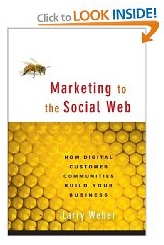 When we were thinking about getting into the social media ring, we began looking for a resource that would give us a total overview of where we’ve been and where we’re going without getting into all the details. We finally found one.
If you’re thinking about getting into the social media arena, or you want to give someone in your company a great overview, I’d recommend a book by Larry Weber called Marketing to the Social Web, published by John Wiley & Sons. He gives you a great 30,000 ft. overview as well as some practical examples of how social media can help you grow your business. He shows you how to do something with social networks instead of just talking about them. He highlights the difference between the old marketing and the new marketing models and outlines steps to building your own customer communities.
by tradespeopleinsights | Jun 4, 2009 | Marketing Trends, Social Marketing

When you’re learning blogging 101 and if you have a good instructor, they’ll keep pounding in some basic points to make your blog more effective and ultimately read. It’s nice to see that studies substantiate some of these key findings, and what’s even more surprising are some of the other findings that I never would have thought of. One such study from Eyetrack III, Summary of their tracking new sites, reveals several findings of interest. Here are 7 that caught my eye:
- Your headline must grab attention in 1 second
- Headlines draw eyes before pictures
- People scan the first few words of a headline
- People scan the left side of a list of headlines
- Introductory paragraphs enjoy high readership
- Shorter paragraphs encourage reading
- Smaller type promotes closer reading
by tradespeopleinsights | Jun 3, 2009 | Marketing Trends, Social Marketing
 Everyone’s putting out stats on how one element or another of the social media landscape is doing, i.e. 175 million Facebook users spend an average of 3 billion minutes a day on Facebook, according to Conde Nast Portfolio; Twitter is growing at a 1,382% annual growth rate; Facebook has grown from 100 million to 200 million users in less than 8 months.
What does all this mean to the B-to-B marketer? It means that the world is embracing social media in one form or another. It means that Americans have not only found it, but are using it. Media post reports 49% of us are using some combination of social media in their life. Here’s a breakdown of social usage by age, gender and education that I think you’ll find interesting from a poll by Harris Interactive:
| Online Social Network Usage – By Age & Gender (All Online Adults; % of Age Group) |
|
|
Age Group |
Gender |
| Network Usage |
Total |
18-34 |
35-44 |
45-54 |
55+ |
Male |
Female |
| Have a Facebook or MySpace account |
48%
|
74
|
47
|
41
|
24
|
45
|
52
|
| Update Facebook or MySpace account at least once a day |
16
|
29
|
17
|
10
|
3
|
14
|
18
|
| Use Twitter (Net) |
5
|
8
|
7
|
4
|
1
|
5
|
5
|
| Follow people on Twitter |
5
|
8
|
6
|
4
|
1
|
5
|
5
|
| Use Twitter to send messages |
3
|
4
|
5
|
1
|
*
|
3
|
2
|
| None of these |
51
|
25
|
50
|
59
|
76
|
54
|
47′
|
| Source: Harris Interactive, April 2009 Multiple responses allowed; * indicates less than 0.5% |
| Online Social Network Usage – By Education (All Online Adults; % of Group) |
|
|
Education |
| Network Usage |
Total |
HS or less |
Some College |
College Grad+ |
| Have a Facebook or MySpace account |
48%
|
40
|
55
|
52
|
| Update Facebook or MySpace account at least once a day |
16
|
14
|
18
|
16
|
| Use Twitter (Net) |
5
|
3
|
7
|
6
|
| Follow people on Twitter |
5
|
3
|
6
|
6
|
| Use Twitter to send messages |
3
|
1
|
4
|
4
|
| None of these |
51
|
59
|
43
|
47
|
| Source: Harris Interactive, April 2009 Multiple responses allowed; * indicates less than 0.5% |
by tradespeopleinsights | Jun 2, 2009 | Marketing Tools, Social Marketing
 For any of us who write a blog, you know it’s a major time commitment especially if you’re going to do it right. Some of you may only have 30 minutes or so each day and you really want to put out a good post. My audience are the manufacturers who sell to the professional tradesman and they know they need to get straight to the punch line in order to keep their attention. My main advice is to be consistent and keep the quality of your post high. Here are 4 guidelines I like to use to make sure I keep myself on track:
- Do at least one original post a week. Since a blog is about your opinion, then let’s make sure that you have one.
- Content over Frequency.We’re not in a marathon to see who can write the most posts. It’s what you say that’s important.
- KISS. Keep it simple. One key topic per post. Deliver the goods in the first paragraph (what’s in in for me).
- Keep it Short. The best and yet the hardest writing sometimes are those short, to-the-point sentences using just the right words.
These are on my checklist. What’s on yours?
by tradespeopleinsights | Jun 1, 2009 | Marketing Tools, Social Marketing, Twitter
 I’m sure we all have stories of customer service experiences both good and bad. I’d bet you’ve had more bad than good experiences though. For manufacturers who sell to the professional tradesmen, these are even more challenging. Think about it for a minute, when do these guys have questions/problems? Usually it’s on a job site or out in the shop where they may or may not have access to a computer. If they do call, they may be on hold for what seems like an eternity and still not get an answer to their question.
You need to think outside the box. Twitter is an ideal tool to service your customers. Customer service departments are supposed to solve problems, reinforce a positive brand experience and not cost you an arm and leg to support.
- While phone calls may solve the problem, wait times do not. Twitter is almost instantaneous and can help solve most problems quickly.
- Brand experience. Great customer service gets talked about and can lead to more sales.
- Economical. Using Twitter often takes less time thus saving money.
Once you have an understanding of how Twitter can work, you can also easily track and monitor what people are saying about your brand.
Tweetbeep-Keeps track of contractor conversations that mention you.
Monitter-Lets you monitor the Twitter world for a set of key words and watches what people are saying about you.
Let contractors know how to know you’re there. Ask users to follow you on Twitter. Place a button on your web site in the customer service section so they know they can contact you in another manner.
Respond quickly and transparently. When you find a tradesman complaining about an issue, @reply them asking if you can help. If the problem is sensitive or the customer is highly upset, you can either direct a message to them or give them a quick way to contact you directly (direct line or your email).
Be engaged in the conversations. Twitter is a conversational platform. Contractors like to talk. This is an opportunity to build your brand.
Be authentic. Contractors are no dummies and if you try to pull the wool over their eyes, it will come back to bite you.
Twitter and social media are helping the way customer service is done. Think outside the box. Wouldn’t you want to be the first in your line of work to offer this as an optional customer service tool?
by tradespeopleinsights | May 29, 2009 | Marketing Tips, Social Marketing
 Blogs, Forums, Twitter – are your brands or company being mentioned on any of these? If not, what are you going to do about it? Should you be joining the conversation? What are your competitors doing? Remember, those that start conversations often end up leading them.
I read an interesting post recently from Maria Pergolino, Social media: Signs your prospects want to hear from you, that I thought had some valid points to consider.
- People Talking about You. While this is the most obvious, when you do find those opportunities you need to start participating. Tools like Google and Twitter Search are good free tools to use to help identify opportunities.
- Friends on Parked Names. Sometimes companies reserve names (park) on social sites so no one else can get them, but aren’t active on the site other than some basic company info. While there, you might be attracting potential customers or editors even without putting content up. If this is the case, you’re missing opportunities.
- Someone Speaking for your Brand. Sometimes people (many times they are customers) take over your name and start talking about your brand or product. Often these advocates share tips and tricks on how you can do your job better. Other times they may be complaining about a product, its features or even your customer service. Regardless, the conversations that are taking place indicates interest in your products. In either case, you should know that you’re being talked about, and in the case of the customer who is unhappy, you should try to come to the root of his problem.
- Name Squatting. This is where someone else beats you to your name (brand) on a social site. It may be someone who wants to profit from your name like one of your distributors, or it could be a competitor trying to lock you out of that particular market. If it’s someone using your name, you should monitor it (use a service) to make sure they aren’t saying anything negative about you. Whatever the reason, it should indicate to you that someone thinks it’s important enough to capture your name.
In Social media, they’re going to talk about you whether you’re listening or not. Don’t stick your head in the sand and ignore them.
by tradespeopleinsights | May 28, 2009 | Marketing Tools
 Professional tradesmen are just as busy as the rest of us and they need to know, what’s in it for them? My experience working with marketing departments is that they are in the features/benefits mode most of the time and have a difficult time adjusting to writing online. In order to write effectively, you must understand how people read on the web.
And how do users read on the web? The answer is, they don’t...they scan.
Nielsen Norman Group’s research found that 79 percent of their test users always scanned any new page they came across; only 16 percent read word-by-word.
For your company’s blog to be effective, your text must be scannable. Jakob Nielsen offers this advice:
- highlighted key words (hypertext links serve as one form of highlighting; typeface variations and color are others)
- meaningful sub-headings (not “clever” ones)
- bulleted lists
- one idea per paragraph (users will skip over any additional ideas if they are not caught by the first few words in the paragraph)
- the inverted pyramid style, starting with the conclusion
- half the word count (or less) than conventional writing
Nielsen’s research also found that users detested “marketese”; the promotional writing style with boastful claims. I’ve often said that the moment you start to sell on your company’s blog is when you will lose your audience.
You need to understand how people read on the web and learn to write for them effectively. Go to Jakob Nielsen’s web site and read this paper. If you look at the top blogs, you’ll find they follow Nielsen’s style guidelines remarkably well. How Users Read on the Web
by tradespeopleinsights | May 27, 2009 | Marketing Trends
 I know you’re convinced that your product or service is the best solution to a tradesman’s problem. According to a recent post in B2B marketing online, a new study from Enquiro Research shows that 99% of B-to-B buying is about CYA. If business buying is driven more by risk adversion, then you need to address those and take the risks out.
This puts a different light on how to approach these buyers to improve your conversion rates. Here’s a summary of some of their suggestions:
- Understand Business Buyer Risk. To improve conversion rates, it’s essential to understand the extent to which your company and its products or services may be perceived by your target buyers. From the eyes of the buyers, where do you stack up: are you a major player in the market or a new entry?
- Become an “Approved Vendor.” If you’re not the 800# gorilla in the market, you have an uphill battle. You could have the most brilliant marketing strategy, were able to get in to see the right people and even demo the product, but you don’t get the order. Reason – we got a better deal from our existing vendor or we went with an approved vendor. One way to address this is champion a teaser offer, e.g. 60-day trial period.
- Use Search Marketing to drive Word-of-Mouth. Enquiro research suggests that word-of-mouth can be hugely influential in the buying process, especially in those cases where the buyer has no previous experience in that product category. Search marketing is a powerful tool for getting your message in front of prospects.
- Personalized messages to different targets. Make each landing page, e-newsletter or offer as relevant as possible to the target. To increase conversions: match prospects with happy customers that came from similar risk profiles. Also consider linking to customer reviews.
What are you doing to improve conversions to sales?
by tradespeopleinsights | May 26, 2009 | Marketing Tips
 One of the great things about social media and blogs in particular is you can almost instantly see how you’re doing in the world of blogging. Most programs like WordPress have monitoring devices built in. You can see what’s hot and what’s not. You can monitor what sites are sending you traffic and what key words are doing their job.
While it’s nice to know these things, don’t get obsessed with them. Darren Rowse from Problogger had a post recently, 17 statistics to monitor on your blog, that you might find helpful. Here are a few that I think are important:
- Overall visitors. Are they increasing or decreasing?
- Most popular posts. Gives you direction for future posts.
- Referral stats. What sites are sending you traffic? If it’s another blog, maybe you should develop a relationship with them.
- Questions from Readers. This gives you a good indication of topics for future posts.
- Key Words. Which are generating the most traffic?
- Bounce rates. How many people go to your site and then click off ? You need to make your site sticky so people stay on it.
Remember, stats are good monitoring tools, but make sure you take that info to improve your content because ultimately, if you listen to your audience, your readership and pass along will increase naturally.
by tradespeopleinsights | May 21, 2009 | Marketing Tips
 You may have the best widget in town, readily available and priced to sell. You need to determine their hot buttons and what trips their trigger. But to get the tradesman interested, you need to:
Get their attention. Address the (WIIFM) “what’s in it for me” question. We need them to feel excited about your new widget and eager to learn how it can make their job easier and more profitable. Use “how to” videos, case studies and online training as ways to get them engaged. Raise questions.
Covert to a customer. Now that you have their attention, what do you do? You need to soft sell and persuade them that your solution is best for them. Build your case, establish the trust factor and then send them to a well-constructed landing page that gives them an offer they can’t refuse and a clear call to action.
Remember, content is king and it defines who you are. Sonia Simone has an interesting post, 49 ways to profit from content marketing, that should give you some guidelines to consider.
by tradespeopleinsights | May 20, 2009 | Marketing Tips
 Good writing doesn’t have to be complicated. Especially in a blog, you need to get in, make a point, have a call to action and get out. Professional tradesmen are too busy and too smart to have to waddle through a post and try to figure out what’s in it for them. Here are 3 sure ways to make your point:
- Clear. If you can’t capture their attention with a good subject line and then deliver your core message in the first paragraph, you will lose them. Don’t make them think, spell it out for them. Remember, blog copywriting isn’t about winning a creative award, it’s about delivering a straightforward message.
- Concise. Keep it to short sentences and paragraphs even though they might not always follow the rules of grammar. Remember, you’re not writing a white paper or a master’s thesis. You want to make a point and get out.
- Compelling. Keep it interesting and persuasive. Keep it as personal as possible and cite real life examples. Do your homework and find out what piques your readers’ interest.
Write from the heart don’t to try to maximize your SEO key words.
So what are your thoughts on killer content?
by tradespeopleinsights | May 18, 2009 | Marketing Trends, Social Marketing
Blogs are now in mainstream media(over 100 million worldwide ) and it presents a unique opportunity for marketers to both influence and monitor conversations that are relevant to your business.
Conversations about you, your brands and your competitors as well are happening as you read this… These conversations are taking place whether you’re participating or not. Wouldn’t you like to be on the inside looking out?
I read a post recently on E marketing Daily that outlined some interesting stats about the number of people either touching or being touched by blogs. Here are some highlights:
Currently, 27.9 million US internet users have a blog they update at least once a month and they represent 14% of the internet population. It’s estimated by 2013 that 37.6 million users will update their blogs at least once a month.

Even more impressive are the number of blog readers. eMarketer estimates that in 2009, 96.6 million US internet users will read a blog. By 2013, 128.2 million people (58% of all US users) will be doing the same.

The numbers tell the story – don’t ignore blogs. They’re not going away and smart B-to-B marketers will get ahead of the curve sooner than later.
by tradespeopleinsights | May 15, 2009 | Social Marketing
 Business marketers trying to reach professional tradesmen can’t seem to warm up to a 140-character message as an impactful way to reach their targets.
Twitter has become a very powerful tool especially if you use some of their tools like Twitter Search which allows you to identify key words and phrases so you can follow and start a conversation with them. You can even monitor your company or product names and see what they are saying about you!
Twitter is a great tool for starting an opinion poll or directing folks to things they are tweeting about. It has been used by marketers at trade shows to create “BUZZ” on the floor: Stop at booth XXX and see their new left handed widget for plumbers.
In a post by Chris Brogan, 50 ideas on using Twitter for business, he outlines steps and hints on how to get the most out of Twitter in your business surroundings. Here are the top 5 tips that will help B-to-B Marketers to get the most from Twitter:
- Instead of answering a question “what are you doing?” answer the question “what has your attention?”
- Have multiple twitters at the company. People take vacations, quit, get on special projects. You need to keep the content going, it has to be good and it’s nice to have a different point of view.
- When promoting a post, give them a hint of what’s coming next.
- Tweet about other people’s stuff – it makes you look human and not always talking business.
- When you do talk business, make it useful. Give them a tip or advice that would make their life better.
What are your thoughts on using Twittersearch?
by tradespeopleinsights | May 14, 2009 | Marketing Tips, Social Marketing
 If you’ve been blogging for a while, might I suggest you take the time to revisit some older posts to see if they can be updated and revised. In an ideal world, every one of our posts would be perfect, but let’s face it, we don’t live in an ideal world.
The information we used may be dated, there might be some wrong info in it or you’ve become more of an expert on the subject. And if we’re honest with ourselves, some of our posts weren’t our best efforts. Even changing a post title can dramatically increase traffic to a post.
All good reasons to rework, revise and update.
Here are 5 suggestions on how you might improve and update a post:
- Post Title. This by far is the most important. If the title doesn’t get them hooked, you could be giving away a million dollars in the copy and they wouldn’t even see it.
- Opening Paragraph. We need to remember that when writing blogs it’s different than writing ad or sell sheet copy. You need to answer the question (WIIFM) what’s in it for me. If the reader gets a sense upfront of what the post is about, you have a good chance of keeping them engaged. Newspaper writers are good examples; they lead with a strong headline, give the highlights in the first paragraph and then deliver the details. Go ahead and be a Clark Kent and you’ll see that you might turn into Superman!
- Add more meat. Since your last post, either the industry has changed or you’ve become smarter, so put more meat on the bones.
- Add more depth. Spend a few more minutes giving examples, sharing opinions or suggesting a book.
- Call to action. After all, isn’t one of the purposes of a blog is to engage our readers? Ask a question, direct them to another site or give them some sort of next step.
I’m sure you could think of other steps as well. Darren Rowse has an interesting post, Updating old posts on your blog, that might be of interest to you .
by tradespeopleinsights | May 13, 2009 | Marketing Trends, Social Marketing
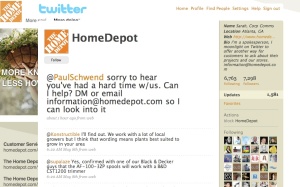 Micro-blogging is an effective way for people to get messages to the world.
Unlike regular blogging where your posts can go on and on and cover numerous subjects, a micro-blog communicates one event. A good comparison is thinking of it as a cross between social networking and blogging. Another way of thinking of it is it’s the new instant messaging vehicle .
If you’re a Facebook user, chances are you’re already micro-blogging to your friends using their status update. Beyond Facebook, there’s Twitter (which is the fastest growing segment of the online market) that allows you up to 140 characters to convey your message (you really have to be good about what you want to say).
Micro-blogs can be used for both personal and business use. For example, if you’re going to a trade show and are introducing a new product, why not do a tweet or a status update on your Facebook page to let people know where and when this event is happening. These can used for product launches, special promotions or new strategic alliances. You must remember that social means conversational (you can’t be putting a hard sell on someone).
Here are examples of Twitter micro-blog posts to @HomeDepot:

Home Depot is using Twitter to offer help and receive feedback.
Do you have any interesting micro-blogs you’d like to share?
by tradespeopleinsights | May 12, 2009 | Marketing Tips, Social Marketing
 In today’s economy, you won’t find any marketer that isn’t looking for a better ROI.
I recently read a post by Modern B2B Marketing, sharing some insights as to best practices from some of the industry leaders. I couldn’t say it any better, so here are the top 5 tips that will help you increase your ROI:
1. Be Found — “According to a recent study by Marketing Sherpa, 80% of B2B purchasing decision makers say that they found the vendor when they were ready to buy, rather than responding to a vendor finding them,” answered WebMarket Central’s Tom Pick.
This is coming to be known as inbound marketing. It boils down to ensuring that you have content spread across the web wherever your prospect may be looking, and that your web site is optimized so that prospects can easily find you regardless of where they are in the buying cycle.
2. Implement Lead Nurturing — “Lead nurturing is having consistent and meaningful communication with viable customers regardless of their time to purchase. One of the speakers at a conference recently said, ‘someone is a lead for life.’ I would agree with that sentiment,” said Brian Carroll, author of the popular book, “Lead Generation for the Complex Sale.”
Combined with lead scoring, lead nurturing programs enable you to profile the behavior of those most interested in your company’s goods or services, keep in touch with prospects until they are ready to buy, build preference for your brand, and in some cases, accelerate your customers’ buying cycles.
3. Create Content That Compels Your Prospects To Buy — A compelling video from your CEO may be just what it takes to convince your prospect to buy from you. From white papers and email to blogs and podcasts, there are several ways to share your message in an engaging way, as detailed in our interview with Craig Rosenberg, Vice President of Products and Services at Tippit, Inc. If your goal is to increase the ROI of your marketing efforts, the key is to create and promote content targeted to be relevant to buyers at each stage of your funnel.
4. Integrate Everything — Your prospects don’t just visit web sites. They go to events, enter social media discussions, read blogs, and so on. Amy Hawthorne, Director of Marketing at B2B lead generation company ReachForce, said that your prospects don’t exist in silos, and your marketing efforts shouldn’t either.
When you determine the types of content that will compel your prospects to engage and eventually purchase, promote it on your web site, on your blog, in social discussions, or anywhere else your prospects are spending their time.
5. It All Comes Down To Testing — Nearly every thought leader I spoke with insists on testing. There are potentially hundreds of channels for you to push your marketing message and thousands of combinations of elements for your web site. The best testing programs are ongoing and can include everything from “offer tests,” which experiment with varying pieces of fulfillment, to testing various elements of a web site including images and navigation. The goal of testing is to predict what combination of channels, offers and elements will be most profitable.
Marketing automation can help immensely with the effort it will take to implement the tips above, particularly as they relate to lead nurturing and lead management. By properly implementing the advice offered by our B-to-B Marketing Thought Leaders, you will soon be heading up a detailed and profitable marketing program.
by tradespeopleinsights | May 11, 2009 | Marketing Tips, Marketing Trends, Social Marketing
 A report by Forrester Research found that most corporate blogs kept by business-to-business (B2B) firms failed to energize their intended audiences and engage them in meaningful conversations about trends and products.
Corporate bloggers are apparently struggling to sustain a conversation, while many B2B marketers are failing to realize that good blogging style should resemble a coffee shop conversation, not a whitepaper.
As a result, most B2B blogs are dull, drab, and don’t stimulate discussion, according to the Forrester report.
More than 70% of the corporate blogs it reviewed stick strictly to business or technical topics and don’t share much personal insight or experience.
74% of B2B blogs receive a minimum of commentary or trackbacks because readers fail to find conversations worthy of their involvement.
Successful blogging, Forrester insists, is not a one-way street, but most corporate bloggers yak away about their companies and products, seemingly oblivious to whether their audience is listening or not.
56% of blogs we examined simply regurgitate company news or executive views, while relatively fewer blogs work to establish thought leadership by enlisting internal experts–with deep, specific knowledge of a particular topic–as their primary blog authors.
“B2B marketers should embrace strategies prominently used by mainstream bloggers to attract readers, build conversations, and engage community members in sharing their experiences with their online peers, the report’s author advises.”
If you can’t get excited about what you do, then please don’t start a blog. It takes time and commitment, and without passion, it’s going to be impossible to move it forward. Your readers will soon spot the lack of passion in what you write.
This isn’t a school project that you do for a set period of time and then it’s done. It’s an ongoing dialog with your audience and it takes planning and managing content and having the right contributors. If you’re organized and have a road map of where you’re going, it will lessen the daily time commitment each of us has. I’ve said in other posts that if you can’t allow 1-2 hours a day to your blog, then don’t do it or find someone who can.
Lee Odden recently gave a presentation, Tips For Better Business Blogging, where he outlines 4 tips for developing a successful blog:
- Develop a practical purpose for your blog
- Plan your editorial and source content
- Socialize by utilizing Facebook, Twitter, Trackbacks to generate traffic
- Measure and promote success to that committee
Conclusion: Social media isn’t going away and businesses will sooner or later figure that out. The key is those that do it first will have a competitive advantage.
Have you had a similar experience you’d like to share?
by tradespeopleinsights | May 7, 2009 | Marketing Tips, Social Marketing
 I keep reminding folks that other than disseminating good information, the #1 goal in my mind is to identify and engage in a conversation with either a customer or potential.
Questions are a great way to give your readers a sense of belonging to a community.
People who have this sense tend to come back for more since they feel a part of your blog. Reader responses give you a gage on your topics as to their relevance and gives you content for future follow-up posts.
I read a post recently from Darren Rowse, Ask a question: 10 reasons why questions work & 12 tips on how to ask them, that gives a good overview. Here are 7 of the top tips:
- Keep your questions relevant to the topic.
- Ask questions that builds on a previous post.
- Ask questions readers will want to know the answer to.
- Give them some options to get the discussion going.
- Use a poll tool to give readers a vote.
- Ask some controversial questions.
- Be willing to share your answer.
Questions initiate conversations, so what do you think?
by tradespeopleinsights | May 5, 2009 | Marketing Tips, Social Marketing
 I’ve written previously that one of the primary objectives of a blog is to engage readers. Unfortunately, we sometimes get so focused on our message and making our blog stand out that we forget about our audience, the people reading our posts. These folks bring new insights and ideas to our posts and provide us with the opportunity for dialogue and feedback .
Here’s an idea: Why not recognize a reader and give them their 15 seconds of fame.Yes, you heard me right, make it about them.
If you create a space or regular column highlighting some of your readers, you accomplish both the benefit of acknowledging that your readers have something to contribute, but it also shows other readers that you value their opinion as well even though you only recognize a few.
A recent post by Darren Rowse, Pay special attention to a reader, outlines 8 ways to highlight your readers. Here are some highlights:
- Promote a comment to a post. When a reader makes a good point, recognize them and talk about their comment.
- Write a post about their blog. Check out some of the blogs of people who share your ideas and write an unpaid review of their blog on what you like about it.
- Send your readers to comment on others blogs. Write a post that links people to another site and ask them to comment on the other person’s site.
- Give readers opportunity to promote themselves. Run a contest/project that gives readers an opportunity to promote themselves.
- Reader of the week. Highlight a reader once a week, say on a Friday.
- Projects/competition. Invite readers to post blogs and share a link with others.
- Run a reader poll. Then highlight it in a follow-up post.
- Invite guest posts. A great way to get another perspective as well as giving someone else the opportunity to have an impact on your blog.
Those are some ideas. What have you found that works?
by tradespeopleinsights | May 4, 2009 | Marketing Tools
Facebook now has over 200 million active users. More than 100 million users log on to Facebook at least once a day.

The INSIDECRM blog provides a comprehensive list of 100 tools and tips that will help your company maximize the marketing opportunities available through Facebook.
This is a great resource list that will make Facebook part of your company’s social media marketing mix for new business:
- Learn why Facebook has rapidly become the go-to networking site for marketers. Learn about the current and future advertising opportunities on Facebook.
- Learn about the endless ways you can use Facebook to promote your company at no costs. Use your creativity and marketing mind to maximize these features.
- Learn about the tools and applications, add-on features for Facebook, that will allow you to customize your profile and fan pages to build relationships with clients and prospective clients.
- Learn how to narrow down your target audience through researching Facebook’s demographics. Learn to tailor your social media new business strategy through “How-to Guides” to help fully utilize Facebook.
- Learn the benefits of Facebook from this list of tools and tips.
Bookmark and read, The Facebook Marketing Toolbox: 100 Tools and Tips to Tap the Facebook Customer Base
by tradespeopleinsights | Apr 30, 2009 | Marketing Tips, Social Marketing
 Why promote your blog? Just because you write the most provocative post, it doesn’t mean the world at large will know it’s even out there. Yet by using the right key words and phrases, you’ll get organic action from the search engines, and if you spend a little more time being proactive, you’ll see even better results.
Here are 5 quick tips to help promote your posts:
- Email Signatures. Add a link to your blog especially of recent posts. Have you ever thought of how many e-mails you send out a day (not to mention all the other people at your company)? What a great way to let people know you have a blog. Most of your correspondence is either going to customers, prospects or vendors, all of which should have a vested interest in your topics.
- Social Networking. Hopefully you belong to Facebook, Twitter, etc. Leverage these by promoting your posts. The object is to have your friends and followers spread the good news. The key is to give them something worth sharing!
- Internal Links. Sometimes we’re so focused on promoting our posts on other sites that we lose site of the most obvious place to be linked internally. Hopefully you’ve written content on a similar topic or market before, so add a link. It keeps people on your site longer and helps build your credibility as an expert. I have all my posts broken into 3 categories: Trends, Tools and Tips and link back appropriately.
- E-newsletters. If you have a list, send out an e-mail promoting some of your key posts. If you don’t have a list, start one as that’s blogging 101.
- Pitch Other Bloggers. This is an important one, but not so easy to accomplish. Like anything else, you need to establish a relationship with other bloggers. Read their stuff to make sure you’re compatible. Make comments on their posts. Link back to some of their posts when appropriate. Blogging is like any other referral network. People need to know, like and trust you before they recommend you. And when you think you’re ready, suggest versus ask them to consider linking.
Daren Rowse provides additional insights to promoting your post that you might find helpful: 11 ways to increase your chances of being linked to by a blogger.
by tradespeopleinsights | Apr 28, 2009 | Marketing Tools
 Twitter is the micro-blogging platform that will help B-to-B marketers grow their brand. It’s not a fad (upwards of 10,000 people a day are signing up).
Twitter helps you:
- Build brand awareness
- Generate traffic via followers
- Gain insight via polls/surveys
- Get to people you wouldn’t necessarily get to because of re-tweets
Twitter support applications that I find useful for B-to-B applications are:
TweetLater. Schedule tweets like you would an e-mail campaign so that you’ll have several going out each day automatically.
TweeterSearch gives you the ability to receive e-mail digests of key word activity so you can track and participate in conversations. You can now know who’s saying what about your company or brand.
Ping.fm. If you have a Facebook or LinkedIn account, you can post updates across all your social media sites.
Twitter on Facebook. You can forward your Twitter updates directly to your status updates on Facebook.
TwitterFox. If you use the web browser Firefox, you can view your tweets in you browser as in a pop-up menu so you don’t have to be going to Twitter to check .
Tweetdeck. A personal browser that connects you with your contacts across Twitter and Facebook and allows you to follow your friends.
Twitter is so much more than a micro-blog limited to 140 characters, and when used properly, can help your overall marketing program.
Have you used other tools to help you get the most out of Twitter? Share them in the comment section below.
by tradespeopleinsights | Apr 27, 2009 | Marketing Tips, Social Marketing
A lot of people don’t know or understand enough about the dynamics of SEO. They either choose to ignore it or become targets of SEO companies that start guaranteeing results. Remember the old saying, “If it sounds too good to be true, it probably is.” “There is no free lunch.” You get the idea.
These companies use techniques called “black hat” which in the short term could raise your traffic, but in the long term it could get you banned from search engines and then who would really lose? It’s important to remember that no SEO company controls rankings on competitive search key words.
I read a post recently by Janet Meiners, Five tips for avoiding deceptive SEO companies, in which she outlines both questionable and downright deceptive tactics. Here’s a summary of what she wrote:
- Putting too many key words on your site. It’s called key word stuffing and they repeat words/phrases. This is an ineffective practice that does nothing more than confuse everybody including the spider.
- Overuse of bolded text or too many links. It looks terrible and doesn’t build trust with people.
- Hidden Links. These are hidden in code or in the footer and may not even be related to your site.
- Complicated link schemes. Google can detect unnatural link patterns. Some people build programs that link automatically that are full of spam content.
- Multiple domains with virtually the same content but different key words. Content is deliberately duplicated across domain names in an attempt to manipulate search engine results.
There are no short cuts. The best rule of thumb is to make your site a good experience for your visitors. This means good original content or other elements that want to make people want to link to you. And as in looking at any service provider, do your home work, get references and if it sounds too good to be true, it probably is.
by tradespeopleinsights | Apr 21, 2009 | Marketing Tips
 A professional tradesman worth his salt, whether he’s an electrician, plumber, HVAC technician or a MRO specialist, doesn’t have a million answers on how to solve problems.
Why not ask the right questions and get engaged in a conversation?
After all, isn’t that what social media is all about — ENGAGEMENT!
One of the biggest benefits of social media is the ability to put something out there (the universe) and let those to whom it applies to identify themselves as users. Where could you corral that much experience in one place and then get input from them (it’s like shooting fish in a barrel).
This beats traditional focus groups hands down. You get a quick, more honest feedback from a broader section of your target audience.
Here are 5 reasons to ask Tradesmen questions:
- New application– You may have a new tool or application that you want to get feed back on.
- New product- what better place to do some real beta testing to see if you’re hitting all the right points with the user.
- Quick tips– ask for theirs and you will be inundated with ideas.
- Identify new uses for products– it would sometime amaze you how these guys are using your product(not according to instruction manual).
- Market research. use polls and surveys to collect valuable marketing info on the product,its applications and the competitors!
When was the last time you talked to a tradesman who didn’t want to tell you about something? Why not ask?
by tradespeopleinsights | Apr 20, 2009 | Marketing Trends, Social Marketing
So you think social media is just a phase, well think again. Here are some numbers from a post by Stan Schroeder, The Web in Numbers: The Rise of Social Media, that will blow you away.

According to Nielsen Online, latest research shows that social networking is now more popular than e-mail. 66.8% of Internet users use social media while only 65.1% have used e-mails.
- YouTube. In March, it reached 100 million monthly views in the U.S.A.^.3 billion videos were viewed on the site. YouTube will serve 75 billion videos to 375 million unique visitors in 2009.
- Facebook. Has grown from 100 million to 200 million users in less than 8 months. If it were a country, it would be bigger than Brazil
- MySpace. Is now lagging Facebook with only 54.1 million unique visitors.
- Twitter. Is growing at a crazy rate. It grew 76.8% in one month (Feb-March 09). Its yearly growth rate is 1,382%. Twitter has 7 million unique visitors a month.
by tradespeopleinsights | Apr 20, 2009 | Marketing Tips, Marketing Trends, Social Marketing
 E-mails have been around and we’ve used it to asked tradesmen to forward on valuable information to their peers about our products or programs. It’s not easy and isn’t reliable because you’re asking the customer to do a lot of work on your behalf. E-mail is also a one-way street in that you don’t make it easy to respond back to the original source.
Joint research by Ball State University,Exact Target and e-mail networking association reveals that more than 46% of e-mail marketing campaigns this year will use social media and e-mail in tandem compared to just 13% in 2008.
E-mail combined with social media offerings like Linked-in, Facebook and Twitter allow you to get your message out quicker to more people and give them an easy way to reply. In other words you’re engaging them and that’s why social media is so important. By clicking a link, you are sharing content with influencers that you might not have had reached.
I read a post recently from Karen Bannan, Combining e-mail with social media,where she shared thoughts from Ryan Duetsch from StrongMail Systems on ways to get the most out of your efforts.
- Use ESPs. Most major ESPs (like StrongMail and Sliverpop) and e-mail providers are making it easy to send e-mails directly to your Facebook page for example.
- Create your own social network. Create your own community. If you’re targeting professional plumbers for example, the discussions that go on provide great resources for e-newsletters. You know what the hot topics are and can address them as an expert.
- Add opt-in links to all your marketing collateral. For example, if you post a new video on Facebook, make sure it contains a link at the end so viewers can opt-in. Once it’s shared, you’ll be reaching thousands of prospects making sure you give them a way to ask for more information.
- Use your status to publicize your e-mail newsletter. Facebook, Linkedin and Twitter give users the option to publish information. Take advantage of this and even send out a reminder before you actually send out the e-mail that it’s coming.
- Change your layout. If you’re sending people from a social media site to your web site, make sure your opt-in links are very visible.
- Use search functions. Follow your company and brand names on Facebook, Linkedin and Twitter to gain market knowledge. Twitter search lets you follow everything that’s mentioned about your company.
- Be a Joiner. You need to get involved. You want to become a trusted source, and in order to do that, you need to join Linkedin groups, respond to questions and get involved in discussions.
by tradespeopleinsights | Apr 20, 2009 | Marketing Tips, Social Marketing
 It used to be that marketers counted on “word of mouth” to help spread their message to the tradesmen and maintenance professionals. Today, social media takes this to the next level and does it quicker and better.
Since you already know who you’re focusing on by using viral marketing, you can make it easier for your message to be passed on. Viral marketing has gained popularity because it produces results that are measurable while increasing your brand awareness. A recent post by Chase McMichael, The 3 pillars of viral marketing, outlines ways you can put viral marketing on steroids. Here’s an overview of how using these techniques can help you reach the professional tradesman:
- Target your audience. Social media makes it easier and faster to reach your target. More people are posting their personal profiles on social networks allowing you to data mine them and identify and rank affinities within specific communities like HVAC -TALK.
- Reach your audience. Once you’ve identified your user, you can quickly pinpoint influencers and begin enticing them to become brand ambassadors.
- Create the right call to action. If you’re doing your homework by monitoring these communities, you will soon identify the issues that need to be addressed and the appropriate call to action. It might be good to join a great online community that you have or sign up for the latest performance charts of a specific tool or application,
Conclusion: Messages that connect with you target can drive a high degree of brand awareness and acceptance. Practical and simple to access technologies help drive engagement and participation.
by tradespeopleinsights | Apr 20, 2009 | Marketing Tips, Marketing Trends, Traditional Marketing
I’m reminded that we should stay on top of new trends but not to throw out or ignore all those traditional things you’ve been doing like e-mails. In other words, “don’t throw out the baby with the bath water.”
E-mails are still the most accepted way of receiving info so why not use it to push some of your new social media toys.
We all want to be part of the newest and sexiest stuff. Social media is a hot topic. It is extremely popular, in part because it is inexpensive and can easily be measured. But it can and should be integrated with more traditional strategies such as broadcast e-mail programs.
I read a post this morning on B2B online marketing, Traditional marketing:not hot but still important, that I thought would be appropriate to share with all the B-to-B marketers out there.
Here are some simple reminders:
- Adopt an integrated approach. Mix the new with the old. Want to promote your blog or e-newsletter? What better way than using your e-mail list.
- Re-evaluate best practices you’d applied in the past. Find out what works best for your audiences. If you’re not sure ask them via a survey, focus groups or really do it the old fashioned way and pick up the phone and call them.
- Stay on top of new trends for old strategies. New tools won’t serve you well if the foundation is weak. Here are some recent tips they found for email marketing,landing page optimization and lead nurturing during a recession.
What are you doing to stay ahead of the game?
by tradespeopleinsights | Apr 17, 2009 | Marketing Tips
 You need to connect quickly in the subject line in order for them to open an e-mail. Look beyond pitching your product and talk about issues that hit their hot button. Don’t know what those are? ASK!
Tradesmen are busy people like the rest of us, and when they get a marketing e-mail, you had better make clear (WIIFM) what’s in it for me in the subject line. They want to know how your product or service will help them on a jobsite.
According to MailerMailer, 74% of all e-mails are opened within 24 hours. Which means if the email isn’t opened soon, then it probably wont be.
I read a post recently form Arthur Middleton, Making your B-to-B e-mail campaign a success, which he outlines 4 tactics that will help you become a reliable source of info. Here is my take on them as it relates to my audience, the professional tradesmen:
- Be a e-newsletter publisher. Look beyond just promoting your products and talk about industry issues that are affecting tradesmen. Give them inside information on marketing trends.
- Leverage the knowledge you get from these contractors. Find out how and why contractors make their decisions. Ask them to be on an advisory panel or participate in a contractor study.
- Preview your e-mail. Make sure preview panes are very much on point because if you don’t make your point quickly, they won’t open your e-mail.
- Create a mobile version. These contractors use mobile devices to stay connected, so make sure to use a smaller version of your logo, and state your claim (WIIFM) within the first few sentences.
Those are my thoughts, I’d like to hear yours.
by tradespeopleinsights | Apr 17, 2009 | Marketing Tips
 B-to-B marketers are so busy pushing out messages using traditional methods to promote their brand that they sometimes forget about the strength of social media to self-identify themselves by searching for solutions or information on the Internet.
Social Media is the most powerful set of tools for branding that has ever existed for connecting with customers on an emotional level.
The brand that a marketer is selling is not merely a logo, a package or a sign on a wall. A brand is not what you want it to be or what your ad says it is. A brand is not even the definition you give to it.
Quite simply, a brand is how your audience feels about you. It’s what they say about you when not encumbered by advertising promotion. Or unencumbered by the paid media around you. So when your “friend” on Facebook, Twitter or Linkedin says they just found the best hot dog in town, you believe them. Much more so than a TV spot.
What better way to receive an endorsement for a product than to get that endorsement from a trusted friend? And that’s what social media is all about.
It’s a simple idea and it works.
by tradespeopleinsights | Apr 17, 2009 | Marketing Tools
 For those of you who are trying to get your arms around Twitter and how to use it for your B-to-B marketing, here are a few thoughts on how you can engage tradesmen and supply them with useful info. The problem is where are they and what (or who) are they talking about. Use “Search Twitter.”
Search Twitter is real time window into who and what your customers and prospects are talking about. Gain insights on what their hot buttons are and then provide them answers to demonstrate your expertise.
Here’s an example: Your company sells products to professional tradesmen. You search using key words and review the posts. If there are questions pertaining to what you do, offer them a solution.
Now here’s where it gets scary. Twitter has an advanced search that’s a great tool that you could use for phrases or key words that plumbers would recognize. You can even search tweets by dates, locations, etc.
You can even write your own detailed searches. Who would have ever thought that Twitter could be used as a data mining tool. That’s the cool cool thing about compiling all that data in one place. You can slice and dice it almost any which way. It’s just another tool in the marketing tool box.
I’d like to hear how you’re using Twitter Search to help identify you targets.
by tradespeopleinsights | Apr 17, 2009 | Marketing Tips
I can’t tell you how many corporate blogs I’ve been on that are treated as just another venue to sell product or try to pump up stock prices. They just don’t get it and wonder why blogs aren’t working.
Companies need to learn it’s not about them anymore, it’s about your customers. They call it social media for a reason – because it’s about people.
If companies want to have a successful blog they need to deliver relevant content that talks about ways to solve your customers’ problems. They need to deliver it in a conversational (human) way using terms that their customers are familiar with.
It’s all about people and that’s why it’s called social media, not marketing media.
A recent post by Chris Baggott, How to make the most out of your corporate blog, highlights ways for companies to be successful:
- Research the key words that drive your business.
- Create titled, individual blogs for different market segment and target those key words.
- Encourage employees to create content.
- Solicit feedback from your customers.
In other words, do your homework and think strategically. Business blogging is a way to make your customers/searchers happy they found you because you have answered a need.
by tradespeopleinsights | Apr 17, 2009 | Marketing Trends
 They are the hard-working men and women of America. They drive the products to market. They build the towers of business. They dig the foundations of dreams. They serve America in every capacity.
They are the blue collar tradesmen, working class heroes we sometimes overlook.
They have been all over this social media stuff long before the rest of us jumped on board. They have been building relationships with friends and business associates from around the world, across the country and around town for decades. They adopted these amazing communication technologies not as a narcissistic plaything but as serious tools of industry.
They are the ham radio operators, the CB truckers and the Nextel two-way cell users. They go by names like Gladys and Night Rider and Bubba and they are the real pioneers in social media.
What makes any of us think this group of users will avoid this brave new world? They are logging on in record numbers. According to one survey, while the universe of blue-collar social media users is less than 10%, they are the fastest-growing segment.
As their jobs dwindle, they are learning new trades and finding new jobs through the use of SM.
Blue-collar men and women are a critical part of the conversation.
by tradespeopleinsights | Apr 17, 2009 | Marketing Trends
Social media allows us to engage each other and start a conversation which hopefully turns into a relationship.
I’ve been in the ad business for over 3 decades, and over the years have used the tools available to develop targeted programs to reach our intended audiences. We were so busy telling people how good our product was that we seldom took the time to ask any questions or listen to what the customers had to say. In other words, most of our communications were one way.
Today with the advent of social media, we have so many options to reach our target as does our target to get info on a particular product or service. Web 2.0, for example, allows customers to participate in dialogs, forums and surveys that let their opinions be known. We as marketers should be happy about this as it affords us valuable insight into the minds of customers (you ask questions, listen and respond).
Back in the day before the Internet was invented by Al Gore, a lot of us used to practice another form of B-to-B marketing (belly button to belly button) where we actually sat down with a customer or prospect and had a conversation with them.
Unfortunately in today’s world, people for the most part don’t have time for these kinds of encounters. Social media allows us to begin the engagement process, so hopefully as we build a relationship, we can ultimately have that face-to-face just like the good old days.
Marketers need to rethink the way they communicate to customers and prospects. Quit selling and start listening.
by tradespeopleinsights | Apr 17, 2009 | Marketing Trends
I guess there is no surprise in this Nielsen/NetRatings study:
“Low-income tradesmen spend more time online from their home computers than do high-paid professionals.“
Makes sense, right? After all, white collar surfs the net while at work, whereas those who work in factories or at construction sites probably don’t have a chance to use the Web while on the job.
Nielsen’s Peggy O’Neill says: “They’re more likely to come home and spend time checking email, chatting online, playing games, and visiting stores than someone who has been online all day long.”
For her research, O’Neill used Claritas Prizm clusters based on ZIP codes and neighborhoods where people live. She looked at the home-based Web surfing habits of all 62 clusters and found that …
the top five Net users were low-income, blue collar workers who burned about 12 hours online per month.
Chatting on instant messenger, clicking through Wal-Mart online and visiting entertainment sites such as Emazing.com were the most popular activities for the top five clusters.
Those who spent the least amount of time online — about seven hours per month — were high-paid professionals.
O’Neill said, “When these people get home, they don’t have a great need to surf the Web.”
What an opportunity! Reaching blue collar consumers at home through the Internet, social and viral media may be the next big idea for emotionally connecting with this broad and loyal audience.
Read more about the study blue collar workers favor home Net use.
by tradespeopleinsights | Apr 17, 2009 | Marketing Tips
Social media allows B-to-B marketers to “really” talk to professional tradesmen in a way that builds a relationship of trust.
In a one-way conversation, like in a trade ad or a TV ad, the viewer gets information about a product or service delivered in a well-crafted, beautifully produced manner. The presenter has his 30 seconds to make an impact and then it’s all up to the listener to act upon the presentation.
 In a two-way conversation, like in any social media space, the reader gets information about a product or service delivered in a simple, approachable manner. The reader seeks what he’s interested in and starts a dialog. With that door open, the reader can ask a question and start a dialog with a presenter he sought. Once the presenter responds, a conversation ensues … and a trusted friendship is often formed.
 And wouldn’t you most likely trust the advice of a friend rather than a presenter you don’t know? And by virtue of the fact that YOU sought out this presenter, the bond of trust is even stronger.
—————
by tradespeopleinsights | Apr 17, 2009 | Marketing Tips
Blogging – you have so much to say and you want to be sure someone out there will read all those golden nuggets of information. Promoting your blog should be no different than promoting a new product. Your marketing strategy should include both push and pull strategies.
For social media, the pull part of the equation includes:
- solid content
- sound SEO strategy
- select key words
- encouraging incoming links
Push strategies can include many things, but the most obvious is e-mail. A recent post by Dean Rieck, How to build your blog using good old e-mail outlines ways to drive people to your blog. Here are 5 highlights:
- Offer an RSS feed. Many people prefer a reader over e-mails. Dean suggests that if you offer a subscription to your blog by e-mail, many will take you up on it.
- Start an opt-in newsletter. This is a great way to build a list with people outside your blog. Remember if you start a newsletter, make sure your readers are getting value or they’ll opt-out as quick as they came in.
- Post a subscription box on your site. Sign-up boxes usually work better than links that take you to a sign-up log.
- Encourage subscriptions everywhere. Beyond your home page, put your subscription box everywhere. Most blogs have templates so each page can include one. Put on your web site, your Linkedin and Facebook accounts. Some even include it in their e-mail signature.
- Manage your list. This by far is one of the most important elements. The old saying “garbage in garbage out” applies in this case. I use Constant Contact, but there are others like Aweber and Icontact, to help manage my e-mail lists. Their fees are minimal for what you get and are an easy way to deliver and monitor your activity. You need an accurate list to promote special products, pricing or events.
by tradespeopleinsights | Apr 17, 2009 | Marketing Trends
Brands are no longer defined by marketers, but by the very people we hope to influence – our customers and potential customers.
B-to-B marketers have to embrace the new engagement marketing (social media) as a viable way to target and talk to both customers as well as prospects. This is about developing a two-way conversation between you and your prospect.
Think about it – it’s like dating. If on your first date all you do is talk about yourself and don’t let your date get a word in edgewise, where do you think this relationship is going?
Instead, if you talk less and ask questions about her and her interests, you’ll engage her in a conversation which might lead to other things based on what is learned by both sides.
Engagement marketing works the same way. You need to ask questions, listen and respond. Customers know they have choices and want to be treated as partners, not prospects.
As a B-to-B marketer, it is increasingly important to establish customer loyalty because without it, it becomes an issue all about price and that’s a road no one likes to go down.
Engagement marketing is about a process that invites, engages, nurtures and then consummates into a sale. Once you do get the sale, you must continue the dialog and turn that customer into an advocate.
by tradespeopleinsights | Apr 17, 2009 | Marketing Trends
 B-to-B marketers looking for ways to reach the professional tradesmen on the go have a new tool to consider – mobile advertising.
Emarketer forecasts that advertisers will spend 3.3 BILLION on mobile ads by 2013 up from 648 million in ’08.
As consumers (both B-to-C and B-to-B) embrace mobile technologies at an ever-increasing rate, emarketer predicts that 2009 may actually be the point where advertisers start shifting attention to mobile.
The industry’s turning point started with the introduction of the Smartphone, then the iPhone. 3G led to faster connection speed and the rise of Internet browsing and WI-FI connectivity kept the ball rolling. 4G is due out this summer and who knows what the next advancement will be. The only thing we know for sure is that it’s coming.

by tradespeopleinsights | Apr 17, 2009 | Marketing Tips
I’m convinced that a blog is a very effective marketing tool for B-to-B marketers. It provides a genuine opportunity to build your company’s brand. But don’t think that if you just create a B-to-B blog you are assured of traffic.
Three things you will need to have a successful B-to-B blog:
- Focus on a niche/market. You can’t be all things to all people as no one would read it. Pick a specialty (or several) and give the audience relevant and meaningful content. Talk to them about ways you can help them solve problems. Keep the marketing copy out of it.
- Make a commitment. If you’re not going to work at this, then don’t bother starting one. The costs of doing a blog comes in the form of time. I’d say you would have to put in anywhere from an hour to two a day to do your blog justice. You need to have at least 3-4 posts a week and they have to be meaningful. That includes researching, writing and responding. You don’t have to be the writer of all posts, but you must be the quarterback.
- Use the social tools available. Use things like Google Reader to help you organize what you’re reading. Twitter and other social media platforms will also build awareness, allow you to repurpose content and generate additional traffic. Integrate social and traditional strategies to make more of an impact.
To have a successful B-to-B blog, you need to pick a niche or target audience and write to them. An example of this is my blog. We’re a B-to-B marketing firm (bet you there aren’t a lot of them around). Why would someone want to read my blog when they can pick up a current issue of BtoB Marketing magazine?
The folks that our agency is best suited to help are the manufacturers who want to sell something to those professional tradesmen. That’s why our blog is specifically targeted to them as a resource for how best to reach this particular target audience.
We may have a narrow niche, but that hasn’t narrowed our opportunities. The Tradesmen Insights blog has enhanced our new business opportunities, allowed us to build awareness, interest and appeal to a specific target audience. We don’t appeal to everyone, but those with who we do, it is a strong appeal.
by tradespeopleinsights | Apr 17, 2009 | Marketing Tips
 In the B-to-B marketing world, most companies have specialties or niche markets that they serve.
In our case, most of our clients target the professional tradesman which makes our task a bit easier than others. To reach, for an example, Electrical Contractors or Electricians, there are very specific key words that would drive them to your site like IBEW (International Brotherhood of Electrical Workers), side-cutters or power bender.
Key words and SEO have long been associated with web sites. But blogs are actually more SEO friendly and much easier to update from information from your analytics.
Twitter isn’t there yet, it’s only a matter of time and search will be one of its most important elements.
Consistently using key words that your target audience would use to find your company will generate significant online traffic.
Companies make the mistake of assuming that once the initial search for those key words and phrases are done, they won’t have to go through that again. This couldn’t be farther from the truth.
Key words and SEO have to be a part of a continual process of monitoring and updating.
Tools like Google search allows you to type in key words and phrases to see what kind of activity levels there are. Especially in this economy where everything is being measured, SEO/organic search engine marketing has proven itself to be a good ROI.
Here are 4 tips to consider when developing your key words:
- Understand your audience. Since you’re in the business of making stuff, i.e. for Electrical Contractors, you should know their slang and buzz words. You should also know what’s going on in the industry. Don’t focus on marketing terms, focus on what the contractor would be typing into Google to solve his problem.
- Keep it simple. Because you’re talking to a specific audience (electrical contractors), you don’t need 1000 key words. The rule of thumb for key words is to have one key phrase per page. Having 6 or 8 only confuses the search engines so they’re not able to determine the focus of the page.
- Evaluate your competition. There are few companies that don’t have some sort of competitors. Look at their site and blogs if they have them. See what key words/phrases they’re using.
- Treat key word searches as an ongoing process. At least once a quarter, take a good hard look at the metrics and make tweaks where necessary.
What tips can you share to help improve your SEO performance?
by tradespeopleinsights | Apr 17, 2009 | Marketing Tools

Your blog can actually help you hone your elevator pitch.
People want to quickly know 3 things before they decide to read, much less bookmark your blog:
- Who you are
- What you do
- Why you’re writing a blog
If any of you have ever been involved with a local business networking group like BNI, you’ll know what I’m talking about. At every BNI meeting, each person has to get up in front of the group and give a 30 second “elevator pitch” as to who you are, what you do and what you’re looking for.
Your elevator pitch should be no more that 150 words. If you’re like me, it will be very hard to put so much into so few words. My elevator pitch has helped me with 3 things:
- My marketing tag line
- My social media profiles in Twitter, Facebook, LinkedIn, E-mail signature
- I read it prior to writing each post and it keeps me focused and on track
Darren Rowse had a recent post where he outlines other reasons to develop a pitch and has pointers on how to write one. You can read his post at: Write an elevator pitch for your blog
Here’s my elevator pitch:
Sonnhalter is a B-to-B marketing communications firm to companies that target tradesmen in construction, industrial and MRO markets.
We understand how to reach tradesmen and can integrate custom marketing programs for our clients that are empowered by great ideas.
We make efficient use of our clients’ marketing budgets with the right combination of traditional and new media.
We also generate the best return on investment for our clients’ marketing budget. Our philosophy is, if you can’t measure it, you can’t improve it.
A blog is also a great branding tool for your company, especially if you’re using it for your business. But I’ll save that subject for another post!
by tradespeopleinsights | Apr 17, 2009 | Marketing Tips
 Tradesmen have specific issues relating to their business and are looking for ways to improve and stay on top of their game.
As a blogger who is targeting this market, one my objectives is for them to return often to my blog as a source of information they can use. Here are a couple of ways you can keep your blog audience coming back for more:
- Focus your content. That means every post you make must answer the (WIIFM) What’s In It For Me question. Tradesmen want answers to questions on how to do something better, quicker, solve a problem or give tips on making their working life easier. Engage them with questions and encourage feedback.
- Become an expert. If you stay focused on your market and messaging, you will fast become a trusted reliable source for that type of industry. People will bookmark you or put you on RSS so they can easily get your next nugget of info.
Your key objective is to get a loyal folowing of your target audience. To do that, they need to feel like they know, like and trust you. What’s nice about social media is that your prospective audience is searching out for you as much as you for them. The key is connecting and continuing a dialog. This will ultimately result in sales.
by tradespeopleinsights | Apr 17, 2009 | Marketing Tips
I don’t know about you, but when one of the times my wife and I have a disagreement, it is usually when we’re going somewhere new in the car, and of course I think I know where I’m going. When getting lost, my thoughts are to keep driving and eventually we’ll run into where we wanted to go. Fortunately, GPS navigation and tools like MapQuest have made my life more easy.
The same hold true for social media. You can drive (A) around aimlessly or (B) you can put a plan together.
Please opt for B. Social media and SEO work well together, but you have to have a plan to maximize your return. Lee Odden wrote a post recently for the blog Mashable, Social media & SEO: 5 essential steps to success, that gives a good summary of what you had to do to capitalize on it.
Here are some highlights of his 5 steps to success as I see it affecting the professional tradesmen market:

- Define your audience. If you’re going after tradesmen, you had better know how they spend their time, understand their preferences and behavior profile. As you get more sophisticated, you can use social media monitoring software that identifies key words, conversations and influencers.
- Define your objective. Social media is not direct marketing. SEO in the social media is to influence discovery of social communities or content by way of research. Indirectly, social content can boost links to web site content improving traffic.
- Make a game plan. In a SEO and social media effort, you need to focus on content and interaction since it’s content that people look for and want to share.
- Define yout tactics. The tactical mix for social media marketing should be focused on where the tradesmen spend their time. What kind of communities are they a part of? Remember, the goal is to start a long-term relationship, not a one nighter.
- Measure goals. Between web analytics and social media tools, you will have more than enough ways to track and help you improve your results.

by tradespeopleinsights | Apr 17, 2009 | Marketing Tips
 Just like in the real estate market where the mantra is location, location, location, the same holds true for social media. CONTENT IS KING. Not content for content sake, but relevant content for your target market. I try to focus most of my posts and re-posts on subjects that have some sort of relevance to reaching my target audience, the professional tradesmen.
Chris Brogan in a recent post, Make media work for you – elements of a good online content, reminded me that there are some basic principles to follow. Here are 3 good ones:
- Make content relevant. Write to answer the question for the reader of “what’s in it for me?”
- Make it brief. Blogs are not white papers. Make your point, give them other links that may be of interest and move on.
- Make it portable. One of the purposes of a blog is to share it, so make it easy, i.e RSS or e-mail.
Content is important, but don’t have the attitude, “If I build it they will come.” Create something of value and then go find the people you’re trying to reach.
by tradespeopleinsights | Apr 17, 2009 | Marketing Trends
An overwhelming majority (88%) of marketers say they are using some form of social media to market their business, though 72% of those using it say they have only been at it a few months or less, according to a social media study by Michael Stelzner, sponsored by the upcoming Social Media Success Summit 2009.
Mediabuyerplanner just released a post that outlines details of new research that should make B-to-B marketers sit up and take notice. Highlights include:
- The #1 benefit of social media marketing is gaining more attention for their business.
- Improving traffic and growing marketing lists is second.
- More than 50% said a major benefit was a rise in search engine rankings.
- 88% of marketers are employing some form of social media.
- 90% of business owners are most likely to use social media.
- 72% say they just started using social media
 What does all of this mean for the B-to-B marketer? It means if you aren’t already on the bus, you’d better get on soon!

by tradespeopleinsights | Apr 17, 2009 | Marketing Tools
In the world of social media, it’s almost impossible to stay on top of everything and still do your day job. As a blogger, writing is probably the least time-consuming activity on a daily basis. I spend more time reading, researching what’s happening in the industries we serve, and monitoring the social network to see what they’re saying about us. These are all very much of the “blogging process.”
Darren Rowse recently posted Set up alerts to monitor what’s happening in your niche, and offered some tips we could all use to help us manage our time better. These tools help you keep on top of your competition, your company and industries you serve.
Here are 5 reasons why alert tools are so important to keep you ahead of the game:
- Generate ideas for content. We all are looking for ways to keep those blogs coming. By using alerts, you can monitor the industry and events as well as other bloggers you respect that might spur an idea or opinion for a post.
- Breaking news. Alerts let you stay on top of when your competitor launches a new product for the professional tradesman. Or how about a major industry shake up? Wouldn’t you like to be one of the first to know breaking news?
- Becoming an expert. Hopefully one of your objectives is to be known in your market as an expert. Alerts help you stay up on the latest info and you then become a “go to” source for industry info. I can’t think of a better way to build your profile.
- Networking. Alerts allow you see what others are saying and you can make connections and build relationships with other bloggers that share the same common interest.
- Watching your back. Alerts let you find out quickly what they are saying about you, your products, your competition. Blogs help you monitor both the good and bad comments sooner than later.
by tradespeopleinsights | Apr 16, 2009 | Marketing Tools
Social media is not going away and a good number of B-to-B marketers haven’t figured this out yet.
Engagement marketing is developing a two-way conversation with a customer or prospect.
Engagement happens when people look forward to hearing from you and find your communications meaningful and helpful.
Engagement marketing creates a common purpose between a manufacturer and its customers. It’s not a “Push” or “Pull” strategy, rather a collaborative one.
Someone is currently engaging your customer. Is it you or your competition?
Econsultancy found that fewer than 50% of companies actually have a defined customer engagement strategy.
I read an interesting white paper recently from Silverpop titled, B-to-B engagement , that outlines 10 tactics that benefit you from the engagement process. Here are the highlights:
- Web2.0. Allows customers to easily communicate with other users as well as the company.
- Spread the load over multiple channels. You need more than a strong pay-for-click strategy. You need prospects to stay for awhile and one of the best ways is to offer them an e-newsletter.
- Monitor the marketplace. You’d better because your customers are. Read blogs relevant to your industry. Find out what the industry is buzzing about and then comment on it. Use your blog research to capture posts about you and your competitors.
- Work the Web. You need to set yourself apart which means in most cases reworking your site to be customer centric instead of marketing centric. An engaged site talks to individuals.
- Leverage your sales team. I don’t know of a successful marketing program that didn’t include the sales force. They are in the trenches every day and know what’s on customers minds. Ask them as they will be the least expensive and most reliable source of market information.
- Incorporate customer conversations. Issues they bring up will resonate with prospects. Customer testimonials are a good way to start conversations with prospects.
- Uniform messaging. This is marketing 101. When you do an e-mail or banner ad program and send the potential to a micro site, make sure the messaging stays constant.
- Build a community. Customers and potentials alike need somewhere where they can discuss issues that are common to both. Foster this by offering them a place to do it, like a forum on your web site. If they’re talking, wouldn’t you think it best to have access to what they’re saying?
- Encourage input. Continually seek info from both customers and prospects. Send surveys, polls, make calls, talk to them at trade shows or conventions and ask for their feedback.
- Drive relationships through data. A richly nuanced database of both customers’ and prospects’ interactions are fuel that drives engagement marketing.
Conclusion: The more engaged a company is with its marketplace, the better the chances of generating sales. The new demand – generations and management technologies provide unique opportunities to touch customers and prospects.
by tradespeopleinsights | Apr 16, 2009 | Marketing Tips
 Once someone goes to your web site, what reason do they have to go back?
I think most of you will agree that once a tradesman has been to your site and got the product info or downloaded some basic info, they normally don’t come back because you haven’t given them a reason to.
Want to scare upper senior management? Go to them with this idea: Make your blog the center piece of your online marketing.
You might initially think that this is a bold concept and many people haven’t considered the possibility of giving up their web site (or their job). I’d imagine for most bigger companies, that would be a hard sell upstairs.
Social media quarterbacked by your blog will bring you more readership and that translates into more opportunities. Think about it. Most everything you have on the web would work on a blog.
Here’s an idea on how to test it without scaring the powers to be. If you have a microsite targeted to a specific trade, niche, product or service, you can check the metrics of how many and how often users go that site, and when they are there, where they go. So you have benchmark data already set up. Now start a blog to that same group of tradesmen, add the same content from your current web site and check the numbers in 3 months.
I’d be willing to bet a good steak dinner that when you look at the metrics for the blog, it will far outperform the web site. Two main reasons for this are that you’re drawing more people because of the content and you’re interacting with them.
Something important to remember is that content is written differently for blogs than the web. Successful blogs write from the benefit angle instead of the capabilities angle which engages the users quicker.
Conclusion: Don’t just make your blog a journal you keep on a daily basis, make it one of the most powerful tools in you marketing tool box.
by tradespeopleinsights | Apr 14, 2009 | Marketing Tools
 Twitter isn’t just for the 20-somethings to follow or be followed. It’s fast becoming a business tool and B-to-B companies need to understand its benefits and start using it.
A friend of mine reminded me that contractors of all kinds have been using the pre-cursor of Twitter for many years – It’s called Nextel, their way of instantly staying connected. Professional tradesmen have had the need to stay connected for years and Twitter is just one more way they can accomplish that.
Here are some highlights of 5 that would have direct applications to manufacturers who want to reach the professional tradesmen:
- Foster customer loyalty. Companies can search tweets from their customers to see what questions or critiques they may have.
- Launch viral marketing campaigns. Encourage users to join you on Twitter in order to receive exclusive updates and new product news first.
- Enhance impact at trade shows. Offer exclusive content and insights from the trade show floor.
- Network with customers. Companies that tweet on a consistent basis tend to generate a larger audience on Twitter.
- Promote product and services. By simply writing a short message, they get the point across.
by tradespeopleinsights | Apr 13, 2009 | Marketing Tools
Reaching tradesmen through social media is very different from your traditional methods.
A recent Forrester research report highlighted the fact that a majority of B-to-B decision makers were going online to find information, and only 25-30% of the marketers were using social media.
Here’s a simple question: Are your customers online? If so, you should be considering social media strategies.
The business world is continuously moving online. Businesses are made up of people who make business decisions and look online for information. Shouldn’t you find those people who are important to you and make sure your company info is found in all the relevant places? Will they find you online, other than your web site?
The top 3 highlights of social media:
1. Social media is easy to use and even easier to manage and measure. You’re usually dealing with a defined audience with common interests especially in a B-to-B situation. Social media’s ability to engage niche audiences should be an essential strategy in your marketing plan.
2. Social media is cost effective. There are minimal outside costs for set-ups, with most being free. The most expensive thing will be someone’s time to write and monitor it. It is a way of very quickly and inexpensively doing some primary research and establishing metrics.
3. Social media is engaging. It’s not a one-way street rather a two-way conversation. Conversations build into relationships, relationships build trust, and who would you rather buy from, someone you know and trust, or an online shopping cart?
B-to-B marketers need to remember:
The voice and manner you approach social media is different from what you’re used to. You’re not doing a hard sell with features and benefits.
Instead you’re giving out info on applications, quick tips to solve problems and asking the reader questions to engage a conversation. No trade ad or web site does that.
by tradespeopleinsights | Apr 10, 2009 | Marketing Tips
Invite the reader to become a “FAN” so you can share more information with them
For those of us who have just recently set up a Facebook account for business purposes, we are all looking for ways to maximize our exposure and get the most out of what’s available. In my search for ways to increase my use of Facebook, I ran across a post by Steve Coulson, “5 Tips for Optimizing your Brands for Facebook” on ways to optimize your brand. His tips ranged from the right way to create a profile to developing different content to fans and non-fans.
Here are 3 takeaways I got from his post that would be very applicable for industrial and B-to-B users:
1. Optimize your web site share preview. One of Facebook’s strengths is the viral spread of shared links into new feeds using the links application. This gives you the option of presenting a number of images that can accompany the link.
2. Display different content for “fans” and “non-fans.” For a B-to-B user, this is a great way to invite the reader to become a fan by incentivizing visitors to see exclusive content. This content could be the latest new product or a special promotion.
3. Defining a publishing schedule for your content. If you manage and spread out updates, it allows you to carry on an ongoing dialog with your fans. Facebook offers different types of updates, e.g., links, notes, videos, and Steve suggests you mix them up which would help create more interaction within the first 24 hours. This is important since updates drop out of the newsfeeds after that time period. Also by using a schedule, you can monitor and track which content gets you more traction/conversations.
B-to-B marketers, by using these types of tips, can help set themselves apart and get more conversations going with fans on Facebook.
by tradespeopleinsights | Apr 9, 2009 | Marketing Trends
 Perception vs. Reality. Perception is Twitter is for people under 30. The reality is it’s the fastest growing segment for folks 45-54. Another reason B-to-B marketers should be using it.
Twitter continues to have incredible growth, but may surprise you where the growth is coming from. Alexei Oreskovic shared these great nuggets of information regarding Twitter in a recent post for Reuter’s MediaFile blog:
Twitter has seen its popularity explode in recent months with a number of unique visitors to its site increasing by more than 1000 percent year-over-year in February, according to comScore.
Twitter is a rare example of the older people embracing a new web technology at such an early stage, says Andrew Lipman, director of industry analysis at comScore.
Twitter may even be catching on among people who have reached a post-business phase of their lives: of the 4 million U.S twitter users in February, 5.2 percent were over 65 years old.

That shouldn’t surprise me. I’ll be 61 this year and this new technolgy stuff is interesting and not that challenging to learn. I not only use it for business, but as my grandchilden grow, I’m going to be a hip Papa.
by tradespeopleinsights | Apr 9, 2009 | Marketing Trends
Twittering isn’t just for the young and hip anymore. As of February, there were 7,038,000 Twitter users (up 1,382% from last year ) according to Neilsen Netview.
Twittering is fast becoming a go-to tactic for B-to-B marketers. They are finding that brief messages to their followers are allowing them a platform to connect using tips, news alerts, events in near real time. They’re also learning that they don’t have to twitter, but can become followers and listen to what’s being said about the markets or industry in general .
B -to-B buyers are still people and that they buy from other people. Jon Miller ,VP Marketing at software developer, Marketo, says, “If you can build a relationship with a prospective buyer using Twitter before they are actively looking, you build your brand more effectively than you could with much more expensive options.”
B-to-B marketers are finally realizing that conversations are going with or without them. If you don’t believe me, type in your company name in Twitter Search and see what comes up. It may surprise you. Tweets don’t show up on Google Search yet or SEO ranking, but it’s just a matter of time.
Rick Karpinski recently had an article in BtoB Magazine that outlines how the business community can benefit from Twitter and gives examples of what some of the early adopters in B-to-B are doing with Twitter as part of their marketing programs. You can read the full post at: B-to-B Followers Flock to Twitter
by tradespeopleinsights | Apr 9, 2009 | Marketing Tips
Professional tradesmen and contractors are busy people just like the rest of us, and if we want them to read our blogs, we need to give them info that’s timely and informative.
The key objective is to not only get info out, but to engage the reader and get their thoughts and comments.
Business blogs tend to be a bit dry and it’s up to you to keep things interesting. I read a post recently from Alyssa Gregory on ways to engage readers of business blogs and here are some highlights:
- Offer advice. You’re an expert in this field, so offer the tradesman some practical advice on how he can do his job better.
- Talk to the audience. If they’re reading your blog, there’s a reason. Since they share a common interest, you need to talk to your audience, but more importantly, keep an eye on their comments and feedback as this will be good material for future posts.
- Share a personal story. Let them see the other side. This helps in building a stronger relationship.
- Go off topic. Throw in an occasional non-business related post. Everyone needs some comic relief.
- Keep it short and sweet. These contractors are busy, so get to the point and deliver (WIIFM) What’s In It For Me.
- Give up the wheel. Instead of doing all the talking, ask questions and ask for comments.
- Give readers what they want. Don’t ask the contractors for their comments if you don’t do anything with them. Acknowledge comments and answer questions. Their feedback will give you material for future posts and even surveys.
Business posts don’t have to be dry and boring. If you’d like to read Alyssa’s entire post: Ways to Engage Readers of a Business Blog
by tradespeopleinsights | Apr 9, 2009 | Marketing Tips
Will blogs replace e-mail?
 After Al Gore invented the Internet, everyone was saying that print magazines that served the trades would be a thing of the past. They said that this old technology would be replaced by the Web. Well since the invention of the Internet, there have been thousands of new magazines launched the old-fashioned way via the printing press.
Darren Rowse from the ProBlogger wrote an article on Hendry Lee from BlogBuildingU. Hendry makes a point that the same was said about e-mails once blogs were introduced.
E-mails lead all other channels by a wide margin in terms of performance. 80.4% of more than 3,000 surveyed choose e-mail as a strong adverting performer compared to 56.8% who chose search.
He suggests a combination of both. Here’s his rule of thumb:
Reach your readers whenever they want and via the content distribution channels and formats they prefer. That almost sounds too simple, doesn’t it. Give the customer what he wants, when he wants it. Brilliant!
He goes on to highlight some benefits to both e-mails and blogs.
Here are some highlights:
E-mail lets you deliver content on a regular basis which promotes recognition… good content creates interest … interest encourages interaction.
E-mail helps you move the prospect down the roads by nurturing a relationship and interaction.
Blogs. E-newsletters are the most popular method of driving people back to your blog… build buzz… create a series of lessons that can be delivered using a sequence autoresponder which will deliver them one at a time over a pre-determined interval.
By using both these tools, you can improve your marketing efforts .
To read his entire post: Blogs and Email How to Get the Best of Both Worlds
by tradespeopleinsights | Apr 6, 2009 | Marketing Tips
I’ve been reviewing dozens of manufacturer’s blogs and have noticed that a number are committing a fatal error. They are trying to be all things to all people.
That brings up the subject of “niche marketing” and in this case, “niche blogging.”
The more general the blog, the less effective it is if you’re trying to reach a particular target audience. This is never more true when you’re trying to reach a specific group of tradesmen.
The purpose of a blog is to have an ongoing conversation with your customer or potential customer. In the case of professional tradesmen, whether they be electrician, plumbers or iron workers, they only have so much time, and when they’re looking for info, it has to be relevant to them. By focusing in on a niche, you set yourself up as an expert.
Here are six quick tips on how you can make a niche blog work in your favor:
- Engagement. If your blog is focused on an niche, you will develop a following that will be easy to engage in topics presented.
- Expertise. Because you’re focusing on a niche, you become an expert.
- Feedback. Because your focused feedback will increase significantly.
- Relationship building. Isn’t that what blogging is? What a better way to engage someone in a non-threatening way.
- Organic search. Because your topic is focused, it will certainly increase the number of hits.
- Branding. Added exposure, interaction and loyal readership translates into brand building.
 Remember that casting a larger net won’t insure you’ll get more fish. You are better off fishing where the fish are.
by tradespeopleinsights | Apr 6, 2009 | Marketing Trends
Industrial markets focusing on design/engineering and technical jobs are spending more time online according to a recent survey released by GlobalSpec.
Here are some of the survey’s highlights:
- 83% found suppliers online
- 81% get their product specs online
- 79% use the Internet for research
- 67% request quote
- 66% compare products across suppliers
- 74% of engineers visited 6 or more related sites weekly
- 56% spend 6 hours a week on the internet
- 21% spend 12 hours or more on the internet
Seeing an online advertisement motivates the engineering, technical and industrial audience to take action. According to 2008 GlobalSpec Engineering Trends Survey, upon seeing an advertisement online, 87% of respondents visited the advertiser’s Web site and 56% e-mailed the advertiser.

View a larger version of the image here
by tradespeopleinsights | Mar 31, 2009 | Marketing Tips
In their marketing to tradesmen, manufacturers are always looking for cost-effective ways to reach out to both existing and potential new customers. E-mail marketing is one tool that can do both.
 Manufacturers who sell through a distribution channel have the most difficult challenge in that they sell their product to a middle man, who in turns sells it to the ultimate end user. Distributors for the most part are very protective of their customer list, so the challenge for the manufacturers is to get their names.
One way is to use product warranty or registration forms to develop a database. This also helps you segment your list for addressing specific issues, either on the product or industry application.
Other ways of generating e-mail addresses is to sponsor e-newsletters from trade publications, inquiries from your web site and trade advertising, as well as trade show and distributor open houses and counter day promotions. A note: when having someone fill out a form, make sure somewhere on it you have them OK (opt-in) so you can send them stuff via e-mail.
Research from Datran Media shows e-mail is still important:
- Driving incremental sales
- Reinforcing a company’s brand position
- Improving customer relations
I read an article from GlobalSpec that outlines ways you can improve your e-mail marketing. Here are some highlights from the article:
- Manage your list. You need to segment and grow your opt-in list. We talked a little about ways above on how you can do both. The key here is to make sure we have permission to e-mail to them. The last thing you want is to be black-listed because of spam.
- Be relevant. Don’t say something for the sake of saying it. We talked above about segmenting your list. One of the reasons is so you can talk specifics about a product or process that is relevant to the reader.
- Deliver on your promises. If you say you’re going to put out a monthly newsletter, you’d better deliver. There are no right or wrong answers on frequency other than being consistent. Unless your products or services change often, I’d suggest starting them quarterly.
- Use e-mail to generate leads and sales. Even if you don’t have new products coming out, you can use white papers or case studies to generate interest.
- Look beyond your own list. Partner with respected third parties in your industry to expand your reach.
Read the entire article: Five Practical Ways to Improve E-mail Marketing
by tradespeopleinsights | Mar 31, 2009 | Marketing Tips
The number one rule in marketing to tradesmen is to do more listening than talking.
 Once you stop talking and start listening, they will tell you what’s on their minds and what you can do for them.
In a one-on-one meeting, an aggressive salesman can do all the talking or interrupt a customer in the middle of a thought. They can’t do that in an e-mail which helps you get good feedback.
This same rule applies to the use of e-mail when marketing to tradesmen.
Karen Bannan of BtoB Magazine interviews Loren McDonald of Silverpop who said,
“E-mail is a two-way medium. If you don’t solicit feedback or ignore it when you get it, you miss the chance to improve your programs, solve problems, expand to meet needs or retain customers.”
Here are a few of his suggestions:
- Provide plenty of ways for them to contact you. Other than your e-mail address, you can use a “contact link” and a visible link on your home page.
- Survey your readers. From asking new subscribers if they’d like to see something specific, to doing a formal survey a few times a year about how the company or its products are doing.
- Watch for responses. If you go to the trouble of asking, you should also make sure someone is in charge of getting back to them with at least an acknowledgement that you’re working on an answer.
This all seems like common sense, but sometimes we’re so busy trying to get the message out that we lose site of the big picture.
E-mail marketing gives you a unique and easy way to have your customers talk with you. What a novel idea!
To read the enire post: How to use email to get your customers talking to you.