Today is Fun At Work Day! Is your work fun? Do you have fun on the job?
Too often, we hear that work isn’t supposed to be fun, but a valuable part of internal communication is to help your staff enjoy their jobs and working environments.
One way to infuse a little fun into work is with internal events. Whether you do something semi-annually, quarterly or monthly, I recommend looking beyond a yearly holiday party.
Here are some ideas of employee events:
Have a picnic or barbeque during lunch. Who wouldn’t want to have their bosses grill them a burger or serve them baked beans?
Matt Sonnhalter, Vision Architect, grilling up goodies
Host internal competitions. Whether it’s a health initiative that includes counting steps or a simple tree decorating or pumpkin carving competition that lets your crew get creative. Every year, Sonnhalter has a summer photo contest and we submit photos from our summers that are judged by our Idea Builder for their composition and adherence to the theme. (You can see some of the winning photos in our Facebook album.)
Celebrate strange holidays. At Sonnhalter, we celebrate National Tradesmen Day, World Toilet Day, Fire Prevention Day and many other trade holidays. Other companies celebrate the more obscure holidays like National Pi Day or Squirrel Appreciation Day.
Go to sporting events. Build your team by cheering on a baseball, football, soccer, hockey, basketball or other sports team.
Make something together. We like to get our hands dirty at Sonnhalter, so most of our events follow that theme including making our own pasta, painting pottery and glass blowing.
Serve your community together. 2014 is the 5th year that Sonnhalter will hold an August Tool Drive to benefit Habitat for Humanity. Our team comes together for a good cause and we have a lot of fun doing it too. Even if a month-long event isn’t a good fit for your company, you can serve your community in other ways including having a volunteer day or having a charity walk team.
In ’13, Sonnhalter filled two trucks with community donations
Whether you do something as an entire company or by department, adding a little fun to work can actually make your people more productive.
How do you infuse some fun into your work environment?
Today we have a blog post from Rosemarie Ascherl, PR Foreman at Sonnhalter, discussing factory tours and how they reflect your company’s brand image.
Last month, Sonnhalter employees had the opportunity to get their hands dirty with a visit to a local manufacturer, Lincoln Electric, that designs, develops and manufactures arc welding products, robotic arc welding systems, fume extraction equipment and plasma and oxyfuel cutting equipment.
We were greeted by our contact, given “VIP” badges and ushered into a comfortable lecture room where each employee’s name was on a placard alongside a packet containing Lincoln Electric information, safety glasses and headsets. After a short greeting by our host, our group was invited to snacks and beverages while watching a short video that covered a history and overview of the company and safety rules for our tour. After the video, we were turned over to our tour guide, a long-time employee, who regularly conducts tours.
Sonnhalter’s experience at Lincoln Electric was a terrific impression reflecting professionalism, pride, friendliness and openness that ultimately mirrors the Lincoln brand.
Does your company have a factory tour policy? Is it an open-door policy? Or is your company one that refuses visitors for fear of losing carefully guarded company secrets?
How your company handles the requests for factory visits, whether it is by an interested community member or a potential customer, is a reflection of your brand.
And once you decide to let visitors in your doors, how you handle their experience is another reflection of your brand.
Suggestions for creating a positive experience:
1. Select knowledgeable, experienced, personable people as tour guides.
2. While tours should be flexible based on your audiences’ needs, provide consistency in the messaging that is being revealed.
3. Establish rules that management or ownership is comfortable with, i.e. no photos, no cell phones.
4. Remember safety at all times.
5. Be friendly.
Having a policy on factory tours is important, and how the tours are handled ultimately affects your company’s brand image. Make it positive!
Business-to-Tradesmen marketing communications firm partners with General Pipe Cleaners, Gerber Plumbing Fixtures and WD-40.
BEREA, Ohio – January 2014 – Sonnhalter, a communications firm marketing to the professional tradesman in the construction, industrial and MRO markets, announces three new clients, General Pipe Cleaners, Gerber Plumbing Fixtures and WD-40 Company.
General Pipe Cleaners is a leading manufacturer of high-quality drain cleaning equipment that is manufactured in the United States. Sonnhalter provides General Pipe Cleaners with professional marketing services including strategic planning, product launches, project management, creative development, social media management and fulfills other marketing communications needs.
Gerber Plumbing Fixtures LLC is a leading manufacturer of vitreous china plumbing fixtures, faucets and fittings for the residential, commercial and hospitality construction markets. Gerber’s comprehensive line of plumbing products is sold exclusively to the plumbing professional. Sonnhalter provides Gerber with professional marketing services including brand guidance, strategic planning, project management, creative development, media planning and buying and fulfills other marketing communications needs.
Sonnhalter does project work for WD-40’s Specialist line of products, including consulting and creative services for targeted product sampling, lead marketing and online training module development. WD-40 Companyis a global supplier of unique, high-value and easy-to-use solutions for a wide variety of maintenance needs and produces the WD-40 Specialist® line of best-in-class products, designed to meet the needs of trade and industry professionals.
“These reputable companies chose to work with Sonnhalter because they needed to reach professional tradesmen and knew that we could help them do that,” said Matt Sonnhalter, vision architect at Sonnhalter. “Our area of expertise made us the perfect solution for their needs.”
About General Pipe Cleaners
General Pipe Cleaners is a leading manufacturer of high-quality drain cleaning equipment manufactured in the U.S. since 1930. General serves drain-cleaning professionals and plumbing contractors, as well as facilities managers, the rental industry and the hardware/home center market. Drainbrain.com
About Gerber
Since 1932, Gerber Plumbing Fixtures LLC has been a leading manufacturer of vitreous china plumbing fixtures, faucets and fittings for the residential, commercial and hospitality construction markets. Gerber’s comprehensive line of high-performance, high-efficiency and eco-friendly plumbing products are sold exclusively to the plumbing professional and are supported with Gerber’s “Best-in-Class” customer service. As a partner in the U.S. EPA WaterSense Program, Gerber is committed to protecting the environment through resource conservation and building best practices. Gerberonline.com
About WD-40 Company
WD-40 Company, with headquarters in San Diego, is a global, consumer product company dedicated to delivering unique, high-value and easy-to-use solutions for a wide variety of maintenance needs of “doer” and “on-the-job” users by leveraging and building the brand fortress of the company. The company markets three multi-purpose maintenance products under the WD-40® and3-IN-ONE®brand names. The company also markets homecare and cleaning product brands: X-14®mildew stain remover and automatic toilet bowl cleaners, 2000 Flushes®automatic toilet bowl cleaners,Carpet Fresh®and No Vac®rug and room deodorizers,Spot Shot®aerosol and liquid carpet stain removers,1001®household cleaners and rug and room deodorizers, andLava®andSolvol®heavy-duty hand cleaners. Wd40.com
About Sonnhalter
Established in 1976, Sonnhalter is the leading B2T marketing communications firm to companies that target professional tradesmen in construction, industrial and MRO markets. Sonnhalter’s brand identity highlights its expertise in marketing to the professional tradesmen. Its tagline, “Not Afraid To Get Our Hands Dirty,” promotes the employees’ willingness to roll up their sleeves and dig deep into clients’ businesses, also, it refers to the market it targets: the tradesmen who work with – and dirty – their hands every day. Sonnhalter developed the acronym “B2T,” which stands for “business-to-tradesmen” to capture the essence of its specialty. Sonnhalter is listed as a BtoB Magazine’s Top Agency for 2013 and has received the honor annually since 2009. For more information, visit the company website at www.Sonnhalter.com or visit the company blog at www.TradesmenInsights.com.
I get so frustrated sometimes, both internally and externally, with emails going back and forth a million times to answer questions or get the proper information that I could scream!
PICK UP THE PHONE! Sometimes we get so caught up in things that we forgot about some of the basics in selling and communicating techniques. Emails are great for getting info and normal communications, but it’s difficult to build a relationship with them. Same holds true for texting.
Those of you that are older than 40 can remember back in the day when you actually talked to customers on the phone and even went and saw them face-to-face sometimes and maybe even had lunch with them. Now I know times have changed, and I’m not trying to downplay the importance of tools like email, but don’t you agree that it’s nice now and again to actually talk to another human?
Here’s a suggestion. Take your top 10 customers and try to have a conversation with them a few times a year. Here’s a novel approach, call them up and thank them for their business and for the long-standing relationship you’ve had over the years. Ask about what keeps them up at night and if you can help resolve some of their business issues.
Don’t you think that might get more mileage than sending them an email? If nothing else, I’ll bet you’ll feel better after talking with them.
There are studies out there and I’ve seen it first hand that the under-30 crowd would rather text than talk. What happened to interpersonal relationships? How are they going to make it in the business world?
We need to keep the basic communication tools as we move down that super internet highway.
Content marketing is becoming more of a focus with all of us, and for it to be effective like any other tool, you need to have a plan and strategy.
Content can be developed in many forms and this can be an overwhelming task, all the more reason to have a plan.
I recently read a post by Heidi Cohen, 2014 Content Marketing Predictions that I thought was interesting and wanted to share some of the highlights of her 7 points:
Content Marketing should be part of an integrated program – content needs to be created in different formats as people take in information in various ways and we need to make sure we’re touching them several times.
Content Marketing expands to all corporate communications – it’s no longer limited to marketing.
Managing Content Marketing assets – track and maintain assets identifying those that need updating and those that need to be created.
Track Results to sales – start by nudging readers to some call-to-action to start an engagement and then follow it through to a sale.
What kinds of actions are you taking in 2014 to improve your content marketing?
I know for most of us, 2013 was a positive experience. Most of our clients and the folks I talk to in the industry had good growth this past year and are expecting the same this year.
According to a recent article in eMarketer.com, 80% of small business are forecasting a better 2014. Here’s what they are saying they will be concentrating on in 2014.
While the small business owners are optimistic about 2014, economic uncertainty and government policies are still on their mind.
So what is your outlook for the new year and where are your challenges? Do any of them match up with what the survey indicates?
From a B-to-B perspective, LinkedIn is one of the better networking tools. I like it because it’s strictly for business. You can also join groups that focus on various industries or topics. As you build your network, it’s important to know the do’s and don’ts.
Profile image – make sure you have a good, professional shot. Remember this is their first impression of you and you only get one chance.
Keyword optimization – keep it to 3-4 top words you want to be associated with. Don’t stuff your keywords or people will pass you by.
Personalize your connection request – let them know how you got their name. Whether it was from a common business associate, a group you both belong to, or maybe they do a blog that you follow.
Ask for endorsements – From people you know, don’t be afraid to ask. If they know, like and trust you, they would be happy to do you a favor. You should also reciprocate and endorse skills of folks you know.
Treat recommendations like references – you want to be sure those who are recommending you have a good reputation. Rule of thumb, never accept a recommendation from someone you don’t know.
Hopefully these tips will help you grow within LinkedIn.
I think most marketers realize that social isn’t going away and they need to plan to incorporate it into their overall marketing strategy. Marketers also know that adding social means more work for their existing staffs.
One of the biggest issues is push back from others within the organization. While marketing may be in charge of social media, it doesn’t mean they have to carry the entire load. I recently read an article by Stephanie Shkolnik in Social Media Examiner that outlines suggestions on why to get employees involved. Here are some highlights:
Define the end goal – like any other initiative, we need to define objectives on what we’re trying to accomplish and how we are going to measure its success.
Create a task force – whether you’re a one-man band marketing department or have a big staff, you need to get others involved and they can and should come from other departments. Tap into sales, customer service, engineering, R&D and general management to be part of the process.
Develop a strategy – that will involve the whole company.
Be consistent – hold regular meetings with the team and track your progress.
If you get others involved and explain what the goal is, it will become easier to get others on board and share the responsibility.
Welcome to another edition of Marketing Insights. Today, we’re talking with Sage Lewis, President of SageRock, a search marketing agency here in the Midwest.
Sage highlights why people who are focused on search engine results should read this book. It’s an easy read even for someone like me, and it costs less than a Starbucks coffee for a digital copy.
Heidi Cohen does a good job highlighting important nuggets from the report. Among them:
Over 90% of B2B marketers are using some sort of content marketing.
42% of marketers think their content is effective and 20% thinks theirs isn’t.
48% of smaller B2B organizations have a documented content strategy compared to 41% of bigger organizations.
78% of smaller companies have someone specific overseeing content marketing as opposed to 58% of larger companies.
More people are planning on spending more of their budget on content marketing. If you’re like the rest of us, budgets aren’t getting any larger next year and we have to do more with less. Heidi suggests looking in other people’s budgets to help the cause.
The biggest challenge still is producing good relevant content no matter what your budget is. That’s why a content marketing strategy is the most important thing you can do to ensure good content on a regular basis.
Are these findings consistent with what’s happening in your world?
Most B-to-B companies don’t take connecting with their customers on an emotional level as a serious tactic in their branding strategy. They contend that customers base decisions on facts, not opinions or not on silly things like emotion.
Yes, it’s important to talk about quality and the features and benefits that set you apart from the competition. But contractors and tradesmen as a whole are also influenced by other outside influences, both in making personal as well as business decisions.
You need to set yourself apart from your competitors and have customers not only remember you, but want to buy from you.
Let’s take an example of buying a motorcycle. If you went on the facts about performance, you’d probably buy a BMW; if it was reliability, you’d buy a Honda, and if you wanted to be cool (emotion), you’d buy a Harley.
Harley’s brand is built on emotion, and those contractors buy that Harley because emotions play an important part in the decision-making process.
Manufacturers who realize this have built a brand that includes using emotion as part of their overall strategy. Emotional branding is a business imperative because emotions are inevitability part of the decision-making process.
So when planning your next marketing effort, what will you be riding?
When you go to all the work to create great content, don’t miss out on opportunities to share it. We’re all guilty of getting into a routine when creating content and rarely deviate from it, whether it be because of time constraints or just laziness. The point is, we need to shake it up a bit sometimes.
According to 2014 B2B Content Marketing Trends, there are over two dozen tactics that you could use. Here are some that I think are important in going after the professional tradesman:
Offer useful info on your website – Make sure to include topics that help folks through your selling cycle.
Industry newsletters – As you collect email addresses, send out a regular newsletter quarterly or monthly. If you are selling to several different audiences, segment the newsletters so they will be more meaningful for those who read them. A plumber probably isn’t interested in something a HVAC guy would be. Don’t be concerned about the size of it, but the quality of it. I’d rather be regularly communicating with 500 key prospects than 5,000 unqualified ones.
Case Studies – By market or application are in high demand by your target audience. Tradesmen like to see what their peers are doing and the results. Post on your website, use it as an e-blast to your targets and have them reprinted so your sales force has something to hand out.
Videos – How to and feature and benefit videos are an easy way for you to get your point across. Put it on your website, and put it on YouTube (create your own channel) with the appropriate search terms.
Online Presentations – Take those PowerPoints you do everyday on why you’re better than the other guys and put it on your website, along with putting it on SlideShare with appropriate key words.
Podcasts – Even if you don’t have a blog, you can utilize this tactic. Interview an industry leader on the issues of the day or what’s coming down the line that might impact your reader. You can use it again on your website and do e-blasts to targeted audiences.
Those are some highlights from my point of view. Whether it’s utilizing these tactics or others, step outside the box and try other things. You’ll be glad you did.
Today we have a guest blog post from Rosemarie Ascherl, PR Foreman at Sonnhalter, who recently attended the International PRSA Conference in Philadelphia to learn the latest trends in public relations.
Earlier this month I had the opportunity to attend a motivational week of education and networking at the 2013 PRSA International Conference. The entire three days of the conference I was bombarded with incredible amounts of expertise and thought-provoking ideas, but several of the impressions stood out.
We are in an era of change. It is time to think differently and recognize that to be successful we must discover new ways of reaching our audiences. We need to be open to change and figure out how to tell our stories, our experiences, to influence and change behavior. We need to evolve.
Measurement is important. While there are many schools of thought on PR measurement, one point is clear: measurement is important. If you aren’t measuring anything, you need to start. Measuring can get very complex, but if you start simple, and add additional metrics as you move forward, the value of your PR efforts can be better understood.
Traditional metrics of assigning advertising value equivalency (AVE), now better termed advertising cost equivalent (ACE), can be a good place to start, but there are many additional metrics that can be examined such as sentiment, social media engagement and search rank. Employing metrics to directly tie the results to business performance or sales is ideal and helps to build the case for PR delivering great efficiency.
The press release is not dead. Press releases are very much alive. They just need to adapt to the changing media models to generate results. One of the ways we can do that is to make the press release more compelling for today’s incredibly visual audiences using graphics, from high quality photos, videos and interesting infographics.With traditional media on the decline, we have to find other ways to get our information to our audiences and consider alternate uses for the press release—such as social media, websites and blogs. Our messages need to be effective for today’s environment.
Just returned from the 2013 STAFDA Show in Las Vegas. According to STAFDA, attendance was up to around 4,900 participants.
The show for the most part was upbeat, and the economic forecast for the next few years looks promising for the construction market.
I talked to several manufacturers and they seemed happy for the most part on the turnout for the trade show. The last day didn’t set any records, but most trade shows don’t.
In talking with several distributors and a few buying groups that were there, they confirmed that they were having great growth in 2013 and expect it to continue into 2014.
It was nice to go to a distributor/manufacturer meeting where both sides were positive. Hopefully the crystal ball will be right.
Just returned from the 2013 STAFDA Show in Las Vegas. According to STAFDA, attendance was up to around 4,900 participants.
The show for the most part was upbeat, and the economic forecast for the next few years looks promising for the construction market.
I talked to several manufacturers and they seemed happy for the most part on the turnout for the trade show. The last day didn’t set any records, but most trade shows don’t.
In talking with several distributors and a few buying groups that were there, they confirmed that they were having great growth in 2013 and expect it to continue into 2014.
It was nice to go to a distributor/manufacturer meeting where both sides were positive. Hopefully the crystal ball will be right.
The can, John, latrine, porcelain throne, commode, potty… No matter what you call it, the toilet is an important part of daily life.
Today is World Toilet Day. World Toilet Day was started to bring awareness to the global sanitation challenge. Here are just a few facts about the global sanitation challenge:
2.5 billion people do not have a clean toilet
Sanitation is a human right
Safe toilet facilities keep girls in school
Sanitation is a good economic investment
You can read more information about World Toilet Day and the facts above here.
We have the pleasure of working with companies serving the tradesmen that keep our toilets in excellent flushing order and help maintain the sanitation systems that we rely on. Their jobs are not considered glamorous, but they are so important.
Today, and every day, we are flush with gratitude toward them for everything they do!
Today we have a guest post from Rachel Kerstetter, our PR Engineer, about the evolution of social media and SEO.
In our B2T niche, as well as in the general B2B market, we use the word “relevant” frequently.
When it comes to B2T social media, quantity does not equal quality. Quality social media engagement can’t be measured in simple number of followers or likes. The relevance of those follows and likes is where we find the quality.
It can be hard to keep up with current SEO tactics that will land you on the first page of Google search results since the algorithms change every day, but as social media continues to grow, SEO is getting easier because it’s no longer optimizing for search engines that will land you on page one of Google.
Social engagement is becoming the new SEO. One of the many benefits of being involved in social media that I explain when we create social strategies is improving search visibility.
I was reading, “6 Reasons Social Media is Critical to Your SEO” on Social Media Today and Stephanie Frasco explained the concept so well when she wrote about the old SEO strategy of link building,
“Think about it – why did Google ever allow links to determine which websites ranked above all the others? The answer is simple: links were like “votes” for your website. The more votes you get, the better off you are. So SEO companies started building links (aka “votes”) manually[…]The idea behind links as a ranking factor is a very good idea, but since it’s become so easy to manipulate, Google has been forced to turn to social media channels which do the same thing but are much harder to manipulate. Link building was always about social proofing.”
The shift toward social search is an excellent opportunity to market more efficiently. Connecting with people (even in business-to-business social media, the decision-makers are still people) won’t have constantly changing algorithms because people have been communicating in similar ways basically forever. Social media is simply taking the natural, conversational form of communication that history shows taking place in the gathering places (think the Greek agora or the city coffee shop) and put it online, where it’s easier to be involved with the conversations that are relevant to you.
Other than me writing about stuff, there are ways that you can change it up and throw in some outside options about issues. The most common way is to ask someone who you know and respect to write a guest post for you and your target audience.
I have found that interviewing industry leaders, either in a Q/A format, or better yet, interviewing them for a podcast, has proven to be very beneficial and useful for our audience. Here are some steps that I use that might be helpful:
Pick an appropriate topic that would be of interest to your audience.
Identify an industry expert that would be willing to go on the record with an option.
Focus the interview/podcast on a focused subject. General topics don’t normally do well.
Get the questions to the interviewee before so they can contemplate their response.
Get interviewee’s input in finalizing questions.
I find that the fireside chat format (more conversational) works best.
Put them at ease, especially when doing a podcast (tell them this isn’t live and if they want to re-answer a question, we can do that and edit it).
Get them a copy prior to going live for final approval.
Let them know when it does go live and supply them a link in case they want to promote it.
Thank them. You never know when you want to reach out to them again.
B2B prospects tend to be well on their way through the buying process before they even identify a company. Don’t you want to be one of those they contact?
In the 3 years that I’ve been doing a blog, I’ve seen more and more interest and yes, business that has originated because of what folks read on my blog. In many cases, by the time they identified themselves, we’re already talking strategy and have won the business. It’s a nice position to be in.
Do an editorial calendar that ties in with your other promotional activities/events.
Optimize content for findability via search engines.
Distribute content by building regular readership either by RSS or e-newsletters.
Use other social platforms to promote your content.
Blogs are time-consuming to do,but if you’re going to do it, then do it right. It’s a great way to stay in front of prospects on an ongoing basis, builds your credibility in the space you’re in and ultimately generates new business.
For those of you that are going to Las Vegas this weekend for the STAFDA Show, we put together an Insider’s Guide to Las Vegas by asking friends and business associates about gems in the city that you might not be aware of. It includes Restaurants, Nightlife, Events and more. It’s available here.
As we start planning for 2014, ask yourself this question:
When was the last time you took a hard look at where your marketing budget is going?
B-to-B budgets, while on the mend from the last few years, are not growing at the same rate as the tasks we are being asked to do. We all are creatures of habit and tend to go and support things that we’ve used in the past and have been successful.
Do this simple exercise. Pull out a spread sheet from 3 years ago where you have all your line items. I’ll bet you didn’t have things like lead nurturing, responsive websites, mobile apps, mobile marketing or content marketing as part of your radar a few years ago.
Yes, over the past few years you may have dabbled in a new tactic, but have you done enough to see if there has been any impact on your brand? I’m not saying you should abandon your current tactics, just make sure you’re not missing any opportunities that might help you sell more. You go to the doctor for your annual visit, don’t you? Why not put your marketing budget through the same type of process?
You may even want to get someone outside your organization who is familiar with your markets to review line items and make suggestions as to what you might want to try or include moving forward.
By using an outsider, you’re not worrying about someone trying to sell you something, and for some reason, outside consultants somehow get the ear of the C suite easier than you or I would.
Good luck in your planning process and at least set aside a portion of your budget to try new things.
Today Rosemarie and Rachel from our PR department are sharing some of the aspects of public relations that can be the scariest to clients.
We find the realm of public relations to be fun, exciting and consistently fresh, but some areas of our field can be scary to our clients.
Here are the top five fears people have about public relations, and why you shouldn’t be spooked by them.
1. You can’t control what the media does with a story once you’ve given it to them.
“Earned media” is highly credible because readers know that you didn’t purchase the space to promote your company. Public relations and media relations professionals cultivate positive relationships with media, we work with these folks on behalf of multiple clients most of the time so we’ve built the foundation for positive coverage before they even get your story. In B2T public relations, we’re working with trade publications primarily and their goal is to be a source of helpful information for their readers.
It can be scary not to see the actual article before it’s published, but with long lead times of trade media, it can be a sweet surprise to see your words in print.
2. Negative comments on blogs and social media.
Your responses to negative comments offer an excellent opportunity to show off your wonderful customer service. Negative comments happen, and if they happen on your social media, you can control the outcome with your response and the community response from your other fans. It’s actually scarier to hide your head in the sand or cover your ears when it comes to social media.
3. Giving interviews is intimidating.
When we set up interviews with trade publications, they often send some sample questions ahead of time to help you prepare. Knowing how you would answer those questions provides a foundation of confidence. Media people are not out to get you, and by providing an interview you’re helping them educate their readers and they’re helping you get your name and expertise out there.
Think of interviews as a conversation rather than an interrogation. Sometimes our clients are even given the opportunity to review and approve their quotes! And they’re often surprised by how articulate their quotes sound.
4. Am I missing out on all of the new things that pop up overnight?
There is actually a name for this condition, it’s a condition called FOMO, Fear of Missing Out. Your company can’t, and shouldn’t, join every new platform or use every new tool that is introduced. If you’re suffering from a severe case of FOMO, work with your public relations people to set your goals and evaluate which platforms and tools are the best for us to get our hands dirty with and which ones would be a waste of time and resources.
5. I want to use the excellent testimonial from my customers, but I’m afraid to share customer information that my competitors will find.
When you’re confident with a customer relationship and know that you’re giving that customer the best quality and service, there’s no need to be afraid of telling their story. Testimonials are an excellent tool for building your credibility, when others read about what your company made possible for that customer, they’ll wonder what your company can do for them too.
When you feature a customer in a testimonial, you’re also helping them get their name out there and gain more visibility. And they’ll love you for that!
Recently, Christopher Hosford, the East Coast Bureau Chief for BtoB Magazine, held a virtual roundtable discussion with some industry leaders about the future of email and where it’s heading. Here are some highlights from my perspective:
Gmail – has moved to a tabbed format that is raising issues about open and read rates.
Dynamic content – the wave of the future is to segment communications around real-time, behavioral-based messages.
Mobile has an incredible impact on how people read their emails. 43% of all emails are opened on a smart phone.
Automation tools are not a silver bullet – it’s the size and frequency that counts.
Triggered email around events, time or a behavior-based activity.
For B-to-B marketers, site visits or time spent on a site is more important, so you need good content to keep them coming back, especially for those in long selling cycles.
Their conclusion is that the future of email is bright because it builds on all these new ways of engagement and marketing perspectives.
Beyond doing a great job in advertising, PR, messaging and engagement, have you ever thought of the other side of the equation – the customer experience?
Sometimes we can be our own worst enemies by focusing on getting the message out, and the means by which we’re doing it makes sense to us, but have we asked our customers what they think?
Forrester claims that Adaptive Marketing Confederation is the trend of the future. They define as:
“A flexible structure and culture of working with marketing staff, partners and systems that enables brands to respond quickly to their environments to align customer and brand goals.”
My take on what this means is pretty straightforward. Talk with the customer service people and sales folks to get a better sense of what the customers’ wants and needs are. I challenge marketers to get out of the office and into the field for some “Street Smarts” by calling on end users.
Forrester refers to customer intelligence teams. This goes beyond spread sheets as you need to uncover customers affinities and needs. All this is driven by data and sometimes it can become overwhelming. But you need to sort through it and along with contributions from other team members, outside marketing (sales and customer service), you can improve the customer experience.
I know this is a moving target, but if you’re not trying to improve it, your competitors will be.
Today we have a post from PR Engineer Rachel Kerstetter sharing some thoughts on business cards.
When I first started at Sonnhalter, the day that I was issued my own business cards was a good day. It was exciting to have new cards with my shiny new title, but a comment made by a fellow PR professional lead me to wonder if business cards still matter.
Last fall, I was volunteering at an event for students and was placed at a table with another PR professional. At the end of the lunch, I gave the students my card and encouraged them to connect with me on LinkedIn. The other professional said, “I never bring cards anywhere with me since anyone can just find me on LinkedIn anyway.”
Her comments got me thinking about my business cards and wondering if they were still valuable. My observations and experiences over the past year have brought me to the conclusion that business cards are still relevant.
Business cards:
Enforce your branding, with your logo, corporate colors, tagline and job title.
Sonnhalter’s branding is apparent on our business cards
Make you easy to find by spelling out your contact information, and in my case, my long last name.
Stick around. Often your card will find its way into someone’s pocket, and at the end of the day your card will end up being added to their existing business card collection.
Get shared. How many times have you been asked for another card because someone gave away the only one you had given them? How many times has a friend or colleague handed you someone’s card and recommended you check them out?
One small piece of cardstock can go pretty far in beginning professional relationships.
I think everyone realizes by now that mobile is the fastest growing segment of the business. While the biggest impact is on the retail markets, B-to-B usage continues to grow. So should you have an app? The answer to that is, will your app give value and help your targeted user with practical things? If yes, then you’d better get rolling.
comScore data shows that 63% of mobile commerce happens via a smartphone. Don’t take these retail numbers for granted. From a B-to-B perspective, giants like Amazon are leading the way in this category. That means that a consumer can buy a book as easily as a hydraulic fitting using a smartphone.
So the questions you have to ask yourself are this: do I have a mobile website, and if I do, is it optimized for smartphones and tablets? If not, you need to get a responsive designed site sooner than later. But just because you’ve built an app doesn’t mean people will come.
I recently read a post by Heidi Cohen, 21 Ways to Promote Your Mobile App that gives you quick ideas on how to promote. Here are some highlights:
Promote your app on your website
Promote your app on your mobile site
Get your app in iOS and Android app stores
Use it in self promotion from emails to QR codes in print and digital ads
Promote it on your business cards and email signature
Hopefully we all are using landing pages to both identify and segment new business leads. But are we just dumping content or are we using creative ways to cross sell, up sell to convert leads into sales?ioninteractive.com has a white paper that gives creative ways to maximize the use of landing pages to distribute your content marketing gems.
They bring home the fact that there is a fair exchange for content. In other words, is the perceived value of what they are getting worth giving up some contact info to you?
They cover ways to maximize content on your blogs, white papers, webinars, slide decks and infographics. Some highlights include:
Blogs –give them a reason to do something else once they are on your blog. Give them something of value for free if they sign up. Give them a reason to sign into your database for future info (get them in the nurturing cycle).
White Papers – most are gated which might restrict the number of sign-ins. Test a non-gated version, but put some call to actions within the paper for comparison chart, industry study, etc. that they would have to register in order to download. See which one generates more. The ungated will certainly bring in more numbers, but most of us are looking for quality not quantity so you’ll have to evaluate what might work best for you. You might want to also concert doing some teaser-type ads/emails that would include a top 10 list with a link to the white paper.
Webinars – after the fact, what are you doing with the recorded version? Are you promoting it with links to either the webcast itself or to the companion slides? Are you including social links for them to share? Test a gated vs. ungated model to see which one generates more interest.
Slides – utilize SlideShare to post the slides with links to the actual webinar (gated). Again, include social links for sharing.
Infographics – visual always gets attention. Make sure there are several links to social, QR code and subscribe button so they have options of both staying in touch as well as sharing.
Their white paper is easy to read and gives you great ideas on how to get more from existing content. You can download it here.
Today we have a guest blog post by Sandy Bucher, Media Engineer at Sonnhalter, sharing advice on how to reach the key people for your message.
If you are a manufacturer and want to reach a certain job title in a particular industry, in a particular market you want to focus on, targeted demographic inserts are another option to the standard print ad and are offered by most publications. Inserts can be one sheet, two-sided and are printed on heavier stock than the publication uses, but can also be a postcard or even a multi-page brochure. The inserts can be bound into, or glued into the publication, depending on the publication’s specifications.
Why inserts?
The purpose of using a targeted demographic insert is that a company can select just those readers they want the message to reach, and the publication will send it only to those selected, rather than sending it to the entire circulation. For an example, if you only want to reach the engineers or the plant operations people, you select just those titles. The cost for placing a targeted demographic insert is generally less than placing a full-run advertisement because you’re reaching fewer people. But you also have to consider the cost of printing the insert. If you’re using a one-page, two-sided insert, remember it’s like placing two ads (you get two pages, more real estate), so that may validate the expense of doing an insert.
Get noticed.
A targeted insert will get noticed. The paper stock is usually different than the paper stock the publication uses, so when flipping through the magazine, the magazine will naturally open to the insert, making the reader stop to see why the magazine keeps opening to that particular section of the magazine. A client of ours that uses the demographic inserts had someone call to voice his displeasure because the magazine kept opening to their insert and he was getting frustrated. But that’s what you want…you want to get noticed and the insert did exactly that for our client.
We all have an end game hopefully on both generating and converting leads. What are the critical factors that you’re looking for?
I recently read in MarketingProfs highlights of a recent study by Business.com surveying 500 active pay-per-lead advertisers that identified what’s important to them. Some are obvious while others are nice to haves but almost impossible to get. Here are some highlights of what marketers want:
Know the purchasing horizon time line
Know the size of their business (# of employees)
Further, here are some things they find useful of leads that are generated from content marketing:
Whitepaper leads
Webinar leads
Sponsored emails
Case studies
Product feature guides
Are you capitalizing on these types of content marketing? If not, maybe you should consider it.
I’ve discussed this in previous posts how there are other options besides a 4-year college degree and the debt that comes with it when choosing a career path. Today, discussing salary comparisons, we have a guest post from Miles Free, Director of Technology and Industry Research for PMPA (Precision Machined Products Association).
Many people think that the choice of where they went to school is an important factor in their post graduation earnings.
A report from Georgetown University shows that the choice of major has a much greater influence on those earnings.
We thought that we would show how the average wage of a skilled machinist compares to those earnings – without the 4+ years of college and the debt most graduates build up while at school.
Our figures for the skilled machinist were taken from our latest Shop Hourly Employee Wage Report and represent the annual straight time hourly earnings for a setup qualified multiple spindle, rotary transfer, Swiss type, or multi axis CNC turning/machining center operator.
The machinist earnings are a low estimate, frankly, because many machinists are scheduled overtime.
The college major earnings data was posted by Planet Money on the NPR site. It was originally prepared by the authors of the Georgetown study.
Average earnings of setup qualified precision machinists exceed those of lowest earning college majors – without the college loans to repay.
We were well served by our college degree, eventually. The problem was, when we graduated, we were making more in manufacturing than our degree would earn us in an entry level position in our field.
If you have the passion for academics and a 4+ year university program, that’s great.
But if you know that you really aren’t “scholarship” material, and you’d rather be doing exciting work than writing papers and piling up student debt, we think it will be worth your time to investigate a career in precision machining – or any other craft like electrician, mechatronics, welding, tool and die making, robotics…
Successful completion of high school math algebra, geometry, trig is all that is needed to be able to do the math for precision machining.
We’d love to help you start your well paying career.
P.S. I interviewed a member CEO today: Their machinists averaged $50,000 last year, plus top-of-the-line medical, vacation, holidays, personal days, uniforms, plus company paid training and more…You should really give serious thought to gaining a skill rather than a degree.
A Preview of the MIT Production in the Innovation Economy Report, released February 22, 2013
The preliminary results of a new research report on innovation in manufacturing caught our eye here at MAGNET recently.
In 2010, MIT’s President, Susan Hockfield, launched the MIT Production in the Innovation Economy (PiE) research group to answer the question: “What kinds of production do we need–and where do production facilities need to be located–to sustain an innovative economy?”
The PiE group also worked to answer these questions:
“How do production capabilities here and abroad contribute to sustaining innovation and realizing its benefits within our own society?”
“How did this new global economy of fragmented research, development, production and distribution come into being? And what does this mean for the future of the U.S. economy?”
The group analyzed these questions in relationship to large U.S. corporations, start-ups companies that had achieved commercialization, and small- and mid-sized U.S. manufacturers (referred to as “Main Street Manufacturers”).
“What’s held manufacturing in the United States…was the advantage firms gain from proximity to innovation and proximity to users. Even in a world linked by big data and instant messaging, the gains from co-location have not disappeared.”
Since the U.S. share of the world market has declined from 34 percent in 1998 to 28 percent in 2010, the PiE group identifies a key danger point to be the declining weight of the U.S. in the global economy, even though the output of U.S. high-tech manufacturing is still the largest in the world.
The group also reports it’s fear that “the loss of companies that can make things will end up in the loss of research that can invent them.”
The group’s research revolved around interviews with 255 manufacturing firms around the world. Besides interviewing companies in Germany, China, Japan and other countries, the group interviewed 178 U.S. firms–37 in Ohio alone, the largest number in any single state.
Based on these interviews the PiE group suggests that small- and mid-size manufacturers in the U.S. depend almost entirely on their own internal resources for growth. It concluded that the innovations of “main street” manufacturers in the U.S. did not lead to greater profits or faster growth. This partly due to the absence of what the PiE group called “complementary capabilities” that companies can draw on to supplement their own resources when they seek to develop their new ideas.
Comparing U.S. manufacturers to those based in Germany, they found that:
“German manufacturers do not create new businesses through start-ups (the U.S. model), but through transformation of old capabilities. German manufacturers had not only their own legacy resources, but also access to a rich and diverse set of complementary capabilities in the industrial ecosystem: suppliers, trade associations, industrial collective research consortia, industrial research centers, Fraunhofer Institutes, university-industry collaboratives, and technical advisory committees.”
However, the group did find some U.S. examples of the kind of collaboration that might lead manufacturers to profit more from their innovation efforts. Two of these examples were in Ohio:
The Timken Company’s collaboration with the University of Akron on a coatings laboratory is cited as a positive model for public/private sharing of research and innovation resources.
The report also mentions the recently established National Additive Manufacturing Innovation Institute (NAMII) in Youngstown as an encouraging example of risk-reduction and risk-pooling.
In it’s conclusion, the report suggests:
“If we can learn from these ongoing experiments in linking innovation to production, new streams of growth can flow out of industrial America.”
From MAGNET’s perspective, the PiE group’s conclusions about the need for complementary capabilities seem to confirm the propositions underlying our Partnership for Regional Innovation Services to Manufacturers (PRISM. The innovative, growth-oriented companies that participate in PRISM benefit from MAGNET’s formal and informal connections to universities, research centers, government resources, workforce and talent development services and many other resources around the region.
If your company is interested in getting more out of its innovation investment, find out more about PRISM by contacting Linda Barita at 216.391.7766. Or visit the PRISM landing page on MAGNET’s website.
You’ve worked so hard to close that big account and now that you have, your job is done, right? Maybe your job is, but it should be handed off to someone else to continue to nurture it.
Lets face it, new business is hard to develop and you’ve got a lot invested in both time, talent and promotional dollars to bring the new customer through the doors. Don’t you want to keep them?
Attracting new customers may be the easier of the task. The key lies in being able to keep them engaged and buying from you. Take off your selling hat and think about giving them value they can use in their job. This could be anything from a tip on how to do a process more effectively to sharing industry concerns. You might even want to give them a survey to keep them engaged and find out profile info at the same time.
Kevin outlines ways you can develop a marketing plan using emails to get the most out of them.
He addresses his 6 life cycle stages of a customer and gives examples of things we all can do leverage each stage.
Prospects – Not-yet customers that need to learn more about your products/services and be persuaded to consider us.
New Customer – Once you have them, you need to start developing and nurturing a relationship with them.
Active customer – Make them feel welcome. Thank them for the business.
Repeat customers – They have already bought into the concept that you and your products are good. Don’t overwhelm them. Keep in communication with them, but make sure they are spaced out and when you do communicate with them you give them something of value.
Lapsed customers – Find out why they aren’t ordering and put a plan together to start up a regular communication with them.
Inactive or abandoned customers – Should be broken into those who should not be contacted and those that might be persuaded to come back.
Do you have a plan in place to maintain key customers?
Today we have a post from Sonnhalter’s PR Engineer, Rachel Kerstetter.
I love to celebrate the random, weird holidays. It seems like every day is a celebration of something: National Hug Your Cat Day, International Tree Climbing Day, Corn on the Cob Day, World Toilet Day… and this list goes on.
Tomorrow, October 4, is National Manufacturing Day and is much more than just a day on a calendar. National Manufacturing Day is a team effort to change the perception of the industry.
Some manufacturers are hosting open houses and other events in order to give manufacturing a facelift and address the labor shortages in the industry and connect with a new generation.
2013 marks the second year of National Manufacturing Day being celebrated. Last year more than 240 events were held in manufacturing facilities in 37 states and more than 7,000 people participated. This movement is growing, and with more than 500 events scheduled for tomorrow, the doors are being opened.
October 4th is a great place to start, but changing the perception of the field is more than just one day. It requires getting involved with schools and communities, inviting them to see the career options in this industry.
We’ve talked many times about the importance of having a mobile strategy when wanting to reach the professional contractors. Their office is a jobsite and they need to be and stay connected. Mobile is changing the way we reach these important people.
A recent article by Bob Oord in marketingprofs outlines the explosion in this market and ways we can maximize our efforts there. An amazing stat is that their usage has doubled in just 1 year! The integration of mobile apps with CRM and business intelligence has changed user expectations.
TOP MOBILE TACTICS TO CONSIDER:
Responsive website – so it can be read on any device
Mobile advertising – can be tailored by location, time and device so take advantage of them.
Mobile email – make sure your HTML can be read properly on these devices.
Mobile apps – apps let you secure a prominent presence on your customer’s device.
Please note that a recent report by Forrester, “Don’t Confuse Tablet And Mobile Marketing,” a B2B marketer needs to differentiate between smart phones and tablets. Smart phones have a much smaller screen for content experiences and is used “on the go,” while tablets are used more at home and in the office offering rich content opportunities.
If you liked this article, you might want to read:
Most of our efforts are in generating new customers, but what about the current ones that are paying the bills? The number varies but it costs a lot more to get a new customer than to retain an existing one.
Do you know what a customer is worth to you? Think beyond this quarter or even this year. Think about the last 5 years. How much stuff have you sold them? More importantly, if you come out with something new, where are your best chances of selling it? To someone new, or to someone who knows, likes and trusts you?
I recently read a post in MarketingProfs by Rafe Gomez comparing an experience he had when taking his 11-year-old daughter to a rock concert and how the band delivered on the “customer experience.”
Here are some of his insights on how we can make the customer experience better, resulting in better loyalty and ultimately more sales:
Deliver outstanding quality – from a great quality product to courteous customer service and user-friendly literature.
Understand what your customers want – don’t assume to know what they want – ask them.
Connect with them – direct relationships are the most important and the most challenging. Always think WIIFT (What’s In It For Them). Be sincere and upfront with them. When communicating with them, don’t always be selling. Try to help solve a problem even though it might not, in the short-term, result in a sale to you.
Under promise and over deliver – exceed your customers’ expectations, then do it again!
Don’t sit on your laurels – Yes, you have some neat products, but instead of sitting there and just doing the same old same o, innovate. If you don’t, someone else will.
Now these points probably aren’t a revelation to you, but when was the last time you focused on your customers and said THANK YOU!
Today we have a guest blog post from Rosemarie Ascherl, PR Foreman at Sonnhalter, discussing content marketing. Content marketing should be part of all B2B [and B2T] business’s overall marketing strategy.
Earlier this month I had the opportunity to attend a fabulous week of learning and motivation when I attended the 2013 Content Marketing World Summit at the Cleveland Convention Center.
Content marketing’s purpose is to attract and retain customers by consistently creating and curating relevant and valuable content with the intention of changing or enhancing consumer behavior. It is an ongoing process that is best integrated into your overall marketing strategy, and it focuses on owning media, not renting it.
While the term content marketing has become popular in recent years, content marketing is a marketing technique that marketers have been using all along. Top B2B content marketing strategies are social media, articles on a business’s website, eNewsletters, case studies, videos and articles on other websites.
While there were many important takeaways from the conference, a couple stood out:
Content marketing needs a strategy
Before you dive into producing your content, you need to have a content marketing strategy. You need to establish your goals and mission, define your audience and establish your process. Content needs to be planned around a clearly outlined purpose. You need to establish the why behind your content strategy before you can begin to put together the how and the where.
Content marketing must be relevant
To establish authority and gain trust with your audience, your content must be valuable and relevant to them. This relevant industry information should provide insight or entertain them. Content must fulfill a need, be interesting and unique.
How can you create something meaningful for both your brand and your audience? Understand your customers, and try to find ways to solve their problems. Give them content that addresses their needs. Remember that it’s not about you—it’s about them. Ultimately, providing this type of content allows a company to steadily build rapport with its demographic and develop a loyal following.
If you find this post interesting, you may be interested in the following:
When you start to develop an internal email database for marketing purposes, what are the protocols you should follow? Beyond your existing customer lists, you normally get addresses from trade shows, ad leads or possible contests you are running. Should you just assemble them and start emailing?
A recent article by Karen Talavera in Marketingprofs contends that the “better to ask for forgiveness than permission” might not be the way to go.
There are several reasons she states, among them email addresses go bad, people change jobs and companies change internet providers. Permission is granted to a brand or company, and if they don’t hear from you in a timely manner, they may forget that they gave you permission. Karen suggests you consider the following:
Remind people how they got on your list
Give them a reason for staying on the list
Let them know what types and frequencies they might expect from you.
She also notes that after the first email to get rid of any non deliverables so you don’t get caught in any spam filters.
I don’t know if it’s just me, but I’m finding dealing with people, both personally or in business, is that they just don’t seem to care about the “customer experience.” I eat out a lot and I tend to go back to places where they treat me better. Their food might not be any better than the guy down the street, but I feel they appreciate my business.
The same holds true in my business dealings. I tend to do business with people I know, like and trust. Yes price is a consideration, but it certainly isn’t the main one. Unless you have a one-of-a-kind product or service, there are other options, whether it be for dining, dry cleaning or buying a new contractor tool storage box.
From a marketing perspective, I see this as a great opportunity to not only keep existing customers happy, but to convert potentials. Just think, if your competitors are just treating their customers OK, doesn’t that leave room for an opportunity for you?
What a missed opportunity for some folks! When someone does go that extra step, whether it’s a waiter or a CSR at a manufacturer, it makes an impression and not only do I take notice, but when the opportunity arises, I tell people about it.
So what are you doing to ensure that your customers are having a better than OK experience with you?
Today we have a post from Rachel Kerstetter, Sonnhalter’s PR Engineer.
I have noticed in some companies that internal communication is not made a priority. External communication in the form of advertising and marketing seem to be pretty important though.
Here’s the problem: Within a company, if you can’t communicate internally enough to get everyone on the same page, how exactly do you expect to communicate with anyone else?
One of my mentors once told me that internal communications is definitely “public relations,” because a company’s employees are its most important audience.
Think about it: Would you want to hear news about your company from a source outside of your company?
If a friend comes to you and says, “Hey, I heard your company just started Initiative X,” but you have no idea what they’re talking about, it’s embarrassing to you and your company. Internal communication is really very simple, talk to each other. Clue your employees in and let them know what you’re doing. Word-of-mouth recommendations are incredibly valuable and have to be earned through solid communication. We live in an age where we look at online reviews before purchasing a pair of flip flops, so if your staff knows what your company is doing, they can be an excellent resource for recommendations.
I know that my answer to the question: How’s work going? is a lot more interesting when I know about new things happening at Sonnhalter.
Internal communication is also important if you’re hiring outside help… for example, an agency.
There’s a reason for a reporting structure, even for outside help. It saves you not only hassle, but also money, if everyone on your team is on the same page, because your outside help won’t have to decipher what your messages and goals are.
Here is another reason Suppliers should think about the value of joining a buying group. The trends are that they are starting their own meetings which means lots of quality time with distributors. Here are the details:
Lockport, NY – NetPlus Alliance, a buying group for industrial and contractor supplies distributors, has opened registration for its first annual group meeting. The event is scheduled for March 16-18, 2014 and will take place at the M Resort in Las Vegas, Nevada. The group’s first stand-alone gathering will engage NetPlus distributors and suppliers through one-on-one business meetings, networking and educational breakout sessions.
M.K. Morse, ORS Nasco, Proto Industrial Tools and Walter Meier will host the breakout sessions that will deliver product knowledge and sales opportunities to NetPlus distributors in a classroom style setting. Dan Judge, NetPlus Alliance Chairman and CFO spoke on the value of these sessions. “The breakouts were an idea that came out of our advisory meetings last fall. These sessions will give our distributors something to take back to the office: product knowledge and new sales opportunities.”
When we think about sales training, we all think about teaching our sales crew about the latest and greatest product we have and seeing how many we can sell. But these folks who we send out into the trenches each day aren’t our only salespeople. What about your non-selling sales people?
Think about your guy who does will calls or the truck driver who delivers your products. How about the receptionist that answers the phones (yes, some companies still have them), customer service folks and yes, even your credit department. These are all non-selling roles that could ultimately affect future orders.
The point I’m trying to make is anyone who comes in contact with your existing customers has an impact on future sales whether they’re thinking about it or not. Think about the last time you called in with a problem or an issue and got treated like they were doing you a favor by taking time to talk to you? Now you’d expect that the customer service department is aware and has had training in how to be nice to people.
Think about your credit department (most people would break out into a cold sweat).Are they working on future sales or just trying to collect money. I know of credit departments that are firm but flexible in coming up with ways that treat customers fair and foster the relationship. Abe Walking Bear Sanchez gives you a fresh perspective on this job function and how it can be a positive way to increase sales.
But are you overlooking other ambassadors within your company that can influence future purchases? We need to instill in all that come in contact with our customers that our future paychecks are hinging on keeping them happy. I think companies need to make sure the attitude and culture is reflected on the front lines and not just in a mission statement that’s on our lobby wall or on our website.
We are who we appear to be and success is based on the weakest link in the chain. Maybe we should all be a little more sensitive on how we present our companies… and a THANKS FOR YOUR BUSINESS every once in a while couldn’t hurt.
Email is still a preferred marketing tool, especially in the B-to-B space. The key to success is having a plan to build relationships with your audience whether they are existing customers or potentials.
To be successful, you need to pay attention to your audience, the messages you’re sending out and not be so self-promoting. Marketo has published Top 10 Tips for Better Email Performance. It’s a quick read and gives you the basics you need to be successful. Highlights include:
Don’t talk at people, but rather create a dialog.
Segment your audiences and the messages for each.
Automate where you can. It makes life easier for you.
Mix it up – days you send them out, use of surveys or a fulfillment piece.
Make sure it can be delivered. Check to ensure that there’s nothing that might prevent your message from being delivered.
If you’re going to make the effort, let’s make sure you’re getting the most out of it!
Sonnhalter is deeply involved with the professional tradesmen. We recently updated our overview of the Plumbing market. The purpose of the document is to give the reader a quick snapshot of the industry and its players for the balance of 2013 and what to look for in 2014.
Included are association and buying group contacts, training firms, best practices, codes and standards, online resources, trade shows/meetings and media publications. A free copy for download is available. Click here to sign up.
Today’s post comes from Scott Bessell, Sonnhalter’s Idea Builder.
I was catching up with a friend who works in the printing industry and our conversation turned to the changes that we had seen in the industry. We discussed that the concept of craftsmanship in our industries, and others, seems to have vanished. Processes today still aim for the same end result, albeit with fanfare and accolades given for spending less time and using fewer resources.
That conversation got me thinking more about the state of the industry and its future. As the concepts of craftsmanship have diminished, how have we survived? How do some of us still produce excellent products and services that make happy customers?
The more I thought, the more I realized, that it’s not the processes or the craft itself that drives industry successes. It’s the talent of the people involved.
No matter how fast-paced our society becomes or how many hats people in industry need to wear, as long as you’ve put your talented people in the right roles, you’ll excel.
People still do great work and companies still produce excellent products with reduced staff sizes because of that talent. They obviously use different tools and techniques, but as human nature goes, they adapt, master and excel, driven by talent as the backbone for any endeavor.
In order to build the best team, take stock of who you have and what their talents are, then give them what they need to succeed. With the right people in place, finding ways to adapt to changing industries is possible.
The best toolmakers, architects, engineers, chemists, accountants, designers… are those who are very good at what they do–naturally. No matter how many times the tools and processes change along the way. There’s an overabundance of mediocrity in today’s workforce, but there are still craftsmen. I acknowledge–the talented ones.
The professional trades are no different from normal consumers when it comes to using mobile. There have been a few articles in eMarketing.com about both time spent on mobile devices and what’s being used to open and read emails. Both are significant when it comes to reaching contractors with your messages.
Email remains one of the most critical marketing channels—if not the most exciting. And as more consumers access on mobile, there is a growing imperative to make sure emails are smartphone- and tablet-optimized. However, that doesn’t mean marketers can forget about the desktop just yet according to a recent article in emarketer.com. That coupled with the fact that the US now spends more time on mobile devices than desktop should send up a red flag for those of us who haven’t addressed the mobile market.
The shift includes watching video, checking social media and reading emails. So what does this mean to the B-to-B market? It means if we want to effectively communicate with our audiences, we need to be doing it in a format that is easily read.
Matt Sonnhalter, in another post on mobile, indicated that by 2015, mobile will be the first screen that people will use. That’s not that far away!
When planning events, you must not lose sight that your brand needs to shine brightly. This is especially true when you’re doing an annual event. We all have our checklists of what was done last year and you repeat it again this year. While details and checklists are important, the how, when and where can make a difference on how the event is perceived. The unexpected can work too in your favor. You don’t have to reinvent the event, just add an unexpected sizzle to it.
Events give us a unique opportunity to be face-to-face with the targeted audience, and in today’s world, it’s becoming a rare thing. Whether you’re doing a major press event, hosting a distributor round table or doing a key customer appreciation event, you have the opportunity to really shine and make an impression. Don’t miss the opportunity.
Here are some things to consider:
Don’t be predictable – Do something different to make the event memorable. It doesn’t have to be something crazy. It could be something as simple as a nice gift for them to remember the event by.
Treat people like you were hosting them at your home – Great hosts make sure that their guests are well taken care of. One-on-one time from your key executives are crucial to the experience. Leave your smartphone someplace else and focus on building relationships face-to-face. Think about when the last time was you were able to spend quality time with these key individuals. More importantly, when will you have the opportunity to do it again?
Personal follow-up – When was the last time you went to an event and after got a personal note from your host thanking them for participating?
Events are not to be wasted and should be considered a rare opportunity for a face-to-face with key people. Make your brand shine!
As your week winds down, pencil in the time on Monday to relax because it’s Labor Day.
Have a happy Labor Day! We need to take time to say thanks to all the tradesmen that we come into contact with on a regular basis. What would we do without the electricians, plumbers, HVAC professionals? How would our factories run smoothly without all the MRO professionals out there?
Sonnhalter salutes America’s professional tradesmen and laborers on this very special holiday. Our working force built this country. And it’s because of each and every American’s labors that we enjoy the freedoms we have today.
At Sonnhalter, we earn our own living by marketing to professional tradesmen in industries like yours…from construction to industrial to MRO. To show our appreciation for such hard-working individuals, we offer a tip of the hardhat and our sincere thanks.
However you celebrate your Labor Day, enjoy it. You’ve certainly earned it
So October 4th is National Manufacturing Day and I ask the question, what are you going to do about it? The reason I ask is that I have yet to meet a manufacturer over the past several years who has not complained that there aren’t enough good people to hire for manufacturing jobs. Why not showcase in a positive light what you do?
Sometimes we can be our own worst enemies. Let’s face it, both we and the school system have downplayed the importance of technical jobs. Guidance counselors at the beginning of the year aren’t that busy, so take one to lunch. Have them tour your facility. Be prepared with stats on how many open positions there are in manufacturing that are currently not filled. We need to be our own Ambassadors!
So why don’t you get involved?The National Manufacturing Day has several ways for you to strut your stuff and get young people excited about manufacturing and the career options it offers. They give you helpful hints on what/how to do activities. There are several things you can do:
Host an event. Put your best foot forward and give students a tour. Expose them to all facets of manufacturing, not just production. Have them talk to other young people who work for you so they can hear it from their peer group that there’s good paying jobs/careers in manufacturing. If your facility is in an industrial park, see if you can enlist other manufacturers to do the same and have tours of their facilities too.
Attend an educational fair at one of your community colleges or tech schools. Take what you can so students can see what you do and more importantly, how you do it. Man the booth with some of your young stars that have come up through the system.
Sponsorships – national events cost money. Help out financially when you can.
Here is a link for the National Manufacturing Day Host Toolkit.
Now that school is going back in session, there’s no better time to get kids excited as the school year begins.
In my mind, not much. I think they both work together to move prospects through the sales funnel. Using a nurturing system, you can start to identify their needs. The key is to do follow-up in some manner.
Nurturing keeps you top of mind, builds credibility, solves prospect’s problems and positions you as an expert. Quality lead nurturing can lead to more sales.
Not all leads are ready to buy, and it’s important to have a process in place to sort them out. According to Russ Hill from Ultimate Lead Systems:
67% of all leads are legitimate prospects.
34% have a need that must be satisfied in the next 6 months.
70% of those prospects didn’t know you made that product.
It takes on average 5-6 sales calls to close a sale.
80% give up after the first call and 90% plus give up after the second call.
It’s important to get the lead the information they requested. A CRM system would help in organizing and communicating with them. It’s also important to find out where they are in the buying cycle. Some cycles are longer than others, and it would be important to know where they are so you can get them the relevant info to get them to the next stage. Lots of this can be done via email or even snail mail depending on the preference of the prospect.
The key in my mind is not to call until they request. Once they do, then periodic calls are appropriate. Depending on your company, it might go to an outbound sales person or into the field for follow-up.
When do you take someone off your list? Unless you determine they will never buy the kinds of things you make, I’d say never. Start a database if you already haven’t. If you publish a newsletter, put them on the list. When introducing a new product, make sure they are copied on the promotion. The key is, even if they bought the competitor this time, it doesn’t mean they will the next time.
Whatever you do, have a process in place and use both lead nurturing and sales call follow-up together.
Today we have a guest blog from Jennifer Murphy, the vice president and COO at NetPlus Alliance.
Two years ago at the Industrial Supply Association Product Show and Conference, I was fortunate to attend one of the educational tracks hosted by a former Navy SEAL, Eric Greitans. His presentation related his experiences as a SEAL to the challenges we face in life, both personally and professionally.
Greitans served abroad first as a humanitarian, and then on the front lines in Afghanistan post-9/11. His book, The Heart and Fist, has a permanent place on my nightstand and I reread the pages that I’ve dog-eared whenever I need a reminder to keep my head up and continue to move forward.
I have many years to go before I am a veteran of this industry. I’ve worked at NetPlus Alliance, a buying group for industrial and contractor supplies distributors, for only seven short years. This pales in comparison to my father, Dan Judge, who’s been around the industry for almost 50. I’ve learned from him, though, about the tough times that our family distribution business, Ward Beals & McCarthy, faced over the years, and how hard it was for him to sell the assets of that business to a bigger company back when I was in college. He kept the corporation intact, and now I am the fifth generation of an industrial business that was started by my great uncles in 1931.
During the recession in 2009, we also heard from many of our distributors about the challenges that they faced. Our members that survived fought hard to gain back the ground that was lost, but the road ahead is still uncertain. The challenges many of us face now, although different from what my great uncles faced, are no less frightening than the rapid-paced social and digital media environment that distributors compete in today.
In The Heart and the Fist, Greitans describes Navy SEAL training: marathon swims in freezing water, followed by miles of running in combat boots and countless other physical and mental challenges. All of this happening in a chaos-driven environment where you don’t know what is going to happen from one hour to the next. Sound familiar?
Throughout the training, they don’t call these exercises tests or challenges; they call them ‘evolutions.’ Because every time you make a decision to accept pain, take on a challenge, put someone else’s needs in front of your own, confront your fear or move through defeat, your character evolves. And eventually you get to a place where you lead.
He said, “Everyone has a front line in life and in business. You are not going to win everyday. You need to work through the challenges and find the people that will be a part of your own front line who will push you through the tough stuff.”
So on the days when I need a reminder to move toward my fears, I pick up that dog-eared book, and reread the words that Eric Greitans put down in his memoir.
Certainly, the economy is better now; its taken time and we’ve gained some of the ground that was lost. But the business environment is also evolving beyond my father’s generation of running a distribution business. The new digital playing field evolves at a rapid pace, and social has new meaning for an independent business owner.
I guess we haven’t talked about this for some time, but I’m seeing more and marketers reverting back to selling on social media platforms and complaining that social isn’t working for them. Should that surprise them?
I recently read a post by Jason Falls in Social Media Explorer that outlined Why Marketers Get Social Media Wrong. I don’t know if their management is putting pressure on them to sell more or what the problem is.
Here are a few tips from Jason’s post:
Understand your audience – this is social and they probably aren’t there to solve the problems of the world.
The audience, contrary to some opinion, is not there to buy.
Social should nurture your brand – talk about experiences or solution to things you’re doing and hope for engagement.
You need to understand why the audience is participating in these networks. Don’t try to measure/compare to traditional channels because they’re apples and oranges.
I have this running conversation with clients about which is better, a traditional direct mail program or an e-blast. It’s a tough question to answer and I’m not too sure there is only one answer.
There are challenges for using both methods and we have seen it become more and more difficult to get emails delivered even if we use opt-in lists from trade publications and have them send it out under their name.
I think that when reaching out to our target market, the professional tradesman, you have just as good if not better of a chance of reaching them with the traditional snail mail.
We recently did a sampling program for a client who wanted to focus more on the electronic side of things and wanted to use more, if not most, in this media. They assumed that direct mail was a thing of the past and was too costly (neither of which are true). We convinced them to give both a try and the results were surprising.
The DM portion of the program outperformed on average 3 to 1 over the e-blasts. We used the same criteria for both lists and did both within 2 weeks of each other. We’re doing a second test using the same message and list parameters and it will be interesting to see if it still holds true.
We’ve all used both of these marketing tools. My question to you is have you found one better than the other in reaching contractors or the professional tradesman?
Right now we’re in the middle of our annual Tool Drive supporting the Greater Cleveland Habitat for Humanity. Since our efforts started in 2010, we’ve found amazing support from our clients, partners, friends and community members.
We talked with Frank Drahan with the Greater Cleveland Habitat for Humanity to find out more about him, Habitat for Humanity and their ReStore. Here’s the conversation:
Q. What is your position at Habitat for Humanity?
A. I’m the ReStore Manager
Q. What is the Habitat for Humanity ReStore?
A. The ReStore is about the four Rs: Recycle! Reuse! Reduce! Rebuild!
Regarding “recycle,” the ReStore is operated by Greater Cleveland Habitat for Humanity as one of the largest reuse and recycle centers in Cuyahoga County.
For reuse, the ReStore recycles and resells salvaged and reclaimed building materials, fixtures and tools that are in good condition.
In order to reduce, the ReStore diverts thousands of tons of usable materials from local landfills.
And finally,rebuild: The community can purchase affordable home improvement items at a fraction of retail cost and proceeds from the ReStore support Habitat’s mission to eliminate poverty housing through home construction and rehabilitation.
Q. How long have you been there?
A. 9 years
Q. What are your responsibilities at Restore?
A. I schedule donations, do customer service, help and work with our great volunteers, coordinate projects around the store and much more that comes with the day-to-day operations at the ReStore.
Q. What’s your most memorable moment working for Habitat for Humanity?
A. It would have to be opening the new ReStore at the new facility, where it’s currently operating.
Q. What do people most commonly donate?
Cabinets are the most common donation but are also needed
A. Kitchen cabinets and appliances
Q. What’s the most unusual donation that you’ve seen come in?
A. The strangest item that has been donated was an embalming machine from a funeral home.
Q. What’s on the ReStore donation wish list?
A. We always have a wish list of items that people might or might not think to donate which includes: appliances, kitchen and bath cabinets, lighting fixtures, sinks, furniture, tubs and showers, architectural salvage items, tools hand/power/yard… any tools!
We also need lumber that’s six feet or longer so we can use it, landscaping equipment, flooring and so much more.
Q.What’s best about working for Habitat for Humanity?
A. Getting to know all of our wonderful volunteers. Also, working with our customers and donors.
Q. The Sonnhalter tagline is “Not Afraid to Get Our Hands Dirty.” What is your favorite way to get your hands dirty at Habitat for Humanity?
A. Picking up donations and meeting the donors around Cuyahoga County
Q.What’s your favorite way to get your hands dirty outside of work?
A. BBQing!
Q. Is there anything else you’d like to add?
A. Thank you so much for your awesome support for the ReStore. We really appreciate everything you have done for us!
If you’re interested in participating in the Sonnhalter Tool Drive, visit sonnhalter.com/tooldrive or contact us to find out more.
B-to-B marketers are always trying to identify more/better qualified leads. Does it surprise anyone that social media ranked very low in this category? The traditional methods of telemarketing, event marketing, webinars, trade shows, email marketing and yes, even direct mail pull better results according to a Survey in MarketingProfs from InsideSales.com
They surveyed 423 B-to-B Sales and Marketing professionals that cited that generating and improving leads was their biggest challenge.
I think sometimes we’re all so focused on the new tools available to us to generate leads that we forget about some of the old standbys.
I have found that we usually have more success using traditional marketing tools when it comes to actually generating good qualified leads.
What are you finding out that works best for you in a B-to-B environment?
Today, Matt Sonnhalter is sharing about a recent seminar he co-presented.
I recently had the privilege of co-presenting a “Marketing 101 for Manufacturers” seminar for MAGNET (Manufacturing Advocacy & Growth Network) with a colleague of mine, Sage Lewis, president of SageRock. You can see the full presentation here, but I want to focus on one of the closing slides of this presentation, “10 Key Factors for Successful Marketing Programs.”
Upfront Planning – it’s not ready, fire, aim! Make sure you have clearly defined your objectives, target, budget and message. Also make sure you set priorities, it is better to do one thing well than multiple items poorly.
Marketing Champion – often times marketing is one of the most overlooked functions within an organization. It is important to make sure someone internally is dedicated to leading your marketing efforts and ensuring their success.
Lead Process – I can’t tell you the stories I’ve heard from manufacturers who spend tens of thousands of dollars at a trade show to generate leads, only to find out the leads are never followed-up on. You have to have a clear plan in place to handle the leads generated by your marcom efforts, from where the leads are going to be stored, and how these leads are being qualified, to who’s following up on the leads and in what time frame.
Patience – in this technologically driven world where we have access to everything 24/7, we seem to always expect results instantly. Sometimes marketing programs take time to run and reach their full potential, so you must be willing to make a commitment and have faith in your marketing programs. If you’ve done your initial upfront planning, you have nothing to worry about.
Resources (internal/external) – none of us have all the resources or time to do everything we would like…not even mega-brands like Nike and Coca-Cola! It’s important to be realistic about what resources you have internally at your company, and if you do not have the bandwidth to successfully implement all of your marketing programs, then you need to prioritize the list and focus on the ones you can handle and/or leverage outside firms to help augment the workload.
Strong Call-to-Action – all of the elements in your marketing program need to have some sort of call-to-action. It can be as simple as going to your website, but you should always give your customers a “next step” with your marketing efforts.
Marketing & Sales on the “Same Page” – if there are ever two departments within an organization that need to work closely together, it’s Marketing and Sales. While they are two very distinct disciplines within a company, marketing is there to support sales and it is critical that both of these departments are working towards the same goal.
Integrated Program – there is no single one marketing tactic that works all the time, so it is important when building your marketing program to have a mix of marcom tactics.
Measure – in order to grow and optimize your marketing plan, you need to try and measure results wherever possible. Otherwise, how do you know if something is working?
Experiment – you can’t be afraid to experiment. There is no “magic formula” or “silver bullet” in marketing; what works for one manufacturer is not going to work for the next.
These are some of the top factors for helping ensure a successful marketing program, but it is by no means an exhaustive list. What are some of the key factors for your successful marketing programs?
As marketers, we have two challenges: one to create great content and two to deliver it. Recent studies have indicated that email still ranked among the top outreach channels to reach buyers no matter what stage they are in the buying cycle. Studies also show that emails should be integrated into other marketing tactics as well.
So knowing the emails are a viable way to deliver the message, we should probably spend some time on the other deliverable – relevant content!
Relevant content addresses the needs of a potential customer. It gives them options to solve a problem or gives them resources for them to investigate. Relevant content draws in potential customers.
According to an article in eMarketer, content creation was still the #1 challenge for them.
So our challenge is to give the reader WOW info every time, which is no small task. You should enlist the help of others within your company that have specific expertise to help develop relevant content.
Sales, engineering and customer service are certainly three places to start. They all are talking to either existing or potential customers and can readily identify issues that need to be addressed. By addressing them, you’re becoming that thought leader which should be one of your objectives.
The key to successful engagement comes in a variety of types of content.
A golden rule is, don’t put content out for the sake of having something out there. You should be looking for relevant stuff, not quantity.
Today we have a guest post, courtesy of Kimberley Laws and Media Shower.
You’ve got hundreds of Facebook friends, an ever-expanding Google+ circle, and an eye-catching collection of Pinterest boards. Yes, you are a masterful user of social media, but how much do you really know about the tools that you devote so much time to using? The answer is likely “not nearly enough.” Here are a few social media studies that will tantalize, educate and make you say a-ha and help make you a fully informed social media user.
Image courtesy of:
Become a social media expert by reading up on the latest studies.
1) Who uses Pinterest?
Pinterest is the perfect way to create your own on-line recipe box, collect great ideas for your kitchen remodel, or hoard shots of the 1968 Mustang Fastback that you’ve always dreamt of having. But what else do you know about this relative newcomer to the Social Media world?
Econsultancy has recently published a series of helpful statistics that offer an in-depth glimpse into Pinterest, its users, and its value as a marketing tool.
According to Econsultancy, Pinterest is growing at a monumental rate “enjoying a traffic increase of 786% in the UK” and is now the third most popular Social Media tool. To help put its growth potential into perspective, Pinterest also boasts a record of keeping its new users much more efficiently than Twitter did during the same phase of its development.
The most popular pins fall under the categories of Food and Drink, DIY and Crafts, and Home Decor. This is great news for online retailers in these sectors as Pinterest accounted for 17.4% of all social media revenue at e-commerce sites in April of last year.
2) Are your buying habits influenced by the reviews you read online?
As a social media user, you have likely come across some scathing comments directed as businesses who failed to keep their customers happy. Perhaps, you have even composed a few, yourself. If so, have you ever wondered if your cleverly crafted reviews “good or bad” has the power to influence the decision of another prospective shopper?
According to a recent survey conducted by Dimensional Research, the answer is a resounding “yes!”
Image courtesy of:
Both negative and positive reviews overwhelming affect consumer decisions, proving that a company’s online business reputation is one of its most valuable assets. Interestingly, the most common source of aggravation “according to a whopping 72% of respondents” is the need to repeat one’s complaint to several different company representatives.
Another remarkable fact gleamed from this study is that individuals with an income of over 150K are more likely to share both positive and negative experiences with others. In fact, 100% of respondents in this income bracket stated that they would share a negative customer experience.
According to a report issued by bitly.com, the size of your tweet’s potential audience is hugely impacted by the time of day in which it is posted.
Image courtesy of:
Maximize your “tweets” with perfect timing.
It would appear that employee productivity drops significantly between one o’clock and three o’clock in the afternoon from Monday to Thursday as this is the prime time for tweeting. The absolute worst time is after eight o’clock pm.
Facebook’s ideal posting time is three o’clock in the afternoon on hump day, otherwise known as Wednesday.
4) What role do women play in the social media arena?
Image courtesy of:
Gender does play an important role in social media.
KRC Research and Weber Shandwick conducted a survey to uncover information on female social media users for marketing purposes and here are some of the discoveries that they made. 81% of North American female internet users have a Facebook account, making it their go-to social media tool. And the average online woman spends two hours a day on social media sites.
Shockingly or not, online women also admit to preferring spending time on social media sites to dating or spending quality time with their significant other. Yes, they prefer their laptops and cell phones over their men.
With social media tools playing an increasingly important role in the lives of us all, it is important to learn as much as we can about it. This smattering of social media studies offer a glimpse of what these important venues mean for your business, your social life and, in some cases, even your marriage. And, if nothing else, the facts contained within are sure to surprise, reaffirm, and entertain. Enjoy.
What study findings do you find the most astonishing? Why?
Kimberley Laws is a freelance writer and avid blogger. She is a huge fan of lists, useful and sometimes, useless factoids, and easy-to-read infographics. You can contact her at http://www.kimberleylaws.com/.
I recently read a 3-part article in Content Marketing Institute by Mark Walker that outlined how to use video to drive awareness, leads and sales. He gives great tips on how to develop and execute a video strategy.
Here are some highlights:
Define your purpose. What do you want to accomplish – educate, entertain, sell?
Define your message. You’re better off doing targeted messages which will be shorter and on point. It’s better to do several short targeted videos than one catch-all one.
Don’t overlook existing video. You might be surprised at what already exists on your products, training, etc.
Leverage event’s show interviews, live demos, contractor interviews.
Keep it short. 3-5 minutes is the ideal length to hold someone’s attention.
Promote videos. Other than SEO, promote on your blog, website and social platforms, along with the appropriate tagging so folks can find you.
Ask your Audience to share and make it easy for them to do.
Mark does an excellent job educating those who may not be familiar with all the ins and outs of videos.
In today’s world where social media has become an integral part of our overall marketing plans, we can’t rely solely on the old standby of the Four P’s – Product, Price, Promotion and Place. We now have to learn how to manage and measure the brand influencers in social media marketing.
In an article in Convince and Convert by Danny Brown, he highlights ways to influence the customer with the Four M’s – Make, Manage, Monitor and Measure. He concludes that by incorporating the M’s and the P’s, we’ll be better serving the customer.
The customer must be the center of our efforts. We need to find out what stage they are in the buying cycle and address the needs at that particular stage whether it’s information gathering or ready to buy.
We need to manage the responses of the messages we send. Did they have a positive or negative impact?
We need to monitor the relationship between the small core group. Who is the influence? What factors are coming into play?
If we do all these we’ll be able to measure our influence on customers.
Danny Brown and Sam Fiorella have written a book, Influence Marketing, which I plan on reading. It certainly makes sense that by incorporating the old methods with the new it gives us better ways to communicate and measure.
Today we have a post from Rachel Kerstetter, Sonnhalter’s PR Engineer, answering one of the questions she’s frequently asked and sharing some tips on how to use hashtags.
The basic mechanics of making a hashtag include putting a pound sign (#) in front of a word, phrase, acronym or combination of characters (but not punctuation).
But beyond calling attention to the words in a tweet, post or whatever, hashtags allow you to join into a more broad conversation. Hashtags have become a standard part of online conversation and stretch across many social platforms. Hashtags originated on Twitter and very recently Facebook added hashtag capabilities to the platform, but you can also use hashtags on: Instagram, Tumblr, Pinterest, LinkedIn, Google+ and newcomer Vine.
There are many ways to use hashtags, but they all boil down to participating in public conversation. Here are some common ways to use hashtags in marketing communications:
Promote engagement during events. Whether your event is online or offline, it will have a presence. When you create your own hashtag (and publically identify it) you can then monitor and interact with the conversation around your event. Most conferences, trade shows, webinars and other events announce the “official” hashtag, put it on publicity materials and have a designated person using it. Mostly this happens on Twitter but permeates into other social media use.
Host or take part in a Twitter chat. Twitter chats are a simple way to have a conversation with multiple people on the same topic. Chats are traditionally an hour and have a prescribed hashtag. Most chats happen weekly at the same time and center around a prepared set of questions, due to their growing popularity services have been created to help you participate more easily, for example Tweetchat is a Twitter application to organized the tweets on a hashtag and shows them in real time, allowing you to tweet in the action and pause the conversation to catch up.
Run and follow a marketing campaign. If you have a campaign that will get people talking, adding a hashtag to it isn’t a bad idea. Often you’ll find ads that have hashtags to see more online.
Contests. Hashtag-powered contests work the best for photos but can also be used for sharing experiences or answering a question. Just ask your fans/followers to post their entry using your hashtag.
Research. See what people are saying or posting about a topic, brand, event or anything by searching hashtags. If you see a relevant topic hashtagged on your own feed, click it to see what else is being said.
If you still aren’t sure you’re ready to use hashtags, at least get your feet wet by identifying them when you see them and find out how they’re being used.
What are some ways that you’ve seen hashtags incorporated into marketing plans?
Have you ever met a contractor that hasn’t tried to talk your leg off? Most are talkers and mean no harm; they just want to connect. So what better audience to connect with if you make something that can help them do their job better?
Stories are ways to make life a little more interesting and who (let’s be honest) doesn’t like a good story? So you, as a manufacturer, are you telling your customers stories or are you just trying to sell them something? You know there’s more than one way to make a sale. Storytelling should be entertaining and engaging, not boring and one-sided.
But you have to know who you are before you can communicate it to someone else. Storytelling can be used to talk about your founders and why they got in business, to the challenges that you face today. You can talk about your people and company culture and what makes you different to do business with.
I read an article by Debbie Williams on the Content Marketing Institute’s site. She focuses her storytelling around 6 questions:
What’s your reason for being? What’s your purpose? What’s important to you?
What’s your history? How does what you do come into existence?
Who are your main characters? Not everyone can have a Steve Jobs, but someone had the foresight and passion to start your company. Who was he/she (them)?
What’s your corporate mission? Why are you in business? What kinds of problems are you trying to solve?
How have you failed? This a hard one for some folks, but a reality for all of us. None of us are perfect, so show some of that humanity. Chances are, people will connect because they’ve been there, done that.
Where are your gaps? You can’t be introducing new products every month of every year. No one really expects that. Use a timeline to highlight major milestones in your history.
One key point that Debbie makes is that brand stories can be told in many different forms. We need to make sure that whoever the content creators are that they are vigilant about continuity and consistency.
So are you taking advantage of telling your story to those contractors out there? If not, you may be missing a huge opportunity to bolster your brand.
Mobile is probably one of the fastest segments right now from a consumer’s point of view, and it’s only a matter of time before it impacts manufacturers and their distributor partners on how they will be conversing with their customers.
According to Econsultancy and Adobe Trend Report, mobile optimization is the number one opportunity in 2013 for marketers. That’s both the good news and bad news as we all are struggling on how to develop a mobile content strategy.
Contractors are always on the go and need and want to stay connected. The problem is what we connect them with. An article in Content Marketing Institute by Tobin Dalrymple highlights five ways you can grow your brand using mobile. Here are some highlights:
Make your content readable on mobile – Studies suggest that 98% of small- and medium-size business websites are not mobile ready. You may want to consider a responsive website (one that senses where the inquiry is coming from and delivers it in the appropriate format).
Make your site feel like a mobile site – use unique ways for people to interact by using things such as swiping or other touch points to make it more interactive.
Create custom mobile assets – don’t put your whole site up. Focus on things that will help those contractors do their job better and more efficiently. Troubleshooting tips, parts availability or access to parts drawing.
You don’t need a special app to have an effective mobile strategy – twice as many mobile news readers prefer a browser over an app.
Mobile is not going away; all of our challenges are to try to maximize the opportunities so our customers have a positive brand experience. The last thing we want to do is frustrate a customer because we didn’t do our homework.
Today we have a guest blog post from Rosemarie Ascherl, PR Foreman at Sonnhalter, discussing the evolution of the press release. Yes, it still is a legitimate marketing communications tool.
Ghosts from press kits past.
Perhaps this will date me, but I remember the days when issuing a press release on behalf of one of my clients meant printing copies, stapling and affixing 4×5-inch prints or slides, folding, stuffing in envelopes and metering for postage. Whew! Eventually, many media outlets requested that the press release be faxed.
The press release of today, while no longer issued on paper, still bears some similarities to press releases of yesterday. It should be well written, factual, using A.P. Style [which updates its guidelines each year]. Same as always, it shouldn’t present information in an opinionated or sale-sy style.
But, today’s press release must be written with digital in mind. It will appear online first, that is, if it is properly optimized. To be effective, it should be clear and very concise. This is not the time for long-winded sentences filled with industry jargon.
The headline, with proper key words for search, is key, and adding a subhead helps by adding more searchable key words near the top. It should include logos, photos, charts and videos to convey information. It should also contain two or more key links, directing readers to more information.
Because of digital, the modern press release is getting to its audience faster and with even less filtering than in the past. Now, press releases are often published as-is on blogs, websites and e-newsletters. At Sonnhalter, when we issue a press release on behalf of our clients, within minutes, the press release shows up on trade publication websites.
Occasionally, the debate will surface that the press release has run its course, and is no longer a viable marketing communications tool. Not so! Press releases are the perfect tool for boosting search rankings, driving people to your website, reaching media, bloggers, customers and sharing via social media.
Sometimes we’re so close to the woods that we can’t see the trees. As marketers, we’re all so busy trying to execute our plans, from using the latest digital options and lead nurturing programs, to doing some traditional direct mailers and participating in a key trade show that we often overlook the obvious – Referrals!
When was the last time you bought something major that you didn’t ask a friend or business associate what their thoughts were on that particular product or the proposed solution you were thinking about.
The professional tradesman is not different. He will ask another peer or a distributor friend about ways to solve the problem. That’s why word of mouth (WOM) plays such an important part. Here are some interesting stats:
92% of consumers trust recommendations from their friends (Nielsen).
80% of all B-to-C and B-to-B purchases involve some WOM recommendations during the purchasing cycle according to Forrester.
I recently downloaded a Referral Marketing Guide from Extole that outlines six steps to take to make sure your WOM program gets results. They not only give you the steps, but practical examples of how to incorporate into your current programs. They also give you case studies.
Here are the six steps they recommend you to follow:
Create a compelling offer
Promote a referral program
Make it easy for advocates to refer
Personalize the friend experience
Keep referral programs top of mind
Monitor and optimize the program
According to the study, WOM recommendations result in a 3-5 times higher conversion than other channels. It makes sense doesn’t it; you value the opinions of others. So as marketers, we need to harness the loyal brand advocates that we have and have them help folks through the selling cycle.
If you haven’t used a WOM campaign to reach those contractors, maybe it’s time you rethink your strategy. After all, we’re all in it to ultimately sell something, and WOM has proven that it will help the customer through the sales cycle by letting others help you sell.
We all face the challenge not only writing good content but getting it consumed. Most of us old-time B-to-B marketers get right to the point, just like Joe Friday, a detective in Dragnet, the TV series (way back before most of you were born).
Joe didn’t have time and was always getting to the point. One of his lines was “Just the facts, ma’am.” I wonder how he’d do in today’s environment of social media? I’m sure he wasn’t the life of the party.
So it’s a given that we’re good at giving them the facts, but is that enough? Great content needs to be useful and interesting.
So we got the useful part down, but some of us have a hard time inserting the interesting in it. A recent article by Andy Cresodina in the Content Marketing Institute, Great Content Meets 2 Criteria: Does Yours? outlines some hints that would help us in both areas.
Here are some highlights on keeping your readers happy:
Give them a unique perspective.
Use strong options or emotions .
Use a little humor (we all need to lighten up a little).
Tell them a story instead of spewing out the facts. Show them you’re human.
Here are some highlights on how to meet your readers expectations:
Make content relevant. What’s in it for the reader?
Make sure your facts are correct.
Quote other reliable sources/stats to support your point of view.
These are some good tips for all of us to follow. Thanks CMI.
Each month we’ll be featuring a blog post from our friends at MAGNET (Manufacturing Advocacy & Growth Network). MAGNET’s mission is to support, educate and champion manufacturing in Ohio with the goal of transforming the region’s economy into a powerful, global player. You can visit MAGNET online at manufacturingsuccess.org.
Market Diversification: What Value Do You Bring? Part 1
Ken Walker, Senior Business Consultant, Program Administrator for Market Diversification
By Ken Walker, Senior Business Consultant, MAGNET
You’ve made “The Decision.”
No, I’m not talking about LeBron leaving Cleveland—I’m talking about the decision to move your company’s products and services into a new market.
Maybe it’s an allied market that uses the same type of products you produce. Or maybe you’re selling the exact same product but to a different kind of customer, for example consumer instead of industrial.
You’ve decided that, for the strategic growth of your company, you are willing to make the investment necessary. You’ve researched this new market’s key customers and key competitors. Your organization is primed, ready and willing to conquer this new territory.
However, before you go charging off, make sure the “new land” is receptive to your invading horde. In other words, in this new market, is anyone willing to buy what you are selling?
Consider: Why Might Customers Choose to Change?
When you decide to enter a new market, unless its an emerging technology market, it is very unlikely that you are the only supplier to the market. In most instances, existing suppliers will have been established for years. Even in markets where the barriers of entry are relatively low, it’s not easy to get customers to change without a compelling reason.
Here are some important reasons why a customer might be willing to change or add to their supplier base:
Not enough suppliers: Some industries have trouble maintaining a vibrant supply chain. The aerospace industry is an example of this, particularly if they are bringing to market a new plane. If you can meet standards or requirements, like AS9100 certification, a me-too product just might be successful.
Dissatisfaction with current supplier: Poor quality. Overpricing. Late deliveries. Poor service. These missteps can sink a supplier with any customer. For example, Motorola created the cell-phone market. But its lack of vision allowed new entrants to invade this exploding market space. The result: Motorola was marginalized in the market it created. Opportunities such as these can be exploited, allowing your company to be successful with a me-too product.
Supplier diversification: Sometimes customers just want to diversify their supply chain. If a customer is not comfortable having just one or two suppliers for a key component, they may be willing to slice up the pie and let you in.
Price: Customers are always looking for lower prices—and high value. If you are willing to compete on price, you may be able to buy market entry in some cases—until someone else is willing to undercut you. And there is always someone else.
Better value: In the end, customers are going to buy your products and services for the value they perceive. In most cases, believe it or not, this value goes beyond price. Yes, you have to be competitive, but if a lower price is all you have to bring, you won’t be at the table long. Someone will undercut you. Or you’ll find out that, in the long run, this market just isn’t worth your effort.
Define Your Company’s Value Proposition
So how do you define your value proposition for a new market or customer?
First, understand your own company’s core competencies. Understand what it is you do better than anyone else in your current industry.
Are you the low-cost manufacturer of widgets? Do you provide just-in-time service? Are you the technology leader? Does your product provide better performance? Lower cost of ownership? Easier to maintain?
Talk to a number of people in your organization to gain consensus on this important point. You’ll find different departments may have different perceptions on the reason for your success in your current marketplace.
Once you really understand your company’s key value proposition attribute, translate it into why customers currently buy from you, why customers keep buying from you and why new customers would want to buy from you.
Here are some examples of major corporations, core competencies and how they translated them into value propositions:
Sherwin-Williams
Core Competency: Manufacturer and Distributor of coatings and related products
Value Proposition: Equipment, supplies and solutions to get the job done.
American Greetings
Core Competency: Creating expressive ideas in words and images
Value Proposition: Enhancing consumers relationships through social expression
3M
Core Competency: Applying technology to real world customer needs
Value Proposition: Harnessing Innovation for your benefit
So what is your company’s core competency? What’s your value proposition?
Once you know and understand these critical attributes, it’s time to effectively communicate them to the new market and go after those new customers.
Although the manufacturing sector usually lags behind in newer marketing tools, it’s time for you to embrace some of them, namely social media.
I’m not saying you have to be active in every venue, but in the B-to-B world there are certain elements like YouTube, SlideShare, LinkedIn. I’m also not saying that social media will be that silver bullet that will have customers lining up to buy your products. I will say that you probably won’t sell anything from being on social media. Then why waste your time?
The key to any tool is to know how and when to use it. Manufacturers are used to having control of the message and where it goes to which is fine. Social media is just a different way to gain exposure and increase traffic. A recent post by Heidi Cohen, 31 Actionable Social Media Marketing Tips Based on Researchoutlines the benefits of using social as well as tips that might help you. Here are some helpful hints from Heidi:
share content across social media platforms
make sure social sharing buttons are on blog and website
write guest posts
nudging customers to rate your products
ask customers to share their photos using your products
educate the market and continue to be a thought leader
What are you doing to maximize social media in your business?
Since Google touches us all, it’s good to get some trends from “Big Brother” especially when it relates to the B-to-B markets. emarketer.com recently had an interview with Mike Miller, director of business and industrial markets at Google, and some new market research they just completed.
Here are some highlights that we, as B-to-B marketers, should consider:
Search – Still big and this should be no surprise. Internet usage among the B-to-B sector jumped from 71% to 88% over the last year. Even more enlightening is when asked about how they used search to research business purposes; there was a 23% increase over last year from 67% to 90%.
Videos – More companies in the B-to-B space are creating videos. They range from how-to videos to thought leadership topics. Here’s an interesting stat – the C suite indexes very high on using videos to find info.
Digital marketing to reinforce the sales force – By the time a B-to-B purchaser actually engages with a company or sales rep, they’re 57% of the way through the decision process.
So with all our marketing challenges, hopefully these will give you some insight on what you might want to focus your efforts on.
So you’re creating content and are using both traditional as well as social media to get the word out. The key question is, what are you trying to accomplish? Have you set goals and identified the appropriate target market you want to go after?
“Any insight on how small B2B companies plan on solving the problems listed? Would be curious to understand what they see as potential solutions versus a larger enterprise.”
Andy’s question inspired us to take a closer look at some of the content marketing challenges faced by North American B2B marketers who work at small businesses (companies with 10 – 99 employees), as compared to their peers at enterprise organizations (companies with more than 1,000 employees). We’ll also share some insights on ways content marketers can address these issues — regardless of the size of the organization they work for.
1. Engagement
In general, both groups are similarly challenged with producing the kind of content that engages — and it is the top challenge for enterprise companies. In a way, I think it’s encouraging to see this as a top challenge, as it shows that marketers are focusing on the value of quality over quantity. And, there is good reason why engaging content matters: Customers and prospects who engage with content are more likely to reach out or initiate a relationship with your organization.
Ideas: Engaging content means different things to different people, so you’ll need to start out by determining your organization’s definition of “engagement” — and what metric(s) you can use to measure it. For instance, as Joe Pulizzi discussed in his recent post on the building blocks of content marketing strategy, we at CMI know our email subscribers are more likely than our other readers to sign up for our events, so “email subscriptions” is an engagement metric we focus on.
While small businesses cite producing enough content as their top challenge, it’s an issue that concerns the majority of content marketers across all business types that we’ve researched.
Idea: One solution is to simply realize that more is not better. This applies to small and large businesses, alike. That said, if you really do need to produce more content, here are three ideas our CMI consultants suggested in a video roundtable on challenges facing B2B marketers:
Reuse content at the beginning and end of the sales funnel: This suggestion applies to any businesses that have a long sales cycle.
Curate content: Instead of producing new content, share existing content — created by your organization or by others in your industry. This strategy can be used by businesses of any size.
Produce evergreen content: I love Ardath Albee‘s quote from the video above: “I think the reasons that we change subject matters and create new content is because we as marketers get bored. We’ve said it; we’ve heard this before: ‘Let’s create something new.’ We don’t need to.” Again, instead of focusing on pumping out more new content, create a body of evergreen content that you can update, as needed. As a bonus, you may be able to curate content in a way that makes it more useful/gives it new life.
3. Integration
Not surprisingly, enterprise organizations are far more challenged with lack of integration across marketing than their small-business counterparts. As more people, products, and geographies become involved — producing integrated content can get pretty complicated.
Ideas: Large organizations like SAP, SAS, Kelly Services, and Intel have complex B2B marketing programs. At last year’s Content Marketing World, we had the pleasure of sitting down with key individuals from these teams to talk about how they manage the process of content marketing. There aren’t any shortcuts — and it involves a lot of work — but there are ways to create efficiencies to minimize the burdens.
While the following ideas will be most useful for enterprise organizations, smaller businesses can also use some of these approaches:
Elizabeth Gaines from SAP talked about how her company has content account managers who are plugged into all of the field marketing teams and geographies.
Pam Didner talked about Intel’s editorial planning process. Her team has an editorial calendar that they create a year in advance, and adjust throughout the year, as necessary. She then presents it to the various stakeholders across her organization (even though for her that means presenting that calendar 30 times).
Kelly LeVoyer and Waynette Tubbs shared that everyone at SAS contributes to one large plan. They also make sure everyone knows the roles assigned to each team — and what KPIs they are being measured on — which, they have found, helps the content marketing plan come together much more cohesively.
Michael Kirsten from Kelly Services says that he spends at least 30 percent of his time on intra- and inter-organizational communication.
4. Budget
It may seem surprising that enterprise marketers are more challenged with lack of budget than small businesses are, as they likely have more to spend overall. But, enterprise marketers also likely need to go through more internal channels to get budget approval, which may explain why a larger percentage of them feel this is an issue.
Another possible explanation is that lack of budget is just a perceived issue with some enterprise marketers who wished they had more money to work with. In contrast, small business marketers may be more accustomed to having to be resourceful in their content efforts.
Ideas: The root cause of budget issues could be lack of buy-in (see point #5, below): If management has not yet bought into the value provided by content marketing, it will be all the more difficult to get the necessary budgetary support. If this is the case, presenting information on return on investment can help justify the costs.
Kapost and Eloqua developed an eBook, Content Marketing ROI, that compares the cost of content marketing to PPC; it’s a great read if you are struggling with this issue. The eBook breaks costs down for both midsize and large companies.
5. Buy-in
This is an interesting challenge, as more enterprise marketers find themselves contending with a lack of executive buy-in, yet more small business marketers consider it to be their primary challenge.
Really understand – and be able to articulate – the value of content marketing.
Do a pilot program and report on key metrics, such as immediate gains (e.g. social followers), social rankings, back-links and leads/sales.
Play on fear. What is the competition doing that you are not? What does your management care about most?
6. Variety
While a good portion of both small and enterprise marketers are challenged with producing a variety of content, not many consider this to be their biggest challenge. I personally consider this to be a good sign, as marketers should be focusing more of their efforts on producing content that engages, and on achieving measurable results, than on the formats their content is delivered on.
Our research is conducted annually, and this year is the first time we asked if content marketing measurement was a challenge. Truthfully, we expected this number to be higher, but, as Jay Baer aptly surmised in our B2B measurement roundtable:
“If you, as an organization, are measuring the effectiveness of your content marketing with something so rudimentary as website traffic, then I guess in your own land you are measuring content. Is website traffic the optimal way to measure the effectiveness of content? No, absolutely not. I think there’s a delta between what people think they should be measuring and what they actually should be measuring.”
Ideas: If you are struggling with measurement, take a look at our online how-to guide that walks you through fundamentals and provides specific suggestions on what you should measure. But if you only have time to view one resource, make it the eBook, A Field Guide to the Four Types of Content Marketing Metrics, in which you’ll learn about the best metrics to monitor for consumption, sharing, lead generation, and sales.
8. Training
Approximately one-third of both small-business and enterprise marketers feel they lack the appropriate knowledge, training, and resources to execute content marketing well. Considering that this field is quickly evolving, and there is no silver bullet, this is not surprising.
Ideas: I know this is a shameless plug, but if you are in need of training, there is no better event than Content Marketing World, which will be taking place in Cleveland from September 9 – 11. CMI’s entire mission is to provide training and education (through our blog posts, magazine, webinars, and more), so if you have a question about content marketing, I’d love to hear about it. Let me know in the comments, and I’ll see what I can do to help and/or we’ll cover it in a future blog post.
9. Professionals
While finding trained content marketing professionals is not a key challenge for many marketers, it is still a concern — particularly for enterprise companies.
Ideas: Another shameless plug (sorry!) but CMI has a fantastic group of consultants led by Robert Rose that help companies with their content marketing programs. If you are a large organization, you may also want to consider hiring a content marketing agency. If so, see what Joe Pulizzi had to say as he explained the 4 Truths About Content Marketing Agencies, and take a look at Doug Kessler’s advice on how to get the best results with your agency in his post, 4 Truths About Content Marketing Clients. If you have a smaller budget, or are only looking for a single writer for your content, consider hiring a journalist.
Are there other content marketing challenges you are facing? Or do you have other suggestions for those facing these issues? Let me know in the comments.
We did a survey to marketing/sales folks in the manufacturing sector who sell through either industrial or construction distributors to see what their biggest challenges are.
From the manufacturer’s point of view, their biggest challenge is getting the distributor’s salespeople to focus on their products. Sound familiar?
Here’s another interesting note. The manufacturers biggest marketing challenge is getting in front of the ultimate end user (contractor or MRO professional).
So it seems that we are in a catch 22 scenario. Manufacturers sell through distribution for many reasons. One of the most important ones is that they have an active loyal customer base that we want to reach. The issue is how do we get more of the distributor’s salesman’s time and attention? I’ve been in this market for over 30 years and have been trying to address this on a regular basis. I feel like I’m in the movie Groundhog Day.
Here are some tips that we’ve initiated over the years that might help you:
Training – over half of the folks we surveyed didn’t have a formal training. It’s hard to imagine anyone trying to sell something they don’t understand. While most people focus on products, don’t overlook the opportunity of how to sell and look for application opportunities when on a job site or in a plant. A good resource for training modules is BlueVolt. They focus on distributor training and focus on marketing and buying groups for the industrial/construction markets.
Promotions – plan them well enough in advance so the distributor can incorporate it into their normal correspondence to their customers. So many times we give them too short of a lead time and we wonder why they don’t do well. SPIF programs work if they are easy to understand and manage. Note that you don’t have to have one for a promotion to be successful. What you need to do is communicate to their marketing and sales force.
Inside Sales & Customer Service – we normally focus our efforts on the outside sales folks since those are the ones we usually ride along with. But in the real world, CSR’s and inside sales talk to 10 times as many customers a day than the outside guys. These are the people you want to train and incentivize. When taking an order, they have the ability in most cases to enter an order for the products they are most familiar with. Not often (although we’d like to think so) that someone calls in and says I want 10 Acme Widgets. They normally say I need 10 widgets and the person taking the order has the discretion of sending them yours instead.
The key is planning and communications. I’d like to hear what you’re doing to make your distributor relationships better.
Content marketing is not a new phenomena. It used to be called “information” that helped set you apart from your competitors. The name might have changed, but we all know great content can make or break you in the B-to-B world.
Unless you have a product/service that no one else has, you’re going to have to differentiate it from the hoards of competitors who are vying for the same sale. So what do you have to do to set yourself apart? According to Robert Rose in a recent post in the Content Marketing Institute, your content must be remarkable!
According to Robert, there is no “try,” you either evolve or fail. That’s a scary statement at the onset, but let’s consider how we go to market. For those of you who’ve been around for a while (no matter what business you’re in), I bet none of you would say you’re doing business the same way you did 10 years ago. I’d bet most would say the same statement holds true for five years ago.
So we are evolving both in what we sell and how we sell itand that’s why it’s so important to have a differentiating story to tell your prospects. This point of difference needs to be communicated across all channels of communication to your targets.
So what’s your point of view?
Robert states that “only the combination of advancing questions, meaningful insight and applied creativity will drive value from data both big and small.”
Here are three basic questions he says you need to ask yourself:
Why is content important to your customers?
What value will they derive from it?
How will it differentiate us?
Lots for us to think about. How would you answer the questions?
Here’s a little-known tip on an easy way to keep up with news in your industry.
If you are interested in finding out what’s happening in your trade, there are many trade publications available at no charge to tradespeople of all kinds, if you qualify. If you want to learn about the latest industry trends, read about upcoming trade shows or industry events or see new products available, all you need to do is request a subscription from these trade publications.
As long as you qualify for those magazine’s specifications, you should be able to receive your own copy of that magazine. Depending on your market, most of the qualification questions asked when requesting a subscription are the type of organization you work for, your job title or function, types of work your company does and do you buy or specify certain products/services. Sometimes they also ask for number of employees at your location, what types of construction fields is your firm engaged in or would you like a print or digital version.
Most subscriptions these days can be requested online from a publication’s website. It’s a pretty easy process. Take a few minutes and sign up for those publications that would benefit you in your work.
Sonnhalter is deeply involved with the professional tradesmen. We recently updated our overview of the HVAC market. The purpose of the document is to give the reader a quick snapshot of the industry and its players for 2013.
Highlights include association and buying group contacts, training firms/certification organizations, franchisee organizations and consolidators, online resources, trade shows/meetings and media publications.
A free copy for download is available. Click here to sign up.
Over the past several years, marketers have been focusing more of their efforts (both time and money) on social media.
Especially in the manufacturing B-to-B space, social certainly has a place to help set you up as an expert in your field of expertise, but it won’t replace more traditional ways of communicating like email. If you really want a tradesman to read something from you, which would you use, social media or email? I’d be willing to bet email.
Let’s face it, the life blood of your business (both existing and potential) lies in the quality of your database. The question is, how do you increase the size and quality of that database and what’s the best way to use it? By using traditional methods like trade shows, PR and direct mail along with social tools like YouTube, SlideShare, Facebook and Twitter, you can start identifying potential customers and start gathering email addresses for your database.
Think about this – if you go to sign up for a new social site, what’s one of the first things you have to give them? Your email! Even they know the best way to communicate is using this tool.
Consider some of these facts:
The fact of the matter is folks respond better to emails than they do to social channels
Email also lets you personalize your message
They are checked more often than social sites
It’s easier to sell through email than social sites
Each month we’ll be featuring a blog post from our friends at MAGNET (Manufacturing Advocacy & Growth Network). MAGNET’s mission is to support, educate and champion manufacturing in Ohio with the goal of transforming the region’s economy into a powerful, global player. You can visit MAGNET online at manufacturingsuccess.org.
Relative to their competitors, all businesses want to be seen by customers as the go-to provider.
My favorite race car driver, and boyhood hero, the late Mark Donohue was labeled as always having an “Unfair Advantage” by his competitors. However, if you read Donohue’s autobiography, it becomes clear that he was a member of a very innovative Penske team. They were always conceiving ways to go faster, testing them on the track and at times stretching the boundaries of the rule book. But there was also an underlying theme of hard work. They outworked most everyone else. Sweat equity, some might call it.
In industry, success through innovation is the same. Coming up with innovative ideas is hard work, getting them successfully to market is difficult and always risky.
The more innovative the product, the larger the uncertainty of success—but usually the higher the payoff. Managing this risk while fostering an atmosphere of innovation is a tricky balance to achieve.
Many companies have a formal process to achieve this balance. But sometimes these processes end up creating barriers that squelch innovation by requiring too much to be known at the early stages of development. Really innovative ideas are almost always those that we know the least about at the beginning.
Innovation Tip: Consider adapting a tried and true principle introduced by W. Edwards Deming to help overcome the early innovation jitters, the Plan-Do-Study-Act cycle. Assign a point person or small team to address key concerns and report each week. This lowers anxiety and keeps innovation moving.
Having a trained workforce is a major challenge in several of the industries that we work with. I wanted to share some highlights from a blog post by the NAED president (National Association of Electrical Distributors) answering the question: Why is training important?
Tom Naber, president of NAED, writes about training as:
An opportunity to expand your employee’s knowledge base.
An investment that provides benefits to both your company and your employee.
An ongoing activity, not a one-time event.
Many associations, like NAED, provide resources that make having a well-trained workforce attainable and are usually the best place to start your process of training your staff.
I just got back from San Diego and the ISA Convention. For those not familiar, ISA is an association that consists of both manufacturers and distributors that sell into the industrial markets.
That market has had some tough times of recent years, but they seem to be bouncing back. But attendance didn’t reflect it. The manufacturers outnumbered the distributors 15 to 1. It’s a bad sign the first day of a show when you can throw a bowling ball down the aisle and not hit anyone.
What’s impressed me over the past several years is that they are not doing the same old same old. They try different things to get and keep the distributors and manufacturers engaged. But to have engagement, you need folks to engage. The manufacturers certainly showed up, but they can’t talk to themselves. What if we went back to having distributors in the booth?
With all the trade shows and meetings we all go to, it becomes difficult to sometimes justify the ROI on an event like this. Hats off to the ISA for at least trying. I don’t have the answer, but if this is a sign of what’s to come, the ISA won’t be around for long.
Today we have a post from Rachel Kerstetter, Sonnhalter’s PR Engineer.
Working in public relations gives me the opportunity to tell stories. I get to tell stories about company histories, professional successes, how products came into being, etc.
Stories are a powerful tool in getting messages across. I’ve been thinking about safety since June is National Safety Month and one powerful story stood out to me. Here’s the headline:
Laborer Dies in Trench Collapse and Lives to Tell the Tale
It compelled me to read further and it brought me to a more in-depth account of Eric Giguere’s story about how not focusing on safety cost him his life and the tough decisions that those around him had to make, which ultimately brought him back.
Basically his team had been working in an unsupported trench without incident for quite some time, then it unexpectedly collapsed and buried him. The people around him had to make tough decisions about how to dig him out and then administered CPR.
One of Eric’s statements about safety stuck with me: “I’m a guy who got comfortable doing things the wrong way.”
By not taking the proper safety precautions, they were saving time on the project. But the cost was great.
Eric’s story is powerful and carries more weight than statistics can. It’s not a horror story to scare people into following the rules rather, it’s a lesson in consequences for taking short cuts and an example of tough decisions, made quickly in a time of crisis.
I’m just back from one of the most intense 48 hours I’ve ever spent at a marketing event. The BMA’s International Conference, “BLAZE” just ended in Chicago where nearly 800 marketing professionals gathered to talk about and learn ways to deal with the ever-changing challenges facing all of us.
The overall theme was no matter what we do, we need to focus on our customers and their needs. B-to-B industry thought leaders gave us practical examples of what’s happening in the market and how we might deal with them. Of particular interest to me was a study just being released that was done by Forrester on industry trends. Here are some highlights:
Marketing role continues to get broader
New skills are needed by 97% of marketers
70% are concerned about brand integrity
45% can find people with the right skill sets
97% are doing things they’ve never done before
Budgets are not keeping up with the demands that are being put on marketing
The general consensus was that we need better collaboration between marketing, sales and IT. We need to tear down the silos and have a common strategy, better integration and customer insights.
They also challenged us on where to find growth over the next five years. How do you compete with the likes of Amazon (who’s growing 25% a year)? 40% of all online sales are coming from mobile devices. What are you doing in this area?
If you’re not familiar with the BMA, you should look into it. They are the only game in town that focuses on B-to-B. Along with their international conference, they have 10 regional events and those cities that have chapters hold monthly meetings.
Are you looking for ways to get in front of tradesmen? If you’re a manufacturer and don’t have anything on YouTube, you’re missing a great opportunity. What better way to show a customer or prospect how to use your product, highlight features and benefits or even have a customer testimonial.
Next to Google (who by the way owns YouTube), YouTube is the highest searched. The numbers are staggering:
YouTube has 1 Billion unique visitors each month and sees four billion video views every day.
1 hour of video is uploaded every second – that’s 60 hours a minute!
Users on YouTube spend a total of 2.9 billion hours per month (326,294 years) watching video.
integrated into Google Results.
When considering content, here are some suggestions. Tell the story first and don’t worry about the length. Shorter is always better and you should focus on the first 15 seconds. If you get their attention, you have a better chance of them viewing the entire video. They need to determine up front that the video will help them. When telling a story, your goals are:
Engage the customer
Educate the customer
Make points of differentiation
Entertain customers
Be different
Rich Brooks in Social Media Explorer explored ways to maximize your YouTube presence. Here are some of the highlights:
Create compelling content – Address the needs of your customers.
Make it findable – both in and out of YouTube. Your Title, Description and Tags are important.
Brand your channel – Create a custom background that goes along with your branding . Use “Player View” as your layout and select autoplay feature.
Post a bulletin and alert your friends and subscribers – Create a link and put it on your home pages.
Leverage other social media platforms – Blog about it, Tweet it, post it on Facebook and submit it to StumbleUpon.
What are you doing to leverage your YouTube videos?
Mile Free, Director of Industry Research and Technology for the Precision Machined Products Association, is posting today with advice for connecting on social media. Miles blogs regularly on PMPA’s blog, Speaking of Precision.
As tradesmen, advertising used to be pretty easy to figure out. A yellow pages ad in the local phone book, small display advertisements in the newspaper and maybe some classified advertisements in the weekly as well. Near a big city? Maybe you would have bit the bullet for a display ad in their yellow pages too. As a customer, in the old days, that’s how I would have found you…
So who uses a phone book these days?
Who still has a land line phone?
How many folks with smartphones walk around carrying a phone book?
My latest phone book is still on the front porch
That’s a trick question. While no one is carrying a phone book, the fact is that when they need to find something, they go search for it. On their smart phone or web device. How easy are you to find on search? For what kind of things are you on Google’s page one?
I’m not suggesting that you need to pay for advertisements on Google to get to page one, but if you use social media tools correctly, you can be found on Google for the services that you provide, and that your customers want.
While I am a staff director for a trade association of precision machining companies, the lessons I learned about how to increase visibility in online search are just as applicable to tradesmen to build your credibility, and thus your visibility online.
Here are 5 steps to increasing your online visibility:
Make sure that your website covers the products and services that you provide. Having an up-to-date website with photos is key to engaging your potential customers and audience. Think of it as your online showroom. Make it look like a showroom, a place where people would like to shop. Nice photos on your website and in your blog get you found on Google too.
Create a blog to share your expertise. It will only take an hour or two a week to create some modest posts about your specialty, or show pictures and discuss a job you just completed, or why you should use a professional to do ____. Share it on both your business and personal Facebook pages.
Use LinkedIn Groups and Facebook to increase your credibility in Google and other search engines. LinkedIn Groups are where you can post your blog posts as news items to get wider viewership. As Google finds your content on places other than your blog and website, it boosts your trust factor and credibility. Find them for your trade, your customers and your locale. Facebook provides a great way to have a conversation with your “natural market”- the folks you already know- and gives them material to help generate word of mouth. Even Twitter can have a role in your tradesman marketing.
Repurpose what you already have. If you already have a sales brochure, repost sections of it as stand-alone blog content. Take photos from your jobs completed book, repost them telling a bit about the back story- How by doing it with your approach, you saved the owner $XXX in time or dollars. Or why these materials instead of XYZ…
Share your expertise. Keeping your expertise hidden doesn’t help anyone. “3 things that can go wrong when you pour Liquid Fire ™ down your toilets instead of getting professional help” may just save someone’s eyesight, as well as help people think about what is really important when trying to solve their problem.
You are an expert. You don’t have to tell anyone why you use 1-1/4” fasteners instead of the 1” ones …but what’s the harm in pointing out that as a professional you use the right fastener for the job, as opposed to just buying the cheapest ones down at the depot store? And then showing them a photo of a job you had to fix because the other guy didn’t use the right fastener?
As you share more and more of your wisdom and experience online, if you tag it properly, you will soon discover that Google has put you on page one for some of products and services in your area that you offer. Because you blogged about them with credibility. And it happened without an ad buy- because to Google, you have become the credible expert in your area.
For those of you that are going to San Diego next week for the ISA Show, Sonnhalter has put together an Insider’s Guide to San Diego by asking friends and business associates about gems in the city that you might not be aware of. It includes Restaurants, Nightlife, Events and more. It’s available here.
Most of the manufacturers we deal with sell through various distribution channels. The relationships range from true partnerships to a necessary evil. Most manufacturers have missed an opportunity to build relationships by not utilizing an old technique called a distributor council. We did a survey to a group of manufacturers who sell through distribution and 85% of them haven’t used this marketing tool.
I think with the market changes after 2008 and the rise of social media, that some of the old traditional ways of building relationships were put on the back burner. If your goal is to build lasting relationships with key distribution partners, you might want to consider a distributor council.
The group has several purposes:
▪ Reinforce your commitment to the industry
▪ Discuss industry trends
▪ Identify ways you can better serve them
▪ Identify new product opportunities
It’s a great way to say thanks to those who have been loyal to you and a way to build loyalty with some distributors that have you on as a supplier but is splitting the business with one of your competitors. I can’t tell you the number of times that I’ve seen those kinds of distributors come to a meeting like this, and after hearing stories from your brand-loyal distributors on how you really bring value to the table that orders start increasing.
Here are the basic items for you to consider for a distributor council:
Identify 10-12 key distributors. Ask them for a 3-year commitment (rotating 3 off each year to be replaced by new ones). Make sure they know this just isn’t a social event.
Have two meetings a year. One at your facility so they can interact with other members of your team, and one somewhere nice and warm in the winter.
You pick up all expenses.
During the course of the year, if a new opportunity surfaces or you want feedback on a possible new product, get their input.
Possible Topic Areas to cover in meetings:
1. Product Training
▪ What kind of training are they looking for?
▪ What are other manufacturers doing?
2. Sales Force
▪ How can they help you sell more product?
▪ How do you rate our salesmen (weak/strong points)?
3. EDI
▪ How important is it to you?
▪ What systems are you currently working on?
▪ How many of your other manufacturers offer EDI?
4. Marketing Support
▪ What can we do to help you sell more products?
▪ What kind of support do your other manufacturers offer?
▪ Review and evaluate marketing support we currently have.
▪ How important is the Web in your sales operation?
▪ Would you use direct mail programs targeted at end users if we supply them?
▪ What do other manufacturers do that work well for you?
5. New Products
▪ Ideas on new products?
▪ Ideas on improvements to current products?
6. Pricing/Service
▪ How do we stack up against the competitor?
▪ What are our strengths and weaknesses?
▪ What are our competitor’s strengths and weaknesses?
The key is to put together an action item list coming out of the meeting and get back to them on items you will be taking action on. This will show them that their input has been heard and is valuable. Let them know upfront that anything can be on the table, but that doesn’t mean that all items will be acted upon.
Distributor council meetings can be worth their weight in gold if handled properly. Have you had an opportunity to participate in any? I’d like to hear your thoughts.
Matt Sonnhalter, Vision Architect at Sonnhalter, is posting today on how to maximize your relationship with your agency.
One of the most important questions that marketing communication clients should ask themselves is, “Are we making the most out of our relationship and interactions with our agency?” Merely talking about how to maximize synergies and rapport between client and agency versus actually implementing such strategies is an entirely different story.
Here are a few way to get the most out of you client-agency relationships:
Be on the same page.
Fostering shared meaning and mutual understanding is a vital aspect of successful client-agency relationships. It is important to be on the same page. Setting clear expectations with one another enables clients and agencies to better communicate and forecast unexpected issues or changes. Establishing processes and responsibilities early on with an agency will decrease stress from time-crunching deadlines. Also, be sure to clearly define success with one another and develop a measurable method for evaluation. Understanding how agencies function and subsequently knowing how to utilize them can reduce the likelihood of miscommunication.
Be clear.
Efficiency is all about clear communication. To reduce confusion, frustrations and delay, have one main contact for the agency. Likewise, an agency should make sure its client knows with whom to communicate. There is nothing more frustrating than having too many cooks in the kitchen. Facilitating consistent, effective communication will aid in strengthening the bond between the client and agency. Companies are more likely to meet project goals by providing their agency with a concise point-of-view.
Be accessible.
Make sure to invest time in the agency. Frequently engage in face-to-face communication by arranging regular meetings to review and discuss active projects – take a necessary break from the computer and telephone. Being available will create a well-oiled working relationship with an agency and produce quicker results.
Be direct.
Another strategy to ensure a healthy and open client-agency relationship is to address issues promptly and judiciously. Otherwise, molehills can develop into unnecessary mountains. Do not let problems fester, but swiftly find the root of the issue and respond with calm, measured and consistent action. Both client and agency should offer and receive feedback. For example, an agency may ask clients to participate in a customer satisfaction survey.
Be a partner.
Agencies want clients to treat them like a partner rather than a vendor. Involve the agency early on in the process. Offer access and resources to the agency, including resources outside of marketing such as sales or engineering – the more an agency knows about its client’s business the more it can help. Take the time to introduce the agency to fellow employees, so that they feel like a part of the team.
Be open-minded.
Strive to remain flexible and receptive to new ideas. Be willing to take risks, occasionally calculated ones. Even areas outside of marketing, such as product development, can sometimes benefit from fielding agency advice.
Above all, trust an agency’s judgment, expertise and point-of-view – people would not let their lawyers perform surgery on them, so likewise allow the agency to do what they have been hired to do. And remember, agencies are in the business of communication, so there is no such thing as over communicating with them.
Today we have a guest blog post from Lisa Murton Beets director of CMI Books, from the Content Marketing Institute.
The Content Marketing Institute and MarketingProfs recently published research on B2B and B2C Content Marketing in our 2013 Benchmarks, Budgets and Trends reports. While the findings give us insight into how B2B and B2C marketers are managing content marketing, we were still curious about the state of content marketing in specific key industries, and how content efforts in vertical markets were differing from those of their peers in other industries.
We decided to first look at marketers who work for B2B manufacturing organizations in North America. This group has adopted content marketing at a slightly higher rate (94 percent) than their North American B2B peers across all industries (91 percent).
Let’s take a look at some of the similarities and differences:
Manufacturing marketers have similar goals for content marketing
Marketers in the manufacturing industry have the same top three objectives for content marketing as their peers across all B2B industries: brand awareness, lead generation, and customer acquisition. However, manufacturing marketers place less emphasis on thought leadership (47 percent versus 64 percent) and website traffic (47 percent versus 60 percent) as organizational goals, which indicates a disconnect, as they also cite website traffic as the primary way they measure content effectiveness. This fundamental disconnect between goals and measurement was present with B2B manufacturers when CMI surveyed them two years ago, but it has shown some improvement.
Manufacturing marketers use video and print magazines more often
Manufacturing marketers cite video as their top content marketing tactic (it was ranked seventh by this group two years ago). Their overall use of tactics is fairly similar to that of the overall population of marketers; however, they place far less emphasis on blogs (54 percent versus 77 percent), which makes sense considering that this industry does not put strong emphasis on web traffic and thought leadership as objectives for content marketing, two areas where blogs can have significant impact.
Manufacturing marketers use print magazines at nearly twice the rate of their peers (60 percent versus 31 percent). However, only 11 percent of self-reported “best-in-class” B2B manufacturing marketers rank print magazines as “effective” or “very effective,” indicating that traditional media companies still have a stronghold on B2B manufacturers, who have traditionally used paid advertising in trade magazines to reach their audiences.
Manufacturing marketers prefer Facebook and YouTube
While their B2B content marketing peers use an average of five social media platforms, manufacturing industry B2B marketers report an average use of three.
Yet, manufacturing industry marketers use YouTube more frequently than the general population of marketers do. This makes sense, considering they rank video as their top content marketing tactic. Their use of Facebook, LinkedIn, and Twitter has risen over the last two years, yet they are somewhat behind in their adoption of Google+, Pinterest, SlideShare, and other “newer” social media options, so it will be interesting to see if they grow in these areas over the next year.
Manufacturing marketers outsource content more often
Compared with the overall content marketing population, manufacturing marketers outsource content more often: 57 percent versus 43 percent. This could be because they rely more heavily on printed material, which often requires outside assistance. Given their increased usage of video, compared to other marketers, it is likely that they are outsourcing video creation as well.
Manufacturing marketers spend less
When compared with their peers across all B2B industries, marketers in manufacturing dedicate significantly less of their total marketing budgets to content marketing (22 percent versus 33 percent). However, 53 percent of manufacturing marketers say they are going to increase their content marketing spend over the next 12 months (31 percent say they will keep spending at the same level).
Manufacturing marketers struggle with effectiveness
Like their peers, marketers for the manufacturing industry report that producing enough content is their biggest challenge. One challenge they cite more often than their B2B peers is the inability to measure content effectiveness (55 percent versus 33 percent). And they’re not only challenged with measuring content effectiveness, many are not even sure if their overall efforts are effective. We know this because only 21 percent of B2B manufacturers rank their organization as “effective” or “very effective.” On the other hand, 36 percent of B2B marketers across all industries rank themselves as “effective” or “very effective.”
On the flip side, 32 percent of manufacturing marketers rank their organizations as “not very” or “not at all” effective, compared with 17 percent of their B2B peers. This shows a need for content marketing education and improvement in the manufacturing vertical.
A brief look at the manufacturing demographic
While it is noteworthy to understand how marketers in the manufacturing industry are managing content marketing tools and tactics, it’s also important to understand how demographics may play a role in these research findings. Here are a few notes about the demographics of this research:
Out of a total 1,416 B2B North America respondents, 88 respondents identified themselves as working in the B2B manufacturing industry.
About 40 percent of the B2B manufacturing respondents work for companies with 1,000 or more employees (16 percent of that figure is for companies employing more than 10,000, so these results could also reflect what larger companies are doing).
Do you work in manufacturing? Are these trends consistent with what you are seeing?
One of the challenges we face all the time in helping manufacturers get into the social media space is to get them to think outside their traditional feature/benefit mentality. Feature-based articles on your products aren’t going to work in this space.
I recently read a post by Jeffrey Cohen in Social Media BtoB called 10 Ideas to Make a Boring B2B Social Media Post Captivating. He hit the nail on the head when he said customers and prospects want solutions to their problems. They don’t want to hear about your products in a sales pitch. Here are some highlights from the post that I found to be interesting, and if you try them, your readership will surely increase.
Use key words in your headline – Use words that a customer would be looking for to solve his problem.
Use adjectives in the headline – descriptive words will pique the reader’s attention and want them to read on.
Don’t talk about your products – that’s what websites are for. Use this space to solve problems and establish yourself as an expert in the field.
Solve problem – use how-to posts or share a customer story of how you helped them solve a problem.
Use video – this is a powerful way of telling your story. Video tends to capture someone’s attention in a different way than the written word.
The key here is to work smart not hard. If you’re going to invest the time into blogging, then let’s try to get the most out of it.
I’d be curious to hear what you’re doing to get better results with your posts.
Awards competitions can sometimes be valuable, but they can also be a waste of time and money in some situations. Sonnhalter’s PR Engineer Rachel Kerstetter is with us today to talk about when awards are worth it and when they aren’t.
It seems like new industry awards competitions are popping up all the time. Awards competitions frequently fall under the umbrella of the public relations team and it’s important to approach awards competitions strategically.
When they’re worth it.
Before shelling out the entry fee of anywhere from $50 to $5,000, filling out long forms and pulling together a bunch of supporting material, look at the award details closely and ask these questions:
Is the organization presenting the award competition reputable and recognized within our industry?
Is there an appropriate category for my company/product/service?
Will winning this award reflect well on my company or will it only collect dust on a shelf?
Do we have quality material to enter?
Does the entry fee fit in our budget or will something have to be sacrificed in order to enter?
Can I meet the deadline?
If the answers to these questions are a resounding yes, definitely enter. Follow the entry instructions to the letter and make sure you meet the deadline.
When they’re not worth it.
If you answer “no” to any of those questions, take a step back from the exciting award entry invitation and think about your strategy.
Just because you have something that you can enter, doesn’t mean you should enter. Make sure that whatever you enter reinforces the value of your product/service/company in the industry.
The main goal for entering award competitions should be to gain quality honors, not to fill a trophy case. There are some organizations that create materials in order to win an award, instead of creating quality materials that happen to be award-winning.
I won! Now what?
When you enter to win an award, of course you want to win! When you receive an award, you shouldn’t just put it in that trophy case and call it a day.
Awards are an excellent opportunity for public relations. First, make sure that you announce the success internally and let your staff know that they contributed. Then promote your award externally with press releases, social media and in other appropriate channels. Your award promotions should cover:
What the award is.
How you earned it (i.e. with an innovative process that reduces your company’s environmental impact, by creating a new product that makes XYZ industry better).
Why it matters. Is the award a symbol of your company’s dedication to improvement? Does it show that you’re successful in meeting certain goals?
Each month we’ll be featuring a blog post from our friends at MAGNET (Manufacturing Advocacy & Growth Network). MAGNET’s mission is to support, educate and champion manufacturing in Ohio with the goal of transforming the region’s economy into a powerful, global player. You can visit MAGNET online at manufacturingsuccess.org.
Addressing the Skills Gap and Improving the Bottom Line
The skills gap in the manufacturing workforce continues to be a challenge. Employers constantly bemoan their inability to get qualified workers, educators convene employers to better understand what they are looking for and develop new programs, and job seekers experience frustration when they are not selected due to lack of skills. It is time to start looking more closely at potential solutions, the role that employers can play, and the value to employers.
Recently reports of successful strategies are starting to emerge. The lessons learned from these successes should be explored for replication and duplication. How do you define and measure success in a way that resonates with all the stakeholders? Typically, successful placement in vacant positions is one clear measure. Another is assessing the Economic Impact of the placement on the company and measures that affect its bottom line.
One example of a project that did both, is a training program managed by MAGNET in 2011. The project was designed to determine if the attainment of skill certifications matched to employer requirements would result in a pool of candidates to fill current or projected vacancies in entry–level positions. Four Ohio sites were selected. The local team was headed by an educational provider and partnered with the local One-Stop that assisted with recruitment of participants. Selected employers were involved from the beginning. They committed to providing input in the content and delivery of the program, as well as hiring completers to fill vacancies. Employer involvement included: plant tours, classroom presentations, delivering some of the training, and conducting mock interviews. Program outcomes included attainment of a National Career Readiness Certificate (NCRC) and the Manufacturing Skill Standards Council (MSSC) Certified Production Technician credential.
Participating employers expressed their satisfaction with the project and the majority of completers were placed followed training. Follow up was conducted with the employers to gather not only their perception of the project, but also the Economic Impact on key factors affecting their bottom line. Preliminary data provided by six of the companies, indicated over $2M in retained sales, $ 250,000 in increased sales, and over $ 6M in investment in plant or equipment as a result of hiring skilled workers. Additionally, ten jobs were created. Factors included: reduced OJT (On-the-Job-Training) time, improved retention, and increased production due to more quickly promoting incumbent workers as their positions were filled with the new hires.
Although a small project and a small employer feedback sample, this model holds promise as a way to help companies quantify the value of this approach. If employers are able to clearly identify the required skills, and if the training providers can match those with certifications that validate the skills, job seekers can more successfully be prepared, placed and retained. Employers have to be part of the solution and training providers have to be willing to adapt their delivery content and strategies to meet both employer and job seeker needs.
Measuring the economic impact on the company provides a quantifiable way for employers to determine the ROI of their time and effort at the beginning of the job preparation process.
I can’t believe that 2013 is almost half way done. There are some mixed messages out there on how things are going this year. I’d like to take the pulse of the industry to see how you’re doing. Can you take a quick poll? Results are shown.
Here is a post from Rosemarie Ascherl, PR Foreman at Sonnhalter, discussing the value of PR. Small PR programs can yield big results.
The Value of PR
Don’t have the budget for an elaborate, integrated, multi-faceted public relations program? For smaller companies with more limited marketing communications budgets, a PR program that involves a minimal investment and enlists the basic PR tools can generate a huge return.
Measuring PR is a controversial topic, and the industry as a whole agrees that it is difficult, if not impossible, to accurately measure. Traditional metrics of volume and outputs, like ad equivalency and impressions, can provide a snapshot of the PR program’s effectiveness. Assuming the sentiment of the PR results is positive and the delivery is appropriate, right now these metrics are a useful indication of PR’s success. One could actually argue that completely earned space with credibility should actually be worth MORE than comparable ad space.
Of course, it is important to remember the media outlet’s relevance in reaching a company’s audience. While it can certainly be an “ego booster” to receive coverage in USA Today, many of our business-to-business [or as we like to call them, B2T, business-to-tradesmen] clients would be better suited to receive coverage in a targeted trade journal with a circulation of 3,000.
As an example, at Sonnhalter we have a smaller, long-standing industrial-focused client with a small PR budget. This client places a priority on PR initiatives over other marketing communication initiatives. In the past year, a basic press release program combined with a modest media relations effort garnered quite a bit of media coverage [if using the traditional metrics, it generated 1,000 percent of its PR investment], which increased brand and company visibility.
Recently this client acquired another company, and it turned to Sonnhalter for assistance in announcing this news to the industry. As its business continues to grow, so does its PR program. Proof that an effective PR program doesn’t always need a large investment.
Sometimes as marketers we tend to gravitate to the newest or hottest thing out there to give it a try. What I might suggest we all do is go back to some basics like email marketing. This is a proven method of communicating with both existing and potential customers.
Lauren Fisher from eMarketer recently did some benchmarking on email marketing which included key data, trends and metrics. Here are some highlights:
Emails are increasingly accessed by mobile devices.
Personalization using triggered emails are increasing.
Daily email use is higher among mobile phone users.
There are over 546 million mobile email users in 2012. That number will triple by 2016.
USA mobile users are estimated at nearly 116 million users.
Nearly 33% of all emails are opened on a mobile device.
Internet users still trust email messaging.
Less that 22% of marketers are optimizing their emails for mobile devices.
Sonnhalter is deeply involved with the professional tradesman. We recently updated our overview of the Industrial/MRO market. The purpose of the document is to give the reader a quick snapshot of the industry and its players for 2013.
Highlights include association and buying group contacts, distribution, training firms/certification organizations, online resources, trade shows/meetings and media publications.
A free copy for viewing/download is available by signing up here.
April 25th is set aside each year to honor plumbers. At Sonnhalter, we have a great appreciation for plumbers and the work that they do. Today, Sonnhalter’s PR Engineer Rachel Kerstetter will be sharing with you about plumbing.
Often plumbers don’t receive the credit and fame that they deserve unless they’re Mario and Luigi and trying to save a princess. The Super Mario Brothers are the most famous plumbers, and they live in a Nintendo game.
The reality is that without plumbers, our world would be far from sanitary or pleasant. As part of our team’s commitment to getting our hands dirty in our clients’ work, we’ve had the opportunity to see plumbers at work, we’ve used their tools and we’ve heard their stories; we know that they deserve to be honored today.
Plumbers do much more than unclog drains and fix leaky faucets – it’s plumbers who install the miles of piping that make hot, cold and process water and gas utilities possible. Using a little research combined with our knowledge of the profession, we’ve put together a list of things you may not know about plumbing:
The word “plumber” goes back to the Roman Empire and the Latin word “plumbum” for lead.
It’s because of a plumber that the Chicago River is dyed green every St. Patrick’s Day. The river was first turned green in 1962 using plumbing dye for detecting leaks. (more of that story here)
The ancient Egyptians had plumbing systems. Archeologists have found lavatories inside tombs as well. (more on that here)
Since 1963, more than 28 billion feet, or about 5.3 million miles, of copper tubing has been installed in U.S. buildings.
In 2004, there were more than 91,000 miles of water distribution piping in the U.S. 78% of that pipe is made of PVC.
In 2011, there were approximately 555,900 plumbers and pipefitters working in the U.S. (via the 2011 Encyclopedia of Careers and Vocational Guidance)
Plumbers install and repair pipes for water, but also for: steam, air and a variety of liquids and gases.
Toilets have saved more lives than any other invention.
Thomas Crapper did not actually invent the toilet. Sir John Harrington actually invented the first flush toilet. (more on that here)
Thomas Crapper owned his own plumbing shop in London by the time he was 25 and was awarded nine patents for plumbing innovations during his lifetime, three of them consisting of improvements to the flushing toilet.
Plumbers installed 2,500 toilets and 2,500 sinks in the Empire State Building. The building also has 70 miles of pipe (more on that here).
Today we salute the ones who keep everything flowing, and not overflowing. We’re thankful for the dedicated plumbers who answer the call and don’t recount the tales of what they’ve pulled out of pipes.











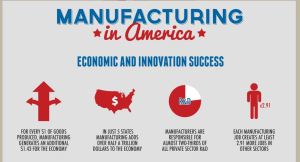








 If you are interested in finding out what’s happening in your trade, there are many trade publications available at no charge to tradespeople of all kinds, if you qualify. If you want to learn about the latest industry trends, read about upcoming trade shows or industry events or see new products available, all you need to do is request a subscription from these trade publications.


 I think with the market changes after 2008 and the rise of social media, that some of the old traditional ways of building relationships were put on the back burner. If your goal is to build lasting relationships with key distribution partners, you might want to consider a distributor council.


