The following is a guest post from Kimberley Laws, a freelance writer and small business owner. She knows firsthand how tough it is to survive in the business world and hopes to use her writing to empower fellow entrepreneurs.
This may be tough to hear, but not everyone is going to love—or even like—your business and the products it offers. In fact, some may come away from your company hurling expletives like Yosemite Sam on crack. And, thanks to social media, these unhappy customers can now share their negative thoughts with a massive on-line audience.
But don’t panic. There is no need to wave the white flag or pull up stakes just yet. With a little know-how and a touch of finesse, you can turn these negative reviews into positives—and win over a new batch of clientele.
There is no need to surrender to bad reviews. You can reclaim your shiny on-line image.
Here is some negative review advice that can help restore your on-line reputation.
Get Acquainted With Social Media.
Many business owners are unfamiliar with the social media tools that are being used against them. How can you respond to a negative tweet on Twitter if you don’t know how to use it? You can’t. That’s why it is important to become adept at using social media platforms. You also need to become knowledgeable about the most popular review sites like Yelp and Angie’s list.
Mastering these internet tools will enable you to respond to unhappy customers and keep on top of future negative reviews.
To tackle negative on-line reviews successfully, you must embrace technology.
You need to respond to negative comments quickly. Ignoring them will make you look like you don’t care, which serves to validate the original complaint. Delaying your response will allow others the chance to pile on further negative reviews—turning the proverbial molehill into Mount Vesuvius.
Don’t Be a “Right Fighter.”
This is not the time to make excuses or argue with an unsatisfied customer. It doesn’t matter who was right or who was wrong. As the owner of the business at fault, you must take full responsibility for what has transpired and apologize. A sincere “I’m sorry” will go a long way to mending the relationship. Plus, it will make you look like a caring professional in the eyes of those watching the exchange.
Who cares who is “right?” All that matters is that you get the complaint resolved.
Image courtesy of http://www.sxc.hu/photo/1095399.
Encourage the Happy People.
Customers seem to be much more motivated to share bad experiences rather than good ones on-line. Let’s face it—humans love to gripe. But it is important that you encourage your happy customers to share their joy as well.
Ask long-time clients to post a positive review. A barrage of positive feedback will make the negatives appear less important to potential clientele.
But never falsify a review. If you have to fabricate positive customer experiences, you have a bigger problem than a simple negative on-line review.
Encourage happy clientele to give you “two thumbs up” on-line.
The best defense against a negative on-line review is, of course, to provide the best customer service possible in the first place. But even the most top-notch service provider can’t please everyone all the time. This is why it is so important that every business owner become well versed in the techniques for handling a bad internet review.
Each month we’ll be featuring a blog post from our friends at MAGNET (Manufacturing Advocacy & Growth Network). MAGNET’s mission is to support, educate and champion manufacturing in Ohio with the goal of transforming the region’s economy into a powerful, global player. You can visit MAGNET online at manufacturingsuccess.org.
By Robert Schmidt, Growth & Innovation Advisor, MAGNET
We need to be innovative—you know, try new things! Building on those that seem to work and quickly eliminating those that don’t work out as we had envisioned.
The proven method I use in this case would be the “Fail Fast, Fail Cheap” (FFFC) method.
How do we go about this? Simply stop spending time and money on developing new processes, products, or marketing messages without trying it out. You want to find out if your concept is a good one? Find out in a fast, easy, and inexpensive way. Bottom line is: The key to fail fast fail cheap is to spend minimum resources to get the concept off the paper (or your mind) and into the application so you can tell if it needs to be changed, destroyed, or finalized.
FFFC follows Demings “Plan, Do, Study, Act” model. In a rapid succession of learning cycles you try out your idea, learn from that experience, modify and try again- all on a shoestring budget. Fast trumps elegant early on.
An example would be to develop a look-alike or “Frankenstein” prototype made from on-hand or commercially available materials. The Frankenstein prototype gathers critical feedback from potential customers/users. Their reactions (likes, dislikes, concerns) help you determine if investing further resources makes sense and guides your step of development. Its much like taking on an entrepreneur mindset, forcing creativity and short time goals due to a limited budget.
Do you have a proven system for testing your new ideas? Let us know!
If you’re an old-time marketer like me, there’s been lots of changes over the past several years as to the alternative ways to reach your targeted audiences. So what do you do so you don’t go the way of the dinosaurs?
I recently read an article in CCO Magazine where they interviewed Brian Kardon, the CMO of Lattice Engines. The interview focused on the making of a modern CMO and what he had to do in order to adjust and thrive in his new environment. Here are some good points he brought up that might help us all:
Get out of your comfort zone – Look at alternative ways to communicate with your potentials. Keep an open mind.
There is no substitute for doing – Jump in and get your hands dirty. The best way of understanding something is by trying it.
Learn from the best – Identify people who are out in front. Those that are risk takers and their passion is contagious.
Don’t fear mistakes – Consider them chances to learn.
Partner with specialists – With all the alternatives out there, hire folks that are good at what they do and then let them do it.
Don’t look back – The things that were successful in the past may not be the best option moving forward.
So I think we can all learn from these pointers if we keep an open mind. I’m finally getting comfortable with most of the new digital and social options available. What I’m not afraid of is asking questions and trying things out. What I found out is I can’t break things like Twitter or SlideShare.
What kinds of challenges are you facing with all these new options?
With the NAED show coming up in May and the ISA show coming up the first part of June, it got me to thinking about trade associations and how they try to get the distributors and manufacturers together so it’s a win-win for everyone.
Most associations are stuck doing things the way they have for years. I wonder if it’s because they’re afraid of change or don’t know how or why to try something different.
Two models that I think work well are the National Association of Electrical Distributors (NAED) and the Industrial Supply Association (ISA). They both have tried different things that seem to be working.
The NAED for years now at their regional meetings have a dance card format that Manufacturers need to get on to get, I believe, 20 minutes with key folks from the distributors they want to talk to. Most manufacturers like this as they know who they’re going to see and can prepare accordingly.
The ISA, a few years back, initiated the FastMatch program in which the manufacturers are in the booth, but set up their dance card with the distributors they want to see. They like to have 20 minute intervals in which to have one-on-one meetings. This year, they are trying, “Take an exhibitor to lunch,” in which the distributors set up a lunch in the hall and invite select manufacturers to lunch. I’ll be curious to see how that works out.
I guess the point I’m trying to make is these associations are trying different things to bring more value to the table.
I’ve put together a quick poll to see what your thoughts are on this. Please take a minute to take and see the results.
Since the social media scene developed many years ago, it’s become cluttered. There are accounts on all social platforms that sit, gathering dust for years. Do any of those accounts belong to you or your company?
Today Rachel Kerstetter, our PR Engineer, is sharing some pointers on how you can spring clean your social media.
When I entered into the realm of public relations with a broad social landscape, I was a little surprised that much of my social media consulting and instruction wasn’t about getting social programs started or operating them, it was a lot of clean up.
It doesn’t take much time to get your social media back on track if you know what to do.
1. Take a look at what you have. How long ago was your last status, tweet, post or picture? Do you have messages or invitations that are waiting to be read? When you look at an old account, try to see where/when things went stale and identify what may have been the cause. Did you have an intern running your social that has since left? Did you “run out” of content or ideas? Do you need help?
2. Check your branding. If anything in your company’s branding has changed, all of your social accounts should reflect that. Get your logos, profile pictures, covers and banners up to date. Make sure that you have a Twitter cover, a LinkedIn banner and a Facebook cover for your company. Use your own company and product names correctly.
3. Is your profile complete? Fill out the boxes with information about your company. Make sure there isn’t a blank spot where an About section should be and make sure that you have links to your website and contact information on there. Here’s what the About Section on Sonnhalter’s Facebook Page looks like:
4. Don’t stand alone. If you only have one person in your company with the Facebook or LinkedIn admin rights or the passwords to your accounts, you’re in for some trouble. What happens if that person leaves your company, takes vacation or falls ill for an extended period of time? You may have one main point person on social media, but always have at least one other person in your organization with social access.
5. Approach the rest of the year with a plan. If you’re having trouble with content, consider setting up a schedule monthly, quarterly or annually with the general topics you want to address on your social media and recruit help if you need it.
You may also be getting overwhelmed on your personal social accounts because your connections are active. Here are just a few tips to save some personal sanity this spring:
Take advantage of lists, circles, etc. to organize your connections into logical groups. That way you can easily check information from one group at a time (or find information you’re looking for).
Change your email preferences so you don’t end the day with 50 Facebook email notifications or opt to receive daily or weekly digests from your LinkedIn groups.
Use your readers. Put all of the blogs you read in one place to minimize jumping around from site to site. We’ve recommended a couple of options in a previous post.
I don’t know why, but in some companies, sales and marketing hardly talk to each other, no less work together. Don’t they realize that they are on the same team? It’s a shame because by working together they can identify, qualify and close more sales. The answer is to open a two-way communication.
Marketing is (or should be) managing the conversations with potentials and helping move them through the sales funnel and then handing them off to sales for the close.
Ironically though, for marketing to move the prospect through, they need to address relevant issues and that’s where sales comes in. This will help build your credibility and hopefully shorten the selling cycle.
Sales are on the streets everyday talking to contractors and distributors. They know what’s keeping them up at night and can bring those issues back to you to develop content around. Sounds logical, doesn’t it?
We all work hard developing content and sometimes forget to spend as much time promoting it. Repackaging and republishing in different ways to drive traffic to your website – these are the driving forces on the internet. Our content is relevant around the world and we need to re-share.
I was reminded recently by an article from ASM, The Association of Strategic Marketing, that there are easy ways to share content. Among them:
Syndication – RSS feeds are the most common way to re-share content. That little button that you put on your site or blog makes it so easy for people to share your content with their group of contacts.
Summarized reports – Group previously published articles to create a report that can be shared by PDF or other downloadable formats.
Social Media – Share on Facebook, LinkedIn, Twitter, Google+
E-mail – Don’t forget about the old standby. Your contacts, both customers and prospects, will welcome good content.
Multi-media – Repurpose into a podcast or video. This media has its own benefits in that we all like to listen and look as opposed to read all the time. Not to mention that YouTube is the second most search engine behind Google.
What are you doing to make sure your content is shared?
I’ve asked Rachel Kerstetter, our PR Engineer, to share some recommendations for moving on without Reader.
If you’re currently using Google Reader to keep your blog and news organized, you’ll need to find another way by July 1st. There are many RSS reader options out there, but here are some options that we recommend.
The built-in WordPress Reader is a pretty good option if you follow only WordPress blogs, which is a popular choice for company blogs. But if you follow nonWordpress blogs or don’t blog using WordPress, this is not a good option.
Feedly is our top pick thatoffers a quick and easy transition of your feeds from Google Reader right to its service. Feedly has an app for both Apple and Android. Their blog has instructions on seamless transitioning here.
BlogLovin’is pretty popular among lifestyle and fashion blogs, but might start growing due to Google shutting down Reader. There is a bloglovin’ app in the Apple App store and they offer a way to import directly from Google Reader before it’s shut down.
Since importing your Reader contacts is really easy on both of these services, you can always test them both out and see what works best for you.
Sonnhalter Makes BtoB Magazine’s “Top Agencies” List for the Fifth Year in a Row
BEREA, Ohio – March 2013 – Sonnhalter, a communications firm marketing to the professional tradesman in the construction, industrial and MRO markets, has been listed by BtoB magazine as one of the top business-to-business agencies in the U.S. for the fifth year in a row.
Sonnhalter is featured in the small agency category in the March 4, 2013 issue of BtoB magazine. Annually, BtoB magazine editors pick the top large, medium, small and interactive agencies that exhibited positive revenue growth, new client wins, innovative work and expanded service capabilities, to compose its top agencies list.
“Many of the top b-to-b agencies registered double-digit growth last year through new clients and organic growth,” executive editor, Kate Maddox wrote in the March 4 edition of BtoB magazine.
“We are pleased to be on the BtoB magazine ‘Top Agencies’ list for another year, making it five in a row,” said Matt Sonnhalter, vision architect at Sonnhalter. “In 2012 we continued working with our great client base and began working with new b-to-b clients in our core B2T niche. The B2T, business-to-tradesmen, a term coined by Sonnhalter, reputation that we’ve built has opened many doors to do award-winning work with companies that market to professional tradesmen.”
About Sonnhalter
Established in 1976, Sonnhalter is the leading B2T marketing communications firm to companies that target professional tradesmen in construction, industrial and MRO markets. Sonnhalter’s brand identity highlights its expertise in marketing to the professional tradesmen. Its tagline, “Not Afraid To Get Our Hands Dirty,” promotes the employees’ willingness to roll up their sleeves and dig deep into clients’ businesses, also, it refers to the market it targets: the tradesmen who work with – and dirty – their hands every day. Sonnhalter developed the acronym “B2T,” which stands for “business-to-tradesmen” to capture the essence of its specialty. Sonnhalter is listed as a BtoB Magazine’s Top Agency for 2013 and has received the honor annually since 2009. For more information, visit the company website at www.Sonnhalter.com or visit the company blog at www.TradesmenInsights.com.
With an 800 lb. gorilla like Amazon, once they come into your playground, things will certainly have to change. Big online giants are not new to this market. We’re used to the Grainger, McMaster Carr and MSC’s of the world. The difference in my mind is that while price is important to them, they are selling more of a convenience. The Amazon model is a bit different and price points are more critical.
AmazonSupply has been up and running for about a year now. I wrote a post last summer and asked how they might be influencing your business. Back then it might have been too early to tell. (I sure would like your input now.) I assume many manufacturers are using them as another outlet for their products. The trends are indicating that the traditional distribution models are declining.
I recently read an article by Scott Benfield in Industrial Supply, Trials and Tribulations of Sales Growth in an AmazonSupply World that outlined the difference and suggested ways traditional distribution can effectively deal with them. According to Scott, it comes down to the way traditional distribution goes to market. He calls it the bundle approach (full service) as opposed to a transactional model with a much lower cost base.
He also recommends strategies moving forward for the “new normal.” In my mind, I’d hate to see the traditional distribution model go away. There’s lots of value in their expertise, but if they are not willing to change, then the future might be dim for some of them.
Manufacturers, what are your thoughts on the different distribution models and where is your sales staff spending their time and efforts? Better yet, what can Associations like ISA do to help their members?
There are several sites out there that help the homeowner find qualified tradesmen. We have a guest post today from LocalTraders and although their focus is on the local trades, some of their ideas are not bad ones for manufacturers to consider as well. Enjoy.
Having an insight into how your competitors work is the key to gaining an advantage in the trade industry, after all with the economy struggling, every advantage counts. Using your competitor may seem like a devious way to boost business but trust me you have to beat your competition in order to reap the rewards. Beating your competition however doesn’t necessarily mean being ruthless, instead making friends and gaining common ground could be your key to success…
Embrace the Competition
Firstly identify your competitors and get to know more about them. Focus on understanding your competitor’s strategy and their target customer; during the analysis, look for similarities and differences between your strategy and theirs. Not only will understanding, embracing and almost making friends (or at least becoming acquainted) with your main competitors mean you can take advantage of parts of their strategy that you may have overlooked but it will also give you an insight and a base to build upwards, developing their principles to take the lead.
The Joint Venture
For many it takes a strong stomach to team up with competitors and purposely share your customer base but partnering up with competitors can mean a mutually beneficial end. A joint venture may mean worrying less about sales but it will serve your customer base with ultimate value and give them the firm impression that they are getting the best possible service meaning a higher chance of future business as well as a very happy customer. An example of a joint venture that is particularly prevalent in the trade industry is the sharing of related services. Your competitor may just offer a slightly different service or the missing link for finishing a job for a client so use each other to profit in the long run and gain customer support.
Learn from Their Mistakes
This is another way to make the right decisions for your company based on your competitor’s experiences so follow them closely and learn from them. One of the main ways you can learn from your competitor is by watching out for price changes and looking out for your ‘window of opportunity’. Many customers will want a more cost-effective deal, especially in these difficult economic times, so be on hand to profit from competitor price increases with the right communication and marketing materials, you may just gain a few more customers!
This article was written by LocalTraders, the market leaders in home improvement solutions. Their easy-to-use enquiry system connects customers looking for high quality services with the local trade professionals who can provide them.
If you’re a manufacturer that either doesn’t use or think social media should be a part of your overall marketing plan, this webinar is for you.
We will discuss why social media is not only relevant but crucial to your overall marketing initiatives. I will be joined by Greg Habermann, COO of SageRock, a digital marketing agency and a strategic partner of ours. We will show you real examples of what manufacturers are doing right and give you tips on how you can too. We’ll focus on YouTube, Slideshare, LinkedIn and Blogs.
When: Tuesday, April 9th at 2PM EST
This webinar is available for viewing on our YouTube channel – click here.
Sonnhalter to Hold Free Webinar Social Media in Manufacturing: Why It Should Matter To You
Social Media in Manufacturing: Why it Should Matter to You
BEREA, Ohio – March 2013 – Sonnhalter, a communications firm marketing to the professional tradesman in the construction, industrial and MRO markets, is hosting a webinar on why social media is crucial to manufacturers. This free, one-hour webinar will be held on Tuesday, April 9 at 2:00 p.m. EDT.
Participants can visit, SocialMediaInManufacturing.notlong.com to register for the “Social Media in Manufacturing: Why it Should Matter to You” webinar. In this presentation, John Sonnhalter, rainmaker journeyman at Sonnhalter, and Greg Habermann, chief operating officer and vice president of SageRock, Inc., will share how social media is an important part of marketing initiatives for manufacturers, along with real examples and tips on how to do social media well featuring various social media platforms including blogs, YouTube, LinkedIn and SlideShare.
“So many in the manufacturing industry either don’t think that social media can help them or don’t know how to make social work for them,” said John Sonnhalter. ”We won’t only tell participants why they should care about social, but we’ll show them real-world examples of good social media use.”
About Sonnhalter
Established in 1976, Sonnhalter is the leading B2T marketing communications firm to companies that target professional tradesmen in construction, industrial and MRO markets. Sonnhalter’s brand identity highlights its expertise in marketing to the professional tradesmen. Its tagline, “Not Afraid To Get Our Hands Dirty,” promotes the employees’ willingness to roll up their sleeves and dig deep into clients’ businesses, also, it refers to the market it targets: the tradesmen who work with – and dirty – their hands every day. Sonnhalter developed the acronym “B2T,” which stands for “business-to-tradesmen” to capture the essence of its specialty. In 2009, 2010, 2011 and 2012, Sonnhalter was named one of BtoB Magazine’s Top Agencies. For more information, visit the company website at www.Sonnhalter.com or visit the company blog at www.TradesmenInsights.com.
About SageRock, Inc.
The Digital Marketing Agency, SageRock, Inc., was founded in 1999 to help clients engage customers across an ever-expanding interactive marketplace. SageRock is a leader in Web marketing, offering search engine optimization, paid search, social media and analytics services. For more information, visit the company website at www.SageRock.com.
You can’t turn around today and not hear the words “content marketing.” You would have thought that someone had discovered the holy grail! Content marketing isn’t anything new, it’s just called something else. There can be arguments for both I suppose, but I feel the primary role of content marketing is to position yourself to have an advantage and sell something!
Why do people do business with you? It probably has something to do with your having something they find useful and need. It also probably has something to do with them finding you helpful, informative and an all-around good guy. They can count on you for troubleshooting or advice on best practices. Now I haven’t mentioned the term content marketing, but don’t you think that’s what you’ve been doing all along? Now they call it something different.
Joe Pulizzi, founder of the Content Marketing Institute and known as the Godfather of Content Marketing, describes it “as a marketing technique of creating and distributing relevant and valuable content to attract, acquire and engage a clearly defined and understood target audience with the objective of driving profitable actions.”
Content Marketing should be helping you in some way to move a prospect down a sales funnel. I’m not saying they need to be hard selling but you need to able to satisfy a need of a prospect in order for them to take the next step. Always answer the question – WIIFM – What’s In It For Me? If a prospect can’t easily answer that question, there will be no next steps.
Chris Brogan, in a guest post on Copyblogger, Why content marketing is not branding, highlights why the end game in any content marketing efforts have to be helping someone make a decision of some kind. He goes on to say that marketing and sales are not evil and that content marketing, if done correctly, will give the advantage in the long run.
What do you think content marketing is and how are you using it?
Manufacturers are trying different ways to get and stay in front of the professional tradesman, and your website is probably one of the first places they will look for info. Is it mobile friendly?
I recently read a post by one of my mentors, Michael Gass, on ways to test your site that I thought I’d share with you. Good info.
In preparation for new business opportunities, it is important that your company’s website be mobile ready.
The number of smartphones in use worldwide has now broken the 1 billion mark, according to Strategy Analytics. Only 15% of companies have a mobile optimized site even though Google estimates that there will be more Web traffic via mobile, than through PCs this year. According to a survey conducted for Compuware, 40% of users have turned to a competitor’s site after a bad mobile experience.
You’ll want prospects to have an easy experience learning about your agency or accessing your agency’s blog content via their mobile device.
Here’s a collection of best practices, white papers and case studies for your review and to help get you started:
There’s nothing like first hand experience so check out your company’s website on your mobile device. Sig Ueland, contributing editor for Practical Ecommerce, pulled together a list of 19 tools for testing your site’s mobile readiness. You can use any of these following 12 for free:
You can make your agency’s website mobile ready until you can create the mobilized version of the site.
If you have a WordPress site, you can use plugins like MobilePress and Mippin which will automatically enable mobile users on your website to access a mobile version of it. Until the mobile version of Fuel Lines has been developed, I’m using another WordPress plugin called WPtouch to mobilize this site. There are also a number of online services such as Mobilize Today that will have your website ready for mobile in a matter of minutes.
When developing new content whether it’s for your blog or website, one of your goals should be to capitalize as much as possible on maximizing your SEO. We all want to grab our fair share and by making a conscious effort to incorporate our key words in everything we do, we’ll have a better chance.
An article by Mike Murray in Content Marketing Institute caught my attention. Mike gives us some good pointers and lots of support sites (mostly free) that we can use to help increase SEO. He’s even created a short checklist for us to reference.
Here are some highlights:
Have I overlooked any key words
Do key words match your business or targets?
New page development – make sure to incorporate your most strategic key words.
Review your site’s analytics to see how people are currently getting there. Are you using some of those key words in your content?
Are you including a call to action? Does the reader easily know what you want them to do?
Look at an internal link strategy that cross links between pages.
Plan your content with a calendar to ensure your key words/phrases are being written about on a regular basis.
Let’s all try to work smarter as we enter a new year.
In the B-to-B world, most sales are not immediate. The longer selling cycles for most industrial/contractor purchases involve more than one person and selling cycles can go from months to years.
So B-to-B marketers need to be patient. I believe Marketing should be the ones who nurture the leads through, and when ready, transition to sales to close the deal.
I think marketing, if the right processes are in place, is in a better position to move them through the process. Effective nurturing is a series of content-relevant info for each stage of the buying process.
Russ Hill from Ultimate Leads calls it the “Transition Zone.” It is the place in time where marketing hands off the lead they so carefully nurtured to sales to close the loop. But in order to do it successfully, you must have a process that everyone is in tune with, and sales needs to make sure to keep info on that lead current in your lead database so we know when a new customer has arrived, from where and what they bought.
B-to-B companies shouldn’t be worried about quantity but quality of leads. According to Albertson Performance Group, quality lead nurturing can lead to 70% more sales. According to them, nurturing will:
decrease selling cycles
increase profit margins
lessen the competition
decrease price pressure
get more referrals
Nurturing is the right way to show ROI on marketing efforts.
One of the biggest challenges for Manufacturers is trying to identify both their customers as well as potentials. It may seem strange to you that most Manufacturers who sell through various distribution channels don’t know who their ultimate customers are.
Distributors as a rule are very protective of “their” customers. Unless you need them to register for a warranty, you need other ways to entice them to give up their contact info. Some of the ways Manufacturers generate names are through trade shows, end-user calls, traditional advertising/PR and social media. You can have customer loyalty and other value-added programs.
The challenge is once you have all of these contacts, what/how do you manage them? That’s where database marketing comes in. This tool can help you segment your audiences into customers, potentials, different markets or applications. Then you can target the message which will increase the potential of folks reading and reacting to it.
Your message to a current user of your product should talk more about applications/performance data while the message to a potential new customer might be more features/benefits of a product or an end-user testimonial from one of their peers.
Your end goal from a customer viewpoint is to build a relationship with them and communicate with them on a regular basis. This will help you in identifying other areas you might help them with, and the more you know about what they do, the better you can offer them ideal solutions to help them.
The bottom line is you’re communicating with them, helping them solve their problems – you are building a customer retention model. If Contractors know, like and trust you, not only will they continue to buy from you, but will become your advocates on the street. They also will be a great source of market intelligence.
Database marketing in my opinion is one of the most important tools in our marketing tool box.
Blah, Blah, Blah. Is this what people hear when you give your 30-second elevator pitch that explains why your firm is different?
Recently I had to identify and vet potential web developers for several major projects for a client. After doing so and narrowing the field to four, we lined up a day for them to present themselves so we could evaluate them at the end of the day while everything was fresh in our minds.
What surprised me is that three out of the four firms used words like synergy, cutting edge, optimize and best practices to describe their business side. What are best practices anyway? When it came to back-end software terms, most of us other than the IT people didn’t have a clue.
The point I’m trying to make is instead of trying to impress people with big words, talk to them like human beings. I wonder if people actually listen to what they’re saying. You just don’t have normal conversations with other folks talking like that.
You want to engage people and to do that you need to act human.
Getting back to my web project. It came down to two firms who differentiated themselves by not talking about themselves, but instead talking about the client’s issues and how they might be able to help. They interacted by acting human. The firm that eventually won the business was because the client felt at ease with them and liked the way they thought about how to solve the problem.
Ironically all four of these firms had the technical competency to do the job, but for some it got lost in the translation.
Think about that next time you’re on a new business pitch. Be yourself, be human. (more…)
We generate leads from more sources today than ever before. So is that the good news or the bad news?The key isn’t necessarily in the number of leads, but the quality. So how do you determine and define them? At the end of the day, all anyone cares about is the sale, right?
Unfortunately all leads aren’t created equal. Depending on the market you’re in, 60-75% of all leads aren’t ready to buy! Note I didn’t say wouldn’t, but not ready. That’s why email is an effective and cost efficient way of moving contractors through the funnel.
There are several thing you as a manufacturer need to consider:
Some of your audience don’t know who you are.
Some may know who you are but have never done business with you.
If you’re introducing a new product that the industry has never had, there needs to be a learning curve in most cases before someone will try it.
If your product is similar to something others already make and has industry acceptance, you have a chance of someone trying yours.
For bigger, more complex sales, it takes longer to move the prospect through the sales funnel.
Let’s take an example of a contractor. I don’t care if he’s a general, plumbing, HVAC or landscaping contractor as their work lives pretty much run in parallel paths. If they are using day-to-day materials to do a job, they are more prone to try something from another manufacturer.
But if it’s a major piece of equipment like a diagnostic camera, snow plow or other major piece of equipment that they use on a regular basis, they need to consider options before buying. Now let’s consider a few things on a major piece of new equipment.
Chances are, if it’s a replacement for an existing piece that’s 5-7 years old or older, the technology probably has changed dramatically and they will need to go through several steps to get them far enough down the sales funnel to turn the lead over to sales.
Here are some steps he might take:
Collect info on your product as well as competitive ones
Review features and benefits
Read customer testimonials on how well your product works
Consider asking for a demo
So where in these steps do you think we should get the sales force involved? If you get them involved before the demo stage, you’re wasting their time. The first 3 steps can be handled via emails.
Remember, salesmen want the sale now and don’t have the patience to nurture the lead along. That’s why marketing should take the lead in identifying and taking them through the sales funnel before handing them off to sales, and email marketing is an ideal way to communicate with the contractor and professional tradesmen. Think about this. If we can hand off a lead that’s ready to buy, don’t you think the sales staff will start taking the marketing department seriously? One of my biggest challenges is to get sales and marketing to work together.
Does lead nurturing make sense to you? Would it surprise you to learn that up to 70% of companies don’t have lead nurturing processes in place. It amazes me that companies spend tons of money getting a lead and virtually nothing on nurturing it.
Many manufacturers have capital goods that have long selling cycles. Most I think would welcome ways to pull buyers forward in the sales process via lead nurturing.
It’s an easy read and what I liked about it was it not only showed you what/how you need to do to engage the potential customer, but it also shows you a different way of looking at your company from the inside.
Even though prospects are more informed now than ever, so are their problems. They are looking for solutions not sales pitches. She shows you how to attract more prospects into your pipeline and then nurture them through the sales process (once you’ve figured it out). Instead of pushing what you have to sell, you need to be pushing the value you bring to the table. What you bring to the party must be relevant.
Cleveland-area agency earns awards for integrated marketing campaign and market-focused product guides.
BEREA, Ohio – January 2013 – Sonnhalter, a communications firm marketing to the professional tradesman in the construction, industrial and MRO markets, received two Silver Davey Awards in the integrated campaign: business-to-business and print collateral categories.
The Davey Awards honor the finest creative work from small firms, agencies and companies worldwide. The Davey Awards are named after King David who defeated the giant Goliath with a big idea and a little rock. The story resembles what small firms do each year by deriving strength from big ideas instead of big budgets.
Sonnhalter developed market-focused product guides for its client, Osborn, who is the world’s leading supplier of surface treatment solutions and high-quality finishing tools. The product guides help Osborn’s customers in the motor-driven vehicles, primary metals and welding markets navigate the best products for their applications.
“We recently started working with Sonnhalter and they stepped in as a key part of our team, producing quality material for us, including these product guides,” said Jeff Naymik, marketing manager at Osborn.
Sonnhalter also earned a silver Davey award for its 2012 self-promotion campaign. The integrated campaign focused on reinforcing the agency’s brand identity and increasing its visibility in the market. Focusing on the question, “Is your current agency dirty?” the campaign communicated the agency’s B2T, business-to-tradesmen, marketing niche as well as how Sonnhalter’s team isn’t afraid to get their hands dirty by digging into, and understanding, their clients’ industries.
“At Sonnhalter, we’re proud of how well we know our clients’ industries and can dig into their work,” said Matt Sonnhalter, vision architect at Sonnhalter. “These two awards are encouragement to keep doing what we’re doing.”
About Sonnhalter
Established in 1976, Sonnhalter is the leading B2T marketing communications firm to companies that target professional tradesmen in construction, industrial and MRO markets. Sonnhalter’s brand identity highlights its expertise in marketing to the professional tradesmen. Its tagline, “Not Afraid To Get Our Hands Dirty,” promotes the employees’ willingness to roll up their sleeves and dig deep into clients’ businesses, also, it refers to the market it targets: the tradesmen who work with – and dirty – their hands every day. Sonnhalter developed the acronym “B2T,” which stands for “business-to-tradesmen” to capture the essence of its specialty. In 2009, 2010, 2011 and 2012, Sonnhalter was named one of BtoB Magazine’s Top Agencies. For more information, visit the company website at www.Sonnhalter.com or visit the company blog at www.TradesmenInsights.com.
About The Davey Awards
The Davey Awards honor the “Davids” of creativity, the smaller agencies, companies, or organizations with annual billings or revenues below certain levels. Each year, The Davey Awards honor winners who derive their strength from big ideas, rather than big budgets.
The Davey Awards are judged by the International Academy of the Visual Arts, an invitation-only organization consisting of top-tier media, advertising, and marketing professionals from the world’s leading organizations and firms. For more information about the Davey Awards, visit www.daveyawards.com.
About Osborn
Osborn is the world’s leading supplier of surface treatment solutions and high-quality finishing tools for hundreds of industrial and commercial applications such as metal finishing, honing and surface polishing. Celebrating its 125th anniversary in 2012, Osborn now includes operations in 15 countries and serves customers in more than 100 countries. A unit of Jason Inc., Osborn carries more than 10,000 standard products and more than 100,000 customized solutions to serve a diverse of group customers and industries. For more information, visit www.Osborn.com.
So you finally got in the social media game and you’re trying to make your mark. With all the clutter and noise out there, you need to differentiate yourself (branding) and engage your potential customers. Let’s work smart and not hard.
Here are 3 tips to help you break through the clutter:
Be proactive – don’t just write posts. Locate where your potential customers hang out. Listen to what they’re saying about your company and products. What pain points are they talking about and how can you help them address those issues?
Train your employees – Social is a new marketing tool and we can’t assume that they know what your focus is for social or what their responsibilities are. They all need to be on the same page and there should be guidelines set up so everyone knows what their roles should be, the processes that are in place, and if a crisis occurs, the steps necessary to address them.
Develop a social media engagement schedule – if you have identified an audience like the professional tradesmen you need to know when they are active on social so you have a better opportunity to engage them. When you do, make sure someone who is knowledgeable on your product or service is available to answer their inquiries. Don’t let a low-level person who isn’t up to speed on your products be your spokesperson.
The bottom line for all of this is to drive more sales, and social media is just one more way of identifying and engaging new prospects.
Yeah, I know I’m a little late out of the gate with these, but I think some of these are worth rereading and some of you might have missed them the first time around.
For those of you who plan on attending the AHR Expo later this month in Dallas, we’ve created a guide to get you around the town during your free time and to entertain those important customers.
The guide includes recommendations from our friends who live and work in Dallas on the best restaurants, night life and sightseeing. We’ve even included phone numbers of taxi companies just in case you don’t want to drive.
We hope you have a great show and hope to see you either at the convention center or one of the establishments listed in the guide.
You may have some of the best content in the world, but if no one reads it, what’s the point? I recently read a post by Heidi Cohen, 13 Ways to Maximize Content Marketing Effectiveness that got me to thinking about getting back to the basics and making the effort of writing posts to pay off.
Here are some thoughts:
Come up with a strong headline – we have less than 3 seconds to capture attention. Make your headline make the reader stop.
Use images – a picture or graphic is worth its weight in gold. We are a visual society and the right image will help keep the reader on the page.
Get to the point – now that you’ve captured their attention, dive into the meat of what you want to say at the beginning.
You don’t have to have all the answers – link to relevant content. It reinforces the point that others share your point of view.
Get them to react – we need to add a call-to-action or ask for comments to get the readers involved. If they share the same opinion on the subject, I’m sure they would have something to contribute to the conversation.
Those are my thoughts. I’d like to hear what you’re doing to get more readership.
Now that the holidays are behind us and we’re all getting back to reality, I thought I’d share some thoughts on what we’re going to do to create better content this year. I was inspired by a post my friend Joe Pulizzi wrote, 42 Content Marketing Ideas for 2013. Thanks Joe for the inspiration!
Top 10 things I’m going to try to do this year to have better content:
Less content will mean more impact – make content more meaningful.
Find at least 3 other thought leaders in your company – build them into your plan.
Develop a list of the top 100 questions coming from your customers – then write to them.
Sit down with every salesperson and ask them what their customers biggest pain points are – then address them.
Define your most targeted audienceand consider doing a targeted print publication.
Assign someone to slide share to figure out how we can get the most out of it.
Make sure every content marketing landing page has only one call to action.
Develop a series of stories for your industry on an aspect no one has covered before – what better way of becoming a thought leader.
Double the number of email subscribers to your blog.
Commission a piece of research that is important to your audience.
Those are going to be my goals for 2013; what are yours?
I know we’re all faced with many challenges in our daily grind, but if you had to name just one thing that keeps nagging at you from a marketing angle, what would it be?
One of my biggest challenges is to keep up with our social media activities. Even though I’ve been doing it now for almost 3 years, it’s labor intensive and I always seem to run out of time even after I’ve delegated some of the activities off to other associates.
Sometimes it’s better to slow down and remember some of the basics like talking face-to-face to your customers. You get so much more from a one-on-one conversation, but we normally don’t have time to do that.
SlideShare is gaining traction more and more and it’s not just for slides. SlideShare is averaging over 60 million visits a month and 120 million page views. That means great traction for your SEO and you can target buyers/influencers via tags and channels (customize content).You can also use it for lead generation and there’s a great post in social media examiner,how to generate leads with slideshare that you may find interesting
It’s now owned by LinkedIn and they are doing a great job making it easy to connect with your LinkedIn contacts and groups.
So if SlideShare is becoming so important, we should start paying attention to the details on what and how things should be put up there. I recently read an article by Roger C. Parker in the Content Marketing Institute’s daily updates on a to-do check list (you can download it here) to make sure you’re getting the most out of SlideShare.
He outlines 22 tips on proofing, uploading files and even tips on working with PowerPoint. Here are a few of his points that hit home with me:
Are slide titles and text consistently placed and aligned?
Other than the title slide, are they numbered?
Does your presentation title appear at the top of each page?
Did you add your firm’s name, URL and contact info at the bottom of each page of your handouts?
Did you convert presentation files to Adobe Acrobat to preserve text formatting?
Did you check each link after uploading to make sure they work?
Did you create links between SlideShare and social media sites like LinkedIn and Twitter?
I guess the point is the devil is in the details and if we all take some time, we’ll get more out of our efforts on SlideShare. Roger suggested if you want to learn more you could read The Marketer’s Guide to SlideShare by Todd Wheatlan.
I know there’s been lots of discussions on the pros and cons of buying groups over the years, and I’m not here to try to sway you one way or the other.
I recently came back from STAFDA, which for those who don’t know, is an association of construction distributors and the manufacturers that sell into that market. What struck me at the trade show part of the event was it was obvious which manufacturers didn’t belong to a group. You saw plenty of Evergreen, Sphere 1 and NetPlus badges there, but they were concentrating mostly on seeing the manufacturing members of their respective groups. (I’m using STAFDA as an example and I’m not trying to pick on them.)
So my question is for those who don’t belong to a group (and don’t have a unique product), how do you justify going to one of these meetings? Should the association try to incentivize distributors to stop by new member booths? I feel sorry for those folks who ponied up the cash but not very many distributors stopped by.
Another interesting issue is that most of these buying groups have their own annual meetings and some are incorporating trade shows along with these get-togethers. From a manufacturing point of view, which shows do you go to? Obviously it’s the ones where you get the most bang for your buck.
Associations/buying groups may want to look at their model as things have changed over the past several years. They need to ask about the value proposition of getting these distributors and manufacturers together. Instead of trade shows (whoever introduces a new product at one of these), maybe there should be a series of round table discussions on how to improve the supply chain for everyone involved.
There are some really smart people out there (on both sides), and I believe a lot more could come out of these kinds of meetings and they could include all members.
Any of you belong to other type groups that have changed the model? I’d like to hear from you.
Podcasts are a very popular medium today and rightfully so. Podcasts can add another dimension to your audience as they can hear the voice behind the words.
You can also put them on iTunes which can give you access to more potential customers who are searching for info on key subjects by key words or phrases. Don’t be obsessed with the number of people who listen to your podcast but more on the quality of them.
There are several ways that you can use podcasts to get to the professional tradesmen. Here are a few to consider:
You initiate them. You can talk about issues affecting the tradesmen and possible solutions they could consider.
You can interview industry experts or association leaders that can talk about everything from legislative issues that might relate to your business in the future, or talk about things you can do now to improve your business.
Be a guest on someone else’s podcast. There are bloggers out there that target the same types of audiences you do. Follow them for a while, and if you determine it would be a good fit, contact the blogger and ask if they would consider doing a podcast with you. You’ll need to lay out the reasons why you think you can contribute to their audience and propose several topics for discussions. Don’t know any bloggers? Go to iTunes and type in under podcasts some of the key words that you are associated with. You’d be surprised at the number of podcasts that already exist. Listen to a few and contact the originator.
Podcasts help set you apart and be known as not only an industry leader, but if you do your own podcasts and get guests to interview, it will also show that you are wired to the right people who can give a different view or experience that will help your listener. It’s a win-win for everyone.
Now that the election is over, I’d like to see what you are anticipating 2013 to be like. I know a lot of you were waiting to see the election results, and they are what they are and we need to deal with the fiscal cliff, Obamacare and more.
I know we’re looking at a pretty fair year coming up. Most of our manufacturing clients have been doing well over the past 18 months, and those that are tied to the construction industry (especially housing) have positive signs that that segment is coming back.
I’d like to know what your thoughts are for 2013. Is it going to be a good, poor or flat year for you? Would you mind clicking on this quick survey and giving us your answer?
No matter what business we’re in, we’re all in the communicating business. I think sometimes we get so caught up in the day-to-day that we forget some simple pointers.
Today we have a guest post by Ryan Franklin, a small business blogger and marketer who writes on behalf of Ordoro. He points out the obvious but sometimes we need to be reminded.
Did you know that the golden rule applies to business, too? That is, treat clients how you would like to be treated. How do you expect to be treated when you have to call into a supplier with a customer service issue? That is how firms and tradesmen expect to be treated when they contact your company. So here are a few key points to communicate with those customers effectively.
Listen to your client. You may be hearing what your customer has to say, but are you listening? Active listening is an essential part to communicating with customers effectively. There is nothing worse than getting on the phone with a service provider to explain your issue with their product or service and realizing that the rep is just not listening – causing you to repeat everything you just said! Pay attention to what your clients are saying; picking up on keywords can assist you in directing the conversation to address the problem.
Do not interrupt your client. Another step to communicating with clients effectively is to avoid interruptions. The last thing your client wants is to be cut off mid-sentence. Show them respect by letting them have a fair chance to speak, and then address the issue carefully. If a client has a complicated issue or is upset about something, it can be helpful to repeat the situation back to them to show that you understand. This is plain common courtesy and good customer service, and clients will appreciate your willingness to listen.
Smile. This may seem a bit ridiculous when you are making calls on the telephone, but this point still applies. Call center representatives across the nation are taught to smile when they speak because it conveys a friendly demeanor between the rep and the customer. How do you feel when you clearly reach a customer service representative that obviously does not want to be at work that day? Customer service agents should always smile and make the customer feel like they care. This will ensure return customers and high client satisfaction.
Make small talk. Avoid dead air even if you are researching an issue for the customer. If you must put a client on hold, be diligent in checking back with them every 60-80 seconds. Even a minute can feel like an eternity when you are placed on hold. Every customer feels like their issue is of great importance and that’s how you should make them feel. Without your clients, you don’t have a job; treat each one of them like they are the only one you have. At that moment, they are.
Again, communicating with customers can be as simple as treating them as you would want to be treated. Train your representatives to think the same way.
Content Marketing is developing useful information to various questions a potential customer might have about your product or application. When someone goes to Google and types in a question, hopefully you already have an answer waiting on page 1 of the search results.
If not, you’ll be missing a big opportunity. If you haven’t capitalized on things like case studies, white papers, newsletters and blogging, you should consider trying some of them. They are content rich and will help you gain credibility.
So the question arises, what do I write about or how do I know what they want? Here’s a way to start. Ask your sales force, customer service, engineering and product management what are the top 10 issues you continually get asked. That should be a start.
Ask the question on some of your social media sites, like groups on LinkedIn. You might be surprised at the feedback you get. If you have the opportunity to visit customers or go to trade shows, ask the same type of questions. Then when you have all the questions, answer them!
The key to content marketing is how you present your info. Storytelling is one of the best ways.
We spend money generating leads, but most of us do a poor job when it comes to leading them through the sales funnel since not all leads are ready to buy. I think we would all agree that if we had a process, chances are we would increase the number of leads that turn into new business.
According to Forrester Research, companies that excel in lead nurturing generate 50% more sales-ready leads at 33% of the cost. This is especially true when it comes to dealing with social media leads. How is your marketing department handing off leads?
What is Lead Nurturing?
Lead nurturing is how your business establishes a relationship with a prospect that is still in the early stages of buying. This type of campaign focuses on creating a beneficial, working relationship so that when it comes time to buy, that lead turns to your business instead of someone else. Lead nurturing is:
Providing high-quality content that is relevant to where the potential is in the buying cycle
Establishing and building trust between you and the potential customer
Finding the most-qualified leads from your generation efforts
Does everyone within your organization understand your different stages in the selling cycle? Most sales funnels were set up for developing traditional leads. A question you must ask yourself is whether social media leads fit into your existing process and if so where? As a rule, social media leads take longer to convert because they are engaging you earlier in the process. How are you moving social media leads into your sales funnel?
Nurturing social leads needs to be handled differently. This will include decision-making content designed to answer questions, overcome objections and provide opportunities that arise during the purchasing process.
So take some time to identify and implement a lead follow-up process that includes nurturing. You’ll be glad you did.
It’s a pretty simple statement. It applies in our personal life as well as our business one. I was thinking about this statement, not only how it might relate to social media, but more importantly to everything we do.
Think about the people you deal with on a regular basis. What kind of reaction do you have when salesmen are always selling and not necessarily listening?
I don’t know about you, but I either try to avoid them or spend as little time as necessary with them. On the other hand, who do you like being around? It’s probably someone who listens not only about your work issues but also gets to know something about you, your family and what’s going on in your life.
These types of folks aren’t always looking for a sale. As a matter of a fact, they are probably trying to find out how they might be able to help you. Novel thought! You probably build relationships with these types of people.
Then why is it that lots of people who use social media for business are always pitching and not listening?Aren’t you trying to get someone to react to what you post online?
Don’t you think that by helping people by answering questions on what keeps them up at night would be a better way to engage folks in a conversation instead of telling them five reasons they should buy from you?
Stop pitching and start helping! If you can answer questions or give guidance on how to solve a problem, I guarantee you will start way more conversations online.
According to a recent post from B2B online marketing, LinkedIn, Blogging and Facebook are the top 3. This is according to a 2012 social media study of B2B marketers that were asked to choose the most important method they use for social media outreach.
In a study conducted by Social Media Examiner of over 1,900 B2B marketers, results indicate that while B2B marketers are finding success in their social media efforts, they still see room for improvement. Whether you’re a large company or starting a small business, here are a few statistics that show why you should be using social media.
Over 56% of B2B marketers acquired new business partnerships through social media.
53% of B2B marketers found social media helped them develop a loyal fan base.
Nearly 60% of B2B marketers saw improved search rankings from their social efforts.
Each social media channel is different and should be approached that way. Here are some highlights from the post:
Facebook is more personal. Let them know what your business offers them.
Create an online community that encourages conversations.
Use photos and videos to make it more interesting.
Engage by offering a strong call to action. You want them to start a conversation.
Blogging is a great SEO effort and link building.
Become a thought leader in your area and gain credibility.
Target each post to a specific audience for engagement and encourage folks to share your content.
Use strong key words to improve site’s performance on search engines.
LinkedIn is a great way to connect with other businesses in your industries.
Be active. Search and connect with individuals and groups that are relevant to you.
Ask for recommendations from previous and current customers. These short testimonials will help prospects see why people like working with you.
Social media, if used right, can help generate leads, interact with customers and potentials and help you build your thought leadership.
Branding is no longer a company logo, tagline and brand colors. Yes, it helps people identify with your company, but it doesn’t necessarily make them want to buy from you. Branding isn’t something that happens overnight. The essence of branding lies in what does it mean. So words play an important part in establishing a brand, and what better way to do that than by creating content.
Joe Pulizzi, founder of the Content Marketing Institute and known as the Godfather of Content Marketing, describes it “as a marketing technique of creating and distributing relevant and valuable content to attract, acquire and engage a clearly defined and understood target audience with the objective of driving profitable actions.” Does that sound like something we should be doing?
Eric Schmidt, CEO of Google says every two days we create more information as we did from the dawn of civilization up to 2003. We need to create and convince customers and prospects to generate content that mentions our brand.
Frank Strong in a recent post on CopyBlogger talks about the web and its endless 24/7 cycle fed by content and social actions. Shouldn’t you be a part of that?
Here are some things to think about:
Content is Currency – How are we spending ours? How much do we have to spend?
You currency becomes more valuable every time it’s shared by someone other than ourselves.
Your responsibility is to create content that’s worth sharing.
So take advantage of the tools that are out there, from blogs to LinkedIn, YouTube, webinars and the multitude of other options available to you.
Come on now, let’s be honest here. You got into social media maybe because you thought it might help your business overall, but maybe you got into it because everyone else was doing it and you didn’t want to be left out.
No matter why you got into it, many B-to-B companies are getting a big F in social media and they can’t figure out why. Social media isn’t a silver bullet, it’s not a stand-alone tactic, it’s something that should be used in conjunction with your other marketing tools.
In order to use social media, you also need to understand how and why to communicate using this media. Traditional feature/benefit, “how great we are” copy won’t work in this arena. Your customers/contractors are looking at ways to solve their problem, not get a sales pitch. They are going to Google it…” How to troubleshoot a specific plumbing problem?” If you want any chance of getting in front of that person, you had better written content and have it tagged properly with the right key words if you want to have a chance of being on the first page of the search results.
Lack of content – The more valuable content you have up there, the better your chances of success.
Focus on lead generation – Not number of followers or clicks. Leads turn into sales and isn’t that our end game?
Get management to buy-in – To do social media right it takes time and talent, and if you can get support from the C suite, you’re paddling upstream.
Identify your target audience – If you can’t do this, then how will you be able to find out what their critical issues are?
Don’t be boring. Make your communications exciting – Give them “HOLY COW” content.
Improve your website – You could be doing everything right in social media, but if where you’re sending them sucks, then you’ve lost all the momentum and credibility you’ve worked so hard to establish.
Learn from your mistakes and go out there and kick some butts!
Social media is transforming to be more visual and ultimately more mobile-friendly. LinkedIn recently introduced some changes to improve the overall Company Page experience and made it easier to interact with your connections.
I’ve asked Rachel Kerstetter, our PR Engineer, to give our readers an overview of LinkedIn’s changes and how you can take advantage of them.
Facebook started the wave of change by introducing timeline for brand pages and eventually individual profiles. Now, in the same short span of time, Twitter introduced a cover image and LinkedIn overhauled its company pages to be more visual and mobile-friendly.
Just as Facebook pushed all of its brand pages to timeline by a certain date, LinkedIn has a deadline of November 30th for all company profiles to have the new format.
Here are a few of the main changes that you should be aware of if you control a LinkedIn Company Profile:
Banner image at the top of company pages. Mimicking the Facebook cover photo, LinkedIn’s banner image gives you the opportunity to show off some personality for your company. This image should be 974 x 240 pixels; many companies that have already uploaded banner images have incorporated not only their branding but some of their corporate culture and a few have used it to highlight products or services. LinkedIn gives you the option to make this banner clickable to take people to your company’s website.
Career section. LinkedIn has highlighted the career section of company pages, making it easier for businesses looking for new talent to showcase opportunities.
Refined company information. The overhaul makes communicating about your company cleaner and hopefully more effective. The About section is now shorter, but you can post more links to send people to your blog or other social media as well as your company website. Products and services are more visible in the side bar, drawing attention with visuals. A custom company module gives you a place to showcase your company culture, awards, events or other information.
Better visibility. Updates from your company are now front and center on your company page and LinkedIn has updated their stream, so your company information is more visible overall.
LinkedIn is also rolling out changes to individual profiles:
You can now endorse others for their skills or be endorsed. Recommendations are still very powerful, but to show that a colleague or partner is particularly skilled in a certain area, you can now endorse individual skills. Your list of skills has been turned into a list of buttons, but if you have a wordy skill description, it will be cut off and there isn’t a way for your connections to see the entire skill, so take a look and shorten your skill descriptions if needed.
Mouse over a skill and click to endorse it
Profiles will also get a new look, without any action needed from you. I requested to be switched to the new design early, here’s a brief snapshot of what my profile looks like now:
To preview more of the new individual profiles and request to switch early too, check out LinkedIn’s blog.
Mobile is a hot topic, and I thought that a practical view from someone who is dealing with contractors on a daily basis would be beneficial. Fred Ode is CEO/Chairman of Foundation Software, and they are the leading accounting software for contractors. Fred has written several articles and is known for his insight into this market. Here are some practical ways contractors should be using mobile. Enjoy.
Stop where you are right now and look around. I bet there are at least two mobile devices in your vicinity. Depending on where you are—say a crowded street—there may be even more! This is the Mobile Age and many industries, including construction, are using this technology to improve their work processes.
So what types of mobile applications could benefit your construction business? One is a remote timecard entry.
Remote Timecard Entry
Contractors can now utilize remote timecard entry applications to streamline the flow of timecard and job data between the field and the office. Some other benefits of a remote timecard entry system are:
Less Double Entry, Fewer Errors. By entering time in the field, contractors can eliminate handwritten timecards (and the difficulty that comes with reading them!) Time is entered directly from the field in a digital format just once, and is then synced back to the office.
Data Defaults. Many apps have dropdown fields that already contain information pulled directly from the company’s accounting software like employee names, job codes, and more.
Multiple Timecard Formats. A good remote timecard entry app will offer multiple timecard formats, including single and group timecard options.
Benefits of Mobile Applications
When it comes down to it, the ultimate goal of any mobile app is to help contractors improve their processes across the board. Some of the benefits include:
Better Communication. Mobile devices can greatly improve communication between crew members. Workers on a large job site can instantly send one another updates, pictures and more.
Improved Workflow and Real-time Data. Along with communication, mobile devices also offer improved workflow and real-time data. Because communication is instant, there’s no waiting around to see if requests were approved or if the next steps can be taken.
Offline Capability. Some apps are equipped with offline capability, allowing contractors working in remote job locations to enter timecards, save them, and sync back to the office once they re-enter their service area.
Electronic Trail of Data. Using mobile applications also creates an electronic trail of data that contractors can reference at any time. Whether it’s solving an issue while a job is still active, or looking back at past jobs to better plan for future ones, the ability to save and learn from past data can only be beneficial.
Making the Move to Mobile
Remote timecard entry is just one of many helpful applications available to contractors. So where to begin with making a move into mobile? Start with a clear goal and thorough research. Find the options that will benefit the company and that have all the features they need. And don’t forget to get the end-users on board before starting the implementation process!
The correct answer in my mind is today. We all get caught up in the day-to-day to do list and putting out the most recent fire, but we should be aware of our brand daily.
Branding is about your whole organization, from the way you answer the phones, to the attitudes of your CSRs. It’s about a culture, things that are out of the control of the marketing department. Yes, marketing can control the look and feel of promotional materials, but once we’ve hooked a prospect, what happens when they contact the company and actually talk to a human being?
For those of you who are still getting your feet wet in social media, here’s a book that will help you get started. It’s called Content Rules by Ann Handley and C.C. Chapman.
It gives you insights on how to create blogs, podcasts, videos, e-books and more. It’s an easy read and they break down the book into three sections – content, how-to section and examples of success stories.
If a picture is worth a million words, then what’s a video worth?
B-to-B marketers are finally coming to realize that video is an important marketing tool. What some don’t realize is that putting it on your website may not be the best place to house it. Video should be housed somewhere like YouTube. From a branding perspective, start your own channel on YouTube. I don’t know a manufacturer that couldn’t take advantage of this marketing tool.
Here are some interesting stats:
Next to Google, YouTube is the next highest used search engine.
YouTube has 30 million daily active users. There are 500 hours worth of video being uploaded every minute.
Google says that an indexed video stands a 50-time greater chance of ranking on the first page of search than a textual page.
Video rates have 400% higher engagement than a static site.
Anyone can get into the video game today. You can buy a good camera for around $300 and there is editing suite software available that almost anyone can use.
Here are just a few of the ways that video can be effectively used for B2B business challenges:
Boost Awareness, Visibility and Reach
Customer Education with Product/Service Demos and Training
Build Trust with Customer Testimonials/Case Studies
Boost Engagement (keep attention on your message)
Lead Generation: Drive Interest and Boost Leads
Change Management: Leverage Video to Persuade and Motivate
Call to Action: Engage Emotion – Demonstrate Value – Create Interest – Drive Action
Branding: Craft a Consistent Message for a 24/7 Global Audience
So if you haven’t taken advantage of video, you should give it a try to see what kind of new activity will come your way.
Depending on what industry you’re in, the rule of thumb is that it takes anywhere from 5-9 times more effort to get a new customer than to keep an existing one. So why don’t we spend more time nurturing the ones we have?
We’re all guilty of taking customers for granted sometimes. I read an article on marketingprofs.com, The 7 Ps of Customer Retention that I thought was appropriate. Here are some highlights:
People – It’s about building relationships. Treat your customer as a person.
Product – Make sure your product is up to what you promised it would be.
Place – How does a customer communicate with you? Make it easy.
Price – You need to take care and give them a good price. They expect you to take care of them.
Promotions – Since they are already your customers, you know what they are buying and can make suggestions for other potential products/services they may be interested in.
Processes – Customer surveys, social media monitoring and customer engagement tools to understand how each customer is engaging with you.
Positioning – Know who you are and clearly communicate that to your customers. Keep the message simple and to the point.
Those are some suggestions on how to keep your current customers happy.
What surprised me in this world of “Post PC Era” where mobile seems to be taking over the world, that the old standbys of direct mail and emails are still alive and well.
Email is by far the most acceptable due in part to the channel’s familiarity, flexibility and universality with 91% using it on a daily basis. The key to success today is audience segmentation, data-driven insights and relevant content.
Direct mail – in an online world, the fact that 65% of consumers have made purchases as a result of a direct mail piece validates the channel. Interestingly, direct mail is the only unsolicited message that isn’t viewed as inappropriate by consumers.
So from a B-to-B point of view, what are you doing to capitalize on these two channels?
Here are some tips:
Keep your message targeted and to the point.
Give them a solution to a problem and don’t necessarily try to sell them something.
Use a list that is focused. More is not necessarily better.
Make an offer clear.
Give them an easy way to respond.
Those are some suggestions from me. What are you doing to capitalize on these two channels?
BEREA, Ohio – October 2012 – The Viega ProPress® for stainless product launch received a B2 Award of Excellence from the Business Marketing Association in the Multi-Channel Lead Generation category.
The B2 Awards are an international business-to-business marketing and communications contest that recognizes excellence among top agencies and corporate marketers. Sonnhalter, a communication firm marketing to the professional tradesman in the construction, industrial and MRO markets, enters award-worthy work, such as the Viega ProPress for stainless product launch, in marketing communication contests.
Viega ProPress for stainless steel is a pipe-joining system that uses press fittings to make air- and water-tight connections in the piping. The system is comprised of stainless steel pipe, valves and fittings in sizes up to 4 inches and makes secure connections in as few as seven seconds compared to more than an hour for some traditional pipe joining methods. For the product launch, Sonnhalter and Viega created a plan for promoting the system as the future in pipe joining and developed several elements including print and electronic communication in trade publications, brochures, direct mail, a micro site and a comprehensive public relations plan.
“We were thrilled to receive the B2 Award of Excellence,” said Adina Barnes, director of market intelligence for Viega. “We’re proud to be recognized amongst the ranks of so many excellent campaigns.”
“We enjoyed working on this campaign,” said Matt Sonnhalter, vision architect at Sonnhalter. “Not only was it a fun project, the results of the product launch proved that it was award-winning caliber.”
A panel of senior-level marketers judged more than 800 entries for the 2012 B2 Awards and selected the Viega ProPress for stainless product launch to receive an Award of Excellence.
About Viega
Founded in 1899, Viega manufactures and distributes the highest quality plumbing, heating and pipe joining products in the world. With innovative systems like copper and stainless ProPress®, ProRadiant™ and PureFlow®, Viega is the global leader in residential, commercial and industrial piping applications. www.viega.com
About Sonnhalter
Established in 1976, Sonnhalter is the leading B2T marketing communications firm to companies that target professional tradesmen in construction, industrial and MRO markets. Sonnhalter’s brand identity highlights its expertise in marketing to the professional tradesmen. Its tagline, “Not Afraid To Get Our Hands Dirty,” promotes the employees’ willingness to roll up their sleeves and dig deep into clients’ businesses, also, it refers to the market it targets: the tradesmen who work with – and dirty – their hands every day. Sonnhalter developed the acronym “B2T,” which stands for “business-to-tradesmen” to capture the essence of its specialty. In 2009, 2010, 2011 and 2012, Sonnhalter was named one of BtoB Magazine’s Top Agencies. For more information, visit the company website at www.Sonnhalter.com or visit the company blog at www.TradesmenInsights.com.
About The B2 Awards
The Business Marketing Association’s B2 Awards recognize the work business marketers and agencies do to engage employees, sales forces, channel partners, government and consumers. Each year, hundreds of entries are judged by a panel of senior corporate marketers and B2B agency executives on the successful balance of style and results.
We’re so focused sometimes on our traditional ways of promoting our products that we sometime overlook the obvious. Today we have a guest post from Jeff Drust, VP Marketing at CDS (Catalog Data Solutions). CDS is a leading provider of software for product search, configuration and online CAD solutions. Enjoy.
Marketing organizations need to continually come up with new ways to get in front of the ever evolving selection and buying process. Industrial part and component suppliers can now do this in a more efficient way; realign their selling processes with the new buying process and turn it to their advantage with a new content type – CAD downloads like Brennan Industries.
CAD downloads as a type of marketing content, are both highly relevant and valuable to both parties. Industrial suppliers offering CAD downloads of their components (e.g. bearings) or engineered products (e.g. motors) create multiple benefits:
Adapt and exploit the new online world. Today, industrial suppliers’ websites are frontline sales tools that must help customers quickly find the ‘right’ product and conveniently save designers’ time when they spec your parts into their new designs ahead of the traditional buying process.
Increase sales. CAD models are the only type of online marketing content (e.g. white papers, case studies, brochures, videos, demos, recorded webinars, reviews, etc.) I’ve heard of leading to a sale nearly 50% of the time they’re downloaded!
Reach the real decision maker – influence the purchase process. Get selected at design time by the design engineer – the true decision maker. The more complex your parts are to draw (even a caster is complex to draw in 3D), the more design time you save customers and the more valuable your models are.
Reach new customers. Research into design engineers’ opinions shows that 97% rate CAD models important when selecting a supplier.
Decrease errors. Using the manufacturers’ CAD models should help eliminate potential CAD errors.
Generate low-cost, high-quality sales leads. Obtain sales leads in return for CAD model downloads – for one national distributor these leads cost ~90% less, convert faster and convert in higher proportion than traditional marketing generated sales leads!
Increase existing customer satisfaction and loyalty. By saving customers time and accelerating their time to market.
Obtain a competitive advantage. So far less than 10% of manufacturers offer downloadable CAD models.
Lower costs. Replace technical sales requests for CAD models with automated self-help downloads.
Enhance your distribution channel. Enable all these benefits within your distribution and OEM channel partners and make sure your CAD models are found online at sites like the CAD model search engine, 3DModelSpace.com.
If you’re interested in case studies and testimonials on the use of this type of content, search for “online cad downloads case studies” or see some at https://www.catalogdatasolutions.com/.
By Matt Sonnhalter, vision architect at Sonnhalter.
I don’t think any manufacturer out there would argue the importance of training. What manufacturer wouldn’t want to ensure their customers are trained properly on how to use their products or informed on their latest product offerings. Plus, training offers manufacturers a way to further differentiate themselves from competitors as well as continue to build their brand with their customers.
There are many ways to approach and handle training; from how-to videos and online training courses, to traditional, printed instructional manuals and sales people demonstrating products in the field. But sometimes there is no substitute for in-person training.
One manufacturer that is leading the way for in-person training is Viega. I should note that Viega is a former client of Sonnhalter. The Viega Education Facility, located in Nashua, NH, is a stand-alone, dedicated building for training and I have to say, a pretty impressive facility. It first opened up in 2006 and since then, over 10,000 people have completed training sessions. Viega averages over 200+ days of training per year, with attendees ranging from architects, contractors and engineers to apprentices, distributors and even Viega employees. Currently there are over 13 standard courses covered in two-day, three-day or five-day sessions.
Here are some course examples: Radiant Design, Piping and Controls, NFPA 13D Fire Sprinkler, Geothermal & Solar and Commercial Radiant Heating & Cooling. Every year, Viega revamps existing courses and adds new ones to encompass the latest technological advances, industry requirements and the newest practices. You can find details for all the individual training sessions as well as register and schedule your training online at www.viega.us/en/service/training..
I’ve had the opportunity to attend a Viega training session. This 2-day training session was focused on continuing education for media partners and included editorial staff from leading trade publications and associations. The training session included classroom discussions about systems and applications within residential, commercial and industrial environments as well as hands-on time to experience several manufacturers’ products and tools.
We were exposed to many different technologies and options as the training was not exclusive to Viega’s products. I personally had the opportunity to experience a wide variety of hands-on applications, from threading pipe and installing a radiant flooring system to pressing various materials (copper, stainless steel, PEX, carbon steel pipe) with the Viega ProPress® system.
It is great to see the level of commitment Viega continues to put behind training and education. I realize not every manufacturer can have a dedicated training facility or the resources to support it, but every manufacturer should have some level of product training.
What are you doing to ensure you are keeping your customers trained?
From a B-to-B perspective, I believe LinkedIn is probably one of the best and most under-used tools in social media.
Think about it. You normally link with people who have similar business interests. Why not let them know your thoughts on subjects using your blog content as one of those sources? I have over 800 connections and through those, I have the potential of reaching over 10 million folks that are connected to my connections. Chances are if someone likes what I have to say, they will share it with others not only on LinkedIn, but on other social platforms.
Your profile views also drive traffic to your blog – if you put a link to your blog homepage.
Make a conscious effort to add 2-3 new contacts each week – people you meet at networking events or business functions. LinkedIn even prompts you to invite people who are linked to others you’re already linked to.
Join Groups – there is a search box where you can look for people, companies or groups. Type in some key words and phrases and see what kinds of groups already exist that you should join.
Start a group – if no group exists, start one. What better way to establishing credibility in a specific market segment.
Most importantly, you need to become active! LinkedIn is one of my best sources for traffic to this blog.
You need to update your profile, post status updates, post links to blog posts, participate in group discussions and answer questions.
As you get more involved in social media, you need ways to manage all your activities. Social media can and is time-consuming, and you really need a plan to help you manage your time and resources.
Set goals – Be realistic and start small, but if you don’t set goals, what do you measure it against?
Know your target audience(s) – You need to talk to each of them in their persona.
Build an editorial calendar – Coordinate it around other marketing activities like trade shows, association meetings or new product launches.
Integrate with other marketing promotions – Social can stand alone and by integrating it into your other marketing activities, you get more bang for your buck.
Determine appropriate content categories – Identify and regularly write on these topics. Some examples would be new products, industry news, training, installation tips, etc.
Allocate appropriate resources – Remember, if you’re the quarterback of this, you don’t or shouldn’t have to do all the heavy lifting. Lean on internal experts from engineering and product management to help out in their areas of expertise.
Those are some tips that I use. What are you doing to help manage your social media?
In the manufacturing arena where competition is fierce, some companies have turned to blogs as a way to increase brand awareness, become a thought leader in their space, increase their web traffic and generate leads. If you’re a regular reader of this blog, you know I keep preaching the importance of a blog in your overall marketing plan, but I also stress the commitment needed to do it right and accomplish all your objectives.
I recently read a post from ThomasNet, 6 Ways to Ensure No One Reads Your Blog, and I thought I’d share them with you(tongue in cheek), so if you are considering blogging, these are the things you don’t want to do.
THINGS NOT TO DO
Post only things about you, your company and products – People do want to know about what you do, but they are also looking for help/guidance in their field of work. We have a rule of thumb that 1/3 of posts should be about you, 1/3 about the industry you serve and 1/3 about what other people have said about the industry.
Offer nothing original, helpful or insightful – That will surely keep them coming back. You need to answer the question, “What’s in it for me?” from the reader’s perspective. They should be looking at you as an expert in the field.
Ignore issues that customers want to hear about – What keeps them up at night? What are some controversial issues going on in the industry or associations you belong to?
Don’t have a keyword strategy – One of the big benefits of social is that by using keywords and phrases will help you get picked up by the search engines.
Post irregularly – You want people to follow you and it’s hard for them to do that if you post once a month. You need to publish content on a regular basis, even if it’s only once a month.
Write poorly – You don’t have to be a professional writer, but you need to be able to write and organize your thoughts. Well-written posts have a topic, your take on the topic and a conclusion for folks to think about and hopefully respond with their thoughts.
While I hope you’ve enjoyed my sense of entertaining you, on a serious note, blogs are great marketing tools. But like all tools, you need to know how to use them.
We’re all overworked and underpaid. Time for most of us is a resource we don’t seem to have enough of, and for those of us who write a blog, it sometimes seems even more scarce.
Time, or the lack thereof, can influence the quality of not only content, but also continuity of your post. We need to remember the reason why we’re doing a blog in the first place – generating exposure, thought leadership and potential customers.
I recently read an article by Brian Milne in ProBlogger that gives you some suggestions on finding time to write. Here are some highlights:
Get up early – I find this is a great way to start the day. It’s quiet and your mind is clear.
Write at lunch – Brown bag it and get away from the office (and all the distractions) and write a post on a nearby park bench.
Stay up late – This one doesn’t work for me as I’m not a night owl, but I know plenty of people who do their best work in the dark (no pun intended).
Utilize apps and shortcuts – use your mobile device to snap a photo and upload images. Take advantage of WordPress features to streamline posting.
Get some help – find others within the organization to write or go out and hire outside writers.
Accept guest posts – I’m sure there are like-minded people out there that you admire and respect that can give a different perspective on issues that are near and dear to you.
Do you read industry blogs and wonder if your company should get involved in blogging? Blogging can be a valuable marketing tool that gives your organization a way to prove its expertise.
In order to tap into the values that blogs offer, manufacturers need to ask themselves certain questions and make several decisions before their blog goes live. This webinar will help participants find out if a blog should be a part of their marketing plans and what all is involved in starting one.
Join us on September 25th at 2:00 p.m. EDT for the free one-hour webinar.
This webinar is available for viewing on our YouTube channel – click here.
Social forums are an ideal way for B-to-B companies to demonstrate their expertise and knowledge. Forums are intended for people to exchange ideas and gather info. There are several to choose from… Quora, HighTable and LinkedIn to name a few. Most of my experience has been using LinkedIn.
A recent article on Social Media Examiner by Kane Russell gives tips on using social forums in a B-to-B setting. Here are some highlights:
Comment from the perspective of a thought leader – answer questions and provide qualitative and quantitative supporting evidence. Acknowledge alternative solutions.
Respect other users – don’t argue but address disagreements using examples and data to make your point.
Join the conversation – respond directly and acknowledge what others have already said.
Be consistent and cover subject comprehensively – do this on both where you have expertise and on topics outside your business experience.
Add links where necessary – but make sure they are relevant.
If you haven’t participated in a forum, please expand your horizons and try. It’s a great way to learn and make new friends.
Most businesses’ social media plans fail because there isn’t a plan. Starting a Facebook account or blog with no plan on how they will react, not only with each other but with the rest of your marketing plan, is a disaster waiting to happen.
I read a good article by Jim Belosic on Social Media Examiner that outlines some pretty straightforward tips for your social media efforts to be successful. Here are some highlights:
Make a commitment – establishing yourself and your company doesn’t happen overnight. You need to make a commitment of time, energy and resources to ensure its success.
Find your best fit – go where your customers or potentials are. It could be Facebook or LinkedIn. Search for your business on sites like Yelp to see where you are mentioned.
Create expert content – don’t promote yourself; promote conversations about issues that affect your followers. This will help engage and position you as a thought leader which is one of your main objectives.
Delegate tasks – as you grow your social presence, don’t get overwhelmed. Get help and recruit more team members. You don’t have to do it alone, but should manage others efforts.
Happy Labor Day! We need to take time to say thanks to all the tradesmen that we come into contact with on a regular basis. What would we do without the electricians, plumbers, HVAC professionals? How would our factories run smoothly without all the MRO professionals out there?
Sonnhalter salutes America’s professional tradesmen and laborers on this very special holiday. Our working force built this country. And it’s because of each and every American’s labors that we enjoy the freedoms we have today.
At Sonnhalter, we earn our own living by marketing to professional tradesmen in industries like yours…from construction to industrial to MRO. To show our appreciation for such hard-working individuals, we offer a tip of the hardhat and our sincere thanks.
However you celebrate your Labor Day, enjoy it. You’ve certainly earned it.
Today we have a guest post from Derek Singleton from Software Advice, a company that helps companies pick the right software whether it’s for an application or industry. Derek has been a guest blogger before and it’s always good to get someone else’s insights. Enjoy.
Want a Construction Job? Get These Skills
In the construction industry, jobs are hard to come by. But a June report released by the Associated General Contractors of America (AGC) indicates that–at least in some states–it’s getting easier. In the report, the AGC finds that 20 states added new construction jobs.
According to AGC data, states with highest percentage of job gains are Montana and Wyoming which posted 12-month growth rates of 15.2 percent and 13.7 percent, respectively. At the opposite end of the spectrum are Alaska and Wisconsin with respective losses of 20 percent and 10.6 percent.
To find out what’s driving these job losses and gains, I recently caught up with AGC’s Chief Economist, Ken Simonson. In my conversation with Simonson, he highlighted three main drivers behind the current trends in construction employment:
Low vacancy rates are spurring investment in apartment complex construction.
The acceleration of natural gas extraction is fueling related construction job growth.
Manufacturing investment is leading to new manufacturing facility construction.
So what kinds of jobs fit well with these market drivers? Below I’ll profile a few relevant professions currently in demand.
Apartment Complex Construction
Apartment construction requires nearly every kind of construction trade on the job. However, there are a few particular positions that are particularly high demand.
Carpenter: Naturally, carpenters are in high demand as more complexes are built and they’re needed for everything from framing to setting crown molding.
Millwork: The millwork trade is in high demand to produce the doors, crown moldings, window casings, etc. needed to finish an apartment.
Electrician: Electricians that are familiar with multi-family electrical wiring and know how to run standard power distribution to lighting and other outlets in apartments are needed to provide power to an apartment.
Natural Gas Extraction
The growth in natural gas extraction from underground shales is also supporting new construction jobs. The majority of these jobs involve heavy construction or civil engineering.
Earthwork and Excavation: The earthwork industry is needed on natural gas extraction for everything from mining the minerals that are used in extraction to clearing roadway to the drill site.
Civil Engineering: Of course, effectively planning these roadways requires civil engineers that can plan the infrastructure of these projects.
Manufacturing Facilities
Construction jobs are also being supported by the uptick in domestic manufacturing, which is prompting manufacturers to build new facilities in the U.S. As a result, there are two main professions that are in high demand.
Iron work: Iron work professionals are needed to put together the large steel frames that facilities require. Within the iron work profession, welders are among the most in demand professions as certified welders are hard to find given that it can take several years to achieve certification.
Electrician: Commercial electricians are needed when constructing a new manufacturing facility because of the need to install power and controls to motors and HVAC systems at the facility–in addition to the need to run power distribution directly from an electrical grid.
If you’re interested in learning more about how these jobs (and skills) fit into the trends I highlighted above, please stop by Software Advice to check out my original article and leave your thoughts here.
GlobalSpec recently released its annual marketing trends report for the industrial sector. The online survey identified trends, challenges and anticipated expenditures in the Industrial market.
Their surveys usually give a relatively good pulse of what’s happening in the space. As I said in my headline, it should come as no surprise that the Industrial market is holding its own especially when you compare it to the last few years.
Here are some highlights:
83% of companies anticipate increased sales over 2011
35% of companies are spending more on marketing in 2012
67% said customer acquisition/lead generation is their primary focus
68% said they would increase spending on webinars
It seems like lead generation is still at the top of priorities. It’s good to see that companies are starting to integrate digital and traditional marketing programs together with online taking more of a role. It was also nice to see more and more manufacturers are starting to use social media with LinkedIn being the most used followed by Facebook.
The report is only 18 pages and is an easy read. Hope you get something out of it.
Customer service. We all say we have it, but what is it? Where does it start?
Unless you are offering something you can’t get anywhere else, then you’re going to have competition from someone. So what makes your customers or potentials want to do business with you instead of them?
Assuming you have a good product then I’d say the customer experience would be the major deal sealer or breaker. Customer service starts the moment someone from your company answers the phone through the sales process and follow-up with your customer service department if a question or problem arises.
I guess what I’m trying to say is your company’s customer service should start with every employee. Those that are on the front line (be it a CS or delivery man), they have the one-on-one contact with the customer and can sway future purchases by their actions or inactions. We all build our business around repeat sales so everyone in the company needs to be goodwill ambassadors. The challenge for all of us is to find the friction in our process and smooth it out.
Let me give you two examples of positive CS experiences.
1- I recently had to go to Buffalo for an association/trade show for one of our new clients. The host hotel was the Buffalo Hyatt and we stayed there. They were going through some renovations like any other hotel, but I seemed to notice that everyone who worked there had a very positive attitude that was focused on the customers and it showed. When we checked out and our car came from the valet, it was filthy dirty (it was clean when we checked in) and I come to find out from the valet that they park guest cars outside so they can retrieve them quicker for guests. Needless to say, the positive experience of the last three days was ending on a sour note. The next day (Sunday), I get the standard thank you for staying at the Hyatt, yada, yada, yada, and if there is anything that we could do to improve our service, please email me (general manager). So I did, explained my story and in less than 15 minutes had a response from him apologizing and crediting our bill for $30 to get a car wash. The end result when/if I’m back in Buffalo, there is a better than 50/50 chance of me staying there again.
2- At that same show, I had the chance to talk to several dealers for this new client and asked them why they did business with Buyers Products. They all said it was because they made a good product, but more importantly the main reason is they did what they said they were going to do, when they said they were going to do it, and if any problems arose, they had their back with any product problems. Several told stories of how they needed product over the weekend and their salesman would actually deliver it to them before Monday morning. They are in a very competitive market and are growing at a pace that outsets the industry standards. Wonder why?
The key for us all is to follow our customers’ experience. From how they find out about you through the repeat orders. If there is friction along the line, work to smooth out the process so your customers have a positive experience.
I believe we all struggle with writing the kinds of emails that will make prospects take some sort of action. We’re careful not to sell too much or give away too much info, but where is the balance, that sweet spot that makes the difference?
I ran across an article by Ben Settle on Copyblogger that I thought was interesting, and I wanted to share some of his insights. He calls his writing style “infotainment.” It’s a way to present your content in a way that’s fun to consume but still delivers value at the same time.
I think those of us in the B-to-B space and especially the manufacturing sector are so focused on the features/benefits of what they are trying to sell that we don’t engage our target audience.
Here are three tips for us to consider:
Inject your personality into every email – show customers the real you; maybe even crack a joke!
Storytelling – stories are naturally entertaining and it’s easy to process info from them.
Culture references pop – work something in (where possible) about the latest craze, TV or current event.
What are you doing to get people engaged in your email campaigns?
Social media is no different from any other marketing tool. In order for it to be successful, you need to have a specific plan with action items that can not only be attained but measured. Once you have a plan, get the C suite to buy into your goals and objectives and keep them in the loop as things move forward.
Once you get approval, make sure you integrate social media programs into your other marketing plans. It can’t and shouldn’t stand alone.
I recently read a good article by Heidi Cohen that outlines seven social media goals. Here are some highlights:
Build brand awareness – a great way to engage directly with prospects.
Protect your reputation – you need to know what folks are saying about your brand.
Learn more about your customers – use social as a kind of market research.
Increase customers or prospects – based on your content you can engage new potentials.
What are you doing to ensure your social media program is a success?
We subscribe to The Kiplinger Letter to keep abreast of the pulse of the markets and insights on what lies ahead. His observations and predictions of what’s ahead are usually right on.
In one of his recent newsletters he was talking about job creation and where the big need will be moving forward as the economy starts to pick up. According to Kiplinger, 85% of future jobs will come from six sectors, Health Care, Hospitality, Construction, Manufacturing, Business Services and Retail.
Among college degrees – science, math, engineering, technology and health sciences have the best prospects.
Among skilled workers – plumbers, electricians and HVAC mechanics can count on good demands. What’s interesting is that Kiplinger says that 25% of these folks (licensed skilled workers) will earn a bigger income than the average college graduate.
Sage Lewis is Founder and CEO of SageRock Inc., a digital marketing agency in business since 1999 and recognized as a Marketing Sherpa top ten U.S. search marketing company.
You do a search on Google for your top-selling product and there you are in spot #1. Whew. Your listing is followed by your best distributor and then after him that new startup you signed on that knows how to market online, but has a website from 1998. Then the trade publications are interspersed in there, touting your product in their article but, sure enough, your competitor’s ad is all over the landing page. The paid search is filled mostly with competitors and Ebay folk selling parts without your permission.
Face it, this is a mess.
Your brand and products are being represented by everyone with a vague interest in them online. You want to control the marketing message, but how? Ideally people would come to you and localize for the distributor, but you can’t tell partners to disengage because it’s driving revenue for everybody. You talked about cookie cutter distribution sites, but those flop in Google. You can’t fund top distributor’s marketing the same as the guy who sells every competing line indiscriminately. Besides they all talk after 3 beers and you don’t need that hassle.
So, you do your own SEO and Paid Search and keep your head down, right? Wrong. There IS a solution to this madness. Here’s what you can do to fix this:
Create a system
What’s the ideal? Step one is defining the goal. What does page one on Google realistically need to look like when you visit? Now make it happen. How? That’s the system part.
Part one of the system:
Create a portal, a first place of contact for those selling product. It should be populated with everything you wish they inherently knew and thought you didn’t have to tell them (you do).
Shareable useful content:
Approved photos
Press releases on product and parts
Video tutorials on selling and running demos
Downloadable brochures and sales PDFs
Recommended products by industry, price and other demo targeting
Tools and Resources:
Training in effective SEO and PPC practices
Google Analytics basics
Localized targeting advice for PPC
Local Page claim instructions
SEO phrase recommendations for product and location (help everyone understand long vs. short tail)
Ideal Phrases for distributors vs. corporate (and why they should comply for their best interest)
Web design consultation and improvement tips and options
Free software for managing digital marketing
Policy:
Link back requirements
Duplicate content restrictions
Spam and other deal breakers
Blog and social media policies
Launch the System
An onsite launch / workshop is ideal.
Explain and build excitement about the common goal (Discuss the master plan for online dominance).
Show everyone how working together means increased revenue for those who comply.
Bring in experts for your event.
Give funding incentives for those who follow the system
People won’t do it. Plain and simple. Money talks. Match investment. Give marketing dollars to those who use the portal and comply with the system. The smart ones will see the benefit and jump all over it.
Monitor and follow-up
Use the tools in the portal to do your own digital marketing work.
Monitor who’s doing what out there and reach out to the eyesores and the high achievers.
Combat competitors who hijack product phrases. In paid, by contacting Google about policy and inorganic by creating content strategies that smack spam landing pages down.
Encourage those complying to share success.
Offer additional incentives for high achievers.
Is it a lot of work? Yes. Is it free of investment? No. Is it worth it in the long run? Of course. Take back your brand.
It still boggles my mind that companies who rush into social media ignore feedback once they do get it. I wonder if they do that with traditional feedback? Why get into it if you aren’t going to participate? What I don’t get is why many companies are ignoring social media on a day-to-day basis. The object of the medium is to engage with like-minded people who are looking for information or products.
I recently read a post by Jeffrey Cohen from socialmediaB2, 69% of B2B Companies Ignore Social Media Feedback. He cites a recent study by Satmetrix that shines some light on worldwide social media practices. They interviewed almost 1200 companies from around the world.
“Businesses recognize the need for a social media strategy, however many are challenged in putting an effective strategy in place,” said Richard Owen, chief executive officer, Satmetrix. “While 77 percent of consumers post about products, 67 percent of businesses have no means of measuring what is being said, and less than one in 20 have any insight into the sentiment of what is being said. This is both a huge threat and a massive lost opportunity. Not only are companies running the risk of losing customers by not addressing their issues shared online, but they are also walking past the opportunity to capitalize on positive comments made on the social web.”
Highlights of the study include:
Businesses are blind to the threats and opportunities of social media:
Thirty nine percent have no social media tracking in place at all.
Fifty one percent of B2B have no tracking compared to 22 percent of B2C companies surveyed.
Fifty five percent of companies ignore customers who provide feedback via social media – by having no process in place to respond:
This increases to 69 percent for B2B companies compared to 42 percent for B2C.
Sixty seven percent of companies do not measure or quantify social media – increasing to 75 percent for B2B companies:
For those that do have some form of quantification, 56 percent just count the comments and followers.
Only 4 percent have any form of sentiment analysis.
Sixty percent of businesses do not have an integrated social media strategy (either do nothing, track or follow-up only).
North America leads the way with 43 percent of North American companies having a follow-up process compared to about 25 percent in other regions.
So where does your company’s social media program stack up? Do you have a strategy in place?
B-to-B marketers are responsible for generating leads from various sources, among them today are social media. I read a report a few months ago by Pardot, a B-to-B cloud marketing automation software provider that said 42% of B-to-B marketers report zero social media leads.
I can’t believe that that high a percentage of users of social media aren’t getting any types of leads. I know some folks use social primarily for brand awareness, but for most of us, the end game (strategy) is to generate leads and eventually a sale. We target a very small market niche, and our blog alone gets 40-50,000 hits a year, many of which turn into opportunities for us.
I’d like you to take a quick poll to see if you’re getting any leads, and if so, do you know where from? Thanks, and you’ll be able to see responses from the other participants.
Miles Free, Technical Director of the Precision Machined Products Association (PMPA), has been a contributor before to this audience and he and I share the same enthusiasm about giving young people other options than a 4-year college degree. The association has been a great supporter of Right Skills Now that are local technical training programs that are very successful
Miles writes a blog for the association called Speaking of Precision. Miles sheds some current insights into the issue. Enjoy!
I remember the excitement of back to school when I was child – new clothes, new shoes, maybe a new notebook, and new school supplies. These items embodied my parents’ wishes for us to succeed academically and earn a better place in the world. Blue-collar budgets meant money was tight, and a well thought out list assured that they did the best for the family with the resources we had.
It is back to school time and while my children have long since left the nest, I have been thinking about what we, would as employers, put on this year’s back to school list for our shops and for our industry?
People that want to work. At a meeting in Chicago recently, I met a VP of Operations from a major soft drink company. What is number one on his list? He told me ‘people that want to work.’ Really. ‘I am looking for people looking for a job, not those just looking for a paycheck. I’m looking for solid people who can make a difference as they make a career.’ His company offers internships and a company development program, but his first task every week is to review his vacancies report. Add people who want to work to the list.
Looking for talent, not labor. U.S Productivity is high, and one consequence is that we need talented people, not just bodies in the ‘labor gang.’ U.S. productivity doubled from 2008 to 2009; then it doubled again in 2010 according to the Organization for Economic Cooperation and Development. The jobs that were cut in 2008 and 2009 tended to be the least skilled positions at any company, according to most press reports.
Now, companies seem to have hit the limit for what they can produce with the talent that they have. To make more sales, they need to add talent, not just bodies. Add talented people to the list.
Urgent need for craft workers. Much of the value add in our industry comes from the programming, set-up and operation of high-tech multiple axis CNC machines. This is not ‘just push the big green button’ work. An inefficient program can cost the company dollars per part if the program runs too slow. Setting up the machine in a longer time than that planned results in higher costs and lost profits. Operators have to be on top of their game to assure all features are produced to spec and that tools are replaced before they create problems. The craftsmen (and women!) in our precision machining industry add value by what they know and how they do.
Our industry’s employees are getting closer to retirement. Median age (half the workforce is older, half is younger) was reported to be 51 for occupations in our industry according to BLS. According to Mark Doms, Chief Economist for the U.S. Department of Commerce, there is a “…longer-term trend of an increase in the average age of those employed in the manufacturing industry. Those age 45 years or older now comprise almost half of manufacturing employment, up from about one-third in the mid-to-late 1990s.” With 10,000 baby boomers turning age 65 each day, our industry – every industry – needs a plan to retain the knowledge and capture the skills of our departing workers.
Willing to train. My parents bought me my school supplies, knowing that I would take them to school. Given the need to replace our retiring highly productive craft workers, what has changed is that for employers at least, we are going to have to step up our investment in training, cross training, and setting up programs for knowledge retention and the capturing of ‘tribal knowledge.’ Unlike my parents, who bought me school supplies, packed my lunch, and sent me off to school, employers today need to take charge of the training and development of the people who add value in our shops. We can no longer take for granted that a surplus of craft machinists is ‘out there’ somewhere just waiting for our offer. We need to actively manage for today’s reality – High productivity, high technology workplaces require skilled, talented, trained employees. We can’t just take what the schools give us. We need to tell the schools what we are looking for in our hires.
Eliminate the skills gap. The policy wonks in Washington D.C., many state capitals, and on our TV ‘news programs’ can debate the finer points of whether or not the U.S. has a skills gap or a skills mismatch. Every employer that I have spoken with in the precision machining industry has told me that if they didn’t have an opening, they would create one for the right candidate if they applied at their shop. That fact alone tells me that the debate is irrelevant. U.S. advanced manufacturing companies must have a talented, trained cadre of capable workers in our industry specialties like CNC programming, Setup, and operation, if we are to remain competitive and sustain manufacturing as a competitive strength here in North America.
Like my folks who wanted to see their kids earn a better place in the world, our companies should be leaders in helping to improve the visibility, value and prestige of the advanced manufacturing people who make a difference in our shops each and every day. By applying their talent, skills and efforts, cars are safer, food and beverages are delivered hygienically, and aircraft and medical devices can be relied upon. As employers, we have a list of what we need. Our job now is to turn that list into a list of actions to make a difference.
The first item on that list should be “to increase the visibility, value and prestige of precision machinists, programmers, engineers and our other high value team members.” If we take this first step, we will make it possible to find people who want to work, people with talent,people able to be trained for our craft, so that we can eliminate the skills gap and keep our shops as competitive and sustainable centers of advanced manufacturing and productive value adding activity.
The longest journey starts with but a single step. Let’s take that first step to let the world know just how good a career awaits them in precision machining. We can, we must, sustain the competitiveness of our shops and industry through our back to school investment.
For those of you who read me on a regular basis, you know I’m high on LinkedIn and what it can do to help you grow your business contact list. With over 161 million business members, there are certainly opportunities there if you know where and how to look.
That’s why I’m always trying to improve how I use this important business tool. As Reid Hoffman, the founder of LinkedIn says, “It’s better to be the best connected than the most connected.”
Jeff Korhan wrote a great post recently in social media examiner that outlines and shows examples of 10 LinkedIn Tips for Building Your Business. All the tips are free to use. Here are some highlights:
Use appropriate key words and phrases in your heading and title – they are different and your heading gives you an opportunity to elaborate on your skills and areas of expertise.
Make sure your online and offline business network are housed within LinkedIn – By linking in other business contacts you ensure its completeness of your entire network.
Tag your skills and expertise – this helps reinforce your capabilities for those who come across your profile and you can use up to 50 tags.
Personally welcome those new connections – It only takes a minute and it’s the first step in starting a relationship.
Hopefully you are using and benefiting from using LinkedIn.
Recently, our President, Matt Sonnhalter, was part of a webinar and he’d like to share some highlights of what’s to come in regards to mobile. Enjoy.
I was recently a co-presenter for a B2B Mobile Marketing webinar sponsored by CFE Media. During the course of my research and prep for this webinar, I was overwhelmed by some of the mobile stats I came across…here are just a few:
– Mobile will be the “first screen” for all Web usage sometime between 2013-2015 (Gartner/Morgan Stanley) – which means mobile devices will finally overtake PCs
– 5.3 billion mobile subscriptions worldwide (ITU) – more than the combined penetration of PCs, landlines and TVs
– 50% of American adults own a smartphone as of February 2012 (CTIA)
– 29% of US adults own a tablet/eReader as of January 2012 (Pew Research Center)
There also continues to be tremendous growth in pretty much all aspects of mobile marketing tactics:
– Revenues from mobile apps will reach $46B by 2016 (ABI Research)
– 20 million QR code scans were recorded alone in Q3 2011 – a 440% increases year-over-year (ScanLife)
– Almost 40 million US mobile users access social media sites daily (comScore)
So why is mobile relevant for B2B marketers trying to reach the professional tradesmen? Smartphones are an integral part of today’s professional tradesman toolbox. These guys are always “on the go;” on the job site and in the field…they need to be able to access information whenever and from wherever they want…these guys are not sitting behind a desk in front of a computer screen. And I’ve got news for you; if your company has a website…you are already playing in the mobile space! So how can you make sure your brand/company is represented well? Here are two simple steps to help get you started with mobile marketing:
1) Optimize for Mobile – make sure all of your Web content is “optimized” for the mobile environment; look-and-feel for smaller size requirements (e.g. easy to read text; no Flash; images that load quickly); but you also have to make sure your content is transformed into: quick answers, bite-sized units (e.g. 100-200 words) and easy-to-digest formats (e.g. audio podcasts and/or video)
2) Integrate – before you run out and develop a completely separate mobile marketing strategy and plan, take a look at your existing marketing programs and determine how you can start integrating mobile components; such as QR codes on print or collateral pieces or optimized e-newsletters so they are legible on mobile devices
I think it is fair to say that “mobile” is certainly here to stay, so make sure it is part of your overall marketing program moving forward.
It’s been a few months now since Amazon announced its serious entry into the MRO market with Amazon Supply. The new service directly goes head to head with Grainger, Fastenal, McMaster Carr and MSC Direct.
If you already sell through any of these, what are your feelings about another player in the market?
More importantly, what about all those independent distributors in Hometown USA? I have to believe most of you get more sales from them (and more profits) than you do from the big boys. How do you think this will affect them?
Here are our three takeaways:
1) User Interface – which will challenge the current online transaction experience from established industrial suppliers/distributors; b-to-b commerce will be competing against a better and more established b-to-c customer experience standard
2) Price Transparency – which industry observers say will lead to reduction in pricing and margins
3) Expansion into Other Verticals – potential for Amazon Supply to expand beyond MRO into other vertical markets
For those of us who write blogs, we do it with the sole purpose of sharing insights and tips that hopefully make your job easier. Our biggest challenge once the killer content is written is to make sure as many eyes as possible see it. Professional tradesmen are always on the go, and I want to make sure they get what they want in short concise bits of information.
It’s true optimization is usually associated with search, but you can insure that your content performs well on social media platforms. I recently read a post by Heidi Cohen, 11 Tactics to Optimize Your Blog that I found very interesting and wanted to share some of the points she makes:
Focus on just a few keyword phrases – prioritize them by the words you want to cover.
Create great headlines – you need to catch their attention so they stop and smell the roses.
Use good photos/graphics – It’s true a picture is worth a thousand words and it attracts readers.
Make your posts easy to read – use headings and bullet points. It also helps search engines.
Make content spreadable – RSS feeds, emails or social media.
It should come as no surprise to anyone that smartphones and tablets are changing the way we all communicate and do business. This couldn’t be more true, especially for small businesses like contractors. These guys are “time starved” and are not sitting behind a computer all day. They are out taking care of business.
A recent survey by Cargo and Inc. Magazine in emarketer.com showed the vast majority (915) of U.S. small companies place importance on wireless communications and smartphones for their businesses. Tablets were not far behind at (64%). You can certainly bet that contractors of all kinds are on the top of this list.
So, if you’re not considering mobile as a key way to communicate with those professional tradesman, you should be.
Here’s a simple tip to get started: Adapt your mobile web presence for Apple OS-based devices (iPads make up 79% followed by Android devices at 39%).
No matter what kind of promotion you’re doing, when going after the professional tradesmen, the bottom line is you want them to ask for more info and ultimately a sale. You can’t do that in an ad (print or digital) by itself. You need those that are interested in whatever it is you’re selling to go somewhere to get more info. Effective landing pages make it clear what visitor is going to do/get for the site.
A landing page is ideal for a next step in the lead process. A good landing page will target a particular audience using a unique page that allows visitors to download the appropriate content (you wouldn’t have the same offer for say a tradesman and for a design engineer). They also help you track and monitor activity by offers so you know what works and what doesn’t.
Landing pages help segment markets, capture leads and make it possible to monitor advertising effectiveness.
By directing them to a specific page with an offer and the appropriate form to fill out, it makes it more likely that they will complete the form and convert to a lead.
If your visitors decide to download your offer, why not invite them to share your content?
Lead nurturing is a very important part of the process. 50% of those who respond aren’t ready to buy just yet.
78% of sales that start with a web inquiry get won by the first company that responds.
By sending a follow-up thank you to those that downloaded material, you have the opportunity to offer them additional info and downloads, as well as asking them to share this with others via social media.
I bet for most of you it’s that you’re afraid you won’t be able to publish relevant content on a regular basis. I’m the first to admit starting a blog is a commitment, but one that’s well worth it.
Your blog can be the center of your social media plan where you can repurpose posts to your Facebook, Twitter and LinkedIn accounts. We have found that consistent posts have helped us become the thought leader in marketing to the professional tradesman and have generated new clients from it.
Since content is usually the stumbling block to starting a blog, here are some suggestions on where and how you can get good content. You need to realize you don’t have to write everything. You need to be the “go-to” resource for your niche, so utilize other experts.
Try to do one original post a week.
Supplement other posts by sharing industry/association news with your insights.
Set up a Google Reader account where you can send RSS feeds of people you want to read on a regular basis and repost their articles with commentary and insights from your point of view.
Case studies and testimonials – Get your sales staff involved. These are great stories and it’s great when customers tell, in their own words, how you helped them solve a problem.
Stats/surveys – folks love to get industry info or trends. Start your own survey and share the results. It’s a great way of getting a conversation going.
Look internally – some of your best resources might just be down the hall. Talk with sales, customer service and engineering. They probably can give you more topics and issues to talk about than anyone else, and it’s relevant to your industry.
Those are some suggestions for getting great content, and don’t think you need to be the sole source of content. Make it a team effort.
We’ve talked a lot about mobile and what it means to both manufacturers and distributors when trying to reach the professional tradesmen. For those who are still on the fence about mobile and where it’s going, here is some useful info.
I recently read a few articles in emarketer.com on mobile that brought up several good points. emarketer.com interviewed Geoff Robertson from Grainger on how they are using mobile in their sales process.
Here are some highlights:
Over the past 12 months, Grainger has seen a 400% increase in mobile activity.
Beyond the location and availability issues, Grainger is trying to help companies streamline their workflow by giving those who are requesting the parts to list them, and then those responsible for purchasing can sign off all using mobile technology.
Over 50% of their users feel comfortable ordering over mobile devices.
Google has an entirely separate algorithm for mobile device searches.
Google reported that 1 in 7 searches are now done on mobile devices.
If you don’t have a mobile strategy in place, it should get on your radar screen soon or you’ll be missing lots of opportunities.
Our vision architect, Matt Sonnhalter, will be presenting on CFE Media’s webcast, “Mobile Marketing: What Impression Are You Making and How Will You Measure It?”
Matt, along with Kim Dushinski author of The Mobile Marketing Handbook, will discuss how B2B marketers can make a good mobile impression. Whether you’re ready for mobile, or not, it’s here. If you have a website, you’re already being viewed on mobile devices.
Join Matt on Tuesday, June 19 at 2 PM EST for this free, informative presentation. You can register here.
I recently read a post by Jeffrey L. Cohen from Social Media B2B about storytelling that got me thinking on how folks in our space could be doing a better job of doing just that.
Think about if you’re at a party or other social gathering, where do you find the crowds of people (other than the bar)? It’s usually around someone who is entertaining people. Most of these folks are great storytellers and keep you engaged and interested because of the way they tell the story.
I think all of us in the business community get so involved in the day-to-day grind that all we’re worried about is “Just the Facts” and we’re losing opportunities to engage our customers or potentials in a conversation. If we’re interested in “Just the Facts” then we are not allowing for a conversation to begin, because either we’re too busy telling someone something or trying to get info out of someone.
I think we need to sometimes step back and re-evaluate how we’re talking to customers or prospects, especially if you’re using social media. No one wants to hear about your products, they want to hear how you can help solve their problems. One way to share this info is by telling them compelling stories. Most old timers struggle with this especially in the social media sector that the marketing is now customer-centric not product.
Jeff highlights 4 great ways to use storytelling in your business that will help you engage more people.
Company History – Tell your story through the lens of the customer. Be authentic and leave out all the buzzwords. Use key events as sources for stories.
Customer Successes – This should be an easy one. Tell how you solved a problem for a customer and even give a quote or two.
Employee Activities – People like to do business with people they know, like and trust. Put a face with a name of those in CS or those who are writing for your social accounts. Let them tell their stories and what they are passionate about.
Community Support – Every company does something locally. We support and do a tool drive for our local Habitat for Humanity. Let your customers see another side of you and what’s important.
Those are my thoughts on how to use storytelling. Do you have any interesting ones you’d like to share?
We live in a 10 second sound bite world where everything needs to be done NOW.
If we take that attitude, especially in sales, new customers are going to be hard to come by. People buy from those they know, like and trust. That’s not an overnight thing in most cases. Patience truly is a virtue when it comes to selling.
It’s usually a process, and depending on what you’re buying, it may have more stages and take longer. No matter if it’s face-to-face or online, there’s a process most of us go through when purchasing something, whether it’s at work or home.
Most companies have identified the stages customers need to go through before making a purchase. Our challenge is finding out up front where they are in that process and then start moving them through the steps at their pace, not ours.
The key is being able to help them through the process without scaring them off. Here are a few suggestions on what might help:
Make it about them and their issues (customer centric).
Take baby steps in asking them questions to get them to the development stage in the process.
Get info back to them that relates to the particular request with a possible solution and ask them another question to continue to engage them.
The more tailored the information, the better chances are of having them buy from you when the time is right.
Those are some of the things we try to do to woo new customers. What are you doing?
Does your company have a social media strategy for your social media efforts? Most companies have jumped on the bandwagon but appear to be shooting from the hip with no strategy or measurements in place.
Companies are going about social strategy backwards, by first concentrating on the tools and technologies instead of focusing on what they want to achieve. My understanding of social media and how to monetize it was greatly expedited because my rifled focus on applying it for new business.
A survey conducted by marketing firm Digital Brand Expressions found that 78 percent of client companies responding to their survey said they use social media, but only 41 percent said they have a strategic plan in place to direct their social media efforts.
Other key findings from this survey that should be of interest:
Of the companies that have no plan in place, 88% agree that it is important.
Of those companies that work from some plan, 94% said that marketing activities are included in the plan.
71% of those with a plan said their Marketing Department is the group with the primary responsibility for creating and maintaining the firm’s social media presence.
Of the planners, 71% indicate they use social media for public relations communications, while 55% said that they used social media for sales-related activities. A surprisingly small percentage (16%) say their HR team is using social media for recruiting, employee retention, training and development, etc. and 26% use it for customer service.
Social media efforts are being led primarily by Marketing (71%) and PR (29%) departments.
Even among those with a plan, few (29%) have written policies and communications protocols in place, leaving the organization exposed to problems arising out of employees communicating in ways that inadvertently hurt, rather than help, their company brands.
“It’s fairly well established that social media is a channel that businesses must participate in, leaving CEOs with the new challenge of planning and implementing brand aligned initiatives enterprise-wide,” said Veronica Fielding, president and CEO of Digital Brand Expressions.
Manufacturers should get on the bandwagon and start using social media. You can be afraid of it and then you’re missing lots of opportunities to tell your story and generate interest in your company and what you do.
This guest post was provided by Dean Vella who writes about social media training and Internet marketing for University Alliance, a division of Bisk Education Inc. and talks about ways you can get started. Enjoy.
Social media campaigns have grown in staggering numbers over the past few years, with business-to-business (B2B) manufacturers among the companies now using this relatively new method of marketing to develop their businesses.
A recent survey by Forrester Research found that B2B marketing budgets are expected to increase an average of 6.8% in 2012. Manufacturing firms projected a 7% increase, up from 4% in 2011.
Social media offers companies the opportunity to distribute their brand message far and wide at faster-than-ever speed. There are pitfalls, however. The viral nature of social media means that companies can quickly lose control of their message. Once that control is relinquished, it can be extremely difficult to regain.
B2B Manufacturers and Social Media
Whether it’s through Facebook, LinkedIn or Twitter, B2B manufacturers are using social media networks to notify recipients about developments in the industry, offer advice on how best to use their products and answer customer questions. As a result, manufacturers are discovering that they now can connect directly with end users in addition to their business partners.
This can create a myriad of benefits. B2B manufacturing companies can acquire information first-hand from their users and business contacts. That provides them with tangible information from a variety of sources that can be leveraged into product development and innovations.
Social media campaigns also can help B2B manufacturers give a “face” to their organization. For example, with an estimated 800 million users, Facebook offers access to a massive, and potentially untapped, consumer base.
An Effective Strategy
Among the first steps in developing a social media campaign is to understand how the platform is different from traditional marketing methods. As previously mentioned, the spontaneous nature of social media makes it tricky – if not impossible – to control the message, the recipients or the timing of the dissemination of information.
Manufacturing companies can consider these factors before implementing a social media initiative:
Where are the customers?
Knowing which social network your users or customers prefer – whether it’s Facebook, LinkedIn, Twitter or Google+ – is the first step in entering the social media fray.
Monitor carefully As much as it is critical to spread information about your organization, it’s just as imperative to carefully and consistently monitor the feedback from users and customers. As such, social media is more about the conversation than it is about the message. It’s important to identify those employees who have the social media training, knowledge and savvy to monitor feedback and post answers to questions and comments.
Use tools One of the major benefits of social media is the array of technology and tools it puts at a company’s disposal. Videos, links, blogs, podcasts and photo sharing – firms can use each of these components to share more information about their company with their customers. The interactive nature of the technology makes this a two-way relationship.There certainly are challenges with social media campaigns in terms of controlling the message. Despite those potential stumbling blocks, there is immense potential for B2B manufacturers and other companies to build new partnerships and attract new clients and customers through social media.
With all the marketing activities we are all doing today, we sometimes forget to review some of the old standbys like your website to make sure it’s current.
Today we have a guest post from Derek Singleton from Software Advice, a company that helps companies pick the right software whether it’s for an application or industry. Derek has been a guest blogger before and it’s always good to get someone else’s insights. Enjoy.
Graphic courtesy of: Thomas Industrial Network, Industrial Purchasing Barometer
The industrial buying market is undergoing changes. An industry that once relied purely on traditional marketing to generate sales leads is now moving online. Survey results released by the Thomas Industrial Network recently found that 9 out of 10 industrial buyers research and evaluate their purchases online today.
As more industrial buying activity moves online, manufacturers will need to focus on building their online presence. In order to make the most of the increase in online activity, manufacturers need to create a website that meets buyer expectations at each step of the purchasing cycle:
1. Discovery – Site visitors are just starting their research process and are trying to find companies that make what they need.
2. Research – Visitors are looking for information on product specs, operations procedures and materials used.
3. Sourcing – Individuals are ready to see detailed pricing and want schematics to ensure that your product works with what they’re building.
4. Procurement – This will usually happen offline.
Beyond modeling a website that guides visitors through the sales cycle, there are four other areas manufacturers should focus on to improve their websites.
Show Off Your Facility & Processes – It’s important to use your website to show off what differentiates you from the competition. If you have a clean, modern looking facility, then you should show it off with pictures or a video tour. If you’ve received awards or other accolades, let visitors know about it.
Create a Product Catalog – The product catalog is a great way to provide visitors with an easy way to navigate the products you make. It shouldn’t, however, simply be an electronic version of a print catalog. In the online world, buyers expect to be able to compare multiple products side-by-side. Your website should allow for this so visitors can narrow their options quickly.
Provide Detailed Product Specs and Schematics – Beyond product comparisons, buyers these days want to see detailed information on each product. It’s essential that photographs, detailed measurements, product tolerances, and schematics are provided for each product so they can move further along the sourcing process. Not providing this information can result in the visitor leaving your website.
Create Downloadable CAD Files – A final element to include in your website is the downloadable CAD file. Providing visitors with access to these files is a great way to speed up a purchase as it allows visitors to determine with greater precision whether your product meets their needs.
Naturally, content is only part of the equation. This content needs to be coupled with calls to action (CTAs) to convert visitors into leads. One critical CTA that works well for manufacturers is the request for more information. By balancing a website with the right content and CTAs, manufacturers can generate more leads online.
To see a few examples of how these web elements are being put to use on manufacturer websites, visit Software Advice, a site that reviews manufacturing software. You can find more detailed information at: Manufacturers, Listen Up: 5 Tips to Convert Your Web Traffic.
LinkedIn 277% More Effective for Lead Generation Than Facebook and Twitter.
In a study conducted by Hubspot, LinkedIn generated the highest visitor-to-lead conversion rate at 2.74%, almost 3 times higher (277%) than both Twitter (.69%) and Facebook (.77%).
200 million leads were generated on LinkedIn last year, according to their Advertising Chief, Jim Lister.
LinkedIn is an important social media platform for new business that helps you to:
Re-establish older connections with past colleagues and clients.
Find new connections and seek referrals.
Request and share recommendations.
Maintain top-of-mind awareness with prospects through status updates.
Gather the right kind of intelligence to make better targeting decisions.
Find and follow client and prospective clients using LinkedIn’s advanced search features. You can find people or companies in your geographic location, or within a particular industry or niche.
LinkedIn has been the “dark horse” of the social media platforms. This is partly because it is a difficult platform to master and networking isn’t easy. But LinkedIn, the world’s largest professional network, is stepping up improvements.
LinkedIn attracts dedicated users who are serious about business. Here are 12 LinkedIn improvements that will help you connect:
More than two million businesses with company pages are now allowed to post status updates to their followers. Watch for prospect’s company status updates and engage with them.
Targeted updates enable you to target your company’s status updates to specific followers so they can deliver the most relevant content to the most appropriate audiences.
To help facilitate conversations, a new polling feature has been added to LinkedIn Groups that’s designed to get a quick read on an issue.
Users can now create a custom group, very similar to a regular group, except you’ll be able to customize a space on the right side of the page. You can add video, integrate your blog, Twitter feeds or other RSS feeds. You can also easily add a poll, from which you can ask your group members questions.
An option available with a premium account is the ability to send InMails, or private emails through the LinkedIn network. Whether you know a person or not, you can contact anyone on the LinkedIn network, even if you don’t know them.
New Group Search helps you to find the right conversation faster among the 1.2 million groups.
The upgraded People You May Know feature makes it even easier to find and connect with people in your network.
LinkedIn Alumni makes it easier for you to tap into this important personal network and review relevant associations.
LinkedIn’s Follow Company button can now be added to their websites, making it easier for any consumer to begin following companies of interest.
Your LinkedIn Profile now puts more emphasis on Skills and Expertise. This means you can showcase your abilities to easily connect with people who have similar skills or with companies looking for specific expertise.
A new tab on your page called Follower Statistics, will add a new layer of reporting to the Page Statistics.
You can now embed a YouTube video on your companies overview page as well as on each individual service page.
If you’re in manufacturing, I don’t have to tell you the kinds of pressure you feel on a daily basis.
Eric Willis follows my blog and is a manufacturer of fasteners in the UK. Eric works as a distribution manager at EJOT UK providing high tension custom fasteners to the aerospace and defense market. EJOT’s global distribution network makes it one of the largest fastener suppliers based in Europe.
He’d like to share his insights on how to stay ahead of the game.
How to Stay Ahead of the Game in the Fastener World
The volatile and unpredictable economy we live in today has wreaked havoc not only for consumers but also for businesses and offices in all markets and industries. The global recession has brought about certain impacts and effects that have rattled businesses to their knees and has made business stability seem like an utter dream.
In the fastener manufacturing market, the level of competition is high and continues to escalate in rampant proportions. It looks as if new manufacturers and suppliers of fasteners are established every day. Unfortunately, the rates of consumers and prospective buyers looking for these materials and supplies have not significantly increased throughout the course of time. This has made the level of competition fiercer than ever.
So what do you do? In the mind of a true businessman, staying ahead of competitors are of paramount concern, one that should be above all else in your list of priorities as a business executive or owner. Staying ahead of the game in the world of fastener manufacturing and distribution is something one cannot simply plan overnight even for the versed and experienced owner or director. To stay ahead and ensure that traffic flows come your way, meticulously planning and perfectly executing the plan is of key essence, and can make or break your business.
For people who know little or have no familiarity or knowledge at all regarding the market or industry of manufacturing fasteners, you won’t likely think of the difficulty owners face when competing with each other. Making sure your business is always competitively operating in multinational markets is also very difficult with lots of variables outside of your control. With the ubiquity of outsourcing and the access of global resources in today’s modern day and age, the manufacturing world is actually in a consistent struggle with rivals.
Here are 3 tips and guidelines on how you can add a competitive edge on your game in the vast and “dog-eat-dog” world of manufacturing, in this case manufacturing of fasteners.
First, lower the expenses of your business. In a simpler and more comprehensible context, if you can make the fasteners while consuming fewer funds for the same quality and quantity as compared with rivals, you’ll be able to provide more savings and discounts to your consumers and tilt the game to your advantage. Several of the most effective means of lowering expenditures involve tactics like outsourced manufacturing of the product, correctly forecasting to allow demand-based manufacturing, eliminating all delays in prefabricated parts and creating shared utilities. When provided with respective applicability to your facility, these techniques may yield a substantial benefit over competitors who opt not to play strategically.
Secondly, understand the standards and demands of your clients. Avoid leaving any worries or doubts in your customer’s mind when they opt to work with you in the future. Meet your client’s needs and demands by rendering them with the fastener supplies they need quicker and cheaper as compared with rivals.
Thirdly, find or create a unique selling point. These could be large brand awareness campaigns through supplying high-profile events such as F1 cars, Prototype Aeroplanes or Extreme engineering designs. Brand awareness in a saturated market can be the difference between stagnated growth and true development of a business.
I’ve always been a big supporter of promoting manufacturing and tradesmen jobs. I recently came across a post from a client of ours, PMPA (Precision Machined Products Association). Miles Free, their Director of Industry Research and Technology, writes their blog, Speaking of Precision and I wanted to share his post.
Is now the right time for you to start your career in U.S. Manufacturing?
The phrase “get in on the ground floor” comes to mind…
I found this chart on Global Macro Monitor Blog on WordPress. They look at it for their purposes. Let’s look at it for ours.
I started my manufacturing career in September 1973, near the bottom of the “Nixon Decline.” It wasn’t easy – I had plenty of layoffs – but there was plenty of upside and I went from laborer in a sintering plant through a series of jobs to become, senior plant metallurgist, quality director, plant manager, division director for quality and technology.
Being in the right place at the right time (manufacturing) from 1973 to 1977 allowed me to take advantage of the upside in manufacturing that gave me the momentum to grow my career.
Looking at the chart above, 2012 looks like the exact same opportunity, only better.
Global Macro Monitor lists some of the factors which influenced the chart above:
Strengthening of the dollar during the 1980′s;
Globalization;
Entry of China and India into the global labor force;
The internet;
Improved productivity;
Technological innovation;
Demographics and worker preferences;
All of the above.
I speak and meet with precision machining company managers and owners daily.
All are looking for people with skills and talent.
All are investing in training for their proven performers.
Our National Technical Conference last week had over 102 first time attendees.
Twice as many companies offered internships as there were students in our first Right Skills Now class.
A comment I received yesterday on Linked In: “I teach Precision Machining and our students are all getting jobs now and the starting pay is getting better… ”
These are some very strong indicators that now is a great time to start a career in manufacturing.
If you can do the math and solve problems based on your experiences, we’d love to have you in our precision machining industry.
P.S. And even though I characterized it as the “Nixon Decline,” I am not at all holding any president responsible for these.
There are far more important factors at play in this chart than whether or not there is a Donkey or an Elephant in the oval office.
The reality is you can’t be all things to all people. Pick a side, draw a line in the sand. Your company will be better for it.
Content marketing over the last few years has become the big buzz word and is often associated with social media. While it can be used to foster social media relationships, content marketing goes way beyond that. As a matter of a fact, it defines who you are and what you stand for.
Years ago you had limited ways to communicate your value proposition, not so today. Today specialists not generalists (no matter what field) are the preferred choice when folks are looking for something and they have a multitude of ways to get information about your company. And people like to be associated with leaders.
Let me ask you a question. If you think this assumption is correct, what do you or your company stand for? Have you chosen a niche? Are you considered the leading expert in it? If not, you’d better do it soon or you may not be around in 10 years. So how are you going to define and get the word out about your specialty? Content marketing.
By creating good content and sharing it, you can establish yourself as the thought leader in your niche. You can attract and retain customers by creating and curating valuable and compelling content on a consistent basis.
Ten years ago before anyone heard of social media, companies still stood for something. I believe you’ve heard of IBM or Apple? You knew one was known for main frames and the other for PCs. Today when you think of either brand, what do you think of…computers or other things? IBM may still make main frames, but they got their butt kicked in PCs and are known more now for their consulting services. Apple was defined by the PC, but not today. When you think of Apple, you think phone, tablet and soon TV.
The point is, both of these companies reinvented themselves and used content marketing to help spread the word in different ways. IBM took advantage of both traditional and social media methods to communicate their position. Apple, on the other hand, didn’t rely on social media directly, but worked the social media system by getting great content out to bloggers and others on the social network to create the buzz for them.
What are you doing to spread the word? Are you using content marketing?
I’d like to hear your thoughts.
Here’s a few other posts you might find interesting:
I’ve been around this crazy business for over 35 years, and one of the biggest issues still today is handing off leads from marketing to sales. You would think that with all the technology today it would be easy, right? Not the case!
Several years ago, marketing would generate leads for various sources and pass them onto sales for follow-up. Then one day someone from the C suite asked how much new business are we getting from our promotional efforts? Marketing said we developed X amount of leads and Sales would say they were all crap. Obviously the finger-pointing wasn’t going to solve the question of how much new business are we getting.
Thus started the process of lead management, qualification, nurturing and at some point turning it over to sales with a little more history behind the leads than there were several years ago. Russ Hill from Ultimate Leads calls it the “Transition Zone.” It is the place in time where marketing hands off the lead they so carefully nurtured to sales to close the loop. But in order to do it successfully, you must have a process that everyone is in tune with, and sales needs to make sure to keep info on that lead current in your lead database so we know when a new customer has arrived, from where and what they bought.
A good follow-up marketing system should have three attributes: 1. It should be systematic.
2. It should generate consistent, predictable results.
3. It should require minimal physical interaction to make it run.
What are you doing to ensure you’re getting the most out of your leads?
Do you know where your customers and prospects are spending their time online? Wouldn’t that be an important part of an overall social media strategy to find and engage them?
If trends continue, social networks will soon surpass internet portals like AOL and Yahoo!
I recently read an article by Phil Mershon in Social Media Examiner that highlighted five ways to use market research intelligence on how consumers behave on social media networks. Although the article is focused more on the consumer side of things, he brings out some points that us in the B-to-B world should take notice of.
Here are some highlights:
Know where your customers spend their time – Over 21% of internet users spent their time on social networking sites. Do you know where your customers and prospects are spending their time? One way is to ask your current customer base where they find meaningful content.
Develop content that is relevant to your reader – Content is king and if you want to stand out in the crowd, you need to become a good source for not only product info, but for industry issues. Remember, content isn’t about you but how you can help your customer or prospect.
Take video seriously – Next to Google, YouTube is the most searched site. Video views have increased 43% and currently over 100 million videos are viewed daily. What are you doing to tell your story and points of differentiation?
Consider the role of Mobile – 8% of all internet traffic comes from mobile devices. Make sure your website is mobile friendly and that content is easy to consume and respond to.
Using key words and investigating sources on the internet, you can find places where your customers and prospects are spending time. Get there and start engaging them.
So what do you do when someone engages you on a social media platform? Hopefully you respond and give them the info they requested, answered their question or directed them somewhere to get an answer. But then what’s the next step? Hopefully you don’t turn them over to your sales force without first determining where they are in your sales funnel.
Does everyone within your organization understand your different stages in the selling cycle? Most sales funnels were set up for developing traditional leads. A question you must ask yourself is whether social media leads fit into your existing process and if so where? As a rule, social media leads take longer to convert because they are engaging you earlier in the process.
Nurturing social leads needs to be handled differently.This will include decision-making content designed to answer questions, overcome objections and provide opportunities that arise during the purchasing process.
I recently read a good post by Nichole Kelly in Social Media Examiner, 5 Tips for Moving Social Media Leads Into the Sales Funnel that I thought might be of interest to you. She makes useful points from understanding the sales funnel to optimizing the path to conversion and explains why social media leads need to be nurtured differently.
What do you think? Have you successfully converted social media fans and followers into revenue? Are you still trying to figure out how to do this?
I just got back last week from the ISA (Industrial Supply Association) Show in San Antonio, and I have to tell you, if I were a manufacturer, I’d have to think about what I was getting out of that show. Since we represent manufacturers that go to these types of meetings, I thought I’d bring up the subject for some serious conversation.
In theory, it’s a place where manufacturers and their distribution counterparts come together via a format of speed dating where the manufacturer requests meetings with distributors (both existing customers and potentials). Like anything else, there are no shows for appointments. The booth program is a two-day affair and while the traffic was light on the first day, it was almost non-existent the second day.
If I was a distributor and could talk to as many suppliers as I could in a period of a few days, I would think they would want to take advantage of it. The manufacturers, as in most associations, foot the bills. They have to bring in product, booths and their associated expenses. What’s most disturbing is that the ratio of manufacturers to distributors is probably 10 to 1.
I don’t have the answer and I’m not trying to pick on ISA. STAFDA, NAED, NAHAD and many more face the same dilemma. There’s got to be a better way in a shorter period of time to make the most out of these meetings. Back in the day, these meetings were a place to showcase new products and programs, but with internet and all the other tools we have, I would hope at least your current customers would know about anything new.
I do recall that the fall meetings in Chicago for a day and a half at the airport were both efficient and successful. I believe it was due in part because the distributors were in the booth and you did your speed dating, but only the roles were reversed. NAED does this at their regional meetings, and as far as I can tell, the manufacturers like the format.
Any suggestions on how we can get these distributor/supplier get togethers to be better for all parties involved?
This month marks three years since I started blogging on Tradesmeninsights.com. With over 500 posts in the system and over 500 followers who are signed up for my monthly newsletter, I thought I’d reflect a bit on what’s come out of all my efforts over the past three years.
If you’re doing a blog or thinking about starting one, make sure you identify the objectives and expectations at the onset.
Our objective when starting the blog was to talk to those interested in reaching the professional tradesmen and ways you could do that. We also wanted to help educate our target audience (manufacturers) on ways they could integrate social media tools into their marketing mix since most of them were very traditional on how they approach things and didn’t like change.
I can remember back in the mid 90s when websites were the big thing and how even back then manufacturers were the last group to come to the party. For those of you who have been around long enough, you will remember those days. Can you image a business today without a website?
To become a thought leader in marketing to the professional tradesmen was our primary goal. We knew that if folks like you (by the way, if you’re a regular, thanks for sticking around) got benefit out of my babblings, we would eventually connect and might even do some business.
We have established dialogs with several folks and have been fortunate to start doing business with several of them. It’s gratifying to be at a trade association meeting or shows and be introduced to people who know who we are because of the blog. And oh, by the way, we are getting business from our blog which was one of our other objectives.
If you do a blog, make sure you have clear objectives and an audience that wants to learn more.
B-to-B customers are doing more homework online when it pertains to buying well before they start the actual buying process. So what are you doing to take advantage of these “opportunity zones” to be successful? B-to-B marketers – are you prepared for a more educated buyer?
We all are facing the challenges of doing more things with sometimes fewer resources, so it stands to reason that what we do, do we want it to give us the best results. Where are you getting your leads and how are you qualifying them? I recently read an article by Dave Thomas on B2B Online Marketing that talks about the results of a recent nationwide survey from BtoB Magazine and Bizo that highlights marketers biggest challenges in 2012.
Among them were:
Paid search came in as the second-ranked tool for marketing, followed by display advertising (35 percent);
60% of marketers claim their biggest challenge this year will be generating additional leads;
63% of marketers state that their marketing mix either falls short of sales demand or they are not entirely sure their mix is working;
56% note brand promotion as a major area of focus.
What I thought interesting was that their biggest challenge was that leads were falling short of sales demands. I guess does that mean that companies are forecasting growth and in order to attain it, they need more leads?
I guess the question I’d like to ask is are you experiencing these kinds of challenges, and if so, will you share with the rest of us?
Now that most companies are back on the offensive and are actively spending more money on marketing, I thought I would ask you where are you getting the best results?
I know the big focus and conversations over the last few years have been on social. Have you jumped in yet, and if so, what kind of results are you getting? What about traditional things like print ads in trade journals and direct mail? Is anyone gaining traction with these?
So to answer my own question, we’re finding in our self promotion that both traditional as well as social media are playing important roles in new business development
A few years ago, we added social media to our marketing mix with this blog. It’s been a major commitment by us to do 2-3 posts a week, but our strategy is paying off. We not only have clients following us, but also potentials who are looking at going after the professional tradesmen.
The blog increases our visibility and also visits to our website. We’ve had a run on inquiries over the last 6 months from folks who have been following us and like what we’re saying. From the market overviews to Podcasts with industry leaders, they have recognized that we specialize in a niche market they are trying to reach and have come to us for help. What’s nice about these new business opportunities is that we’re not competing for the business.
All of our new business isn’t coming from social. We’ve had a print campaign going for the last three years in the leading trade journals where we put a false cover on the copies that go to potential advertisers in those markets. This too has brought us several new business opportunities.



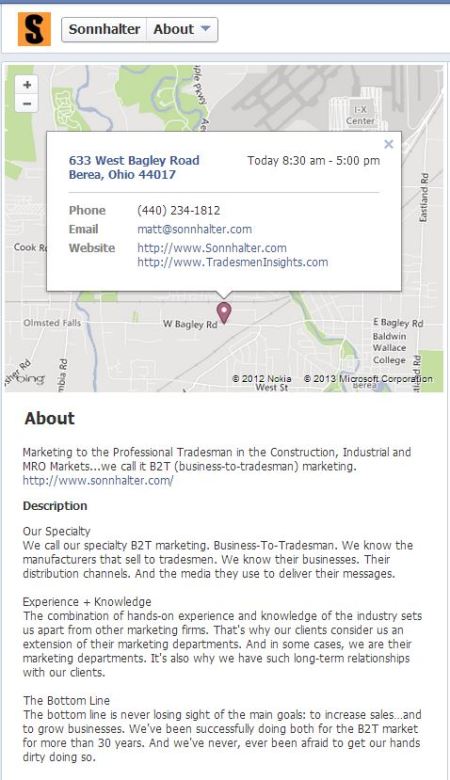




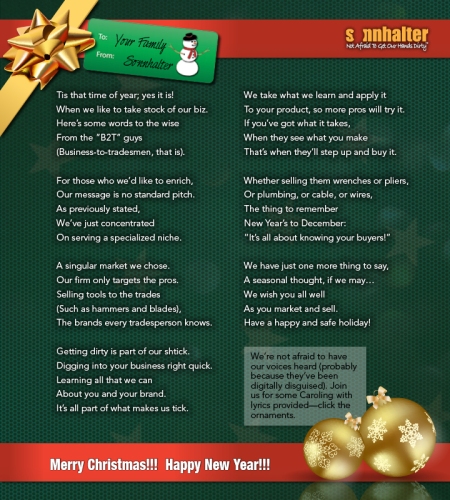












 If trends continue, social networks will soon surpass internet portals like AOL and Yahoo!

