By John Sonnhalter, Rainmaker Journeyman, Sonnhalter
Contractors and professional tradesmen often don’t have time to read the latest trade publication or look at the magazines’ website on a regular basis and might miss your message.Chances are, unless you only make one product, their interest at any given time may be on another product.
When they do go looking for things, the first place most go to is the Internet and they Google it. Chances are that they are looking for a solution just as much as they are looking for a specific product.
That’s why search is so important in the big scheme of things… and what makes you go up in search? Good meaningful content! You need to be top of mind when they reach that portion of the sales funnel where they will need to contact someone.
Heidi Cohen had an interesting article regarding advertising vs. content driven messages that had some good points for the B-to-B market.
B-to-B lags behind the consumer counterpart in doing research before they contact a manufacturer or distribution point. But even at 57%, you’d better have some skin in the game from a search perspective or you’re going to be left at the curb.
50% of U.S. consumers will do anything to avoid ads
75+% of U.S. consumers hate hearing or seeing ads multiple times
65% of U.S. consumers use a DVR to skip ads
Those are some scary numbers, and even though they are consumer driven, remember that those same consumers may be buying your products at their workplace. So what’s the alternative?
86% of U.S. consumers value brands that are useful over those that have interesting advertising
Translation: Give your customers the info they need when they need it. Here are some tips:
Leverage the social media platforms where your customers hang out.
Supply product info for potentials to seek out.
Tap into sources your customers trust, like trade associations.
Make sure the info you give prospects enhances the product value.
Skip the promotion and show them best practices when using your products.
Re-promote your content. Once is not enough.
So the question is, how much effort are you using to create great content? You only have so much time, so use it wisely. Give them solutions to help them run their business better and make money. You’ll be a hero in the end.
By John Sonnhalter, Rainmaker Journeyman, Sonnhalter
LinkedIn is a business platform and although it’s set up for individuals, companies can and should have a company page. It allows your company to have a snapshot of who you are and helps you connect with your audiences.
Yes, LinkedIn has been used primarily in the past for people to network, but remember, not all folks on LinkedIn are looking for jobs.
Brand recognition − Use your company logo and colors that define your brand. Create a custom background image to set you apart. Incorporate your main URL and phone number too.
Focus message – Instead of taking the about us from your website, tailor the description that speaks directly to the people who are visiting your page.
Improve search –Under the specialty section, add key words/phrases. You need to make your page easy to find.
Stay in front of your prospects – Post relevant content on a regular basis and create custom images to set you apart. You have three options for sharing: 1 – Push it to everyone that follows you, 2 – Target specific groups (if you have enough in each group) and 3 – Pay to sponsor the update to attract new followers.
Start promoting your page on email signatures and even send an e-blast out to your current database with a link to your page. The key is don’t miss this opportunity.
By John Sonnhalter, Rainmaker Journeyman at Sonnhalter
Let’s face it, we’re all in this for the same reason.To talk with people who share the same interest. We must always be tweaking and improving what we deliver.
Warranty cards and trade show leads are a start but we need to be more creative. Salesmen visits to job site are a good way to start a conversation.
So in order to get them to give up their email, we better come up with some interesting and helpful stuff that will make them want to read our emails for future gems.
It’s not only what you have to say, but how you say it. Beyond being potential customers, these contractors can be your best friend by sharing it with their peer group. Remember contractors need to know, like and trust you before any meaningful dialog will start.
Here are some tips to building a better list of contractors and tradesmen:
Think like a contractor– What are their pain points? Give them practical solutions. Always answer the question, “What’s in it for me?”
Talk like a human – Don’t use marketing or sales speak. Keep it conversational.
Give them a reason to sign up – Sneak peeks at new products, exclusive product demos.
Ask the contractor what they want help with – Get engagement from the audience you want to reach.
Don’t be afraid of humor – People like to smile and it shows more of your human side.
Reach out to contractors – On a regular basis, randomly pick several contractors and have a product manager call and pick their brains on possible new product ideas.
Emails are back and stronger than ever if we do them right. Remember, you’re not looking for a big list, but a good one.
By John Sonnhalter, Rainmaker Journeyman, Sonnhalter
We’re all focused on generating more leads these days, but I find it ironic that most companies don’t do much with them once they get them. Simply fulfilling a request is not the answer, but yet many companies do just that.
According to a recent survey of people who have requested info suggests that 80% of all sales are made on or after the third contact. The survey conducted by Marketing Best Practices, Inc. polled over 700 respondents with only 8% buying after the first call.
David Frey, the senior content editor and author of several marketing books advises, “An educated prospect is your best prospect, and if they haven’t become a customer it’s because you haven’t fully educated them on the value of your product and developed a relationship of trust.”
Why do many businesses have a problem following up with their prospective customers? Mr. Frey explained, “The problem is not that small businesses don’t have the capacity to follow up with prospects, it’s that they don’t have the systems in place to do it well.” In his recent newsletter, “Follow-Up Marketing: How To Win More Sales With Less Effort,” Mr. Frey advised, “A good follow-up marketing system should have three attributes:” 1.It should be systematic. 2. It should generate consistent, predictable results. 3. It should require minimal physical interaction to make it run.
This leads to a more pressing issue and that is, what is the difference between sales lead management and a CRM tool? According to Russ Hill, President of Ultimate Lead Systems:
Sales lead management is a sub-function within an overall CRM strategy. Traditional CRM programs like Salesforce.com, SalesLogix, ACT, Goldmine, Maximizer and others focus on the sales person entering and managing his own data and pushing it “up” to management.
Sales lead management starts with management generating and capturing leads from all sources, fulfilling information requests and delivering them to the sales channel and tracking follow-up and sales results to measure marketing return-on-investment.
Here are some other interesting facts:
INQUIRIES MEAN NEW BUSINESS!
67% of all inquiries are from legitimate prospects with real needs.
34% have current needs that must be satisfied within 6 months!
70% did not know the company made the product before seeing their ad. . . making them NEW PROSPECTS!
A six-year study* of nearly 60,000 inquiries conducted by Penton Media Company also found that:
43% of inquirers receive literature and information too late to be of use.
72% of inquirers are NEVER CONTACTED by a salesman.
25% of sales contacts are made at the inquirer’s request.
40% of inquirers purchase the advertised product, a competitive product or change their suppliers. * NED Reader Action Reports
The key is to get a lead management system in place that can help your CRM convert those leads into sales.
Today we have a guest post from Kathy Jackson on behalf of the Tulsa Welding School.
It’s never been a better time to crash that glass ceiling. Increasing numbers of women are climbing the steel ladder to a successful career in the skilled trades. While many of these jobs have traditionally been viewed as mostly male oriented, employers seeking welders, construction workers, and electrical technicians have been reaching out to women.
Industry Growth
Jobs in many skilled trades will likely be plentiful in the coming years thanks to growth in these industries. For example, jobs for electricians are expected to increase by 14 percent through 2024. The HVAC field is also expected to expand by 14 percent, notes the below data from Tulsa Welding School.
Higher Earning Potential
Women who wish to switch from female-dominated fields may find their earnings significantly higher: the average annual wage in childcare is $21,710 versus an average of $40,040 for welders. Or administrative assistants average $34,500 versus HVAC technicians, who average $46,880.
Faster, Less Expensive Training
Women looking to enter these fields won’t need a four-year university degree either. Most jobs only require a high school diploma and training at an accredited trade school, many of which can have graduates up and running in less than a year. Additionally, the savings in tuition will add up. The difference between a trade school and a four-year degree can be as much as $94,000, and university tuition will likely not be getting any more affordable in the near future. Plus, the Department of Labor announced $1.9 million total in grants as a part of the Women in Apprenticeships and Nontraditional Occupations program.
If you’re a woman looking to climb that steel ladder even further, you can work towards positions in management and engineering in the HVAC and electrical fields, respectively.
So, if you have an eye for precision, patience, and attention to detail, try your hand at the skilled trades. They are looking for women just like you!
About Tulsa Welding School
Tulsa Welding School was founded in 1949 by two welders who recognized a strong demand for skilled tradesman in their industry. More than 60 years later, TWS has evolved into an educational institution that prepares students for various skilled trade careers with a multitude of specialties and applications. We train our graduates for the skills, knowledge, and the workplace attitudes that are essential when entering the professional world. Graduates who put forth the dedication, commitment to excel, and workplace experience in their welding, HVAC/R or electrical education, have the potential to obtain a lasting and rewarding welding career.
By John Sonnhalter, Rainmaker Journeyman, Sonnhalter
Building relationships with contractors is no different from building them with your friends. You build relationships with friends over time, but once they know, like and trust you, then they will do anything for you.
Building relationships with contractors is no different. It can’t be a one-way street when everything you talk about is trying to sell them something. You’d get a lot farther if you were looking out for their best interest and helping them solve problems or do things better so they can make more money.
A friend of mine once told me “contractors buy stories before they buy stuff.” Anyone who has spent time with contractors knows how true this is. Know what’s bothering them and keeping them up at night. So how are you going to find those things out? By talking with them and starting to build a relationship.
So if you’re a manufacturer looking to spend more meaningful time with contractors, I’ve written 8 tips on how to connect with contractors that you can get HERE.
The paper gives you tips on how to use relationship marketing and storytelling when dealing with contractors. You’ll also learn how to use training modules and mobile to stay connected and help them train their staffs.
Every year Plant Engineering conducts their Maintenance Study. The objective of this research is to better understand maintenance practices and strategies currently in place in North American manufacturing facilities and the effects of maintenance on productivity and profitability.
The 2016 study identified seven important high-level findings impacting the manufacturing industry:
Maintenance Strategies – facilities utilize multiple maintenance strategies on the plant floor, with preventive maintenance (76%), “run-to-failure” (61%) and computerized maintenance management system (60%) being the top three
Shutdown Schedule – on average, all systems are shutdown three times each year
Maintenance Support – 6 in 10 facilities dedicate a significant amount of maintenance support to their rotating equipment
Unscheduled Downtime – aging equipment (50%) and operator errors (15%) remain the leading causes
Training – more than half of respondents’ maintenance personnel receives training in safety; basic mechanical skills; basic electrical skills; motors, gearboxes, bearings; and lubrication
Technologies – 62% of respondents’ facilities use a computerized maintenance management system (CMMS)
Outsourcing – the average facility outsources 22% of their maintenance operations, up from 17% in 2015
Diving deeper into the research findings, I was surprised at some of antiquated and simplistic practices still used for maintenance, especially given this age of technology and the Industrial-Internet-of-Things (IIoT). For example the second highest maintenance strategy was Reactive Maintenance also known as “run-to-failure.” And the leading cause for unscheduled downtime is Aging Equipment at 50%, while Lack of Time to Perform Maintenance or Lack of Maintenance make up 25%. And even though 83% of maintenance personnel receive training in safety, only 3 in 5 respondents indicate that their maintenance teams receive basic mechanical and electrical skills. How can we expect these people to maintain equipment if they are not properly trained? And the ultimate technology dichotomy, “clipboards and paper records” at 39% was ranked third highest for the technology used to monitor and manage maintenance!
By John Sonnhalter, Rainmaker Journeyman, Sonnhalter
A recent study by email on acid reported that email marketing is going to remain a top priority for companies in 2016. Though we could have predicted this was the case, nearly three out of four companies (71.8 percent) say they are planning to spend more time on email production and more than four out of five (86.7 percent) report that they will increase email marketing budgets this year.
Here’s their interesting infographic.
To see the infographic clearly, please click here and download a copy.
Many of our clients use the custom e-blast, or direct message tactic, to deliver their message to prospective customers. The definition of an e-blast (email blast) is a single sending of an electronic message to many people. The best type is the custom, targeted or direct e-blast sent to an opt-in list that you specify.
Here are some benefits of utilizing this type of marketing:
The message is yours, and yours only; you’re not fighting for attention with other advertisers.
You choose who will receive your message – selecting by job title, business or industry, geographic area, etc.
The message can be varied; it can introduce a new product, or talk about several products, or announce a special offer.
The message can direct the reader to a specific place like your website or specifically to a dedicated landing page on your website, where they can sign up for valuable content you could offer them, such as a white paper or an e-book.
The contact information gathered from those interested parties could then be added to your database for follow-up action, building up your database.
Using the opt-in email lists of specific trade publications is beneficial as opt-ins have agreed to receive marketing messages and promotions through email, and they will be more likely to read your message.
Metrics – After your message is sent, the reporting will show you how many people opened and viewed the e-blast and how many people clicked on a particular link in your message.
The cost is usually less expensive than sending out a printed direct mail piece, as you don’t have the cost of printing and postage to factor in.
So if you have a special offer or new product you want to tout, utilizing targeted, custom e-blasts with an opt-in email list is one way to accomplish your mission.
By John Sonnhalter, Rainmaker Journeyman, Sonnhalter
We all want to be recognized as leaders in our respective fields and in today’s world the current mantra is to be that “Trusted Authority.” To be a recognized leader in your field is not an overnight sensation. It takes time and you need to deliver more than bells and whistles.
I recently read an article by Mark Buckshon from Construction Marketing Ideas where he discusses this very topic. He gave the example of Frank Lloyd Wright’s role in leading architecture to a new level in his day. He truly was considered a trusted authority, and if you wanted a second opinion, you’d just have to ask him. Not everyone agreed with him, but they respected him.
Frank Lloyd Wright’s Darwin D. Martin House, in Buffalo, NY. Courtesy of Dave Pape.
Time is one thing we have little of, yet it’s what it will take to position yourself and your company as the industry expert. Wisdom comes from experience and experience is gained over time.Lots of your credentialing will come from the school of hard knocks. But that’s OK. We should learn from our failures and missteps.
Learn to share your expertise and solve problems instead of trying to sell contractors stuff. With the advent of social media, we no longer control the message or where or when it will be delivered. You need to learn to share your experiences via story telling as opposed to a sales pitch. Show your expertise by telling contractors how you helped others solve a problem or gave them a better way of doing a job that resulted in them making more money.
To become a true authority you need to deliver results beyond the ordinary. If you do this, you’ll be able to grow your business through referrals and repeat business. Contractors are very loyal and they do talk among themselves, so let’s make sure what they are saying about your company is good.
It’s a never-ending battle. You need to keep being ahead of the curve and continue to wow contractors. Remember, everything you do at the contractor level should answer this one simple question, “What’s in it for me?”
By John Sonnhalter, Rainmaker Journeyman, Sonnhalter
We all want to get our message in front of contractors. In order to get more out of your content, you need to tie it to your strategy.
We need to help them with solutions to their problems, a better technique or tool for the job. A different process that will save time and money. Online training for their workers.
We’re all concerned on getting the message out that we sometimes miss other opportunities to use the same content (message) and deliver it differently.
I read a post by John Jantsch, 10 Ways to Use One Piece of Content, that brings this into perspective. Contractors get their info in several formats. Have you tried any other ways of delivering your message?
Here are some highlights from John’s post:
Turn your post into a series of videos that the sales folks can send out on an individual basis.
Do a webinar and feature it on your website.
Use a SlideShare deck that you can use both on SlideShare as well as on your LinkedIn profile.
Develop an infographic and send it out in an e-blast.
Testimonials. Get contractors who are already happy customers to give you testimonials, either written or on video.
John’s point is that it’s not the amount of content, but its intention.
By John Sonnhalter, Rainmaker Journeyman, Sonnhalter
We’ve had conversations here before about independent industrial distributors missing sales opportunities by not keeping up with the latest technology available.
I see that Industrial Distribution magazine is doing a webinar on this very subject on May 18th; you may want to sign up for it or suggest some of your independent distributors who are still lagging behind get in the game. Jon Eames from NH Bragg and Jack Templin from Affiliated Distributors will be contributors. Here’s what they will be covering:
Industrial customers are asking suppliers of all sizes to offer a highly functional e-commerce-enabled website. So how do smaller, independent distributorships take the first steps:
Review ways independents can get in the game of e-commerce without breaking the bank.
Hold true to their business objectives while developing an e-commerce strategy.
According to Forrester Consulting, a 2014 study shows that 52% of business buyers expect at least 50% of their purchases to be made online in 3 years’ time. This should be an eye opener for distribution, but some are ignoring the facts. The big boys like Grainger (40% of their sales are from the internet) and MSC Industrial (over 50% of their sales come from online) are certainly taking advantage. Shouldn’t that set the tone for the independents? Forrester forecasts that B-to-B e-commerce will exceed $1.1 trillion and comprise 12% of all B-to-B sales by 2020.
I’ve said in the past that for smaller industrial distributors to survive, they need to use the internet. They can’t count on the business model of contractors coming in at 7 in the morning or around lunch time to pick up what they need. Time is money, especially for them.
Independent distributors are slow-moving in implementing e-commerce programs.
Technical challenges are making sites user-friendly, making it aesthetically appealing and staying ahead of the competition.
Primary reasons of not engaging online was lack of demand, technical obstacles and lack of marketing/promotional resources.
Customer satisfaction and the customer experience are the key factors in developing an online presence. Ironically, that’s how the independent distributor built their business in the first place. Now they just need to transfer that to a different platform not only to keep existing business, but to grow additional revenue.
Source: Industrial Distribution
My worse fear is that the Amazons and the Alibabas of the world are going to make the independent extinct in a few years. I understand that the AD buying group has just instituted a new program to help members deal with some of these issues. It’s too early to tell if it’s making an impact, but at least they recognize the issue and are trying to help.
By John Sonnhalter, Rainmaker Journeyman, Sonnhalter
Manufacturers who focus on contractors and professional tradesmen need to understand who they are and what makes them tick. They need to spend less time selling and more time solving the contractors problems.
I recently presented to a group of building material manufacturers at a marketing summit put on by Mark Mitchell from the Whizard Strategy. You can find the entire presentation here.
I’ve been talking with contractors for many years and here are some takeaways to consider when wanting to connect and support them.
Contractor Profile
Most are family-owned businesses
Most have fewer than 20 employees
Most started working in the trades and moved into starting a company
They have long days, usually starting around 6:00 in the morning and ending around 5:00 in the evening
They have to multitask — project management, purchasing and sales
Most of their day is spent in the field
Biggest challenge is finding qualified workers
Second biggest challenge is training them
What are Contractors Looking for?
Solutions to their problems
How to do job better, in less time
Have access to knowledgeable factory people for technical assistance
Manufacturers who under promise and over deliver
How to Connect with Contractors
Have your sales force spend a majority of their time in the field talking with contractors
Have a special contractor portal, hotline and emails to get their questions answered in a timely fashion
Mobile apps (if applicable) to help them do their job better, i.e., an estimating tool
Online product/application training for their workers
Send them leads
Contractors buy stories before they buy stuff. If you’re trying to establish a long-term relationship, the contractor needs to know, like and trust you first. It’s like any friendship; it develops over time and the relationship is mutually beneficial to both sides. If contractors are your life blood, take good care of nurturing them as a good friend would do.
By John Sonnhalter, Rainmaker Journeyman, Sonnhalter
The biggest challenge manufacturers face today is the ability to keep contractors interested and engaged in their brands. It’s much easier to keep an existing contractor than going out and trying to convert a new one.
In a recent eMarketer article they talked about how B2B International surveyed 266 U.S.- and Western Europe-based B2B marketers from a variety of industries in October and November 2015. The market research firm found that 62% of respondents said building market share remained the top challenge among others.
But how do you build market share without building relationships with those you sell to? Contractors are looking at solutions, not new products! If your product can help them do their job better or quicker, then you have a winner.
What can you do? One way is helping them identify pain points in their daily routine. A common one is getting new business leads. Owens Corning has a great website where on the one page it focuses on getting the user to the right contractor.
Another pain point for contractors is training employees, both old and new. Most good contractors are limited on growing their company because they can’t find qualified people to do the work. Dust off those YouTube videos and training tips and tricks and offer them to contractors.They can be offered online and you can incentivize the recipients for taking and passing the course. What better way to build brand loyalty from both the contractor and the worker.
There are plenty of ways to build market share and one of them is loyalty. You need to get and keep them engaged and always answer the question, “What’s in it for me?” Word gets around (contractors talk to each other).
The Millennial generation has been a hot topic for managers and marketers for many years now; in fact you used to call us Generation Y. Not everyone agrees on the exact years for each generation, but it’s generally accepted that Millennials are those born between 1980 and sometime between 1998 and 2000. Generation Z is the next upcoming generation with birth years in the 1990s through 2010. Predictions are already being made about the generation of kids born after 2010 as well!
People used to call Millennials “digital natives” due to our comfort using the internet and technology in general. But the generation after is what I would consider truly digital natives.
Millennial Technology Experience
Take me as an example. I’m a member of the Millennial generation and I can trace the growth of technology through my formative years. I recall changing the channel on the television using a dial and improving the picture on the tube TV by repositioning bunny ears. I used DOS and the first laptop computer I ever touched had a black and white screen. I looked up phone numbers in the phonebook and had to take typing classes in school. But we also caught on as technology advanced by leaps and bounds. I think that’s part of why the Millennial generation is so quick to learn – we had to adapt quickly.
Generation Z Technology Experience
The next generation that communicators should be preparing for is Generation Z. Those who knew how to use a mobile phone before they could sit in the front seat of a car. Those who stream music, TV and movies as the norm and consider DVDs to be “old” technology and don’t know what the “Save” icon really is.
The need for visual and video content is apparent now, but this generation will consume content differently and we need to be talking to them the way that they want to be talked to. Now more than ever, people have more control over the messages that reach them.
Everything travels fast, which enhances the need for real-time marketing and virtual communication. In our B2B space, we’re often protected and can learn from the mistakes and triumphs of others because we don’t start talking to this generation until they enter the workforce, so pay attention now. Watch the consumer brands that communicate to a younger demographic. You’ll notice an increase in visual, real-time communication, but don’t think that means your brand needs to get on SnapChat or Instagram to communicate with the new generation.
Infographic via Fluent
Video
By and far, mobile, visual, app-based social media is being used for interpersonal communication among peers. Instead, this group is turning to video on YouTube as well as on Facebook. This is an area where you should be upping your game now. Video is such a valuable content marketing tool for your brand as it is. Refresh yourself on 6 Tips For Using Video To Tell Your Story and make sure you’re working video content into your integrated marketing plans.
Live Conversations
It may seem strange to bring up live conversations when talking about a digitally native generation, but technology makes live conversations even easier. Livestreaming, video chatting and other services facilitate an in-person conversation without actually being in person. Check out our recommendations for using livestreaming.
Start Now
Don’t let the next generation of your B2B audience sneak up on you. Take the lessons you’ve learned from communicating with tech-savvy Millennials and the observations that you make on communications with digital natives in Generation Z and implement them in your marketing communication plans today.
Guest post by Amanda Subler, Public Relations & Media Manager for Content Marketing Institute (CMI)
Last year I traveled the U.S and Europe producing a documentary about content marketing for my company Content Marketing Institute. We visited Moline, Illinois the home of John Deere. We traveled to Washington D.C., to visit Marriott’s Global Headquarters. We went to Salt Lake City to visit Blendtec, the home of one of the largest blender manufacturers in the world. (Ever heard of Will it Blend? YouTube videos?) We even flew all the way to Denmark, to see how one of the country’s largest banks is transforming financial television.
But one of my favorite trips was to Warsaw, Virginia, where a little fiberglass pool seller used content marketing to not only save their business, but gain international fame and even go from selling to manufacturing their own pools.
Marcus Sheridan and his partners at River Pools and Spas were in big trouble when the recession hit in 2008. Suddenly, (no big surprise) no one wanted to buy pools anymore. For three straight months, they were overdrawn on their bank account. As Marcus says, he didn’t know what they were going to do. “Every consultant I talked to told me to close our business.” That’s when Marcus discovered “content marketing.”
The first thing he did was write down every single question he and his partners had ever gotten from a prospect or customer. Then they committed to answering every single question in blog format consistently on their website. He even answered the one question every single pool sales person is afraid to answer until they are sitting face-to-face in your living room: How much does a fiberglass pool actually cost? That single blog post has received well over 2 million views. By consistently answering every single sales question, River Pools went from being fourth in their market to the number one seller of fiberglass pools in the country. They get calls from people all over the world wanting to buy pools from them. It helped them build such a powerful brand, they have just moved from selling fiberglass pools to now actually manufacturing their own pools.
How did they do it? Marcus and his partners recognized early that with the advent of the internet, the traditional sales model was no longer viable. You can no longer afford to withhold information from your prospective customers until you can actually pitch them face-to-face. People looking to make any sort of purchase, especially such a large investment as a pool, are doing research online before they ever consider contacting a company about the purchase. When people start their search for a new pool, River Pools is the number one resource that pops up. Marcus and his team provide ten times more information than any other pool seller. Prospects are sold before they even make that initial phone call to River Pools. Content has become such a powerful sales tool, that last year, River Pools sold about 90 pools and 90 percent of those were sold before they even went on the sales call. Why? Marcus’ team is not afraid to give clients all the information they are looking for, including an actual sales proposal (which is unheard of in the pool industry), before ever stepping foot in a prospect’s house.
Was it hard for a couple of pool guys to learn a completely new skill set, essentially learning to be writers? Heck yeah. As River Pools co-owner Jason Hughes says, it was really hard at first, but he found the more he did it, the better he got at it. His advice for others is to just start small, just post something-get it out there. There’s no way it can hurt you. He says “if it applies to a pool company, it can apply to anybody. If I can do it, anybody can do it.”
So what are you waiting for? Do you have a list of questions from your prospective clients or current customers that you can answer? If you’re too afraid to answer those questions, you need to ask yourself why? Are prospects getting these answers from someone else? Are they getting it from your competitors? You could be missing the opportunity of a lifetime for your business.
I’ll leave you with this final thought from Marcus on the power of content marketing, “The moment we stopped saying we’re pool sellers and said we’re the best teachers in the world about fiberglass pools, and we happen to install them ourselves, was the most prosperous day of our lives.”
You can see more of Marcus’ story in the documentary, The Story of Content, at timecode 23:27.
You can learn more about the documentary and download a screening guide at TheStoryOfContent.com
About Amanda
Amanda Subler is the Public Relations & Media Manager for Content Marketing Institute (CMI), overseeing all PR and media relations for the company. She also produced CMI’s new documentary on the rise of content marketing, The Story of Content. She’s a former award-winning journalist, spending 11 years in local TV newsrooms as a producer and executive producer.
It must have been a “data jockey” who allocated the minimal, odd-ball spaces on websites for what are known as banner ads. Message purveyors have the challenge then to effectively communicate messaging within the confines of 320×50 pixels or the endearing long and thin 120 x 600. It’s as if they (the space allocators) didn’t want ads on the site to begin with! Clearly a necessary evil. Well, hail capitalism! Banner ads are what make the web (afford) to go around!
So, the challenge is what do you say and show in such cramped spaces?
Looking keenly at what is being done lately, I’ve taken some cues from the retail side of the creative craft. I’ve noticed that, for the most part, when consumer product is being presented they usually offer up only ONE saleable feature. This soap gets you cleaner, this car is faster, this food makes you healthier, this candidate will solve this problem. You get the picture.
Serve me up your best. If I’m interested I’ll follow through and get the details. Those examples offer ONE thing they want you to digest and act upon. I am asked too many times to try and get as much information into these tiny limited spaces as possible—even when it’s not possible. If I may, how many times are you drawn to the blabber mouth at a party? Tune them out right? Same thing!
As with all other mediums, banner ads must be created with their limits in mind. Whether the ad is static or animated, it’s crucial to minimize content since you’re dealing with minimal space. You may have heard the saying about fitting so many pounds of something into a much smaller capacity container.
Estimates are crucial in planning your budget, they are a statement of the approximate charge for work to be done, submitted by a business firm ready to undertake the work.
In order to get a more accurate approximate estimate, you’ll need to provide the following:
A detailed list of what the end “product” is expected to be or what you want to accomplish. This lets us know what you want and helps us stay on the same page.
Any and all support info at the time of the estimate. It can be difficult to build changes into an estimate, so providing everything you can when the estimate is requested helps you get the most accurate estimate.
A timeline that provides for adequate time to complete the work.
Estimates are calculations of what time/monies will be needed to fill a blank page. Just like filling this blank page it is not always that easy!
One of the most underutilized components implemented by exhibitors at trade shows is the “hands-on” demonstration of their product/solution. Professional tradespeople make their living working with their hands, so it should not be a surprise “hands-on” product demonstrations are a favorite for this audience.
Typically trade shows like to talk about the quantitative stats…number of attendees, number of exhibitors and number of speakers. But instead of focusing on the number of people walking up and down the aisles and attending these shows, maybe we should be focusing more on the quality of the interactions between trade show attendees and the exhibitors. One of the more effective quality interactions would be the “hands-on” product demonstrations and skills competitions at trade shows. In general, booths that have some sort of demonstration or activity for their product tend to have more traffic and activity.
The first quarter of the year tends to be a busy time for trade shows targeting the professional tradesperson. I recently attended the World of Concrete Show and was amazed at the number of hands-on areas. The parking lots of the Las Vegas Convention Center were packed with manufacturer tents highlighting “hands-on” demos with everything from cutting and drilling, to polishing and breaking up concrete.
It was amazing to see the passion, enthusiasm and support shown by the attendees watching these tradespeople showcase their skills. All of these areas outside the convention center consistently had more active traffic compared to the normal booths inside the exhibition hall.
Now there are a number of factors that go into making a successful trade show, but hopefully, when you are planning your next show, a hands-on demo will be part of it!
Today, we have a guest post from Jeff Selingo, author of “There Is Life After College,” which comes out on April 12th.
Nearly 40 percent of American workers hold a bachelor’s degree. College graduates are found in virtually every profession. Some 15 percent of mail carriers have a four-year credential, as do one in five clerical and sales workers, as well as, 83,000 bartenders.
Getting a bachelor’s degree is what going to college means to most Americans and is so ingrained in our culture that students who don’t march along are often admonished, questioned and considered failures.
The decades-long march to college-for-everyone at 18 has actually closed off rather than opened up options for teenagers and twentysomethings.
As recently as the 1970s, a teenager had a number of options after graduating from high school: get a good-paying job right away, enlist in the military, find an apprenticeship in a trade or go to college.
A teenager today really has only two of those options still available: the military or college. Less than 1 percent of Americans serve in the military, so most go to college right after high school. In the early 1970s, less than half of high school graduates in the United States went on to college the following fall. Today, nearly 66 percent do.
The goal of universal college has actually done more harm than good because it banished anything that smacks of job training to second-class status.
Don’t get me wrong: I’m not encouraging 18-year-olds to skip out on further education after high school. But not everyone is ready for a traditional American college experience at 18, nor does it align with the interests, skills, and mindsets of some teenagers.
We need more than just one pathway to good jobs in the U.S. What we need is a place like Harvard—both prestigious and rigorous—that will attract students who have talents and interests to pursue skilled jobs critical for the economy that don’t necessarily require a four-year college degree.
As I traveled the country the last two years talking to employers of all sizes and in all sectors of the economy for my forthcoming book, what I heard most is the worry they have about filling so-called middle-skill positions in advanced manufacturing, healthcare and information technology.
Nearly half of the American workforce has these jobs today, but many of them are filled by aging Baby Boomers who will soon be retiring. It’s expected that as many as 25 million of all new job openings in the next decade will be for middle-skills jobs.
Employers told me they have a healthy supply of talent for their white-collar office jobs that usually require at least a bachelor’s degree and sometimes a master’s or Ph.D. But if manufacturing has any hope of making a rebound in the U.S., there is a desperate need for younger workers with technical, hands-on skills that require training after high school.
Today, only 52 percent of young people have either a two- or four-year degree or an industry certificate by the time they reach their mid-twenties. The goal of universal college has actually done more harm than good, because it diverted attention away from any real discussion of a robust apprenticeship program, and it has banished anything that smacks of job training to second-class status.
There is evidence attitudes are beginning to change. First, the number of apprenticeships is rising for the first time since the 2008 recession. Second, with college debt surpassing the trillion-dollar mark, students and parents are giving apprenticeships a second look as an alternative to paying sky-high tuition for a bachelor’s degree that might not lead to a job. Third, some apprenticeships are beginning to have an academic component that makes them nearly indistinguishable from traditional colleges.
The modern version of what an apprenticeship could look like for American students interested in alternatives to college is on display at the Apprentice School in Newport News, Virginia. Students who choose from one of more than 20 occupational areas are paid an annual salary of $54,000 by the final year of the program—$10,000 above that of the average bachelor’s degree recipient—and afterward they are guaranteed a job with the military contractor that operates Newport News Shipbuilding.
The school is just as selective as Harvard. It receives more than 4,000 applications each year for 230 spots, and significant numbers of its graduates go on to earn bachelor’s or master’s degrees. In many ways, it looks and feels like a typical American college, except in one important respect: its students graduate debt free.
We need more such schools and pathways post-high school that serve a greater array of industries as well as students who don’t want to travel down the one route we offer to them now.
About Jeff
Jeffrey Selingo is author of three books on higher education. He is a regular contributor to the Washington Post’s “Grade Point” blog, a professor of practice at Arizona State University and a visiting scholar at Georgia Tech’s Center for 21st Century Universities.
In There Is Life After College, Jeff Selingo explores why students struggle to launch into a career after college and how they can better navigate the route from high school through college and into the work world. It will be released by HarperCollins April 12
There’s a woman who I know from a local professional organization. We’ve been “formally” introduced multiple times. After the first time we met, I knew her name, her face, we traded cards and connected on LinkedIn.
The next time I saw her, I said “hello” and she introduced herself as if we’d never met. I wasn’t really offended because not everyone has a knack for names and faces. I let her know we’d met before and where.
Meanwhile, I’ve been getting emails and LinkedIn messages from her to support her nonprofit organization through monetary donations or volunteering. At least twice a month, I get a message from this woman asking me for something.
The third time we “met” I was a little annoyed at her re-introduction and didn’t spend much time after shaking her hand, because I felt like she would ask me for something again.
Then last week, I was at an event with a colleague and she entered the room and greeted my colleague, who then asked her, “Do you know Rachel?”
She said “No” and tried to introduce herself for a fourth time.
On a personal level, it’s extremely frustrating to seem so forgettable. These four introductions and constant digital “asks” left me screaming internally, “LEARN MY NAME!”
It says a lot about you as a communicator if you can’t actually build a relationship with your audience. If you want something from me, I’m more likely to give it to you if I feel like you know me, you get me and you might have something to offer me in return.
Before you inundate your audience with promotional messages, make sure you know them. Who are they? What problems do they deal with? Can you be a help to them as well or do you just want their dollars? You can’t have a one-sided relationship with anyone. This woman is no longer a part of my professional network because clearly she doesn’t want to be a connection… unless I’m giving her something.
How do you engage with your audiences in a way that builds a relationship rather than tears it down?
By John Sonnhalter, Rainmaker Journeyman, Sonnhalter
I guess it would be getting new customers and keeping existing ones.
An effective customer experience starts with understanding your customer and then delivering good, meaningful content to them. The more positive the experience, the better the sales or so it would seem. This could be a challenge in today’s market where sales have turned from relationship-based to transactional-type sales.
So let’s look at two areas – marketing and customer service.
It’s not surprising then that a recent survey of CMO’s by eMarketer showed that their biggest concern was the customer relationship followed by ROI on marketing activities.
But what about once you have them as customers? Usually it’s easier and less costly to keep an existing customer than try to find a new one.
I ran across a study recently in emarketer.com “How to Win at Customer Service,” that claimed most people just want their questions answered.
Here are some highlights:
81% of those surveyed just wanted their questions answered
89% feel more positive about brands that give good customer service
46% tell their friends and family about a quick response time
So what does all this mean to the manufacturing sector? Well the bar isn’t raised too high and we certainly don’t have to reinvent the wheel.
Here are some tips on how to serve the professional tradesman:
Keep your customer service department open on business days from 7 AM to 5 PM EST. If the contractors are having issues, you need to be available when they are working.
Staff your customer service department with experienced people who can answer questions, troubleshoot a problem or forward them on to someone who can.
By Chris Ilcin, Account Superintendent, Sonnhalter
It’s not late, I promise.
Yes, I know the Super Bowl was well over a month ago. So what’s the point of reviewing the commercials now? Well that’s pretty much my point.
Advertisers at this year’s “Big Game” (as the nonsponsoring like to call it) spent more on commercials during the broadcast that was spent on Super Bowl ads in the 60’s, 70’s and 80’s COMBINED. So quick, how many do you remember like the 1984 Apple commercial? How many have become the new brand for a company like Chrysler’s “Imported from Detroit”?
Not one. And that’s because for most major brands (or at least the ones that can afford Super Bowl ads) that’s no longer the point. These ads are now focused more on creating “buzz” by being as interruptive as possible. It’s about how many tweets it can spark when it airs, how many shares it can get on Facebook, and how many best/worst listicles it can make it onto the next day. And then it’s on to the next thing, or back to the standard messaging.
A perfect example? PuppyMonkeyBaby. Outrageous by design, its general air of “too cool for you” hits you harder than the overly caffeinated drink it’s selling. It’s all buzz and very little brand (other than the 3 dudes on the couch representing their target demo).
The antithesis? Death Wish Coffee. Sure it’s a CGI-filled 30 seconds, but it sets up the niche this coffee wants to serve, and doesn’t lose its message in the effects.
[youtube
Of course it was also done for them for free as part of an Intuit campaign. But that makes it an even smarter move for them as they show that they truly are willing to help small businesses, while also poking fun at the bloated advertising/pop culture spectacle that the Super Bowl has become.
So what’s the takeaway for B2T Marketing?
Don’t believe the hype. Set your brand and create collateral that builds on it, not on a fad or trend. Be a thought leader, not another voice in the crowd. And know you market well enough not to launch a broadside at everyone, but a targeted message where you need it to be.
By John Sonnhalter, Rainmaker Journeyman, Sonnhalter
I’ve addressed this issue in the past, and as time goes on, but I’m afraid the independent distributor may be following the way of the corner hardware store. Distributors need to step it up a notch!
Long before Grainger, Fastenal, Home Depot and the thing they call the Internet, the local industrial distributor was the backbone to local manufacturers and businesses. My, how things have changed over the past several decades.
I believe the small guy still has a chance to compete on a local level, but they need to change the way they do things. They need to know what their value proposition is, and most importantly, know their customers and what they want.
Source: Industrial Distribution magazine
If they can’t add value, then what’s the point? At the 2015 ISA Convention in Cleveland, one of the breakout sessions, “Looking Ahead at Distribution: The Future Impact of Size and Value Content 2015,” revealed some interesting issues. Mike Hockett, Associate Editor of Industrial Distribution magazine, did a good job summarizing both the results of the study, as well as the subsequent panel discussion.
Here are some highlights:
Service sales represented only 5% of their total sales.
Buying groups represented the best support.
Manufacturers relied on small local distributors for customer loyalty and technical expertise.
It’s no surprise that cutting tools and abrasives remain the top two product categories that industrial distributors sell. Both require technical knowledge to support and troubleshoot problems. The question is, are the distributors going to charge for this expertise and are their customers going to be willing to pay for it?
So what do smaller industrial distributors need to do to stay in the game? Here are some thoughts:
Embrace Technology – get an online sell site, integrated supply services and electronic billing for customers to order easily.
Value Proposition – need to define so they can focus on the things that matter most and where they make their money.
Buying Groups – need to get in one or more so you can stay competitive and make more money.
Technical/Engineering Expertise – set yourself apart from the pack.
Cleveland – March 2016 – Sonnhalter, a communications firm marketing to the professional tradesman in the construction, industrial and MRO markets, announces Mortar Net Solutions as one of its newest clients.
Located in Burns Harbor, Ind., Mortar Net Solutions is a leader in the development, distribution and support of innovative moisture management solutions for masonry construction. The company developed and brought to market a series of innovative solutions, including MortarNet®, BlockFlash®, LathNet™ and TotalFlash® that continue to aid masons and architects in their commitment to the creation of beautiful and durable structures.
“After an exhaustive search, we’re happy to be working with Sonnhalter as we continue to increase our footprint in the marketplace,” said Art Fox, marketing manager at Mortar Net Solutions. “Mortar Net Solutions was impressed by Sonnhalter’s ability to market to the contractor and distributor levels, and we look forward to applying their expertise to our line of industry-leading solutions.”
Sonnhalter provides a full range of marketing communications services for Mortar Net Solutions that will span across multiple departments which will guide Mortar Net Solutions’ creative messaging on both print and electronic platforms, as well as managing its public relations and media relations.
“Sonnhalter is happy to expand its reach in marketing to the professional tradesmen through Mortar Net Solutions’ customer base in the masonry construction industry,” said Matt Sonnhalter, vision architect at Sonnhalter. “Mortar Net Solutions delivers solutions that are one-of-a-kind to the market, so we are excited to drive the message of these unique products.”
About Mortar Net Solutions
Mortar Net Solutions develops, distributes and supports innovative moisture management solutions for masonry construction. Mortar Net Solutions was founded in 1992 with the invention of its flagship product, MortarNet®, a mortar collection solution developed to prevent water damage to masonry cavity walls. Mortar Net Solutions also developed new proprietary solutions for masonry construction, including TotalFlash®, BlockFlash®, BlockNet®, HouseNet®, CompleteFlash™, WallNet™, WeepVent™, CellVent™ and LathNet™. Mortar Net Solutions is a partner company in CavityComplete™ Wall Systems, the only tested, code-compliant and warrantied wall systems for masonry cavity walls using completely compatible components. For more information, visit MortarNet.com.
About Sonnhalter
Established in 1976, Sonnhalter is the leading B2T marketing communications firm to companies that target professional tradesmen in construction, industrial and MRO markets. Recently, Sonnhalter moved from its original office in Berea to a new space in the historic Brownell Building, located in the heart of downtown Cleveland. Sonnhalter’s brand identity highlights its expertise in marketing to the professional tradesmen. Its tagline, “Not Afraid To Get Our Hands Dirty,” promotes the employees’ willingness to roll up their sleeves and dig deep into clients’ businesses, also, it refers to the market it targets: the tradesmen who work with – and dirty – their hands every day. Sonnhalter developed the acronym “B2T,” which stands for “business-to-tradesmen” to capture the essence of its specialty. For more information, visit the company website at Sonnhalter.com or visit the company blog at TradesmenInsights.com.
Does this sound familiar? A new customer promised they would place a $30,000 order, but only at an average price per unit of $0.16. The sales rep ran the requested price through their internal process, and because $0.16 was above the required 20 percent margin, the sales rep approved the discount. End of consideration.
But here’s where the story gets interesting. After looking at the average price points for the top 20 customers of this product, the pricing manager determined that significantly bigger customers – with purchase volumes in excess of $100,000 – were paying $0.18 to $0.22 per unit on average. In fact, the third largest customer, at $468,000 in volume, was paying a $0.22 average sale price.
What was the justification for the lower price for the smaller customer – other than the fact that the customer simply asked for it?
For many companies, pricing decisions are largely made in a vacuum, without regard to pricing data, market circumstances, product value or customer differentiation. The situation is usually exacerbated by a compensation structure that rewards revenue and volume over margins and profitability.
The solution, therefore, typically requires a completely new mindset for the sales team and organization—one focused on margins over top-line revenue.
It All Begins with Pricing Data Visibility
The beauty of the role of data in pricing decisions is that it lends an important clarity to difficult choices. A sales rep is naturally inclined to want to make the customer happy. But if you are armed with the right data, you can not only rationalize why a price discount might be a poor decision, you can also provide informed alternatives the sales rep can present to the customer – providing an opportunity for the sales rep to save face, the customer to get a great price and your organization to get the margin it needs.
In our story above, for example, you can start by showing the sales rep the list of average price points. This puts the requested price discount in animportant context– that the discount amounts to asking the organization to offer better treatment to a relatively small customer than it offers to its third largest customer.
The Power of Informed Pricing Options
You can also take this reasoning a step further. Rather than saying “No” outright, you can provide alternatives. For instance, the sales rep could tell the customer that $0.16 is possible, but only with a certain volume of purchases. If the customer is willing to increase the size of its order, you’ll be happy to provide the more favorable price. Or, if the customer is unable to purchase more than the anticipated $30,000, the sales rep can offer a price in the range of $0.18 to $0.19 – still a significant discount, but more in line with the organization’s average selling prices.
Always Look at the Big Picture
When it comes to pricing, you should never make decisions without looking at the big picture. Think it through. Take the time to look at similar customer segments so you can see the prices and margins other customers are paying. And always make sure the volume justifies the price.
After all, the goal in business is not to just gain market share. It’s to gain profitable market share. Consistently offering a low-ball price eventually hurts everyone in the industry; ultimately, you’re creating pressure to make prices so low no one will be able to compete profitably – and everyone will lose. But with the right data, you can make more informed decisions and provide the options that will help your team win the sale without giving away the house.
Today, we have a guest post from Jeff Guritza on the importance of brand identity.
The market wants to know: who are you and what does your business stand for? Said differently, what is your brand promise, and how is your business perceived in the marketplace?
Go ahead and think for a minute about your organization. Take a moment and really ask yourself:
“Who the heck are we?!”
“How different is our company than the competition?”
“What makes working with us unique and compelling?”
All strong brands take a well-defined position, one cemented in a foundation of consistency and sincerity. It is from this position that market alliances are formed, customer relationships are fortified and market share is defended or expanded.
Does your company speak to the market in a clear, consistent manner?
This isn’t just about messaging. This isn’t about a value proposition or pithy mission statement. This is about being real. Proper branding is about having a long-standing, consistent, predictable and definable presence in the market.
“This Is How We Do Things Here”
I believe branding matters today more than ever. Your brand identity will exist whether you’re actively participating in its development or not. You’ve got to clearly define what you stand for, or you will end up standing for nothing at all.
No brand, yours included, will ever hold universal appeal, but that’s the beauty of it. As a successful business selling similar solutions as your competitors, it’s valuable to be able to say to a customer, “If you want to do business this way, then do business with us.” It’s up to you and your brand to define what this way means.
A strong brand opens doors to new customers while protecting the customers you already have. There’s an opportunity for brand building each and every time you engage a customer or potential customer.
It’s human nature to find comfort in the known. If both your brand and your behavior are consistent and predictable, you’re on to something. If you hire or fire with no process, randomly price products in a vacuum or acquire new lines or businesses without a clearly defined assimilation strategy, it’s a recipe for brand insignificance. The devil’s in the details of a finely crafted plan.
The Power Online
Today, customers can be more fickle as they have more options, more opinions and more channels from which to arrive at their buying decision. Years ago, you took someone’s word as to who was the best source for the products needed. Today, everything can be validated or refuted via an immediate, online search.
Buying a new car? Jump online and you’ll instantly compare makes, models, trim levels, dealerships, reliability reports, reviews, recall notices and prices. After an hour’s effort, you’ll become a quasi-expert on virtually every aspect of the planned purchase: what you need, where to buy and what to pay.
When was the last time you talked to an Amazon representative or outside sales person? How about never? Amazon’s face-to-the-customer is devoid of humanity: no names, emails, etc. When you think about it, their “brand” is basically a logo, web address and your online account.
The information superhighway has forced leaders to reassess how they go to market (externally) and how they run their business (internally.) The transparency today leaves little place to hide; employees and customers alike have phones with broadband connections to instantly share their opinions with the planet. Your best defense? A strong brand that’s clearly defined and omnipresent.
Brand Building Isn’t For Sissies
Brand building isn’t like building a house. When building a house, you can delegate some of the work. And as needed, you can make quick executive decisions that cut costs or save time.
Brand building is more like training for a marathon. With true brand building, there are no shortcuts or steps to skip. Either you commit to it fully, or you don’t. Everything matters.
Like marathon running, brand building requires relentless and sustainable dedication, focus, vision and patience. Skipping a few runs and eating poorly has a negative impact on your training. Similarly, neglecting your brand via undisciplined communications, mediocre account management, and misaligned strategies produces poor results.
Here’s a five-step exercise to help get you more refined in your branding discipline:
1. Assess your brand situation/status. Take time to understand the current state of your brand. Are you as committed to your organization’s brand as you can be? Remember: you must always behave/operate in accordance with your brand’s promise. If you’re known for speedy service, you can’t slow-pay vendors.
2. Latch on to a story, and tell it. Every company has a history and a story. This story is the foundation of your brand. Be sure you have that story established, mastered, and shared by every customer-facing associate. Be direct and avoid ambiguity.
3. Think broadly. A brand’s impact and influence is far-reaching. Do not limit your thinking to any existing, narrow-cast set of parameters. Expand your vision beyond the present and explore unchartered markets, pricing models, corporate structures, and product groups.
4. Think digitally. In this era of online everything, at a bare minimum you can’t forget the digital user interface (UI) and the overall digital user experience (UX.) Know that e-mail footers, web sites, invoice templates, etc. are all branding opportunities. Social media has us all interconnected; your brand must tap into this.
5. Be consistently present in the marketplace. Attend industry events. Walk around at trade shows. Hire new associates with fresh ideas. Blog about your vision for your business or industry. Sponsor community events. Bottom line: make sure you become a master of brand continuity in the minds of your customers.
Branding Is The W-H-Y
Which leads me to my point: why do customers do business with you? Why do folks choose you over your competition? Why do people pay the prices you charge?
It’s because of your brand. It’s having your people, your processes and your products all strategically wrapped into a compelling, original and authentic package. Proper branding gives an organization its soul. Without a soul, companies tend to behave in awkward and uninspired ways. And this ultimately leads to irrelevance.
Branding requires relentless customer centricity, unwavering internal controls, leadership accountability, laser-focus on corporate metrics and a steady, positive attitude. Your brand is why you matter to your customers. Therefore your brand matters.
Don’t become irrelevant.
Now with The M. K. Morse Company, Jeff Guritza has successfully led sales, marketing and product management initiatives within global organizations and markets for more than 20 years. His work involves creative branding strategies tied to product launches, channel development, structured training programs, corporate acquisitions, and executive long-range planning.
By Miles Free of PMPA. This post originally appeared on pmpaspeakingofprecision.com and is reposted with permission.
21,420 to be exact. This is a 20% increase in the number of credentials issued in the United States from 2014. It is a great start toward the 100,000 skilled jobs that industry will need to fill over the next decade…
20% more credentials issued in 2015 over 2014
PMPA is an original founding partner of NIMS, and continues to support its mission to develop and certify industry recognized credentials for our workforce through consensus skill standards.
NIMShas developed skills standards ranging from entry-level to master-level that cover the breadth of metalworking operations and industrial technology maintenance. NIMS certifies individuals’ skills against these national standards via credentials that companies can use to recruit, hire, place, and promote individual workers. Schools and employer training programs incorporate the credentials as performance and completion measures to deliver high quality training to industry standards. NIMS will soon add credentials in Industrial Technology Maintenance and Computer-Aided Manufacturing (CAM) to its portfolio of offerings in 2016-2017.
NIMS works to ensure all individuals entering the workforce are equipped with the skills needed to be successful on the job from day one.
“Executives from PMPA member shops all tell us that they would hire people with skills -even if they did not have an immediate opening,” says Bernie Nagle, Executive Director of PMPA.“Our support of NIMS, and the RIGHT SKILLS NOWprogram is one way that PMPA and our members are addressing the issue of lack of skilled workforce. We congratulate NIMS, and their entire team, on the growth in credentials issued in 2015.”
PMPA congratulates NIMS, all of its partner and sponsoring organizations, and the professionals doing the work that made 2015 a record year for credentials issued. This record is evidence of both the commitment and achievement of developing a competitive workforce through our NIMS community.
Digital display advertising is one way to drive traffic to your booth at a trade show. Depending on the size and location of the trade show you’re exhibiting at, the venue may offer this option. A client of ours recently took advantage of this opportunity at the Las Vegas Convention Center.
The digital display ads appear on various screens located throughout the venue, usually near the high traffic areas such as main lobbies and secondary lobbies, entrances to meeting rooms, near the info desk or near escalators.
Here are some tips when creating your digital display ads to get the best effect:
Make the Text Big – designs should be simple, clear and easy to read
Use Bold, Non-Serif Fonts – avoid decorative or serif fonts
One Message – don’t present a complicated message or numerous images
Use Bright, Bold Colors – and design with high contrast
Lose the White Space – increase your logo, font sizes and images
Be Short and Sweet – your ad will appear for a few seconds each time, so you want it to be a quick read
Booth Number – be sure to add it to the ad so people know where to go
Enforce your brand, showcase a new product, offer a giveaway – digital display ads can get your message into the minds of the trade show attendees to get them into your booth where you want them.
By Chris Ilcin, Account Superintendent, Sonnhalter
I recently listened to a report on NPR about how big companies are analyzing their social media followers to make sure they’re “passionate” enough. It’s not enough for these brands anymore to just rack up followers; they need to re-tweet, blog and be engaged enough to matter.
In manufacturing, the opposite could very easily be said. There’s no shortage of passion, but social media numbers and avenues continue to be a struggle.
Passion side of the argument, the case is easy to make. There simply aren’t people more passionate about their work than skilled craftsmen. It’s part of what makes that jump from simply doing a job, to doing a job right so distinct. And look at the time and effort the average tradesman puts into sharing knowledge with others and the next generation, it’s unmatched in any other field. Lastly, look at the brand loyalty and rivalries that do exist in our industry. The passion generated by Ford/Chevy, Lincoln/Miller, Deere/Case IH, Snap-On/Mac/Matco and a hundred other make Coke/Pepsi look like a kindergarten sandbox dispute.
So how can you use that passion to improve your social media numbers?
Be on the Right Channel – Facebook can allow for a more direct line of access, but it can also be demographically wrong. Twitter allows for quick hits of info, but requires more monitoring. LinkedIn is great for professional development, but has a structure that takes some getting used to. You don’t need to have all your eggs in one basket, but you should prioritize your message and messaging.
It’s Not All Rah Rah – If you’re only going on social media to talk about the latest products and re-post press releases, stop now. Be a source for more than just self-promotion.
Know What Your Audience Wants to be Doing – What do your customers do when they’re not working? Share stories about that every once and a while, so you become a resource.
Share the Bigger Picture – Community outreach, training and other industry rather than company issues should be a regular feature of your feed.
Don’t Read the Comments, Except When You Do – Part of the passionate rivalries I mentioned above seems to be following the brand you DON’T like, just to constantly comment on how much you don’t like it. Don’t give those comments the time of day (or attention their posters want). However, social media can be an excellent point of contact for legitimate customer issues. Act on those, and quickly.
By John Sonnhalter, Rainmaker Journeyman, Sonnhalter
We’re all looking for the best, most effective way to get in front of our prospects. According to a recent survey by eMarketer.com conferences, trade shows and webinars are the three best venues to do that.
Trades shows, although expensive, can be an effective tool in getting in front of the right audience. The big problem for most of us who can’t afford a 100 x 100 foot booth is getting folks to notice you.
What’s often overlooked are industry conferences where you may either not attend or send only a few of your team. Typically, these are the kinds of events that C-suite folks go to, and most conferences allow plenty of time for networking opportunities. Ideally, it would be nice to be able to present to the group as an industry leader.
Webinars are another great way to get the attention of your target audiences. The best part of webinars is that you’re not competing for their attention, you have 100% of it. The key to a great webinar is having content that users need. This is especially true when talking with engineers (both design and mechanical).
The biggest challenge is getting people to sign up and attend. You naturally want to include existing customers, but ideally, you want to attract new potentials. There are media companies out there like WTWH Media that will help identify and get folks to participate, but will also act as moderators and promote the event both before and after.
The key is to try some of these other activities to aid in your thought leadership.
As human beings, and companies made up of human beings, sometimes it’s important to do the right thing and not talk about it.
This may be a little strange coming from a PR person, but there’s a point where the “R” in “PR” (remember PR= Performance then Recognition) goes away and we simply need to perform like human beings.
A good communicator recognizes that point and smart companies rely on the counsel of good communicators.
In the wake of crisis situations such as natural disasters or community safety crisis like what we’re seeing with Flint Michigan, we simply need to do the right thing and not seek praise for being human and helpful. By stepping up but not shouting out, we do the right thing, no one questions our motives and the real heroes get the credit.
For example in Flint, the plumbers who spent a weekend installing new faucets and water filters for residences for free deserve the credit. The organizations who donated the supplies and food for their efforts aren’t pounding their own drum and saying, “look at us, we did something good.” No, they’re working together with their competitors to directly help people who need it.
If your organization’s values are in the right place and your actions align with them, there’s no need to pat yourself on the back.
By John Sonnhalter, Rainmaker Journeyman, Sonnhalter
I keep harping on building your own internal customer database. One of the reasons is that if you’re selling online, that list could be gold for you. 90% of the marketers surveyed by Accenture and the Blackstone Groupsaid email marketing was what they used to promote their commerce activities.
Another interesting stat is that of these marketing executives, 23% said that email marketing drove at least 25% of overall revenues. Some say that email marketing accounts for more sales than all other digital advertising.
If you want accountability, consider this:
Heidi Cohen gives us several reasons why email trumps social media:
Email provides directly measurable ROI – You know immediately how many opened and read your message.
Email is content format agnostic –It’s user-friendly and you can use text, images, videos, audio, PDFs.
Email can deliver both long and short content – Content can vary from a link to several pages in length.
Emails – you can control delivery – Whether it’s now or delayed.
Emails can be read on anything – Smart phones, tablets, laptops, no apps required.
Emails build customer relationships – Once someone allows you to communicate with them, it represents a certain level of trust.
Recently, INSIGHT2PROFIT worked with a manufacturer that had not executed a price increase in nearly three years. There had been individual negotiations, but overall, pricing had remained relatively flat. While the company was a market leader, it was ignoring the pricing lever for profitability.
Our team worked with theirs to determine a plan for strategic price increases, as well as a process for conditioning customers to expect those increases.Here are the steps we took, which you can utilize to ensure your own success in communicating price increases to your customers without losing business.
Step 1: Start Addressing the Issue Informally First
You know sales is all about building relationships, so leverage yours. Instead of waiting for a letter to be sent to everybody, which does not make anyone feel like a priority, start reaching out. Whether it is over the phone or over lunch, start the conversation: “I wanted to let you know we are looking at a pricing initiative to better reflect the value our organization is providing.”
The more you can do to ensure your customers are not surprised with a price increase, the more successful you will be. Taking that a step further, developing a cadence for price increases can help guarantee pricing excellence: Communicating with your customers to an extent that they expect a price increase every year or six months (or whatever period fits your business model), the conversation shifts from “why are you raising prices?” to “what is the price increase?”
Step 2: Create Supporting Documentation
Given that it had been several years before the organization’s sales team had gone before a customer and said, “We’re going to raise our prices,” INSIGHT2PROFIT helped to build an extensive communication package. It covered a draft of the letter that would communicate the change to customers, as well as a sales script and FAQs personnel could use to combat concerns.
The purpose was not for reps to read the script or answers word-for-word, but rather to instill confidence in their responses. When the sales team used their own wording but projected the agreed upon message, fewer customers questioned the change.
Step 3: Role Play, Role Play, Role Play
If you have not completed a price increase in a number of years, you haven’t had that difficult conversation in a long time, and it can be hard to handle. That is why we insisted on a lot of role-playing with the company’s customer-facing staff members.
We got them into the room and said, “I’m the purchasing manager, you are the sales rep. Tell me why I’m getting an increase,” and they practiced. The first round was less than ideal. By the third iteration, the team had gained confidence and were incredibly convincing. Several of the staff told us how powerful the preparation was and that they knew exactly what to say when faced with an unhappy customer. Ultimately, they were confident enough to go into the marketplace and deliver the increase.
When practicing with your team, cover these bases:
Read through the sales scripts, encouraging staff to use their own words
Role play questions and answers
Reiterate selling based on value, not price
After doing so, our client began getting 90 percent of what they asked for when, in the past, they historically achieved just 50 percent of their ask.
Step 4: Don’t Back Down
Continuing to educate and condition customers regarding your pricing initiatives is just as important as training your staff. The first time you cave when a customer pushes back, threatening to take their business elsewhere, you have set a precedent that will ultimately set your pricing initiative up for failure.
Think of it like giving in to a child because they were crying after being told “no.” If you roll prices back even once, you have taught your customer not to take your increases seriously. The better behavior is to remain respectful and professional while sticking to the increase.
There is obviously risk, and you may even lose a small amount of business. But we believe the bigger risk is backing off and setting a precedent for price locks.
By John Sonnhalter, Rainmaker Journeyman, Sonnhalter
I’ll be one of the guest speakers at the Whizard Summit in Boulder, Colorado in April. Mark Mitchell, CEO of Whizard Strategy, has put together a jam-packed, 2-day conference for manufacturers of building materials on ways to address issues with architects, builders and contractors.
Here is a taste of what you’ll learn step-by-step in this two-day event packed with insights and strategies you can use immediately to generate sales:
Find out what builders REALLY want along with 3 simple ways to make sure you give it to them.
The #1 reason architects keep ignoring you – and a simple shift you can make to get specified.
The biggest challenge facing most contractors and a proven strategy that will make them WANT to do business with you.
The secret to selling Commercial Building Facilities Managers and Design Build Contractors – an often-missed step that stops the sales process dead in its tracks.
A growth blueprint you can share with lumber and specialty dealers that will make you a welcome visitor any time.
How to take the intimidation out of “Big Box” selling and finally get your products and services the respect they deserve.
Guest speakers include building materials experts in market research, SEO, online content and video, marketing automation, builder and contractor sales.
To register, visit http://seethewhizard.com/summit/. You’ll receive an additional $200 discount if you use the code “Sonnhalterclient” before March 1st.
By John Sonnhalter, Rainmaker Journeyman, Sonnhalter
I recently read a post by John Jantsch from Duct Tape Marketing, People Buy Stories Before They Buy Stuff, that reminded me how true that statement was, especially when talking with contractors.
Tell me, do you know a contractor that won’t talk your leg off? If you do, it’s a rarity. Contractors learn by telling and listening to stories. Whether it’s about how they developed a short cut in their process to save them money, to a funny story about one of the new hires screwing up a job royally until they stepped in and saved the day.
I think we all agree that stories are an important part of the selling process.For you, it starts with how you write an email or blog post, to your interaction when face to face with a contractor. They need to feel comfortable with you.
Yes, they know you want to sell them something, but most want to do a little talking first (consider it foreplay). There is a right way to use stories as a way to guide contractors to that perfect journey.
John outlines several keys to building a better framework for storytelling:
The ideal contractor persona – you need to know what drives them, what they believe and what they fear. Your local distributor should be able to help fill in the back story on each contractor. It’s about establishing yourself as the right person to help them.
Make them the hero – the main character must be your ideal customer persona. You’re there to help them understand the real problem and that you can help them solve it.
Help them understand their problem – and give them practical and proven methods of fixing it.
Understanding contractor’s goals and questions during every phase of the buying process gives you, the manufacturer, a chance to create content and campaigns aimed at satisfying their needs.
We did the legwork to identify more than 20,000 vocational programs at schools all across the United States, so that you don’t have to. All you have to do is download it.
But once you’ve downloaded the Excel spreadsheet, what can you do with it?
Here are seven different ways you can use our database:
Build your network. Locate the programs in your area, and connect with the folks that run them. You never know when having a connection in those training programs could be beneficial.
Become a resource for them. Whether it’s offering to send someone from your organization to speak to a class or volunteering to host a facility tour, the next generation of tradespeople won’t be able to be trained properly without support from the industry.
Hire their students. Use the programs in your area as places to recruit skilled employees, co-ops, interns or apprentices.
Supply them. If you offer a product or service that’s of use in a training program, supply these programs either through donations of your products or heavily discounted equipment, students will be more likely to use the equipment they’re familiar with from school once they get into the workforce. This grassroots strategy has long-term benefits; an ongoing relationship with a vo-ed program will provide exposure for you for each new class.
Learn them. Get to know the next generation better. Millennials as a generation seem to frighten marketers and managers, but there’s no reason to be scared. Millennials are bright, technologically inclined and learn quickly; the sooner you engage with this young talent, the better.
Get your distributors involved. Your distribution network can amplify your efforts to combat the skills gap. They can reach into areas far from your headquarters and help train the next generation.
Share. Please share our list with anyone that it may help, whether it’s a colleague in the industry or someone who is looking for a rewarding career path.
It will take teamwork and effective communication to help close the skills gap that the industry is facing. Support for vocational training programs is crucial, and it should come from those within the industry. This list is just one tool that can help facilitate those efforts.
CLEVELAND – February 2016 – Sonnhalter, a marketing communications firm to the professional tradesman in the construction, industrial and MRO markets, received a Silver Davey Award in the 11th Annual International Davey Awards competition. Sonnhalter accepted the award in the Print-Collateral Brochure category for a brochure on Water Quality created for Viega LLC.
The Davey Awards honor the finest creative work from small firms, agencies and companies worldwide. The Davey Awards are named after King David who defeated the giant Goliath with a big idea and a little rock. The story resembles what small firms do each year by deriving strength from big ideas instead of big budgets.
Viega LLC launched its Water Quality Initiative to educate the engineering community and prepare them for the new ASHRAE 188P standards to combat Legionella and other waterborne pathogens. Sonnhalter worked with Viega to create the water quality campaign and the 8-page brochure to educate the industry and position Viega as the leader and subject matter expert.
“We’re excited to receive this award for a campaign that supported and educated such an important issue,” said Matt Sonnhalter, vision architect at Sonnhalter. “As an agency that works closely with professionals in the plumbing industry, it was a great experience to help Viega combat a problem that affects millions.”
About Viega
Founded in 1899, the Viega Group is the global leader in press technology systems for industrial, commercial and residential industries. Viega LLC, headquartered in Wichita, KS, offers more than 3,000 products, including Viega ProPress® for copper and stainless, Viega MegaPress® for black iron pipe in hydronic systems, Viega MegaPressG for gas and Viega PEX Press systems in Zero Lead™ bronze and high-performance polymer. For more information, visit www.viega.us.
About The Davey Awards
The Davey Awards honors the “Davids” of creativity, the smaller agencies, companies, or organizations with annual billings or revenues below certain levels. Each year, The Davey Awards honors winners who derive their strength from big ideas, rather than big budgets.
The Davey Awards is judged by the International Academy of the Visual Arts, an invitation-only organization consisting of top-tier media, advertising and marketing professionals from the world’s leading organizations and firms. For more information about the Davey Awards, visit www.daveyawards.com.
About Sonnhalter
Established in 1976, Sonnhalter is the leading B2T marketing communications firm to companies that target professional tradesmen in construction, industrial and MRO markets. Recently, Sonnhalter moved from its original office in Berea to a new space in the historic Brownell Building, located in the heart of downtown Cleveland. Sonnhalter’s brand identity highlights its expertise in marketing to the professional tradesmen. Its tagline, “Not Afraid To Get Our Hands Dirty,” promotes the employees’ willingness to roll up their sleeves and dig deep into clients’ businesses, also, it refers to the market it targets: the tradesmen who work with – and dirty – their hands every day. Sonnhalter developed the acronym “B2T,” which stands for “business-to-tradesmen” to capture the essence of its specialty. For more information, visit the company website at Sonnhalter.com or visit the company blog at TradesmenInsights.com.
By Miles Free of PMPA. This post originally appears on pmpaspeakingofprecision.com and is reposted with permission.
Today our growth is limited by our inability to acquire skilled workers. In the last recession, we were held back by lack of demand for our customer’s end products. Today, we cannot find the skilled people that we require to operate new high tech equipment that is needed to make the high precision parts we produce.
Our shops are tackling this issue in a number of ways. Some are setting up internal training programs, some apprenticeships. Several of our member companies are creating on-site schools to teach skills needed. As an industry we helped to create, and are supporting initiatives like Right Skills Now. Right Skills Now uses National Institute for Metalworking Skills (NIMS) credentials to create the skilled workforce that manufacturers require to remain competitive in today’s global markets.
Claim:The President had this to say about employment and manufacturing:
“More than 14 million new jobs; the strongest two years of job growth since the ’90s; an unemployment rate cut in half. Our auto industry just had its best year ever. Manufacturing has created nearly 900,000 new jobs in the past six years. And we’ve done all this while cutting our deficits by almost three-quarters. We’ve launched next-generation manufacturing hubs, and online tools that give an entrepreneur everything he or she needs to start a business in a single day.”
Response: We haven’t won this one yet.
“…there has been a gain of 878,000 jobs since February 2010. But Bureau of Labor Statistics data show that the number of manufacturing jobs is still 230,000 fewer than…in the depths of the recession — and 1.4 million fewer than when the recession began in December 2007. Indeed, the United States only gained 30,000 manufacturing jobs in all of 2015.” – Washington Post
Question: Why do we have a skilled workforce shortage when we are at the lowest labor participation rate in ten years?
By John Sonnhalter, Rainmaker Journeyman, Sonnhalter
As manufacturers we all know how important keeping in contact with our customers is. Email is one of the easiest and most effective way to do that and unfortunately for those of you who sell through a distribution process it’s hard to get the ultimate end user’s nameno less try to start a relationship with them.
That’s why it’s important to begin building your own database of both current and potential contractors. If you’re fortunate enough to make products that require a warranty card that certainly is a place to start. Other outbound marketing activities should include incentives for contractors to give up their contact info so you can start a dialog with them.
Give them something of value that would help them in their everyday activities, such as:
mobile app
some sort of calculator to help them estimate projects
Do you know that the average office worker checks their email 30 times an hour? Can you imagine what the stats are for contractors out in the field?
The point is that emails are very acceptable ways of communicating with each other. The key is to have relevant and timely info for your prospect.
Heidi Cohen gives us several reasons why email trumps social media:
Email provides directly measurable ROI – You know immediately how many opened and read your message.
Email is content format agnostic –It’s user-friendly and you can use text, images, videos, audio, PDFs.
Email can deliver both long and short content – Content can vary from a link to several pages in length.
You can control delivery of emails – Whether it’s now or delayed.
Emails can be read on anything – Smart phones, tablets, laptops, no apps required.
Emails build customer relationships – Once someone allows you to communicate with them, it represents a certain level of trust.
With all the marketing trends and new things over the last several years, email still seems to be the “workhorse” for most people’s marketing efforts. Recent research from Gigaom reports that over 75% of smart phone users check their emails on their phones. What I find remarkable, if you look at the chart below, 5 years ago paid search, SEO and digital ads would have been at the top of the list. Oh, how the more things change, the more they remain the same.
So what are you doing to grow your own email list?
Sonnhalter has used several services for a very long time… as in decades. I’m not sure how we started working with these services, but I had to assume there was a reason.
However when I took over the contracts with these services, no one seemed eager to provide the most important service of all… customer service. Coming into my new role, I wanted to understand our various contracts so I reached out to the most recent person assigned to us. No answer. I reached out to the company referencing our account number. No answer.
I attended a conference and visited the service provider’s table, and immediately got attention because they thought I was a new customer. The sales person apologized up and down and said our rep would be in contact with me. He was able to look up answers to some of my questions. More than a week after the conference, I had no contact.
When it comes to your customers, it’s crucial not to become lazy. Don’t expect your relationship to maintain itself just because you’ve been with them for years. Don’t focus all of your time and attention trying to win new business that you forget your current business.
As I learned in Marketing 101 in college, it’s cheaper to maintain an existing customer relationship than to build a new one.
When you ignore, forget or don’t serve your current customers the way that you should, you are in danger of losing them.
At the conference I met with several competing service providers who would be happy to have me as a customer, what makes our current providers think we’ll stick with them if there’s someone else who isn’t lazy?
In your personal life, if you were to call your mechanic for general maintenance on your car and they never called you back to schedule an appointment, you’d probably consider finding a new mechanic, right? It’s the same in the business-to-business world.
Your customers want to be valued, whether they’ve been working with you 5 days or 50 years.
Today, we have guest post from Jeff Guritza, a marketing professional in the power tools accessories industry, on the incorporation of social media in a company’s business plan.
We’ve all heard the term “social media,” and you may have even been afraid to ask, “What the heck is that?!” Regardless of your awareness level, you shouldn’t be asking yourself if your business should be engaged in social media. You should be asking yourself how.
Practically overnight, social media has become a cultural phenomenon. Simply stated, social media is defined as people going online to find, read or share content that interests them. Commonly used platforms are Facebook, Twitter, YouTube and LinkedIn. Contrary to popular opinion, it’s not just a personal platform that millennials use during their free time. Increasingly, people of all ages and nationalities jump online 24/7 for practically everything: researching gift ideas, sharing photos, reviewing products or getting directions
Social media is not a fad that will fade in time. Like your morning cup of coffee, it’s here to stay.
Social media transcends personal opinions, pastimes and hobbies. Its vast influence is felt in industries both large and small, near and far. Baby Boomers are embracing social media in droves, looking to communicate with grandkids and reconnect with friends. Whether you like it, people right now are vetting your business based upon content they find about you online.
To help guide you, here’s three smart steps to follow when looking to jumpstart your company’s social media engagement.
1. Social Media Lite:First, realize in this day and age you absolutely must have a social media presence. At a bare minimum, your company should set up accounts on LinkedIn, Facebook and Twitter. To do so, find your most tech- savvy associate and have him or her get online with a logo, some pictures, key contact information, company facts and reasons for being (think elevator pitch.)
This first step is non-negotiable and must be done ASAP. If you don’t have capable internal resources, it is worth the investment to have an outside vendor handle this on your behalf. Just ensure they share all account info (user names and passwords) to enable you to self-manage your accounts in perpetuity. This step isn’t expensive, complicated or even time-intensive. People are already forming opinions about your organization and likely sharing them online. As any PR counselor will tell you, it’s important to control the message, and having a social media presence is a way to accomplish this. This first step truly is the baseline cost of doing business today.
2. Define Your Brand: Step two focuses on building online content within the framework established in step one so that you’re engaging social media in a timely and purposeful way. From new product launches and success stories, to employee service anniversaries and customer awards, there’s plenty of content that industrial businesses can post.
And you should post. Many of your stakeholders find value in the content shared. Social media is a powerful new channel-to-market primed for you to get your business noticed in a positive way. And with step two, you’ve now taken what was a simple online presence and launched a bonafide program.
A valuable byproduct of this second step is tangible ROI. Like most online efforts, you’ll be able to track and quantify all activity (number of visitors, page “likes”, etc.) This is powerful data to capture and analyze to help guide strategic planning. It’s good to know what your target audience and stakeholders think about you and your company, warts and all.
With step two complete, you’ve effectively created an online measurable forum for people (customers, vendors, former employees, etc.) to engage with your organization on a personal, yet professional, level where they can provide feedback, ask for technical support and provide critiques that ultimately reflects how your company (brand, associates, policies, service levels, prices) is perceived by the market.
3.Establish A Process: (a rare final step today within the industrial distribution realm) is creating a daily, strategic online content management system. This only happens when you commit a dedicated resource (FTE) to reinforce and grow your brand in meaningful ways each and every day via social media.
This final step follows a structured, formal daily process to engage your company’s online audience by posting content that positions your company as the best in breed. This includes content from your team on best practices, helpful hints and upcoming trade shows and events.
Great content is king. Post anything that you consider valuable. This includes how-to videos, conversion charts, technical specs, best practices, success stories, etc. The goal is consistent, quality content that is aligned with your brand’s promise.
Make no mistake. Companies that have embraced step three can directly attribute business success (leads, sales, VOC improvements, etc.) to the social media process. Therefore, social media is making them money.
With step three, your social media function is now part of the expected, daily workflow and has become an integral component of your overall, multi-faceted marketing plan.
All industrial businesses must be present online in some formal fashion or you risk being viewed as outdated or even irrelevant. It’s like choosing not to travel to an industry event you’ve attended for years or forgoing an annual display ad in a trade publication. You become conspicuous by your absence. Forgo social media, and you’ll be viewed differently.
A fully operational social media process at your organization will allow you to educate, engage and convert readers into leads. And you will close more business (direct sales) because of your social media program.
Keep in mind it’s not an overnight process; it’s brand-building. And like Rome, it wasn’t built in a day.
The granular nature of online audience segmentation allows surgical strikes to an audience of one, a concept previously unattainable with traditional media.
People do business with people. And social media is people. This isn’t a lifeless magazine ad or a direct mail postcard; social media is one person’s thoughts, opinions and perception of your business. In this manner, it affords you the chance to identify opportunities and seize upon them.
As the information age continues to advance at a seemingly ever-increasing pace, any perceived lack of presence online is to your company’s detriment. Do yourself a favor now and invest the time to establish a baseline social media profile for your business. It’ll help attract land and retain customers, vendors and employees. You’ll thank me later.
Jeff Guritza is an international sales and marketing professional with more than 20 years of experience working for both manufacturers and distributors within several industrial markets: power transmission, fluid power and power tool accessories. This post originally appeared on Industrial Distribution.
By John Sonnhalter, Rainmaker Journeyman, Sonnhalter
As we start 2016, it may be time to reflect on ways we can do better moving forward. I have found one of the biggest issues and one of the easiest ones to correct is communications between sales and marketing. Here’s a post I did last year that might give you some starting points.
Sales and marketing must work together to define the ideal client and determine how and what to get in front of them. Social media and the internet in general has changed the way people buy. Today, research is done online long before the potential customer identifies themselves to a prospective vendor. So what can you do to ensure that when the buyer is ready, you’re on the list to talk to?
This is an issue that continues to frustrate marketers and sales across the board. Both disciplines have insights to offer and neither should be working in a vacuum.I read an interesting article recently by John Jantsch from Duct Tape Marketing that addresses this very problem.
He states: “My take is that for organizations to take full advantage of the dramatic shift in the way people and organizations buy today they must intentionally blend inbound marketing, outbound marketing and inbound selling a way that mirrors today’s customer journey.”
He offers some suggestions on how they can work together. Here are some highlights of shared responsibilities:
Planning – When marketing is creating a plan, involve sales. They have insights that marketing doesn’t. Their insights are invaluable in helping define the customer journey.
Editorial – Even if sales people aren’t great writers, they certainly can identify pain points along the way and possible solutions for marketing to write about.
Social – Make sales aware of social opportunities, whether it’s LinkedIn or participating in an industry forum that social is a good networking tool.
Engagement – Have sales and marketing make calls together or write a proposal.
Measurement – Forget quantity and focus on quality of lead and how you can take them down the sales funnel. Focus on creating a profitable customer.
By John Sonnhalter, Rainmaker Journeyman, Sonnhalter
According to a recent post in eMarketer.com, mobile is continuing to grow in the workplace. In 2014, the average non voice time U.S. adults spent on mobile devices surpassed that of desktops and laptops for the first time.
And by 2017, eMarketer.com estimates that mobile usage will increase to more than an hour a day more than desktops or laptops. This should come as no surprise to us. The next time you’re in a meeting, look around the room and see how many mobile devices are there and how many times those individuals check their devices during the course of the meeting.
So what does this mean for manufacturers who are trying to reach the professional tradesman? It means if you don’t currently have a mobile strategy, you better develop one soon! Here some areas you need to focus on:
LinkedIn, a leading BtoB social media tool, reports that 55% of all its traffic is coming from mobile in the last part of 2015. Google reported that in the U.S., more than 50% of all searches were made on mobile devices .
Similar estimates for mobile use: Facebook (58%) and Twitter (90%) are forecasted by the end of 2016.
Mobile is here to stay and we need to recognize that these are new challenges for our workforces.
It’s a common knee-jerk reaction for salespeople to focus on increasing volume by offering discounts on every sale – even if it means sacrificing margins. One way to mitigate the risk of excessive discounting is to establish a pricing system that balances volume incentives with well-defined boundaries that sales staff must operate within.
Ideally,in an effective pricing system, the framework should provide guidance for as many as 80 percent of sales.This guidance should consider a comprehensive range of factors, including the type and size of the customer, the market and the nature of the opportunity. The direction should be clear and unequivocal, providing sales staff with “guardrails” that establish minimum and maximum prices or margins. Sales staff can bounce between these guardrails as appropriate, but they should not be allowed to go above or below the established boundaries.
For the other 20 percent of sales, be prepared to manage the pricing exceptions.For these outliers, the framework allows pricing managers to enter the conversation and work with the sales staff and perhaps even the financial team to develop a strategic price appropriate for a specific situation.
By limiting exceptions to no more than 20 percent of the time, you’ll be able to equalize the competing interests of volume versus margin far better than a one-size-fits-all pricing system. Sales staff will still have the flexibility to manage the majority of sales on their own, allowing them to meet the needs of specific customers as well as their own particular quota goals. But the boundaries you set will prevent those individual goals from overriding your company’s high-level goals.
Every business is different, so the 80/20 framework that’s right for your organization will depend on the type of selling you do. If your business is list-price driven, your pricing system may be able to accommodate higher volume incentives. If you’re in a business where price is highly customized, then your framework may need a more aggressive margin component. Implementing this system may take some time, as well. Achieving the right balance of guidance and exceptions is a process that often requires fine tuning. It also requires an extensive amount of data and knowledge in order to put together a sustainable system that produces actionable, accurate and real-time insights.
Whatever the framework you decide upon, the 80/20 structure will provide sales staff with the latitude they desire, while protecting the profit margins your organization needs.
For more details on how to develop guard rails for your team and establish an 80/20 structure, check out this article.
We’ve closed the books on 2015 and 2016 is already off to a great start. If you haven’t already, now is a great time to evaluate what worked well and what didn’t work for you in 2015 to calibrate your 2016 efforts.
The most popular Tradesmen Insights posts of 2015 give us an idea of what content proved valuable enough to you to keep coming back and to share. Our top posts from last year represent many trends and challenges that aren’t going away.
Planning, strategy, content marketing, listening and adapting with the ever-changing algorithms that rule the web remain important issues into this year.
Since we started Tradesmen Insights many years ago, it’s undergone some changes, but the goal is still the same: to provide valuable B2T marketing communications information, advice and guidance.
What do you expect to be the top issues you’ll face in this year?
Desktop opens are still more than mobile, but the trend is closing the gap according to a recent post in emarketer.com.
Mobile click-through rates for U.S. marketing emails sent by Yesmail clients in the later part of 2015 were up close to 14%.
So what does this mean for manufacturers that are trying to reach contractors and tradesman? It means that whatever you’re trying to communicate to them, it needs to be mobile friendly. Contractors check more than emails on job sites, and the more mobile friendly you are, the better results there will be.
Besides the content they want to deliver, they need to consider apps and mobile tactics. Here are a few.
Possible Apps to Consider:
Product information
Engineering or other calculators
Installation and troubleshooting instruction videos
Sometimes I get scared that others in the industry don’t know what PR actually is or stands for. The textbook definition of PR is simply put as Public Relations, the way that you communicate (relate) with your audiences (publics).
For 2016, I challenge you to think of PR differently than ever before. Banish words like “spin” or “promote” and instead think about PR as Performance, then Recognition.
Meaning, your organization needs to perform, do something, before seeking recognition or media coverage. The articles that practitioners like myself get for your company is called earned media, the “earned” part is very important. PR Pros can help you identify recognition-worthy aspects of your company, but we can’t create it for you out of thin air.
As you go about your business this year think about the cool things your company does, such as launching a product, breaking a world record or being the first to provide a service that adds value, and recognize that these are opportunities to communicate with your audiences.
PR is more than just getting headlines, it’s telling the stories of your company. Make 2016 a year of action stories for your public relations team to tell. Doing this will help you build your organization’s credibility in 2016.
Pricing data can be dense. If no one is reviewing it, managing it, comparing it or scrutinizing it, it’s likely your organization is missing price leaks you could otherwise put a stop to. From volume discounts to price overrides, profits are lost and margins are cut, but do you know by how much? Can you identify your true pocket price for your top selling products?
If not, you may have a data visualization problem. But like any problem, a solution exists, you just have to seek it out.Here are four ways to gain better visualization into your organization’s pricing data.
1. Establish Pricing Ownership:
In most manufacturing businesses, pricing is a responsibility divided amongst marketing, sales, finance, product teams and other executives. But whose job is it to see the big picture? If you can’t validate hiring a pricing manager, you can develop a Pricing Ownership Matrix.
In a decentralized customer environment where no pricing leader is appointed, you can define pricing area ownership. Consider catalog and list pricing, discounting, key accounts, geography and business divisions.
Then ensure these “area owners” meet often to talk about the big picture of pricing.
2. Search Out Discounting Visibility:
Do you know how many discounts your sales team is offering? How about your customer service team? From freight and volume discounts to rebates and “long-time customer” pricing, the hits to your margins add up.
Obtaining clear visibility to your discounting structure through a Pricing Waterfall is a powerful way to determine pricing leaks and non-value added discounts. Discover how to determine your true pocket price in the this1-minute video.
3. Determine Product Value:
Your organization deserves to be paid for the value it creates. But do you know which products create the mostvalue for your company?
Most businesses focus on getting the price they set for each product, but are often disappointed when customers won’t agree to it. More important than “getting the price” is balancing what the right price is.
Some products won’t create a lot of value for the brand—perhaps they are not differentiated enough when compared to the competition. Those products will fetch a lower margin. Other products may create a lot of value; they may be highly differentiated or solve a problem your competitors can’t. Higher margins can be sustained, bringing in higher revenues.
Once you determine and utilize this information, your pricing strategy can become far more sophisticated.
4. Utilize Technology:
If you are using an outdated ERP system or BI tool, you may not be seeing the entire pricing picture. While you can track list price and invoice price, what about analyzing pricing and mix analysis? Without actionable information from your tools, how will you identify outliers, see pricing variations among peer groups or be immediately alerted to pricing variances?
While there is power in your data, you must utilize the properpricing applicationto discover that power. To truly visualize your pricing data in the most efficient manner, you need a pricing application that can stop price leaks before they become dangerous to your bottom line, predict customer churn and identify the root causes of profitability issues.
The Bottom Line
By establishing pricing ownership, seeking discount visibility, determining product value and utilizing technology, you can gain the pricing data visualization you truly need. In fact,one manufacturer worked with INSIGHT2PROFIT to gain better visualization and was able to realize an additional $2.3 million in revenue over 16 months.Learn more in our case study.
By John Sonnhalter, Rainmaker Journeyman, Sonnhalter
We’re all being pulled in too many directions at our jobs, and just when you think you’ve got your life under control, something else pops up to distract you.
A recent study conducted by eMarketer identified the major impediments of distracting us at work.
Some of these are pretty obvious, but wasteful meetings and excessive emails top the list. The study shows that the average daily time folks take to check their emails at work is 3.2 hours a day! It’s no wonder people can’t get any work done.
What’s your biggest challenge? I’m assuming it’s on this list.
By John Sonnhalter, Rainmaker Journeyman, Sonnhalter
I know we all know “CONTENT IS KING” and we focus on putting out good stuff. But we should be just as focused on building the list to whom we’ll be sending all this valuable info. There are so many sources for gathering data from trade shows, PR and leads from advertising. We need to formulate a plan to separate them by market, industry or other criteria so specific targeted messages can be sent with a strong call to action.
Organically grown lists will give you better delivery and open rates. They will also help your conversion rates since the prospects are more likely to open email. With folks being inundated with emails this will become an even more important factor.
It’s a fact that if you have an engaged database of subscribers, you have a captive audience, not only for them to read, but to share. I read a post on problogger.net by James Penn entitled, 10 Ways to Get More Email Subscribers For Your Blog that I thought brought home some key points.
Among them are:
Use multiple opt-in forms – have 3-4 in your newsletter template. The more you have, the better the chances of them signing up.
Offer a freebie for signing up – Give them a report, industry trends or white paper for signing up.
Use your most popular posts – They will continue to bring in traffic.
Create special reports on industry issues – Use already existing content to create.
Ask readers to join your email list – What better way to get people on board.
These are some great tips. What are you doing to increase your email lists?
By John Sonnhalter, Rainmaker Journeyman, Sonnhalter
I think we’re all in agreement that Content Marketing is here to stay and is becoming a more integral part of overall marketing programs. Some of the reasons are that technology is broader, easier to use and more accessible. People are trying to do more in less time and are motivated to seek self-serve product information to reduce pre-purchase decisions.
The mistake most marketers make is not developing a content strategy, because the B-to-B objectives are going to be different from its B-to-C counterpart. That’s why you need a written plan. Make sure they include:
By Chris Ilcin, Account Superintendent, Sonnhalter
via Fabtech on Facebook
Fabtech Expo wrapped up another great show last month in Chicago. Presented by AWS, CCAI, FMA, SME and PMA, it truly lives up to its billing as the largest metal-forming, welding and finishing event in North America.
There are many great wrap ups of this show, including Fabtech’s own, but I want to share a few personal observations:
Chicago is a great host city for any show, but especially this one, given its rich history of amazing architecture, manufacturing and Midwest hospitality
There was an HUGE number of students and educators there, great news for the future of our industry
In the North Hall, the “Big 3” welding companies each had impressive and expansive booths, each playing to their strengths, and full of new products
In fact, new products ruled the day in both halls. We truly are on the verge of a 4th industrial revolution. Every booth seemed to burst with new, and most importantly, integrated products, system and solutions. The buzz on the floor and in the seminars was that to survive and thrive, manufacturing needs to embrace new technology.
The common perception used to be that manufacturing wasn’t an “early adopter” and that the old ways were best. But the smart companies are now realizing that the two are not mutually exclusive. Look at products like WeldRevolution, where a little-out-of-the-box thinking has led to significant gains in productivity and quality. There are a hundred more examples from any given aisle, but the message was clear: the manufacturing floor of the future will put productivity first, and results will be seen in real-time, in the palm of your hand.
Make plans to attend the 2016 Fabtech in Las Vegas, it’s sure to dazzle.
Join Matt Sonnhalter for a Marketing Minute and learn about the modern press release and how key elements make it a strong, effective communication tool.
To view other videos from Sonnhalter, visit our YouTube channel here and let us know if there’s a B2T marketing topic you’d like us to cover.
By John Sonnhalter, Rainmaker Journeyman, Sonnhalter
One of our biggest challenges is to make sure we have the right message for buyers as they go through the buying process. Another challenge is to deliver it in a way that they want to receive it.
I recently read an article by Jeffrey L. Cohen in Social Media B2B, The Most Effective B2B Content Types for Each Funnel Stage that I found very helpful. He summarizes a study by Regalix that asked B2B marketers to indicate which content types were most effective at each stage of the sales funnel.
Awareness – it makes sense that social media, blog posts and infographics would be used to get your attention.
Consideration – they narrow their search by looking at white papers, visiting websites and web-based events.
Purchase – when they make a purchase the website, case studies, research reports and videos top the list in helping close the deal.
Loyalty – keep in front of them using newsletters, social media, email, mobile and web-based events.
Advocacy – when someone becomes your advocate, you’ve hit the holy grail. Best way to touch them is with social media, blog posts or videos.
How do these content types shape up to what you’re seeing?
As the Thanksgiving weekend approaches, we’d like to say thanks to the many friends and clients we’ve had the good fortune to come in contact with over the years. We’re all running in several different directions all the time, and this time of year we need to slow down a bit to appreciate the things around us.
So this weekend, don’t take your briefcase home, and your emails will still be there Monday morning when you get back in the office. Recharge your batteries this weekend. Play with your kids or grandkids, visit an old friend or watch some football. We take a lot of things for granted sometimes – our Families and Friends.
Enjoy the weekend. We can get back to the rat race next week.
By John Sonnhalter, Rainmaker Journeyman at Sonnhalter
Your potential audience doesn’t want quantity, they want quality. So if you’re trying to generate more content quicker just for the sake of having it, don’t waste your time. You need to accelerate demand, not noise.
The best way to connect with your audience is to determine what kind of content they want. In other words, what motivates buyer behavior and how do they get information? If you know these, you can build the correct content architecture.
What motivates buyer’s behavior? You need to have a deeper understanding of how a buyer thinks and then what do we need to say to get him over to our side.
How do they get their information? What type of content do they prefer and where do they go to get it?
Building a content architecture – Once you have an answer to the above questions, then you can map out a plan to get to them with the right info at the right time.
Content Marketing’s main purpose is to drive specific business outcomes. So the buyers aren’t looking for more info, just the right info. He points to a 2014 ANNUITAS survey where less than 3% of those responsible for content marketing activities were happy with their outcomes. Here’s another scary fact from Sirius Decisions — that 70-80% of all content is never used!
These are not good numbers to take to the C-Suite to get more funding. If you can’t achieve positive and measurable results that can be tied to sales revenues, you really don’t have a content strategy at all.
Years ago, an Ohio-based specialty metal business made the decisionnotto charge for freight costs, even though their products were extremely heavy. The rationale? None of their competitors were charging, so they couldn’t either.
In reality, this company was No. 1 in the industry, so all those competitors were actually just followingtheir lead. When the company realized what was going on, it had the opportunity to change the policy for its entire industry.
And so it did—collecting more than $1 million in additional revenues.
Smart companies know pricing strategy isn’t just about the price on the invoice.To have an immediate impact on your bottom line without formally raising prices, here are three areas to tackle first.
1. Freight Costs
If you’ve been operating for decades, your freight policies have probably been in place just as long. Maybe you don’t charge for freight at all, or fees are the same across all territories—or you charge the same as you did 50 years ago even though shipping rates have risen dramatically.
To start, ask yourself:
When was the last time our freight terms were updated?
What is our justification for our freight policy?
What are our competitors doing in this space?
This line of questioning can help internal stakeholders determine if there’s opportunity for improvement without much effort, as the aforementioned specialty metal business discovered.
2. Rush Orders
When you place an order on Amazon.com and you want 2-day shipping, you understand you’ll have to pay premium pricing—in this case,$99 for a year of Amazon Prime.
Your customers realize this, too. Yet many manufacturers and distributors don’t charge extra for rush orders.
If your lead time is two weeks, but your buyer needs his order in three days, are you charging extra? In order to get that order to the buyer within his limited time constraint, you’ll have to disrupt your operation, move around other orders and pay higher shipping costs. You might even put other orders at risk. You should be paid for those efforts, but many manufacturers don’t actively seek compensation.
Remember, if a buyer needs an order faster than usual, they’ll gladly pay to get it sooner.
3. Volume Discounts
It’s natural to want to offer discounts to your biggest customers, but if you don’t have a discounting strategy in place, the practice can steadily erode your bottom line.
Discounts shape your customers’ perception of your pricing: With every discount your give, the lowered price becomes the new standard. The next time that customer calls with an order, she will expect that same price, even if the order is only half the size.
The key here is to communicate early and often regarding volume discounts. When buyers understand why they are receiving discounts for aspecificorder, they will begin to understand the rationale behind your invoicing and, therefore, not expect discounts with every order.
Additionally, the threat over-discounting poses on profit often goes undetected since most companies don’t truly know how much profit is lost when sales reps offer discounts. Your company does not need to ban discounts all together, but a discount ceiling should be put in place to keep your profits from decreasing too drastically.
Start Small (and Risk-Free) with Freight, Expedites and Discounts
Raising prices throughout each of your product lines can be a highly complex process that demands a lot of analysis. Freight, expedites and discounts are areas you can impact quickly without upsetting current customers.
Start by identifying improvements that can deliver the most profit with the least amount of risk and effort. The extra revenue you uncover can be used to support larger-scale strategic pricing efforts in the future, such as increasing product prices, which will require more time, effort and commitment.
Bad pricing practices are more common than you’d think. Find out why bad pricing happens to good companies in our free guide.
By John Sonnhalter, Rainmaker Journeyman, Sonnhalter
Now that it’s time for budgeting for next year, the question is, where are you going to allocate your dollars? There’s always more opportunities than there is money to fund them.
Social media – have you tried some efforts in it this past year? What were the results? What were management’s expectations?
Mobile marketing – Has this been on your radar screen? Do you have plans to be mobile friendly in 2016?
I recently read a post from Jeffrey Cohen at Social Media B2B that highlights the latest CMO results on B-to-B Statistics on what and where money is being spent. You can get complete details here. What’s amazing is that only 23% of marketing projects run by B-to-B product companies use marketing analytics.
Here are some highlights on budgets:
Marketing makes up 10% of overall company budget
Product companies currently spend 8% of their marketing budgets on social media
In the next 5 years, they will spend 18% of their marketing budget on social media
Here are some highlights on social media impact:
54% of B-to-B product companies have proven impact of social media on their business
40% of B-to-B product companies have a good sense of the impact of social media on their business
6% of B-to-B product companies have not been able to show impact on their business
Here are some highlights on mobile and internet:
B-to-B product companies currently spend 5% of their marketing budget on mobile
In the next 3 years, B-to-B product companies will spend 14% on mobile
B-to-B product companies complete 7.5% of their sales over the internet
Hopefully these numbers will help you in your upcoming budgeting processes.
The press release is possibly the most basic element of public relations and is still the most effective method of getting your organization’s news out. However, the concept of consistency is often overlooked when considering press releases.
Having a consistent press release program can provide a variety of benefits to your company.
What exactly is a consistent press release program? Often we aim to distribute an average of one press release per month for our clients; if it’s a slow news year, that could be 8-10 press releases instead. The key is consistency.
Here are 10 reasons to establish a consistent press release program:
Strengthens your brand’s relationship with the media
Positions your brand as a reliable source when publications need input for round-up articles
Press releases can spur interview requests for more in-depth media coverage
Press releases strengthen your brand
Improve your search rankings
Complement other marketing efforts
Provide content for social media posts
Reinforce your brand’s position in the industry
Provide support material for other media relations efforts
By John Sonnhalter, Rainmaker Journeyman, Sonnhalter
Short videos are ideal for social media and for you to gain reach and shares.
As a manufacturer, are you capitalizing on this powerful tool to disperse your message? You don’t need a “Hollywood” production. As a matter of a fact, the ones done on a mobile phone would do just fine. We’ve done “man on the street” interviews with contractors at will-call counters and on job sites asking their opinions on tools and other products.
Did you know – Videos convey more info per minute than any other media and 65% of the public like to learn via videos.
In my opinion, you’re better off making a series of very short videos (keep each to one thought or idea). Ideally under 2 minutes is what I tell folks to shoot at. Below is an example of one of a series of videos we have done.
Here are some thoughts on content.
Focus on a problem your customer might have from their perspective (what happened if the problem isn’t resolved?)
Provide tips to solve it.
Utilize the video medium to show examples or illustrate a solution. Here’s your chance to be creative.
Make sure they know your company has the solution to solve their problem.
Donna Moritz did a recent post in Social Media Examiner that talks about 6 ways to use short videos in social marketing. Here are some highlights:
How to video – solve a problem.
Highlight your skills – what better way to get your value proposition out there.
Showcase an event – trade show, association event or new product intro.
Go behind the scenes –give the viewer some insights of your company that they normally wouldn’t see.
She also outlines 10 tools you can use to create and edit short videos.
The bottom line is, use video in your marketing efforts.
We’ve been hearing for years that print is “dead” and digital media reigns. However for B2T, print is still and important medium.
Join Matt Sonnhalter in the next installment of our Marketing Minute series to find out more about why you shouldn’t call time of death of print advertising.
To view other videos from Sonnhalter, visit our YouTube channel here and let us know if there’s a B2T marketing topic you’d like us to cover.
By John Sonnhalter, Rainmaker Journeyman, Sonnhalter
Everybody wants answers, especially to problems, and they expect your customer service department to be on 24/7. This is especially true in the B to C market.
I recently had trouble with a wine cooler that was one month out of warranty and quit. Needless to say, I wasn’t a happy camper and I let the manufacturer know on their website over a weekend. To my surprise, I got an answer within a few hours and they are working with upper management to solve my issue. Now they may just be blowing smoke and we’ll see, but their responsiveness made me cool down a bit.
I ran across a study recently in emarketer.com “How to win at customer service,” that claimed most people just want their questions answered.
Here are some highlights:
81% of those surveyed just wanted their questions answered
89% feel more positive about brands that give good customer service
46% tell their friends and family about a quick response time
So what does all this mean to the manufacturing sector? Well the bar isn’t raised too high and we certainly don’t have to reinvent the wheel.
Here are some tips on how to serve the professional tradesman:
Keep your customer service department open on business days from 7 AM to 5 PM EST. If the contractors are having issues, you need to be available when they are working.
Staff your customer service department with experienced people who can answer questions, troubleshoot a problem or forward them onto someone who can.
Sonnhalter Releases Comprehensive List of Nation’s Vocational Education Programs
Agency’s list provides useful information from thousands of technical programs across the country.
CLEVELAND – November 2015 – Sonnhalter, a marketing communications firm to the professional tradesman in the construction, industrial and MRO markets, released an extensive database of vocational education and technical programs in the United States. The database, which includes more than 20,000 programs, contains useful and easy-to-read information about each program, including addresses, phone numbers, websites and more.
The database serves as a tool for companies looking to implement more grassroots campaigns to recruit the next generation of professional tradesmen. The convenient and easy-to-use database is available for download and is designed to be sortable and searchable for a variety of fields, including program type, location, degree type and other important information.
“As an agency that markets to so many professional tradesmen, we understand the importance of reaching out to the young people interested in learning a trade,” said Matt Sonnhalter, vision architect at Sonnhalter. “We created a master list that will act as a resource that will hopefully bridge the gap between local manufacturers and local vocational programs.”
Established in 1976, Sonnhalter is the leading B2T marketing communications firm to companies that target professional tradesmen in construction, industrial and MRO markets. Recently, Sonnhalter moved from its original office in Berea to a new space in the historic Brownell Building, located in the heart of downtown Cleveland. Sonnhalter’s brand identity highlights its expertise in marketing to the professional tradesmen. Its tagline, “Not Afraid To Get Our Hands Dirty,” promotes the employees’ willingness to roll up their sleeves and dig deep into clients’ businesses, also, it refers to the market it targets: the tradesmen who work with – and dirty – their hands every day. Sonnhalter developed the acronym “B2T,” which stands for “business-to-tradesmen” to capture the essence of its specialty. For more information, visit the company website at Sonnhalter.com or visit the company blog at TradesmenInsights.com.
By John Sonnhalter, Rainmaker Journeyman, Sonnhalter
We’ve had conversations here before about independent industrial distributors missing sales opportunities by not keeping up with the latest technology available.
According to Forrester Consulting, a 2014 study shows that 52% of business buyers expect at least 50% of their purchases to be made online in 3 years’ time. This should be an eye opener for distribution, but some are ignoring the facts. The big boys like Grainger (40% of their sales are from the internet) and MSC Industrial (over 50% of their sales come from online) are certainly taking advantage. Shouldn’t that set the tone for the independents? Forrester forecasts that B-to-B e-commerce will exceed $1.1 trillion and comprise 12% of all B-to-B sales by 2020.
I’ve said in the past that for smaller industrial distributors to survive, they need to use the internet. They can’t count on the business model of contractors coming in at 7 in the morning or around lunch time to pick up what they need. Time is money, especially for them.
Independent distributors are slow-moving in implementing e-commerce programs.
Technical challenges are making sites user-friendly, making it aesthetically appealing and staying ahead of the competition.
Primary reasons of not engaging online was lack of demand, technical obstacles and lack of marketing/promotional resources.
Customer satisfaction and the customer experience are the key factors in developing an online presence. Ironically, that’s how the independent distributor built their business in the first place. Now they just need to transfer that to a different platform, not only to keep existing business, but to grow additional revenue.
Source: Industrial Distribution
My worse fear is that the Amazons and the Alibabas of the world are going to make the independent extinct in a few years. I understand that the AD buying group has just instituted a new program to help members deal with some of these issues. It’s too early to tell if it’s making an impact, but at least they recognize the issue and are trying to help.
Today we have a guest blog post from Jeff Naymik, Marketing Director at Nook Industries. This post originally appeared on Nook’s blog Making Motion Work and is reposted with permission. Read the original blog here.
We live in a world of instant communication and yet, we are sometimes not good communicators. Poor communication is usually the root problem for creating silos in many technology-driven companies. Development secrets are usually held tightly and limited to only those in the organization who “need to know.”
When you start limiting the flow of information in your organization, divides begin among associates, departments and divisions. Many mature brands struggle with the problem of departmental silos, while some start-ups introduce products at lightning speed. How can this happen? The reason is communication is their lifeline to survival and success.
Look around your organization for signs of silos. You’ll find:
Special projects in every department no one has heard of.
Too few meetings to inform senior staff of progress.
Poor communication from the top illustrating how your efforts fit into the big plan.
Many companies recognize this problem but most don’t know how to address it. The senior staff needs to appoint a cross-functional team of people committed to change, “Change Agents” if you will.
With the backing of the senior staff, this team has the authority to break down barriers of communication throughout the organization. A process needs to be put in place and everyone needs to take ownership.
Change will come through the commitment of proven leaders in the organization as they drive the change process.
By Andrew Poulsen, Public Relations Technician at Sonnhalter
In 2015, it’s anything but a surprise that social media has completely revolutionized how companies, agencies and organizations connect with their audiences. Many companies utilize these services to build transparency, inform customers of new products and to keep their audiences in the loop on any day-to-day updates and promotions. While we’ve all seen organizations curate pages on Facebook and Twitter, here’s a look at some newer ways companies are maximizing visibility and profitability through social media.
Livestreaming-Thanks to recent apps like Periscope and Meerkat, livestreaming has become a totally user-friendly experience, and many brands from Red Bull to GE have used these apps to advance their social media presence. Livestreaming apps can drive engagement through a variety of platforms. For example, Periscope, which is driven through Twitter, can be a great tool for streaming live Q and As, behind-the-scenes interviews or new product releases.
Influencer Marketing-A brand ambassador serves as a great go-between for the brand and the consumer. And with the innovation of social media, brand ambassador programs are easier than the more formal programs of the past. Many companies utilize Instagram as a way for social influences to talk about their products. Having these influencers promote your products through their Instagram profiles give the product a much more down-to-earth and less-intrusive style of branding and engagement. The audience also sees the products being delivered often in a much more practical sense than an advertisement.
Have an Active Presence-It’s one thing to occasionally update your Facebook or Twitter profiles with product updates and events. It’s another thing to have a constant and active voice for your brand. Ask your audience questions. Be accountable when your audience has issues. Make the audience experience feel personal.
Social Media-Exclusive Promotions-Announce deals, sales and contests through your social media profiles. Not only will this capture the attention of your existing followers, but it’s an easy way to grow your audience through sharing, retweeting, etc.
Be Mindful of Your Content-While you want your fans to follow all your platforms, you should make sure it’s worth their time to do so. Try to make sure they are getting a unique experience on each platform. While your Facebook could be used for more formal, long-winded announcements, make your Twitter more quippy and digestible. Maybe use Instagram for event photos and behind-the-scenes content.
By Matt Sonnhalter, Vision Architect at Sonnhalter
Photo courtesy of Viega LLC.
One issue that concerns all of us who are selling to the professional tradesman is that there is and will be a shortage of qualified tradesman in the future as the 50-plus segment of the market is on the verge of retirement.
We represent lots of manufacturers who realize this and want to do something to spur interest in and obviously get their brands in the hands of future users.
Sonnhalter, a marketing communications firm to the professional tradesman in the construction, industrial and MRO markets, released a database which includes virtually every Vocational education and technical program in the United States. The database, which includes more than 2,000 programs, contains useful and easy-to-read information about each program, including addresses, phone numbers, websites and more.
The database serves as a tool for companies in the trade markets who wish to implement more grassroots campaigns to recruit the next generation of professional tradesmen. With details about each individual program within a technical center, marketing toward students within a specific skill set is easy and convenient. The database is available for download and is designed to be sortable and searchable for a variety of fields, including program type, degree type and other important information.
Today, we have a guest blog from Machinery Zone on some of the common pitfalls found in a company’s content strategy.
Every construction company with an online presence feels the pressure to create consistent, high-quality content. When done properly, it represents a great way to generate site traffic, build brand awareness and demonstrate your expertise to the world. Every blog post, article and other piece of content you generate is an opportunity to plant seeds that could eventually blossom into a steady stream of viable leads. Are you doing it right? Here are the seven mistakes to avoid in your content strategy.
1) Skipping the editorial strategy set-up phase
Too often, communication projects are missing a guideline. To create an efficient content strategy in sync with your goals, it is essential to set up a solid editorial strategy.
To whom are you going to address your content? What is its purpose?
What are you looking to accomplish?
What is your editorial line and tone?
At what frequency will you publish articles?
These questions will enable you to establish a work methodology and an editorial calendar. Measure your results along the way and adjust your actions according to your analysis, but remember to stay true to your core strategy.
2) Pushing forward commercially focused content
Sales pitches and presentations do not create emotional brand attachment. If you want to see a rise in customer loyalty, offer generous and (almost) disinterested advice and tips to your readers. Share and spread your knowledge. When you educate your customers, they see you as an expert. They trust you and, consequently, they are more likely to buy from you.
In order to produce successful marketing content, it is important to ask yourself:
Is my content truly original, does it offer any added value?
What content will be valuable to my audience and to my clients?
Instead of focusing on selling a product or a service, offer useful, educational content to your audience. Be simple, clear and concise. Forget about technical jargon. Adopt appropriate language and learn to popularize technical concepts. Be interesting and entertaining.
3) Overlooking your target audience
You are a specialist in the construction industry. You host a blog that is appreciated and recognized by professionals in your business sector. But are these professionals really those you want to sell your products or services to?
Knowing your target audience is key to successful marketing content. It is essential to analyze your Google Analytics statistics and clearly identify your clients, those who you are really interested in.
Who are they?
What are their needs and desires? What problems do they encounter?
What vocabulary do they use?
The more you will help your audience and offer solutions to the challenges they encounter, the more they will enjoy, comment and share your content on social media and become your ambassadors.
4) Publishing low-quality content
Long sentences, lack of keywords, poorly explained jargon, major spelling errors, copy and pasted text from the company brochure. These are the main characteristics of poor-quality content.
No matter how exciting the topic is, a poorly written article will not capture the reader’s attention. It can be difficult to read onscreen, create misunderstandings and exasperate industry experts. Worse, it can discredit your expertise.
5) Omitting content promotion
You’ve focused on writing an excellent article and posted it on your blog. But if you do nothing to promote it, no one will know just how great it is!
An effective content strategy does not only address content creation. It also involves distributing, promoting and optimizing content.
Carefully select your communication channels. Rather than dispersing yourself on every existing social network, focus on those on which your audience is present and active.
For example, if your target clientele consists of industry professionals, optimize your presence on Twitter and LinkedIn. If you are selling products where visuals play a major role in conversion rates (house building, gate installation), concentrate your efforts on social networks dedicated to images such as Pinterest and Instagram.
6) Neglecting existing content
You are planning to redesign your website? Before you delete everything, identify which content deserves to be saved, updated and optimized.
Quality content is always of interest to the reader and can be recycled. Obsolete articles may simply need to be updated with recent key figures. Also, when writing a new article, consider making a link to other content-related articles.
7) Failing to optimize content for search engines
The content you provide to your website visitors is the key to success, not only from a conversion point of view, but from a ranking point of view.
Your main goal should always be to satisfy your audience. However, properly optimizing your content by following a few simple SEO rules, ones that will not compromise the quality of your article, is essential to improve your ranking on Google.
For instance, search engines are more likely to offer better ranking to longer blog posts over 250 words. Work your target keywords in the SEO title, the URL, on-page headline and throughout the content without overkilling it. Add ALT text to your photo and invite your users to share their experiences. A post with an actively engaged comments section is a clear signal that the page has value.
Cleveland – October 2015 – Sonnhalter, a communications firm marketing to the professional tradesman in the construction, industrial and MRO markets, announces Nook Industries as one of its newest clients.
Located in Cleveland, Nook Industries is a leading innovator of linear motion components and systems, and its products serve a multitude of industries, including aerospace, chemical, food and beverage, transportation and many more. Nook offers engineering, design, analysis and manufacturing in one facility, and it has the in-house ability to heat treat solid and hollow ball screws and linear shafting. It is also the only company in the industry to offer onsite die design, manufacturing and control.
Sonnhalter will provide a number of agency services for Nook that will span across multiple departments. The firm will assist in developing and implementing an integrated marketing plan for both the OEM and MRO markets. Other services include branding, nurturing campaigns to vertical markets, newsletters, public relations services and social media.
“We are excited to be working with a client that not only raises the bar for the linear motion industry, but also has roots down in the Cleveland area,” said Matt Sonnhalter, vision architect at Sonnhalter. “Sonnhalter hopes to work closely with Nook and utilize our B2T expertise to help them grow in the market.”
About Nook Industries
Headquartered in Cleveland, Nook Industries is an ISO9001:2008- and AS9100C-registered company that provides controlled motion solutions in a wide range of industries including transportation, medical/diagnostics, paper, chemical, food/beverage, solar/aerospace, entertainment and communications markets. For more than 45 years, Nook has provided comprehensive engineering, design and analysis in providing the highest quality linear motion manufacturing solutions on the market today. For more information, visit nookindustries.com or call 800-321-7800.
About Sonnhalter
Established in 1976, Sonnhalter is the leading B2T marketing communications firm to companies that target professional tradesmen in construction, industrial and MRO markets. Sonnhalter’s brand identity highlights its expertise in marketing to the professional tradesmen. Its tagline, “Not Afraid To Get Our Hands Dirty,” promotes the employees’ willingness to roll up their sleeves and dig deep into clients’ businesses, also, it refers to the market it targets: the tradesmen who work with – and dirty – their hands every day. Sonnhalter developed the acronym “B2T,” which stands for “business-to-tradesmen” to capture the essence of its specialty. For more information, visit the company website at Sonnhalter.com or visit the company blog at TradesmenInsights.com.
By Chris Ilcin, Account Superintendent at Sonnhalter
Ask yourself and a few other people in your organization to name your top-selling product. If anyone answers with a product number, you’re doing it wrong. Don’t think like your catalog or even your current customers. Think like the customer you don’t have yet.
A potential customer doesn’t know you or your company and certainly hasn’t memorized your product numbers. They may not even know that they need your product yet.
All they know is that they have a problem, and they’re desperately looking for a solution.
Help them find it – and you.
Start by not thinking about what you make, but why you made it. What purpose does it serve? What niche it fills? Or, what issues it helps resolve?
Use the answers to those questions as the basis for white papers, success stories and as key words in press releases, websites and YouTube videos.
Put all that out there, and when a customer with an issue starts searching for an answer, your crumb trail of keywords will lead them to you. Make it so that where your marketing efforts don’t bring your product to a customer. Have their search bring them to you.
The best part about turning the tables like this is that it can be a refreshing change of perspective for your entire organization. It makes everyone get out of their silo and put themselves in a customer’s shoes. That can affect not only marketing and SEO, but also product development, customer service and morale.
By John Sonnhalter, Rainmaker Journeyman at Sonnhalter
First of all, do you have a lead nurturing program? If the answer is no, you may want to consider one and here’s why.
In a recent article in eMarketer.com, there were some interesting findings in a study done by Demand Gen Report (DGR) in July of 2015
Over 50% of U.S. B-to-B marketers said nurturing programs outperformed their counterparts from 10-30%.
These leads outperformed others in moving through the sales funnel, and respondents reported a 10-30% increase in sales opportunities.
The key in lead nurturing is being able to define specific markets and subsequent messaging. You need to be relevant. Email was the most widely used tactic with over 94% using it.
Another interesting stat is that 42% of consumers will delete an email if it isn’t mobile friendly, so keep that in mind.
So do some of these stats resonate with what you’re doing?
By John Sonnhalter, Rainmaker Journeyman at Sonnhalter
We live in a society that expects immediate gratification. This spills over into our business lives, and companies expect an immediate ROI on almost everything today — Content Marketing is no exception.
Some companies are putting more eggs in the content marketing basket and are expecting big results in a short period of time. The problem is, to build a loyal audience, it takes time. They need to get to know, like and trust you and that doesn’t happen overnight.
If you want immediate results, use traditional outbound tactics like direct mail to generate short-term activity.
This is no surprise for those of us who have been doing this for some time. For those that are trying to get a content program going they need to do some ground work to let management what to expect and when to expect it.
Joe offers some suggestions on getting in the game while you try to build a case for the BIG push.
Do a pilot program –choose a market category and put metrics like increases search engine ranking or number of leads that will demonstrate to the bean counters that it’s working.
Fear Factor – analyze your competition and make the case that your company is losing web visibility.
Find a sugar daddy – identify solutions to key pain points for your sales leaders and you may find that they not only will become your advocate, but may find funds short term to fund your efforts.
The bottom line is that it takes time, so be patient!
By John Sonnhalter, Rainmaker Journeyman at Sonnhalter
Contractors and professional tradesman often don’t have time to read the latest trade publication or look at the magazines’ website on a regular basis and might miss your message.Chances are, unless you only make one product, their interest at any given time may be on another product.
When they do go looking for things, the first place most go to is the internet, and the chances are that they are looking for a solution just as much as they are looking for a specific product. That’s why search is so important in the big scheme of things, and what makes you go up in search – good meaningful content!
Heidi Cohen had an interesting article regarding advertising vs. content driven messages that had some good points for the B-to-B market.
B-to-B lags behind the consumer counterpart in doing research before they contact a manufacturer or distribution point. But even at 57%, you’d better have some skin in the game from a search perspective or you’re going to be left at the curb.
50% of U.S. consumers will do anything to avoid ads
75+% of U.S. consumers hate hearing or seeing ads multiple times
65% of U.S. consumers use a DVR to skip ads
Those are some scary numbers, and even though they are consumer driven, remember that those same consumers may be buying your products at their workplace. So what’s the alternative?
86% of U.S. consumers value brands that are useful over those that have interesting advertising.
Translation: give your customers the info they need when they need it. Here are some tips:
Leverage the social media platforms where your customers hang out.
Supply product info for potentials to seek out.
Tap into sources your customers trust, like trade associations.
Make sure the info you give prospects enhances the product value.
Skip the promotion and show them best practices when using your products.
Re-promote your content. Once is not enough.
So the question is, how much effort are you using to create great content?
By John Sonnhalter, Rainmaker Journeyman at Sonnhalter
When developing content, manufacturers may be concentrating on the wrong types, making the results less than desirable. Many focus on product brochures and slide presentations as they are easily available.
These may be low hanging fruit for development, but they’re also not delivering the results they want. According to a recent survey by the CMO Council, NetLine and Content ROI Center, brochures only delivered 9% great leads and slide presentations only 15%.
A recent article eMarketer.com talks about ways to improve performance on developing content.
Content pieces that weren’t “salesy” drew much better numbers. It’s not surprising that white papers, industry reports, videos and webcasts scored better.
This should serve as a wake-up call for all those manufacturers that are trying to make an impact on contractors and professional tradesmen. Get away from selling and start helping them solve their problems.
If you want to get noticed and build up your credibility, this is the way to do it. Chances are you already have many of the assets needed to do most of these tasks, from how-to videos to webinars talking about a specific topic. I know you’ve got the brain trusts inside your company to either create the white papers or do the videos; why not capitalize on their expertise?
We also need ways to measure the effectiveness of these tasks and try to link back leads to actual sales. Landing pages are a great way to start collecting data and nurturing campaigns will help them through the selling cycle.
Let’s face it, we all have limited time and budgets and we need to make the most out of both.
By John Sonnhalter, Rainmaker Journeyman at Sonnhalter
I have found that there’s no better way to position yourself as a credible source than by having a third party sing your praises. Most companies, if pleased with what you did or supplied, would be happy to not only give you a recommendation, but in some cases, a testimonial.
Here are five things to consider:
Keep the requests to unique applications or markets. This helps you focus on something that sets you apart.
Ask when the project is complete – when everything is fresh in everybody’s mind.
Get proper clearances upfront – when dealing with bigger companies or unique situations, it’s smart to get an approval upfront and let the customer know what you want to accomplish and assure them that they will have final approval before it’s used. If you have a PR department or agency, they are used to vetting out potential before you waste time and resources.
It’s best you control the writing. Most customers are not writers, they’re contractors. Besides, they aren’t aware of the big picture of what you’re ultimately trying to accomplish. Write an outline of what you want to accomplish and then let someone interview the contractor and write the story.
Utilize info in multiple places – try to get it featured in a leading trade magazine. Post it on your website. Have a sell sheet made up for your salesmen to use. If you’re on social media, post it there with links back to your website. Here’s a good example of Viega that uses case studies very effectively.
Don’t miss out on one of the best ways of building credibility using a third party.
I’ve been reading the book, “Trust Me, I’m Lying: Confessions of a Media Manipulator,” by Ryan Holiday at the recommendation of a colleague. It’s full of interesting, and damning, tidbits of information about today’s online publishing world.
Ryan speaks specifically about blogs, but some of his comments are true across many digital outlets, including some of the websites for your favorite printed trade publications. Allow me to stress the word “some.”
The main comment I want to share reinforces a message that we try to send our clients about the relevancy of PR and the basic, age-old PR tool: The press release.
Ryan writes:
“When I first started in PR, all of the leading web gurus were proclaiming the death of the press release. ‘Good riddance,’ I thought. […] Before long, I came to see the truth. Blogs love press releases. Does every part of their job for them.”
He continued to explain why:
The material is already written
The angle is laid out
The subject is newsworthy
They can blame someone else if the story turns out to be wrong
In my B2T public relations world, I find that many of the publications that I work with are low on staff and have to produce more content to continuously feed their websites and some have mandated blogs with post frequency requirements.
From a PR perspective, this is good. The editors at these publications have gotten to know me from sending press releases, event invitations and periodic messages offering to help with whatever they need.
Often, those press releases are posted verbatim on their websites within 5 minutes of opening the email. The press releases serve to make those editors’ jobs easier because they know, at least if they receive it from me, that it’s solid writing, confirmed information and packaged in the easiest format for them to use.
For our clients, press releases receive more attention and pickup today than they did even five years ago when I started in this field.
Sure, online coverage isn’t tied to as high of an “ad equivalency rate” because online advertising is cheap, but it gets more impressions because the majority of people are getting their immediate news online, either through visiting their favorite sources or ordering it up in their inbox through e-newsletter subscriptions.
As an added benefit of the modern press release, that is delivered electronically, the media I work with will often post the release and occasionally will follow-up for a more in-depth story or to request comments for another article they’re working on.
Don’t let anyone tell you that press releases are dead, because in this industry, they are alive, kicking and very valuable.
By Chris Ilcin, Account Superintendent at Sonnhalter
“Content Marketing” has been a buzzword for a few years now, and quite frankly, it can be a confusing term to translate to your everyday marketing strategy. But for manufacturers, it all boils down to one simple sentence:
Be a resource.
You have a product, your competitors have a product, but now more than ever, your current and potential customers need information. Just like you, they are dealing with a skill gap. Just like you, they need to establish a way to transfer knowledge and training to a new generation of workers. Be there to help, and sales takes care of themselves.
via Contently.com
For generations, John Deere has published The Furrow. Currently, Lincoln Electric has garnered justified publicity and acclaim for taking what was The Stabilizer and updating it as Arc Magazine. And there are more examples.
For all their marketing and CRM uses, the real purpose of both is to be a resource. Both companies have chosen to make best practices, product information and collective knowledge a matter of public knowledge, and in so doing, they have engendered customer loyalty and established themselves as “industry experts.” They have become the resource. They have transcended the marketplace of products and become the leaders in the marketplace of ideas.
The key to an effective program is to make the same essential information accessible in multiple formats and repurpose it as much as possible.
As an example, take a newly developed solution and:
Develop a press release
Write a white paper
Host a webinar based on the white paper
Take the questions from the webinar and develop short videos for posting on social media
Use the video links as the basis of an email campaign
Use responses to the email campaign to feed your lead generation system
Write a success story about a company that implements the solution, showing gains in productivity or cost reductions
So, the same essential information has now been repurposed seven different ways, generating leads and exposure all along the way.
And best of all, when a customer you never even knew about searches for information on that solution, they find you.
By John Sonnhalter, Rainmaker Journeyman at Sonnhalter
Being socially responsible goes beyond individuals. Companies, no matter what size, should support communities where they draw its workforce from.
Plans should be well thought out and be in line with your company, customers and employee’s goals. Although most people think of financial donations as the primary way of showing support, there are many ways to get the entire staff involved like volunteering at a food bank or shelter or building a house for Habitat for Humanity.
A company’s greatest asset are its people. Studies have shown that employees perform better when there are locally supported programs. They are proud to be associated with a company that gives back.
Here are 5 results of developing a community program:
Creates better morale among employees
Helps create a more efficient business process
Builds a strong public image of your company (and is a good recruitment tool)
Better employee loyalty
Attracts new customers
The key to success in my opinion is to get the employees involved with suggestions on where the money would be better spent. Let’s face it, they probably have a better handle on where the greater needs are.
Here are a few examples:
We have a small manufacturing client that has a clear-cut plan for where a portion of the funds will go, but they’ve added a twist. Each employee has control of $1,500 of the company’s money that they have 100% control over where it goes. Talk about engagement!
Since we focus on reaching the professional tradesmen, we have supported the local Habitat for Humanity with an annual tool drive to raise money for them. We are fortunate that many of our clients choose to participate by giving tools and other accessories that can either be used on a project or sold in their ReStore where the money is used for future builds.
These are just a few examples. I’d love to hear how/what your company is doing to support the local communities.
By John Sonnhalter, Rainmaker Journeyman at Sonnhalter
Landing pages are a great way to both monitor and capture information. The key to successful landing pages is to focus on the one message that got them to that page and deliver.
No matter what kind of promotion you are doing, when going after the professional tradesmen, the bottom line is you want them to ask for more info and then ultimately make a sale. You can’t do that in an ad (print or digital) by itself. You need those that are interested in whatever it is you’re selling to go somewhere to get more info. Effective landing pages make it clear what the visitor is going to do/get at the site.
A good call to action should fit seamlessly in the flow of the landing page so even if they are scanning the page it will stand out and will give them a clear and compelling reason for a next step.
Make sure the call to action is “above the fold”if your landing page is more than one screen. We don’t want to take the chance of them not scrolling down to get what they want. Give them more details on what you’re offering and a reason to give up their contact info in order to get it. If you’ve promised a contractor a mobile app that will make his life easier, tell him in more details why.
Landing pages help segment markets, capture leads and make it possible to monitor advertising effectiveness.
By directing them to a specific page with an offer and the appropriate form to fill out, it makes it more likely that they will complete the form and convert to a lead.
If your visitors decide to download your offer, why not invite them to share your content?
Lead nurturing is a very important part of the process. 50% of those who respond aren’t ready to buy just yet.
78% of sales that start with a web inquiry are won by the first company that responds.
By sending a follow-up thank you to those that downloaded material, you have the opportunity to offer them additional info and downloads, as well as asking them to share this with others via social media.
Contractors’ time is precious, so keep the message to only a few short paragraphs and use bullet points where possible. Test it out first. Pass it by some contractors to get their feedback and see if they get the intended message the way you intended.
You’ve spent time, money and energy to get them to this page and you don’t want to lose them.
By John Sonnhalter, Rainmaker Journeyman at Sonnhalter
I have a running conversation with clients about which is better, a traditional direct mail program or an e-blast. It’s a tough question to answer and I’m not too sure there is only one answer. There are challenges for using both methods and we have seen it become more and more difficult to get emails delivered even if we use opt-in lists from trade publications and have them send it out under their name.
I think that when reaching out to our target market, the professional tradesman, you have just as good, if not better of a chance, of reaching them with traditional snail mail.
We recently did a sampling program for a client who wanted to focus more on the electronic side of things and wanted to use more, if not most, in this media. They assumed that direct mail was a thing of the past and was too costly (neither of which are true). We convinced them to give both a try and the results were surprising.
The direct mail portion of the program outperformed, on average, 3-to-1 over the e-blasts. We used the same criteria for both lists and sent both within 2 weeks of each other. We’re doing a second test using the same message and list parameters and it will be interesting to see if it still holds true.
We’ve all used both of these marketing tools. My question to you is…have you found one tool better than the other in reaching contractors or the professional tradesman?
By John Sonnhalter, Rainmaker Journeyman at Sonnhalter
Testimonials are one of the best ways to validate your products/services, especially if it’s from a contractor. Don’t be afraid to ask as most are more than willing to participate. Once you get them, make sure to repurpose them in several areas. Put it on your website; if you have a blog, do a post. If you’re on social media, share a link. Do project profile sheets that your salesman and distributors can use in the field.
Third-party validation is a powerful tool for new business. Testimonials help to eliminate skepticism, provide credibility and trust. If done correctly, it’s one of the easiest and most effective ways of creating appeal with potential contractors.
Here are some tips for creating and using testimonials:
Don’t be generic. Specific, detailed testimonials are much stronger than those that are general and vague.
Prospects are more likely to believe testimonials that are attributed to a specific person and company than those that hide their identify. I’ve found that most happy clients are glad to provide a written recommendation and are willing to have their name attributed to the testimonial.
Provide testimonials on your firm’s website, your online brochure. They should be used anywhere and everywhere on your site. Not just on a testimonial page. Also include them in other materials used to promote your company. The more places potential clients can see them, the better.
Develop a consistent process to solicit testimonials from your satisfied clients. The best time to ask is immediately after you have done business with them.
An easy way to request a recommendation is through LinkedIn. You can ask your connections to write a recommendation of your work that you can display on your profile, and with their permission, you can add it to other materials used to publicize your company. LinkedIn is also a great place to give testimonials in order to get testimonials.
Whenever you receive a great letter or e-mail from a client, be sure to ask them if you can use their comments as a recommendation.
Adding pictures to testimonials can significantly increase interest and raise their CTR.
Providing a link to the site of the person who wrote the testimonial can bring additional credibility.
Don’t neglect to create some select video testimonials. These are much more personal and powerful than just written copy.
Good testimonials are filled with benefits. That’s what prospective clients are really looking for, how your services benefit them.
When asking for testimonials, give your clients clear instructions on what you need. Make them as specific as possible.
I’ve found that setting up a Google Alert to receive daily emails of who is talking about your company is a way to discover additional testimonials.
If you aren’t using testimonials, you’re missing out on a simple, but great tool for new business.
Do you have any additional tips to share? Please add them in to the comment section below.
Today, we have a guest blog from Area Temps on new ways to staff hard-to-fill positions in the skilled trade industry.
The job market is tight, and you have several unfilled openings for hard-to-find candidates, causing your company to lose production unless you pay overtime to your current staff. You’re not alone. According to a recent Boston Consulting Group report, by 2020, there will be a shortage of 875,000 machinists, welders, maintenance technicians and industrial engineers. The steady growth in Northeast Ohio manufacturing, just as many skilled laborers are reaching retirement age, is leaving employers scrambling to find the right candidates from an ever-shrinking pool of applicants. Often, positions remain open for months while HR personnel search for the perfect person who can perform 100 percent of the job duties upon hire. A better solution may be employing individuals with school training who are motivated to work in their chosen fields. Let’s explore why.
Reason #1 – Flexibility
A candidate who is looking for on-the-job experience after completing a training program will be more flexible about work responsibilities than someone with years of experience. They won’t shy away from other duties during down times, such as assisting in the warehouse or cleaning work areas. In most cases, they are satisfied as long as they perform their primary job, such as machining or welding, most of the time. In contrast, many skilled candidates feel that doing work outside their field is beneath them. Recently, we interviewed a highly skilled welder who refused to do anything except welding, even though other job requirements, such as sweeping his work area, were minimal. Needless to say, our client selected a different candidate with less experience but a more flexible mindset. In industry today, having a flexible workforce is a key component to a company’s success.
Reason #2 – Less Turnover
Some skilled applicants are available in this highly competitive market because they are simply not interested in committing to any company long-term. They may spend one or two years with an organization before seeking greener pastures and moving on to a competitor who is offering more money or better benefits. Even though these individuals require minimal training and are productive while you have them, they won’t hang around for long, and you may be in a bigger staffing bind once they leave than you were before you employed them. On the other hand, trainees tend to be appreciative and loyal to the companies that took a chance and hired them. There is a higher likelihood that they will stay with you if you treat them well and give them opportunities for advancement.
Reason #3 – Economical
To land a highly skilled applicant, you must be prepared to offer an extremely competitive salary and benefits package. And if you want to keep them, you will need to give healthy raises, which may become a strain on your budget. In contrast, a candidate with school-only training is typically willing to work for a reasonable entry-level salary to increase their hands-on knowledge in the field. Be careful of underpaying these individuals once they become proficient in their jobs. You should always keep tabs on the going rate for their experience level and pay them appropriately, so you don’t lose them to your competitors. Keep in mind that other forms of compensation work well too, such as generous vacation plans, profit sharing or production bonuses.
Reason #4 – Faster Hire
Since there are more trainees available than experienced applicants, you will be able to fill your openings more quickly. Many times, a trainee can be hired within a few days, versus the weeks or even months needed to hire a skilled individual. Leaving a position open for an extended period of time will result in higher overtime costs to offset lost production. In most cases, a trainee will become proficient in less time than it would take for you to fill the job with your ideal candidate.
Reason #5 – More Trainable
Have you ever hired a candidate who, on their first day, said, “That’s not how we did it at XYZ Company?” If so, you know how frustrating it is when a seasoned person comes into your organization and is reluctant to conform to your procedures, because they feel they know better. Granted, some of the ideas they bring to the table might be good ones, but if they haven’t learned why you handle tasks a certain way, how do they know their methods are better? Trainees come into your company with a clean slate. They are eager to be taught your processes, to prove that they have what it takes to succeed within your organization. Even though they need more initial training than a skilled candidate, they make up for their lack of experience with a willingness to learn.
Reducing the Risk of Hiring an Entry-Level Candidate
Are you still unsure about hiring candidates with limited on-the-job experience? If so, you can mitigate your risk through Area Temps’ temp-to-hire program, which gives employers the opportunity to work with applicants during a probationary period, prior to making a long-term commitment. A trainee’s ability to learn the job, their attitude, their reliability and other important factors will all become evident during this timeframe. Candidates who develop into assets to your organization can be rewarded with permanent employment, at no additional cost to you. Please contact us if you would like more details about available applicants or our temp-to-hire program.
This post originally appears here on Area Temps blog.
By John Sonnhalter, Rainmaker Journeyman, Sonnhalter
We’re all focused on generating more leads these days, but I find it ironic that most companies don’t do much with them once they get them. Simply fulfilling a request is not the answer, but yet many companies do just that. According to a survey of people who have requested info suggests that 80% of all sales are made on or after the third contact. The survey polled over 700 respondents with only 8% buying after the first call.
David Frey, the senior content editor and author of several marketing books advises, “An educated prospect is your best prospect, and if they haven’t become a customer, it’s because you haven’t fully educated them on the value of your product and developed a relationship of trust.” Why do many businesses have a problem following up with their prospective customers? Mr. Frey explained, “The problem is not that small businesses don’t have the capacity to follow-up with prospects, it’s that they don’t have the systems in place to do it well.”
In his recent newsletter, “Follow-Up Marketing: How To Win More Sales With Less Effort,” Mr. Frey advised, “A good follow-up marketing system should have three attributes:
It should be systematic.
It should generate consistent, predictable results.
It should require minimal physical interaction to make it run.
This leads to a more pressing issue and that is, what is the difference between sales lead management and a CRM tool? According to Russ Hill, President of Ultimate Lead Systems: Sales lead management is a sub-function within an overall CRM strategy. Traditional CRM programs like Salesforce.com, SalesLogix, ACT, Goldmine, Maximizer and others focus on the sales person entering and managing his own data and pushing it “up” to management.
Sales lead management starts with management generating and capturing leads from all sources, fulfilling information requests and delivering them to the sales channel and tracking follow-up and sales results to measure marketing return-on-investment.
Here are some other interesting facts:
INQUIRIES MEAN NEW BUSINESS!
67% of all inquiries are from legitimate prospects with real needs.
34% have current needs that must be satisfied within 6 months!
70% did not know the company made the product before seeing their ad … making them NEW PROSPECTS!
A six-year study* of nearly 60,000 inquiries conducted by Penton Media Company also found that:
43% of inquirers receive literature and information too late to be of use.
72% of inquirers are NEVER CONTACTED by a salesman.
25% of sales contacts are made at the inquirer’s request.
40% of inquirers purchase the advertised product, a competitive product or change their suppliers. * NED Reader Action Reports
The key is to get a lead management system in place that can help your CRM convert those leads into sales.
All employees’ previous 3-digit extensions are still valid. Current employee direct dial phone numbers have changed and we can update them with you if we have not already. Visit our Facebook page to see photos from our open house. [/vs_text][/vs_innercolumn][/vs_innerrow][vs_innerrow background=”none” border_width_value_=”0″ border_style=”solid” border_color=”#000″ div_padding_top=”12″ div_padding_right=”0″ div_padding_bottom=”0″ div_padding_left=”0″ ][vs_innercolumn span=”span12″][vs_title el_title=”See our new office!” tag=”h2″ size=”default” style=”default” font_weight=”300″ alignment=”inherit” color=”#000000″ animation=”no” disabled_el=”no” ]See our new office![/vs_title][vs_gallery el_title=”New Office Gallery” item=”6222″ gallery_style=”grid” columns=”4″ image_width=”300″ image_height=”300″ effect=”none” hover_effect=”none” open_in=”lightbox” animation=”no” disabled_el=”no” gallery_type=”photo” ][/vs_gallery][/vs_innercolumn][/vs_innerrow][/vs_column][/vs_row]
Today we have a guest blog post from Stacy Combest, Marketing Team Leader at WTWH Media.
It’s no secret that social media has become the major player in marketing, but with all the hype, there are still companies not ready to step up to the plate. In the beginning, business-to-consumer companies were reaping all the benefits of social media. Consumers were attracted to the informality of engaging with their favorite brands one on one. However, recently business-to-business companies have started to pay attention to the benefits of using social media.
With that, the distinguished line between B2C and B2B has begun to fade. What we are discovering is that even though we’re interacting with other brands, we know there is a person or team of people behind the name, changing how we interact with them. Rather than targeting the brand alone, B2B social media targets individual influencers either directly related to the brand, the industry or in some cases both.
The goal in targeting the influencers is to shift them into brand ambassadors: people who will share your content, give your company positive reviews and ultimately spread the word about you. The key is to know who your top influencers are, what platforms they use, how to capture their attention and when they are online.
Top influencers typically have a strong social media presence and are industry experts in their own right. They may already be engaging with you often, increasing your success because the relationship has already been established.
Tip 1: Lists are key for success
Make a list of these users (broken down by industry if you’re company is involved in more than one) so you can target them for future campaigns.
It’s important to push your business across many channels; however if you are using Facebook because it’s popular—but your audience isn’t there—it’s a waste of time. LinkedIn is currently the best social platform for B2B companies. Starting out as more or less an online resume, LinkedIn has grown into the place to be for B2B companies because those on it are there for business reasons. You are not going to see pictures of what someone ate last night for dinner or the umpteenth smiling baby. Rather, LinkedIn is a social platform for the professional.
Twitter is another platform growing in popularity within the B2B community. Aside from live tweeting; tools like CoveritLive and Storify give customers real-time updates not only from the company but everyone using a specific hashtag or handle. The number of things you can do with Twitter grows everyday.
Tip 2: Broaden the search and ask for love
Search for top influencers on all the platforms you’re on—you may even find the same influencers on more than one. Invite them to like your page, follow your Storify or share your post. (Chances are…they will!)
The way in which you compose your post is also very important. Each social platform is designed to attract in different ways. Twitter allows 140 characters in a tweet but most successful tweets are fewer than 60. Where Facebook has an unlimited amount of characters, it recommends a character count of around 100. Learn what will attract your influencers based on the industry you’re in. For example, engineers use social media to learn or seek information, so posts that work best are composed in the form of questions.
Tip 3: Learn the lingo
Test the headline of your article on by tweeting multiple titles and seeing which one performs the best.
Finally, timing is everything. You created an amazing social post; it has a beautiful eye-catching image and the perfect call-to-action. You post it on all your platforms at the same time but the next day your impressions are less than 2% of your total following with zero clicks. What did you do wrong? The answer is timing. Everyone uses social media at different times, and diving even deeper, each platform’s traffic is different. The key is to know what times of the day are the most active and post then. You may find that users are on LinkedIn in the mornings but more active on Facebook in the evenings. So the same post will need to be scheduled at different times.
Tip 4: Don’t let your post die in vain
Each platform has an average life for its posts. Facebook is 2-5 hours, Twitter is about 45 seconds (yikes!), Pinterest never dies, and so on. Learn when your customers are online and target your posts during those times, otherwise your hard work will never pay off because no one will ever see it.
All in all, social media is constantly shifting and changing. What worked for you today may not work next year or next month. By continually checking your reports and what’s working, you’ll be able to stay on top of your social media success.
Stacy Combest is the Marketing Team Leader for WTWH Media and has been with the company for three years. After her service with the 350th Psychological Operations Company, she shifted her focus from the military’s version of marketing to winning hearts and minds in the civilian world. Stacy enjoys life in Ohio with her husband and daughter.
Right now we’re in the middle of our annual Tool Drive supporting the Greater Cleveland Habitat for Humanity. Since our efforts started in 2010, we’ve found amazing support from our clients, partners, friends and community members.
We talked with Kevin Kelly with the Greater Cleveland Habitat for Humanity’s new ReStore location to find out more about him, Habitat for Humanity and their Restores.
Here’s the conversation:
Q. What is your position at Habitat for Humanity?
A. Store Manager at our new Eastside location (4601 Northfield Rd, North Randall).
Q. What is the Habitat for Humanity Restore?
A. Habitat for Humanity Restores are non-profit home improvement stores and donation centers that sell new and gently used appliances, furniture, building materials and house ware items. We sell to the public at a lower cost than retail.
Q. How long have you been with Habitat for Humanity?
A. More than three years. I first started as a volunteer for Habitat.
Q. What are your responsibilities at the Eastside Restore?
A. I manage all aspects of the store including personnel, donations, pricing and sales.
Q. Most memorable moment working for Habitat for Humanity?
A. The most memorable moment was a home dedication. Actually seeing a family get their home for the first time that I helped build. Also working with the many volunteers and companies.
Q. What’s the most unusual donation you’ve receives?
A. The most unusual donation was an X-ray of someone’s broken leg.
Q. Most common donations?
A. The most common donations are household items, appliances, furniture, knickknacks and building materials.
Q. What’s on the Restore donation wish list?
A. Anything and everything.
Q. What’s best about working for Habitat for Humanity?
A. Being able to affect the community in a positive manner.
Q. The Sonnhalter tagline is “Not Afraid to Get Our Hands Dirty.” What is your favorite way to get your hands dirty at Habitat for Humanity?
A. We recently opened the new store and I helped put the store together. This was very rewarding and dirty.
Q. What’s your favorite way to get your hands dirty outside of work?
A. I like working on homes. My son recently purchased a foreclosed home and we fixed many aspects of the home. It was a lot of fun working with him on the project and purchasing many of the items from the Habitat ReStore.
Q. Anything else to add?
A. We are grateful to Sonnhalter for the annual collection and donation of tools. We truly understand the work involved and appreciate their time and generosity toward the Habitat mission.
If you’re interested in participating in the Sonnhalter Tool Drive, visit sonnhalter.com/tooldrive or contact us to find out more.
By John Sonnhalter, Rainmaker Journeyman at Sonnhalter
Video is a powerful tool. Consumers view more than 8 billion videos a day on YouTube and Facebook. That alone should tell you something – that people like videos. Why should you use short videos to attract the professional tradesman? Show how to solve a problem or demo a new tool or application.
Although there’s no specific research for the B-to-B sector, and more specifically to the professional tradesman, I think it would be safe to assume that these folks like to watch them as well. Here are 12 tips for effective tradesman videos. By using testimonials and showing how a product is used, videos also help move prospects through the sales process.
A recent study was done by Animoto of 1,000 consumers on how they interact with and feel about companies who use videos. Here are some highlights:
25% of consumers lose interest in a company if they don’t use video.
Email open rates can increase by up to 50% if video is included.
75% believe a video describing a service is important.
National Manufacturing Day, or MFG Day, is October 2nd, which may feel like a long way off from right now, but you should start planning today.
If you’re a manufacturer, you should plan an event. Not sure what type of an event to plan? There are a variety of options for hosting an event, ranging from full day tours and sessions to half day learning seminars, or even 1-hour presentations.
If you’re not a manufacturer, you should attend an event. You can find Manufacturing Day events in your area using this interactive map.
If you’re planning to host an event for MFG Day in October, here are a few tips to make it successful:
Set goals for your event. Do you want to improve your company’s image in the community? Do you need to recruit new talent? Do you want to contribute to changing the image of manufacturing? Figure out what you want to accomplish with your event and then create your plan.
Identify your target audience(s). Based on the needs of your organization, some potential audiences to invite include local technical school and high school administration, faculty and students; local and regional politicians; local and trade media; family and friends of your employees and/or the local community as a whole.
Put together a simple agenda. Include time to introduce your company and tailor your event to the audience that you’re inviting.
Plan informative and interactive activities. Facility tours, brief presentations on different roles and Q&A sessions are easy to arrange and are effective.
Promote your event. Be sure to list your event with mfgday.com, use your network to promote, and personally invite your target audience and promote your event through your existing channels including on your website and social media.
Not available on October 2nd? No problem! Pick a day that works for you and invite the people you want to reach to an event.
The manufacturing sector still faces a myriad of misconceptions. Initiatives like MFG Day provide a great opportunity to dispel myths and shed some light on what the industry is really like.
Will you be hosting or attending an event for MFG Day?
We’re offering a thorough B2T Marketing Checkup allowing for an independent examination that helps you take your marketing program’s temperature and choose the right prescription for a healthy marketing communication program that reaches the professional tradesmen in the construction, industrial and MRO markets.
The checkup questionnaire features a variety of questions in up to 20 areas, ranging from broad overall plans and processes to more specific elements including advertising, media, product launches and public relations.
Your answers along with supporting materials help us gain a better perspective on where your program is, what works for you and ways to make your company’s marketing communications program stronger and healthier.
You’ll get the B2T specialists’ advice and recommendations.
[/vs_fancylist]
We all see a doctor for checkups if we want to stay healthy, and we take our cars to the mechanic to keep them running smoothly. It’s about prevention.
Bring your marketing program to Sonnhalter to get independent, third-party advice, recommendations and guidance on your current marketing plan. A win win if there ever was one.
Today, we have a guest blog from Jessica Kane of Federal Steel Supply, Inc., discussing some of the new innovations expected to shape the future of the construction industry.
New angles are being used for the advancement of construction design that will most likely be widespread within the next 50 years. Designers and architects are implementing new trends that could very well be profitable in building spaces for new offices and living establishments. Here are just a few:
One Stop Design
One trend that is already in play is the single design model. A common practice in planning is having an architect create construction documents. They are then handed over to the contractors to be edited and executed. This entire process is now shifting to be done all in one place to save time and money. So, all the outlining, engineering and construction plans are set and submitted to be built directly afterward.
Sustainable and Efficient Solutions
Being energy efficient is a constant concern in construction. So when new buildings are going up, construction around the world has established new ideas on how to conserve. New facades have been used to produce energy through a solar collection and to provide a natural cooling system. For instance, a designer in Melbourne, Australia, has developed a system which includes an outer layer of a side of a building that contains solar panels that shift to collect energy from the sun and provides optimal shading. Another useful technique that has become a sustainable solution in providing energy is the innovation of utilizing the shade of building faces, as seen in Hamburg, Germany. A residential establishment has microalgae installed within glass panels that collects solar energy and creates heat through the process of photosynthesis. The panels can also be shifted in order to provide natural cooling to the building.
Large 3D Printed Structures
Constructing large structures using a 3D printer has been on the minds of the industry since its initial success in quickly building smaller housing units. Large structures are being composed by 3D printers, but only in part. The MIT Media Lab is finding that results from printing a large building are often rugged and contorted. The product is sanded down and filled with concrete to stabilize the structure. Through these new and innovative projects, engineers are adapting to new technologies for quick and economical production.
Drone Assistance
Building firms are using drones more frequently to help with inspections and material delivery. Drones can provide high accuracy inspections in hard-to-reach areas that can prove dangerous and costly if performed by a human. Drones help in collecting data, executing sophisticated design strategies and accurate data transmission needed by engineers. The construction of complex drones would become crucial in downtime reduction, because it would cause fewer accidents and enhance workflow speed at construction sites.
Adding on with Permanent Modular Construction
Permanent modular construction is the process of constructing buildings offsite (60-90 percent of the building) in a factory-controlled environment which is then moved to its final building site. While this exists now, more of this type of construction will become prominent as it becomes more sustainable and leaves less material waste, less site disturbance and provides more flexibility and reuse of materials. In addition, modular construction has an accelerated construction process due to its ability to have site work conducted simultaneously. Because modular construction is built offsite and needs to be transported to its final location, the quality of the building is higher than that of an on-site building, because it has to withstand transportation and installation requirements. Modular construction allows for add-ons later in the process. For example, instead of constructing a 100,000-square-foot building, you can build a 25,000-square-foot building and later make additions to increase the size. It’s this flexibility that makes it prime for a bright future in the construction industry.
Periscope, Meerkat, Hangouts, YouTube Live, etc. are all names that are appearing more and more in social media marketing news. Many in the B2T (and B2B) space may not even be familiar with those names, or have heard them and wonder what they are.
At the end of the day all of these apps and services do basically the same thing: Live video streaming.
The concept of livestream is by no means new, we’ve been doing live webinar and video conferences for years. The transition of livestreaming from desktop to mobile for more than just FaceTime and Skype is what’s making these services newsworthy.
Here are a few applications where live video streaming can be beneficial to your business:
3. Large public announcements (product launches and large announcements)
4. Presentations
5. Virtual press conferences
6. Conferences
7. Live Q&A sessions
8. Focus groups
Obviously many of these applications are cross-functional. Livestreaming can be an effective way to get everyone in one place in a business or industry that can be geographically scattered.
The service you select for livestreaming depends on your needs and capabilities, including:
Your audience size
Equipment
Mobile device capabilities
Public vs. closed audience
Interactivity needs
Recording needs
I personally recommend recording anything you stream live, even if it’s a closed meeting. Keep a library of your videos for your own records, to share with anyone who missed the event, for later promotion on YouTube or Vimeo, to provide as a resource and for reference for various content development needs.
If you’re hosting webinars, services such as GoTo Webinar, WebEx and others are probably still the best option as they are primarily for screen sharing of presentations. For live Q&A events or virtual press conferences, Hangouts and YouTube live may be best, but apps like Meerkat and Periscope also work. Meerkat and Periscope can be great options for streaming presentations via mobile devices at an offsite location.
Regardless of the service you use to live stream, here are a few tips for an improved experience for your audience:
Make sure audio is clear
Keep the video device stable
Start streaming before the event officially starts and end after the event ends
Incorporate your livestream into your social media promotion
Make sure users can easily access the stream
Record for future use
Do you have experience with livestreaming? What tips would you share?
Promotional items can serve a variety of purposes such as adding the “rattle factor” to a direct mail marketing campaign or being a keepsake to commemorate an award.
From sourcing small items such as logoed sunglasses, to larger items like commemorative beer steins, here are a few tips to keep in mind next time you need to order a promotional item:
Get quotes from 3-4 sources. Not only does this help you find the best price, but it gives you extra options if the first supplier or product falls through.
Get a sample, even if you have to pay for it, prior to ordering. This will ensure you found the right source for the right item. No one wants to trash an order of 100, 1,000 or 10,000 promo items that arrive and are not what you expected.
Get custom packaging if you’re shipping out a promotional mailing with breakables. No one wants to receive a broken item.
Build in time for damaged or lost shipments. If possible, order extras. This is very important if you’re ordering from an overseas location.
Probably the most important tip: Give yourself as much extra time as possible to account for any delays.
By John Sonnhalter, Rainmaker Journeyman at Sonnhalter
Your Blog is a repository of helpful content that can effectively attract a large number of prospective customers.
Here are 5 simple steps and suggestions to improve your company’s blog as a major tool for fueling new business leads:
1. Creating
Each new blog post is a new opportunity for you to be found online by your best prospects. Some quick suggestions:
Write to a specific target audience and provide answers to their advertising/marketing challenges.
Write consistently: This is important to creating regular readership. Write at least 3 to 5 posts per week.
Post should average 350 to 450 words and be pleasantly scannable to the eye. Break up long paragraphs, use bullet/numbered lists when possible. Highlight key words and thoughts.
Write in the inverted pyramid style, lead with your conclusion. People read differently online than they do for print. They tend to scan much more.
Identify and consistently use key words in your post title. You want to be able to dominate these words in Google search.
Let your reading fuel your writing.
Write 1 original post to every 4 to 5 resource posts. You’ll never be considered a thought leader without original content, but you won’t generate much traffic if all of your content is just your original thought. A balance of both needs to be provided through your blog.
Write with an “evergreen” style that will have a long shelf-life and provide a great return on your time investment.
Provide the “Readers Digest” version for your writers. Do the work on behalf of your readers and pull out the nuggets in simple language that is concise and easy to read.
2. Optimizing
Carefully think through your blog’s heading. A “heading” is a stand-alone phrase that describes your blog’s content that appears below it. I usually advise clients to create a blog descriptor statement for the header that lets a reader and search engines know the purpose and intent of the content. Mine is “Marketing to the professional tradesman in the construction, industrial and MRO markets.”
Be sure you own your domain. A person that still has “wordpress or blogspot” in their domain won’t be able to change blogging platforms without losing traffic.
Be sure your site is indexed with Google. If your pages are not indexed, then Google is not crawling them.
Build quality inbound links. There are lots of online business directories where you can just submit your URL, agency’s name and a description of your services. There are also many social media sites where you can simply build links to your site. Writing guest articles and posts and optimizing our press releases can build links. The best way however, is to produce valued content and create a blog that is a repository of helpful information for your target audience.
3. Promoting
Make sure your content can be easily shared on Facebook, Twitter, LinkedIn, as well as social bookmarking sites such as Digg, del.icio.us and StumbleUpon with Share buttons.
Jumpstart traffic by repurposing your blog’s content through an email newsletter that is sent every other week. This is an easy thing to do. Since you already have the content and can create an email template that is reused, it will take literally minutes to prepare the newsletter and send.
Build a sizable Twitter following that is targeted using TweetAdder and repurpose your blog content to your Twitter account using a program such as Social Oomph.
Write guest posts; invite others to guest post for your blog.
Comment on other blog posts and online articles, sites such as STAFDA or HVAC Professionals on LinkedIn, etc. Select those sites that are frequented by your target audience.
Write content for searchability.
Publish new blog content to your other social media accounts such as Facebook and LinkedIn.
Conduct your own primary research using your blog; generate links and traffic through press releases using your groups on LinkedIn.
Be proactive in facilitating speaking opportunities by creating a Speakers Page for your blog; list the topics and titles that you can speak to. You can also provide links to your past speaking engagements through YouTube; post photos through your Flickr Photostream.
Pull blog content together, expand SEO opportunities, creating Slideshare Presentations, Whitepapers, etc.
4. Converting
All of this activity isn’t worth the time investment if it doesn’t turn visitors into leads.
Place your RSS Subscription Feed button above the fold, near the top of your blog’s homepage. Visitors who subscribe will automatically receive updates every time you publish a new post either through an RSS Reader or through their email inbox. I would suggest setting up an RSS feed through Feedburner.
Also place a subscription for your email newsletter within your blog’s sidebar to create Opt-Ins from site visitors.
5. Measuring
If you can’t measure it, you can’t improve it. Fortunately, you can measure a lot online and continually hone your program.
Review your blog site’s analytics daily to see what posts are generating the most traffic, what search terms are being used, where traffic is coming from, who is linking to you, links readers clicked on, page views, etc.
Utilize your email newsletter analytics to improve open and click-through rates. Test the day of the week your email newsletter is sent, time-of-day and subject line copy.
Create a first-step call-to-action for your readers to know how to initially engage you. This could be something similar to my Industry White Papers. Make it something simple and of value that doesn’t take a lot of consideration but does separate to qualified prospects from those that just want to glean what they can get from you for free.
Use this suite of tools to analyze your marketing efforts:
Sonnhalter is offering a Half-Day Brainstorming Session to give you a new perspective and some fresh ideas. We’ll bring our idea people and meet with your team. Then, we’ll give you our recommendations in the form of new ideas that you can implement.
Recommendations:
10 marketing ideas based on your objectives.
[/vs_fancylist]
Pre-meeting questionnaire
(20-minute phone interview).
The interview will help determine your marketing priorities.
Some possible questions:
What keeps you up at night?
What are your top 3 marketing priorities for next year?
What new product launches are planned?
Initial meeting.
A half-day (morning or afternoon) meeting with our core team. We will come to the table with ideas on each of the key initiatives. On the day of the meeting, we will address your 3 top issues.
Ideas from meeting and follow-up communication.
Based on our meeting, we will provide our recommendations. These will include at least 3 ideas for each of the 3 key initiatives. If you implement one of these ideas with us, we will waive the $1,995 fee.
Follow-up call.
We will call you to discuss and evaluate our recommendations.
Half a day will change the way you think about your marketing.
By John Sonnhalter, Rainmaker Journeyman at Sonnhalter
LinkedIn by far is the best tool for B-to-B users in my opinion. It’s easy to use and the networking options are almost limitless. I’ll assume most of you are on it, but when was the last time you refreshed it?
The 2015 Social Media industry report from Social Media Examiner said 88% of B-to-B companies use LinkedIn and 41% cite it was their most important platform.
Review your company page – What, you don’t have one? Better get going on creating one. Keep it up to date with current news. Consider changing the images frequently during the year.
Review results of posts – Track links that drive visitors to your blog or website so you can better understand what’s driving engagement.
Add relevant showcase pages – Create topical pages of areas of interest to your customers. It’s a great way to segment your audiences and post content relevant to them.
Employee lunch and learn – While we can’t force folks to promote the company, we can certainly encourage them to do so by buying them lunch to explain why and show them what they could do would be helpful. By providing them a standard 2 or 3 sentence description of the company, it will help search results for the company as well.
Create a Slideshare deck for employee profiles – create a short deck describing your company. Your employees can add it to their profiles.
By John Sonnhalter, Rainmaker Journeyman at Sonnhalter
Landing pages are microsites where prospects go when they click-through a link.
Hopefully, as part of your strategy to move prospects along the selling cycle, you are using landing pages in order to deliver on what you promised. It’s also a great way to track responses and gather contact info. It could also be a way of losing a potential customer.
Here are some tips that might help results:
Keep it simple – Deliver on what you promised to get them there in the first place.
It’s not about you – How can you help them with a problem that got them there in the first place.
This is not an ad – They’re not looking for a sales pitch, but answers to specific questions.
Powerful content – Keep it relevant. Don’t focus on key words. Instead, make what you say useful and valuable.
Landing pages focus the visitor on the next step in the process.
All too often, folks want to talk about 5 different things and give them additional links. It won’t work. Just ask yourself – why did they click on a call-to-action that got them here? Then deliver what you promised.
If you want to learn more, you might want to read:
Welcome to San Diego— also known as America’s Finest City! Here you’ll find the finest weather…the finest beaches…and the finest whatever else you’re looking for. We asked some of our San Diego friends for their recommendations on where to sample some of the local cuisine—and not just the Mexican dishes you’d expect in a border town. Here, there’s everything from steakhouses to seafood places to the best Asian food this side of the Pacific.
We put together a list of those secret locales that only the locals know about. After all, at Sonnhalter, we not only like to get our hands dirty…we like to get them sticky and salty too! When you’re not convening at the Convention Center, make sure you get out and about to see the city’s many sights—from the old mission to the historic Gaslamp Quarter. See why they call San Diego America’s Finest City!



 Every year



 Last year I traveled the U.S and Europe producing a documentary about content marketing for my company
  Estimates are crucial in planning your budget, they are a statement of the approximate charge for work to be done, submitted by a business firm ready to undertake the work.

 There’s a woman who I know from a local professional organization. We’ve been “formally” introduced multiple times. After the first time we met, I knew her name, her face, we traded cards and connected on LinkedIn.


 Cleveland – March 2016 – Sonnhalter, a communications firm marketing to the professional tradesman in the construction, industrial and MRO markets, announces Mortar Net Solutions as one of its newest clients.



 As human beings, and companies made up of human beings, sometimes it’s important to do the right thing and not talk about it.


 We did the legwork to identify
  CLEVELAND – February 2016 – Sonnhalter, a marketing communications firm to the professional tradesman in the construction, industrial and MRO markets, received a Silver Davey Award in the 11th Annual International Davey Awards competition. Sonnhalter accepted the award in the Print-Collateral Brochure category for a brochure on Water Quality created for Viega LLC.
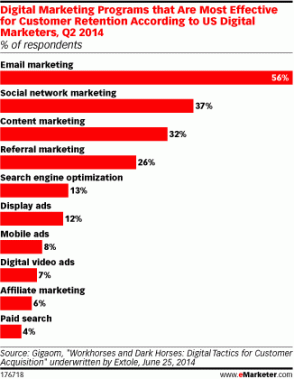
 Sonnhalter has used several services for a very long time… as in decades. I’m not sure how we started working with these services, but I had to assume there was a reason.
 We’ve all heard the term “social media,” and you may have even been afraid to ask, “What the heck is that?!” Regardless of your awareness level, you shouldn’t be asking yourself if your business should be engaged in social media. You should be asking yourself how.

 We’ve closed the books on 2015 and 2016 is already off to a great start. If you haven’t already, now is a great time to evaluate what worked well and what didn’t work for you in 2015 to calibrate your 2016 efforts.
 Sometimes I get scared that others in the industry don’t know what PR actually is or stands for. The textbook definition of PR is simply put as Public Relations, the way that you communicate (relate) with your audiences (publics).


 When you start limiting the flow of information in your organization, divides begin among associates, departments and divisions. Many mature brands struggle with the problem of departmental silos, while some start-ups introduce products at lightning speed. How can this happen? The reason is communication is their lifeline to survival and success.


 Cleveland – October 2015 – Sonnhalter, a communications firm marketing to the professional tradesman in the construction, industrial and MRO markets, announces Nook Industries as one of its newest clients.


 e been reading the book, “Trust Me, I’m Lying: Confessions of a Media Manipulator,” by Ryan Holiday at the recommendation of a colleague. It’s full of interesting, and damning, tidbits of information about today’s online publishing world.

 Landing pages are a great way to both monitor and capture information. The key to successful landing pages is to focus on the one message that got them to that page and deliver.


 The job market is tight, and you have several unfilled openings for hard-to-find candidates, causing your company to lose production unless you pay overtime to your current staff. You’re not alone. According to a recent Boston Consulting Group report, by 2020, there will be a shortage of 875,000 machinists, welders, maintenance technicians and industrial engineers. The steady growth in Northeast Ohio manufacturing, just as many skilled laborers are reaching retirement age, is leaving employers scrambling to find the right candidates from an ever-shrinking pool of applicants. Often, positions remain open for months while HR personnel search for the perfect person who can perform 100 percent of the job duties upon hire. A better solution may be employing individuals with school training who are motivated to work in their chosen fields. Let’s explore why.


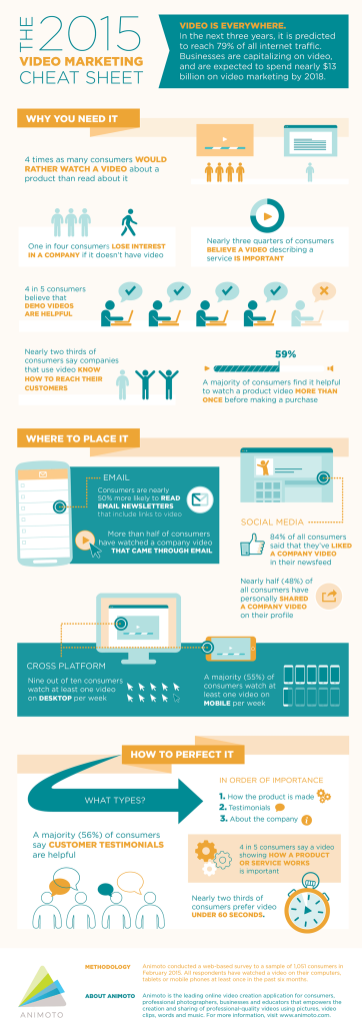


 Constructing large structures using a
  Building firms are using drones more frequently to help with inspections and material delivery.

 Sonnhalter is offering a Half-Day Brainstorming Session to give you a new perspective and some fresh ideas. We’ll bring our idea people and meet with your team. Then, we’ll give you our recommendations in the form of new ideas that you can implement.

