
What are you Doing to Maintain Customer Relationships?
You’ve worked so hard to close that big account and now that you have, your job is done, right? Maybe your job is, but it should be handed off to someone else to continue to nurture it.
Lets face it, new business is hard to develop and you’ve got a lot invested in both time, talent and promotional dollars to bring the new customer through the doors. Don’t you want to keep them?
Attracting new customers may be the easier of the task. The key lies in being able to keep them engaged and buying from you. Take off your selling hat and think about giving them value they can use in their job. This could be anything from a tip on how to do a process more effectively to sharing industry concerns. You might even want to give them a survey to keep them engaged and find out profile info at the same time.
Granted there are several ways to do that, among them using email. I recently read an article by Kevin Gao, in MarketingProfs, Email best practices for developing and maintaining crucial customer relationships by effectively using email.
Kevin outlines ways you can develop a marketing plan using emails to get the most out of them.
He addresses his 6 life cycle stages of a customer and gives examples of things we all can do leverage each stage.
- Prospects – Not-yet customers that need to learn more about your products/services and be persuaded to consider us.
- New Customer – Once you have them, you need to start developing and nurturing a relationship with them.
- Active customer – Make them feel welcome. Thank them for the business.
- Repeat customers – They have already bought into the concept that you and your products are good. Don’t overwhelm them. Keep in communication with them, but make sure they are spaced out and when you do communicate with them you give them something of value.
- Lapsed customers – Find out why they aren’t ordering and put a plan together to start up a regular communication with them.
- Inactive or abandoned customers – Should be broken into those who should not be contacted and those that might be persuaded to come back.
Do you have a plan in place to maintain key customers?
National Manufacturing Day Opens Doors
Today we have a post from Sonnhalter’s PR Engineer, Rachel Kerstetter.
I love to celebrate the random, weird holidays. It seems like every day is a celebration of something: National Hug Your Cat Day, International Tree Climbing Day, Corn on the Cob Day, World Toilet Day… and this list goes on.

Tomorrow, October 4, is National Manufacturing Day and is much more than just a day on a calendar. National Manufacturing Day is a team effort to change the perception of the industry.
Some manufacturers are hosting open houses and other events in order to give manufacturing a facelift and address the labor shortages in the industry and connect with a new generation.
2013 marks the second year of National Manufacturing Day being celebrated. Last year more than 240 events were held in manufacturing facilities in 37 states and more than 7,000 people participated. This movement is growing, and with more than 500 events scheduled for tomorrow, the doors are being opened.
October 4th is a great place to start, but changing the perception of the field is more than just one day. It requires getting involved with schools and communities, inviting them to see the career options in this industry.
A quick look at manufacturing:
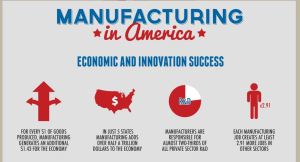
Click to view more
You can visit mfgday.com to learn more.
Are You Missing out on Mobile Marketing Opportunities to the Professional Tradesman?
We’ve talked many times about the importance of having a mobile strategy when wanting to reach the professional contractors. Their office is a jobsite and they need to be and stay connected. Mobile is changing the way we reach these important people.
A recent article by Bob Oord in marketingprofs outlines the explosion in this market and ways we can maximize our efforts there. An amazing stat is that their usage has doubled in just 1 year! The integration of mobile apps with CRM and business intelligence has changed user expectations.
TOP MOBILE TACTICS TO CONSIDER:
- Responsive website – so it can be read on any device
- Mobile-friendly campaigns – optimize landing pages.
- Mobile advertising – can be tailored by location, time and device so take advantage of them.
- Mobile email – make sure your HTML can be read properly on these devices.
- Mobile apps – apps let you secure a prominent presence on your customer’s device.
Please note that a recent report by Forrester, “Don’t Confuse Tablet And Mobile Marketing,” a B2B marketer needs to differentiate between smart phones and tablets. Smart phones have a much smaller screen for content experiences and is used “on the go,” while tablets are used more at home and in the office offering rich content opportunities.
If you liked this article, you might want to read:
Mobile Marketing to the Professional Tradesman: What are you Doing?
Why Mobile Marketing is Important for the Professional Tradesman.
Customer Service: What Are You Doing to Retain Customers?
 Most of our efforts are in generating new customers, but what about the current ones that are paying the bills? The number varies but it costs a lot more to get a new customer than to retain an existing one.
Do you know what a customer is worth to you? Think beyond this quarter or even this year. Think about the last 5 years. How much stuff have you sold them? More importantly, if you come out with something new, where are your best chances of selling it? To someone new, or to someone who knows, likes and trusts you?
I recently read a post in MarketingProfs by Rafe Gomez comparing an experience he had when taking his 11-year-old daughter to a rock concert and how the band delivered on the “customer experience.”
Here are some of his insights on how we can make the customer experience better, resulting in better loyalty and ultimately more sales:
- Deliver outstanding quality – from a great quality product to courteous customer service and user-friendly literature.
- Understand what your customers want – don’t assume to know what they want – ask them.
- Connect with them – direct relationships are the most important and the most challenging. Always think WIIFT (What’s In It For Them). Be sincere and upfront with them. When communicating with them, don’t always be selling. Try to help solve a problem even though it might not, in the short-term, result in a sale to you.
- Under promise and over deliver – exceed your customers’ expectations, then do it again!
- Don’t sit on your laurels – Yes, you have some neat products, but instead of sitting there and just doing the same old same o, innovate. If you don’t, someone else will.
Now these points probably aren’t a revelation to you, but when was the last time you focused on your customers and said THANK YOU!
Content Marketing: Have a Strategy and Be Relevant
Today we have a guest blog post from Rosemarie Ascherl, PR Foreman at Sonnhalter, discussing content marketing. Content marketing should be part of all B2B [and B2T] business’s overall marketing strategy.
Earlier this month I had the opportunity to attend a fabulous week of learning and motivation when I attended the 2013 Content Marketing World Summit at the Cleveland Convention Center.
 Content marketing’s purpose is to attract and retain customers by consistently creating and curating relevant and valuable content with the intention of changing or enhancing consumer behavior. It is an ongoing process that is best integrated into your overall marketing strategy, and it focuses on owning media, not renting it.
While the term content marketing has become popular in recent years, content marketing is a marketing technique that marketers have been using all along. Top B2B content marketing strategies are social media, articles on a business’s website, eNewsletters, case studies, videos and articles on other websites.
While there were many important takeaways from the conference, a couple stood out:
Content marketing needs a strategy
Before you dive into producing your content, you need to have a content marketing strategy. You need to establish your goals and mission, define your audience and establish your process. Content needs to be planned around a clearly outlined purpose. You need to establish the why behind your content strategy before you can begin to put together the how and the where.
Content marketing must be relevant
To establish authority and gain trust with your audience, your content must be valuable and relevant to them. This relevant industry information should provide insight or entertain them. Content must fulfill a need, be interesting and unique.
How can you create something meaningful for both your brand and your audience? Understand your customers, and try to find ways to solve their problems. Give them content that addresses their needs. Remember that it’s not about you—it’s about them. Ultimately, providing this type of content allows a company to steadily build rapport with its demographic and develop a loyal following.
If you find this post interesting, you may be interested in the following:
Manufacturers: What are you trying to accomplish with your content marketing?
Why do you use content marketing – Do you think it’s for branding or for selling?