by tradesmeninsights | Jun 11, 2014 | Marketing Tips, Marketing Tools, Marketing Trends
Traditional marketers are still, for the most part, selling the features and benefits of their products and why they are better than the competition.
Look at any trade magazine for example, and look at the headlines. I’ll bet 80% of them are promoting just that fact.
To stand out in the crowd and really get some traction in the market, we need to put the WHY before the HOW. The reader wants to know or is searching for solutions to his problems. Ways to make his life better. Here’s an example of someone doing it right (disclaimer, they are a former client of ours).

Osborn is a global manufacturer of surface treatment solutions. In other words, they make stuff to remove and polish metal parts. They are one of the major players in the world, but like everyone else, they have a ton of competition.
A typical method of selling these types of products is on price since most users can differentiate the different levels of quality. It’s hard to make any margin if price is the topic of conversation. So what Osborn did was ask the WHY question to find out what kind of pain points their users are having. One identified they can help in the production process to get the most productivity out of their processes. Whether it’s in their facility or Osborn’s test lab, they can help find a solution.
It’s ironic that many of the performance issues aren’t with the product, but how they are running it on the equipment. Even though they are in the brush business, their ultimate goal is to help the customer. Thus their value proposition isn’t selling grinding wheels, but selling solutions. Do you think price comes into the selling equation now? Nope.
Their program identifies and talks to different end-user groups as well as a different message to their distribution partners. All directing them to specific landing pages.
So if you put the WHY before the HOW, chances are you’ll be noticed more, get more interaction and sell more stuff with price not being the leading topic of conversation.
by tradesmeninsights | Jun 10, 2014 | Marketing Tips, Marketing Trends, Traditional Marketing

I recently did a series of interviews and podcasts of contractors. The main focus was on what manufacturers could do to better support them in the field. These contractors were electricians, plumbers, HVAC and general contractors. There were some common issues from them that I thought would be useful to manufacturers:
- Quick response to questions – access to knowledgeable tech people for problem solving.
- Regular site visits – have your salesman make regular visits. Most contractors say they very rarely see the manufacturers. Great way to build relationships and identify possible product problems or shortcomings.
- Application training – quick tips on doing a process better/quicker. If not in person, via email.
- Best way to communicate with them – mobile phone or email.
- Don’t use/look at social media (Twitter, Facebook).
- Recognize that they are professionals.
It looks like there are some opportunities for manufacturers to up their game. There wasn’t a contractor I talked to that would turn away a visit from you. That sounds like an opportunity to me.
by tradesmeninsights | Jun 4, 2014 | Marketing Tips
I think we all struggle with understanding ways to match content with the sales process to help the prospect through the sales funnel.
I recently read an article by Paul Gustafson about mastering effective B-to-B content. His points are thought leadership, content that’s easy to consume and the ability to listen to what the customer is saying.
B-to-B audiences can be demanding and we need to help the prospect through the sales funnel. At each stage we have the appropriate content to move them down the line.
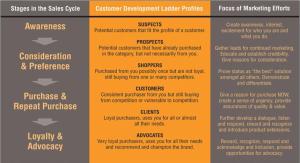
Thought leadership – you need to focus on 3 components:
Expertise
Original
Comprehensive
Teaser content – pique the interest to refine audience, and then when you have them hooked, you can engage them with more meaningful content.
Listening and engaging – give your audience an opportunity to respond. Then listen and react. More comments mean more discussions.
Paul leaves us with a final thought:
“Effective B-to-B social content starts and ends with thought leadership. The resulting social engagement can refine that voice, strengthen your future content and expand your audience base.”
by tradesmeninsights | May 28, 2014 | Marketing Tips, Traditional Marketing
As manufacturers, we have to serve two masters, the distribution network we sell through and the ultimate end-user. Sometimes we can take these relationships for granted. Remember, they have other options. Here are a few thoughts on how to nurture the relationships:
Distributors
- Distributors do have a choice in what they carry. Chances are they have your product as well as several competitors on their shelves. So let’s assume for the sake of this exercise that product performance is comparable.
- What makes their counter guys and sales force sell more of one brand over the other? Yes, you can offer SPIFs, but that at best is a short-term solution to increase sales.
- I’d say things like ease of ordering and timely delivery might be helpful.
- What about knowledgeable factory people available for product training and troubleshooting?
- How about making end-user calls with their sales force?
Here’s a unique thought – thank them for their business instead of hammering them to help you make your numbers this month.
Most distributor/manufacturer relationships have a long history. Don’t take them for granted. Sales will come, but distributors are looking for more than a quality product at a competitive price.
My grandmother used to tell me you’d catch more bees with honey than vinegar.
Contractors
Many of the same tactics work at the contractor level. But here’s a place where you can make a brand difference:
- If you have their back and they know they can count on you for product/technical support, you’ll make a friend for life.
- Contractors-like elephants-have long memories, and if you drop the ball too many times, they will find alternative products. Trust me, I’ve seen it.
- Contractors want to be recognized for the trade professionals they are. Something as simple as sending them an email for example, on National Plumber’s Day, recognizing how hard they work. Wouldn’t you think that would have a positive brand experience?
You know, this stuff isn’t rocket science, it’s more common sense. And it doesn’t have to cost more money, just use good business practices.
My golden rule is to treat people the way you expect to be treated. It works and it makes life a whole lot simpler.
by tradesmeninsights | May 27, 2014 | Marketing Tips, Social Marketing, Traditional Marketing, Uncategorized

We all are working hard to create content in various forms, but what can we do to create the demand for it? If we build it, it will come philosophy won’t work.
In the b-to-b space where selling cycles can be long with numerous folks involved, you need to address several different issues along the way down the sales funnel, but do you know what they are?
I’ve long been a proponent of sales and marketing working closely together. After all, the objective of both is to sell more stuff.
I’m amazed that folks in the marketing department spend little or no time in the field talking with customers. I always recommend marketing folks spend time with the salesmen in the field, and I don’t mean a day or two. Spend a week or so and you’ll see customers in various stages of the buying process.
More importantly, you as a marketer have the unique opportunity, while in front of a prospect, to ask some really relevant questions that the salesman might not ask.
Questions like:
- What other types of info would be helpful in your decision-making process?
- What triggers a buyer to start the process?
- What kinds of concerns do your colleagues have that we might address?
- Focus on customers needs and concerns.
Why do I keep harping on getting in front of the customer? Let’s be honest. Most companies don’t know their customers well enough. They don’t know or understand the buying process well enough. They don’t have content framework to communicate with the potential buyer.
I read an interesting article recently by Jay Hidalgo in the Chief Content Officer magazine that outlines 3 steps to create a process to create demand for your content.
His User’s Guide consists of 3 things:
- Developing a buyer’s persona (know your customer)
- Define their buying process
- Developing a content framework for communicating with a buyer
He takes you through a process that engaged the combined efforts of sales and marketing resulting in a well-thought-out strategy, and content that will be on target that users will want to pass it on. You can read his entire article here.
by tradesmeninsights | May 21, 2014 | Marketing Tips, Marketing Tools, Social Marketing, Traditional Marketing
 Don’t have a plan to follow or nurture leads?
When was the last time you responded to an ad, e-blast or other form of communications about a new product and never heard from the company after they got you what you requested? Or if you did hear from them, it was weeks or months after the original inquiry.
I bet it’s more the rule than the exception, especially in the B-to-B world. What I can’t figure out is why. Unless your product is so unique, wouldn’t you want to let the prospect know why dealing with you is better?
Yet I see many manufacturers still today that have no formal plan to follow and nurture leads. If they are not going to follow-up the lead, then why are they promoting the product in the first place? It’s a waste of time and money.
Many pass the lead on to their distribution network before qualifying them as to what stage in the selling cycle they are.
Wouldn’t it make sense to follow-up with the prospect…
- to see if they got the info they requested?
- to see if you can answer any questions?
- to direct them to a local distributor?
- to possibly offer them some other help or info once you determine where they are in the sales cycle?
A lead that has been qualified and then passed on to either rep or distributor gives them a little better feel for what the prospect is looking for and the application. The lead doesn’t stop there; it’s only the starting point.
There are several CRM programs out there that can help you manage, track and nurture the leads. What I don’t understand is why folks are using them. One reason I found is that lots of sales folks don’t like lead tracking and nurturing programs because it identifies some weak links in the selling cycle. In the world of ROI, I would think Sales and Marketing would want to know where new business is coming from so you can do more of the same.
It makes sense if you qualify the lead before giving it out to follow-up with. You’ll get better results and salespeople might even call on them.
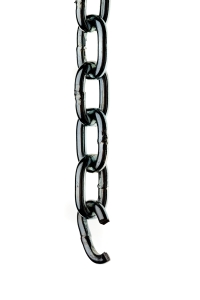
The sales cycle is only as good as its weakest link.



