by tradespeopleinsights | Nov 7, 2012 | Marketing Tips, Social Marketing
 Come on now, let’s be honest here. You got into social media maybe because you thought it might help your business overall, but maybe you got into it because everyone else was doing it and you didn’t want to be left out.
No matter why you got into it, many B-to-B companies are getting a big F in social media and they can’t figure out why. Social media isn’t a silver bullet, it’s not a stand-alone tactic, it’s something that should be used in conjunction with your other marketing tools.
In order to use social media, you also need to understand how and why to communicate using this media. Traditional feature/benefit, “how great we are” copy won’t work in this arena. Your customers/contractors are looking at ways to solve their problem, not get a sales pitch. They are going to Google it…” How to troubleshoot a specific plumbing problem?” If you want any chance of getting in front of that person, you had better written content and have it tagged properly with the right key words if you want to have a chance of being on the first page of the search results.
I recently read an article by Kipp Bodnar, 10 Reasons Why B2B Companies are Failing with Social Media, that outlines some very important points. Here are some highlights:
- Lack of content – The more valuable content you have up there, the better your chances of success.
- Focus on lead generation – Not number of followers or clicks. Leads turn into sales and isn’t that our end game?
- Get management to buy-in – To do social media right it takes time and talent, and if you can get support from the C suite, you’re paddling upstream.
- Identify your target audience – If you can’t do this, then how will you be able to find out what their critical issues are?
- Don’t be boring. Make your communications exciting – Give them “HOLY COW” content.
- Improve your website – You could be doing everything right in social media, but if where you’re sending them sucks, then you’ve lost all the momentum and credibility you’ve worked so hard to establish.
Learn from your mistakes and go out there and kick some butts!
by tradespeopleinsights | Oct 31, 2012 | Marketing Tips, Marketing Tools, Traditional Marketing
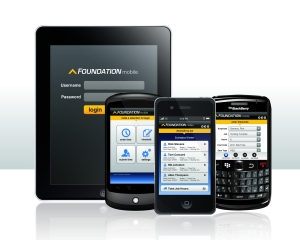 Mobile is a hot topic, and I thought that a practical view from someone who is dealing with contractors on a daily basis would be beneficial. Fred Ode is CEO/Chairman of Foundation Software, and they are the leading accounting software for contractors. Fred has written several articles and is known for his insight into this market. Here are some practical ways contractors should be using mobile. Enjoy.
Guest post By Fred Ode, CEO/Chairman of Foundation Software
Stop where you are right now and look around. I bet there are at least two mobile devices in your vicinity. Depending on where you are—say a crowded street—there may be even more! This is the Mobile Age and many industries, including construction, are using this technology to improve their work processes.
So what types of mobile applications could benefit your construction business? One is a remote timecard entry.
Remote Timecard Entry
Contractors can now utilize remote timecard entry applications to streamline the flow of timecard and job data between the field and the office. Some other benefits of a remote timecard entry system are:
Less Double Entry, Fewer Errors. By entering time in the field, contractors can eliminate handwritten timecards (and the difficulty that comes with reading them!) Time is entered directly from the field in a digital format just once, and is then synced back to the office.
Data Defaults. Many apps have dropdown fields that already contain information pulled directly from the company’s accounting software like employee names, job codes, and more.
Multiple Timecard Formats. A good remote timecard entry app will offer multiple timecard formats, including single and group timecard options.
Benefits of Mobile Applications
When it comes down to it, the ultimate goal of any mobile app is to help contractors improve their processes across the board. Some of the benefits include:
Better Communication. Mobile devices can greatly improve communication between crew members. Workers on a large job site can instantly send one another updates, pictures and more.
Improved Workflow and Real-time Data. Along with communication, mobile devices also offer improved workflow and real-time data. Because communication is instant, there’s no waiting around to see if requests were approved or if the next steps can be taken.
Offline Capability. Some apps are equipped with offline capability, allowing contractors working in remote job locations to enter timecards, save them, and sync back to the office once they re-enter their service area.
Electronic Trail of Data. Using mobile applications also creates an electronic trail of data that contractors can reference at any time. Whether it’s solving an issue while a job is still active, or looking back at past jobs to better plan for future ones, the ability to save and learn from past data can only be beneficial.
Making the Move to Mobile
Remote timecard entry is just one of many helpful applications available to contractors. So where to begin with making a move into mobile? Start with a clear goal and thorough research. Find the options that will benefit the company and that have all the features they need. And don’t forget to get the end-users on board before starting the implementation process!
by tradespeopleinsights | Oct 24, 2012 | Marketing Tips, Social Marketing, Traditional Marketing
The correct answer in my mind is today. We all get caught up in the day-to-day to do list and putting out the most recent fire, but we should be aware of our brand daily.
Branding is about your whole organization, from the way you answer the phones, to the attitudes of your CSRs. It’s about a culture, things that are out of the control of the marketing department. Yes, marketing can control the look and feel of promotional materials, but once we’ve hooked a prospect, what happens when they contact the company and actually talk to a human being?
Heidi Cohen, in her post, Why Brands Matter (And Size Doesn’t), highlights several attributes we can all use to help in our long-term objectives.
Here are some highlights:
- Are you providing value to your customers – understand your target markets and their needs
- Are you relevant to your customers – be where your customers are
- Extend your brand beyond the product – provide useful info at every step of the purchasing process
- Have a brand personality – needs to be consistent in all dealings with customers
- Creating a trusting relationship – earn your reputation every day. Don’t assume anything.
What’s your company doing on a daily basis to make sure your brand is living up to expectations?
by tradespeopleinsights | Oct 23, 2012 | Marketing Tips, Marketing Tools, Social Marketing
For those of you who are still getting your feet wet in social media, here’s a book that will help you get started. It’s called Content Rules by Ann Handley and C.C. Chapman.
It gives you insights on how to create blogs, podcasts, videos, e-books and more. It’s an easy read and they break down the book into three sections – content, how-to section and examples of success stories.

by tradespeopleinsights | Oct 17, 2012 | Marketing Tips, Marketing Tools, Traditional Marketing
 If a picture is worth a million words, then what’s a video worth?
B-to-B marketers are finally coming to realize that video is an important marketing tool. What some don’t realize is that putting it on your website may not be the best place to house it. Video should be housed somewhere like YouTube. From a branding perspective, start your own channel on YouTube. I don’t know a manufacturer that couldn’t take advantage of this marketing tool.
Here are some interesting stats:
- Next to Google, YouTube is the next highest used search engine.
- YouTube has 30 million daily active users. There are 500 hours worth of video being uploaded every minute.
- Google says that an indexed video stands a 50-time greater chance of ranking on the first page of search than a textual page.
- Video rates have 400% higher engagement than a static site.
Anyone can get into the video game today. You can buy a good camera for around $300 and there is editing suite software available that almost anyone can use.
Here are just a few of the ways that video can be effectively used for B2B business challenges:
- Boost Awareness, Visibility and Reach
- Customer Education with Product/Service Demos and Training
- Build Trust with Customer Testimonials/Case Studies
- Boost Engagement (keep attention on your message)
- Lead Generation: Drive Interest and Boost Leads
- Change Management: Leverage Video to Persuade and Motivate
- Call to Action: Engage Emotion – Demonstrate Value – Create Interest – Drive Action
- Branding: Craft a Consistent Message for a 24/7 Global Audience
So if you haven’t taken advantage of video, you should give it a try to see what kind of new activity will come your way.
by tradespeopleinsights | Oct 16, 2012 | Marketing Tips, Traditional Marketing
Depending on what industry you’re in, the rule of thumb is that it takes anywhere from 5-9 times more effort to get a new customer than to keep an existing one. So why don’t we spend more time nurturing the ones we have?
We’re all guilty of taking customers for granted sometimes. I read an article on marketingprofs.com, The 7 Ps of Customer Retention that I thought was appropriate. Here are some highlights:
- People – It’s about building relationships. Treat your customer as a person.
- Product – Make sure your product is up to what you promised it would be.
- Place – How does a customer communicate with you? Make it easy.
- Price – You need to take care and give them a good price. They expect you to take care of them.
- Promotions – Since they are already your customers, you know what they are buying and can make suggestions for other potential products/services they may be interested in.
- Processes – Customer surveys, social media monitoring and customer engagement tools to understand how each customer is engaging with you.
- Positioning – Know who you are and clearly communicate that to your customers. Keep the message simple and to the point.
Those are some suggestions on how to keep your current customers happy.

 Come on now, let’s be honest here. You got into social media maybe because you thought it might help your business overall, but maybe you got into it because everyone else was doing it and you didn’t want to be left out.

