by tradespeopleinsights | Oct 17, 2012 | Marketing Tips, Marketing Tools, Traditional Marketing
 If a picture is worth a million words, then what’s a video worth?
B-to-B marketers are finally coming to realize that video is an important marketing tool. What some don’t realize is that putting it on your website may not be the best place to house it. Video should be housed somewhere like YouTube. From a branding perspective, start your own channel on YouTube. I don’t know a manufacturer that couldn’t take advantage of this marketing tool.
Here are some interesting stats:
- Next to Google, YouTube is the next highest used search engine.
- YouTube has 30 million daily active users. There are 500 hours worth of video being uploaded every minute.
- Google says that an indexed video stands a 50-time greater chance of ranking on the first page of search than a textual page.
- Video rates have 400% higher engagement than a static site.
Anyone can get into the video game today. You can buy a good camera for around $300 and there is editing suite software available that almost anyone can use.
Here are just a few of the ways that video can be effectively used for B2B business challenges:
- Boost Awareness, Visibility and Reach
- Customer Education with Product/Service Demos and Training
- Build Trust with Customer Testimonials/Case Studies
- Boost Engagement (keep attention on your message)
- Lead Generation: Drive Interest and Boost Leads
- Change Management: Leverage Video to Persuade and Motivate
- Call to Action: Engage Emotion – Demonstrate Value – Create Interest – Drive Action
- Branding: Craft a Consistent Message for a 24/7 Global Audience
So if you haven’t taken advantage of video, you should give it a try to see what kind of new activity will come your way.
by tradespeopleinsights | Oct 16, 2012 | Marketing Tips, Traditional Marketing
Depending on what industry you’re in, the rule of thumb is that it takes anywhere from 5-9 times more effort to get a new customer than to keep an existing one. So why don’t we spend more time nurturing the ones we have?
We’re all guilty of taking customers for granted sometimes. I read an article on marketingprofs.com, The 7 Ps of Customer Retention that I thought was appropriate. Here are some highlights:
- People – It’s about building relationships. Treat your customer as a person.
- Product – Make sure your product is up to what you promised it would be.
- Place – How does a customer communicate with you? Make it easy.
- Price – You need to take care and give them a good price. They expect you to take care of them.
- Promotions – Since they are already your customers, you know what they are buying and can make suggestions for other potential products/services they may be interested in.
- Processes – Customer surveys, social media monitoring and customer engagement tools to understand how each customer is engaging with you.
- Positioning – Know who you are and clearly communicate that to your customers. Keep the message simple and to the point.
Those are some suggestions on how to keep your current customers happy.
by tradespeopleinsights | Oct 10, 2012 | Marketing Tips, Marketing Trends, Traditional Marketing
 I recently attended Content Marketing World in Columbus where I got a glimpse of the 2012 Channel Preference Study by Exact Target. The study gives insights to different channels – direct mail, email, Facebook, LinkedIn, Google+, Mobile Twitter and SMS.
What surprised me in this world of “Post PC Era” where mobile seems to be taking over the world, that the old standbys of direct mail and emails are still alive and well.
Email is by far the most acceptable due in part to the channel’s familiarity, flexibility and universality with 91% using it on a daily basis. The key to success today is audience segmentation, data-driven insights and relevant content.
Direct mail – in an online world, the fact that 65% of consumers have made purchases as a result of a direct mail piece validates the channel. Interestingly, direct mail is the only unsolicited message that isn’t viewed as inappropriate by consumers.
So from a B-to-B point of view, what are you doing to capitalize on these two channels?
Here are some tips:
- Keep your message targeted and to the point.
- Give them a solution to a problem and don’t necessarily try to sell them something.
- Use a list that is focused. More is not necessarily better.
- Make an offer clear.
- Give them an easy way to respond.
Those are some suggestions from me. What are you doing to capitalize on these two channels?
by tradespeopleinsights | Oct 9, 2012 | Marketing Tips, Traditional Marketing
We’re so focused sometimes on our traditional ways of promoting our products that we sometime overlook the obvious. Today we have a guest post from Jeff Drust, VP Marketing at CDS (Catalog Data Solutions). CDS is a leading provider of software for product search, configuration and online CAD solutions. Enjoy.
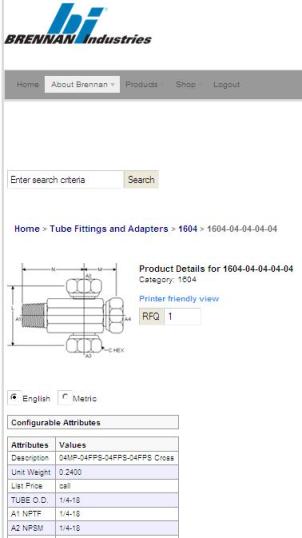 Marketing organizations need to continually come up with new ways to get in front of the ever evolving selection and buying process. Industrial part and component suppliers can now do this in a more efficient way; realign their selling processes with the new buying process and turn it to their advantage with a new content type – CAD downloads like Brennan Industries.
CAD downloads as a type of marketing content, are both highly relevant and valuable to both parties. Industrial suppliers offering CAD downloads of their components (e.g. bearings) or engineered products (e.g. motors) create multiple benefits:
- Adapt and exploit the new online world. Today, industrial suppliers’ websites are frontline sales tools that must help customers quickly find the ‘right’ product and conveniently save designers’ time when they spec your parts into their new designs ahead of the traditional buying process.
- Increase sales. CAD models are the only type of online marketing content (e.g. white papers, case studies, brochures, videos, demos, recorded webinars, reviews, etc.) I’ve heard of leading to a sale nearly 50% of the time they’re downloaded!
- Reach the real decision maker – influence the purchase process. Get selected at design time by the design engineer – the true decision maker. The more complex your parts are to draw (even a caster is complex to draw in 3D), the more design time you save customers and the more valuable your models are.
- Reach new customers. Research into design engineers’ opinions shows that 97% rate CAD models important when selecting a supplier.
- Decrease errors. Using the manufacturers’ CAD models should help eliminate potential CAD errors.
- Generate low-cost, high-quality sales leads. Obtain sales leads in return for CAD model downloads – for one national distributor these leads cost ~90% less, convert faster and convert in higher proportion than traditional marketing generated sales leads!
- Increase existing customer satisfaction and loyalty. By saving customers time and accelerating their time to market.
- Obtain a competitive advantage. So far less than 10% of manufacturers offer downloadable CAD models.
- Lower costs. Replace technical sales requests for CAD models with automated self-help downloads.
- Enhance your distribution channel. Enable all these benefits within your distribution and OEM channel partners and make sure your CAD models are found online at sites like the CAD model search engine, 3DModelSpace.com.
If you’re interested in case studies and testimonials on the use of this type of content, search for “online cad downloads case studies” or see some at https://www.catalogdatasolutions.com/.
by tradespeopleinsights | Oct 3, 2012 | Marketing Tools, Traditional Marketing
By Matt Sonnhalter, vision architect at Sonnhalter.
I don’t think any manufacturer out there would argue the importance of training. What manufacturer wouldn’t want to ensure their customers are trained properly on how to use their products or informed on their latest product offerings. Plus, training offers manufacturers a way to further differentiate themselves from competitors as well as continue to build their brand with their customers.
There are many ways to approach and handle training; from how-to videos and online training courses, to traditional, printed instructional manuals and sales people demonstrating products in the field. But sometimes there is no substitute for in-person training.
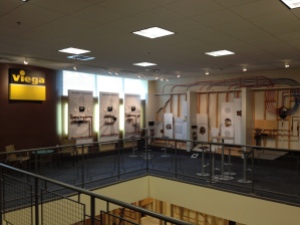
One manufacturer that is leading the way for in-person training is Viega. I should note that Viega is a former client of Sonnhalter. The Viega Education Facility, located in Nashua, NH, is a stand-alone, dedicated building for training and I have to say, a pretty impressive facility. It first opened up in 2006 and since then, over 10,000 people have completed training sessions. Viega averages over 200+ days of training per year, with attendees ranging from architects, contractors and engineers to apprentices, distributors and even Viega employees. Currently there are over 13 standard courses covered in two-day, three-day or five-day sessions.
Here are some course examples: Radiant Design, Piping and Controls, NFPA 13D Fire Sprinkler, Geothermal & Solar and Commercial Radiant Heating & Cooling. Every year, Viega revamps existing courses and adds new ones to encompass the latest technological advances, industry requirements and the newest practices. You can find details for all the individual training sessions as well as register and schedule your training online at www.viega.us/en/service/training..
I’ve had the opportunity to attend a Viega training session. This 2-day training session was focused on continuing education for media partners and included editorial staff from leading trade publications and associations. The training session included classroom discussions about systems and applications within residential, commercial and industrial environments as well as hands-on time to experience several manufacturers’ products and tools.
 We were exposed to many different technologies and options as the training was not exclusive to Viega’s products. I personally had the opportunity to experience a wide variety of hands-on applications, from threading pipe and installing a radiant flooring system to pressing various materials (copper, stainless steel, PEX, carbon steel pipe) with the Viega ProPress® system.
It is great to see the level of commitment Viega continues to put behind training and education. I realize not every manufacturer can have a dedicated training facility or the resources to support it, but every manufacturer should have some level of product training.
What are you doing to ensure you are keeping your customers trained?
If you liked this post, you might want to read:
Podcast: Why Online Training Gives you the Edge.
by tradespeopleinsights | Oct 2, 2012 | Marketing Tips, Marketing Tools, Social Marketing
From a B-to-B perspective, I believe LinkedIn is probably one of the best and most under-used tools in social media.
Think about it. You normally link with people who have similar business interests. Why not let them know your thoughts on subjects using your blog content as one of those sources? I have over 800 connections and through those, I have the potential of reaching over 10 million folks that are connected to my connections. Chances are if someone likes what I have to say, they will share it with others not only on LinkedIn, but on other social platforms.
- Your profile views also drive traffic to your blog – if you put a link to your blog homepage.
- Make a conscious effort to add 2-3 new contacts each week – people you meet at networking events or business functions. LinkedIn even prompts you to invite people who are linked to others you’re already linked to.
- Join Groups – there is a search box where you can look for people, companies or groups. Type in some key words and phrases and see what kinds of groups already exist that you should join.
- Start a group – if no group exists, start one. What better way to establishing credibility in a specific market segment.
Most importantly, you need to become active! LinkedIn is one of my best sources for traffic to this blog.
You need to update your profile, post status updates, post links to blog posts, participate in group discussions and answer questions.
Don’t waste an opportunity.

 If a picture is worth a million words, then what’s a video worth?


