by tradespeopleinsights | Sep 15, 2010 | Marketing Tips, Social Marketing, Traditional Marketing
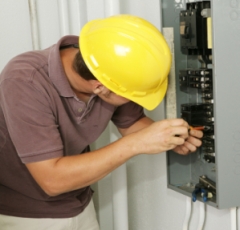
Today we have a guest post by Marc D. LeVine, Director of Social Media for Riaenjolie Inc, a web development company that specializes in websites for contractors and other tradespeople. If you’re a contractor, take a look at his tips to help improve your site.
Some people truly believe that for most local businesses engaging in Social Media (e.g. Facebook, Twitter, LinkedIn, blogging, etc.) it is a complete waste of time, and worse – it’s a waste of money. While this may be true for some small businesses, it is not true for all small businesses.
There is no question that computer challenged individuals probably won’t benefit much from social networking, primarily because they do not understand the technology – not because business opportunities do not exist for them. Others may be avoiding Social Media because they already have more business than they can handle and are stretched too thin trying to meet the demand for their services.
Andy Gaur, CEO of RiaEnjolie Inc., a New Jersey web page design company specializing in professional looking and affordable websites for Electricians and other trades people, is very well attuned to the world of traditional and Social Media Marketing for business. “It is much better to be preparing a well conceived and comprehensive marketing plan and getting ready to use an appropriate mix of outreach strategies rather than just sticking with just one or two strategies that have not worked very well for Electricians and others in the trades,” says Gaur. “If you don’t jump on different things – like Social Media – that show promise, you may end up in a struggle to retain your current customers and fail to gain new ones that are unaware of your business and what you can offer them in quality workmanship and affordable pricing.”
The reality is that while there may be a few good reasons for not engaging in Social Media, there may be many more convincing arguments as to why all small businesses should be involved on the Internet.
Local Business People Need Local Business Solutions
Residential Electricians, in particular, do the majority of their work close to home. Homeowners usually seek out electricians and plumbers that do business within or near to their community. If there is an emergency, they want help to come from nearby and as soon as possible. Customers also prefer to engage local trades people recommended to them by their neighbors and friends or from right out of the local listings – often found on the Web.
In order to be easily found, small businesses need to show up in search results for keyword phrases that include a geographic modifier and their services and/or products. An Electrician in Brooklyn, NY needs to show up in search results for “electrician Brooklyn NY or “residential electrician Borough Park,” etc. They can easily do this without ever once engaging in a social networking activity.
When it comes to Social Media, local businesses should be spending their time on geo-targeted social networks like Google Buzz, Google local search and Foursquare. Maybe Twitter, Facebook and LinkedIn aren’t for them, but these geo local sites are just what the doctor ordered.
 Here is how geo local Internet searching can be of benefit to almost any small business, including electricians. If your small business has done all it can to be easily found, your target customers “land” right on your website and can see your phone number, front and center. If your website is all that it needs to be, they will pick up the phone and call you to come make electrical repairs in their home.
Here are a few things to keep in mind when planning for how your business will be found on the Web by your local customers:
1. Be Sure to Use Local Keywords. Your customers will look for you by city and state, first. They need to be prominent among your keywords and accompany other keywords that are specific to what you do for a living that you also offer your customers to solve their problems.
2. Pay Attention to Local Google Maps. They offer some great tips on local searching. And, having these maps appear right on your website when potential customers are trying to figure out exactly where you are located in relation to their own homes is a great tool and benefit.
3. Choose Authoritative Directories for Inclusion. Submit your website to the better known “authoritative” directories such as Yahoo! Directory. Look for other quality directories on which to post your URL so as to earn enough link equity to rank you ahead of your competitors, especially in the more general directories (re: searching for electricians).
You Can Ignore Social Media, but Not the Internet
Looking for other reasons why electricians and other small businesses need to pay attention to the Internet, if not actively participate in social networking? Your business may be getting bad ratings and reviews from service reviewers and customers. You could possibly be losing business and not know why. You may not even have an opportunity to answer the critics as they continue to throw bricks at you in front of hundreds or thousands of potential customers searching for reviews on your service.
Listen to What Others are Saying about You and Your Business
One thing every small company should do on the Internet is to listen to what others are saying about you – good, bad and awful. Connect with your current customers as well as your potential ones. Be available to answer their questions and to give your advice. Be there to answer their criticisms and address their concerns. You get a lot of mileage by showing everyone that you care and always respond in an honest and truthful way – even when the news may not be what they want to hear. People respect that kind of attention.
When People See That You Know Your Stuff, They Know Who to Call
Respect also comes with being perceived as a subject matter expert (SME). If you are the local electrician – show your target audience what you know as an experienced tradesman. Create a blog and offer some basic tips free and with no strings attached. Share “how-to” solutions and let people know about preventive measures that can save them money and worry. This is the sort of attitude that earns praise and future business opportunities.
You Don’t Need to Get In Over Your Head When You Make the Right Choices
If it sounds like I have gotten you to stick your big toe in the Social Media waters, I may have. But realize that what I have shown you does not involve constant Facebook updating or daily “Tweeting.” My recommendations are directed at being found and being respected, more than they are about engaging in a full range of conversational activities in social networking.
Spend the Bulk of Your Attention and Your Resources on Your Website
______________________________________________________________________________
Sample navigation of a typical Electrician’s Website
Home | About Us | Ethics & Value | Guarantee | Safety Tips | FAQs | Glossary | Jobs | Useful Links | Contact Us | Directions
Services
Residential Voice & Data Cabling | Hot Tubs & Spa | Ceiling Fans & Attic | Emergency & Back up Systems | Panels & Wiring | Rewiring | Landscape & Outdoor Lighting | Inspections | Telephone & Computer/Network Cabling | Surge Protection | Basement Development | Knob & Tube Removal | Kitchen & Bathroom Remodeling | Recessed Lighting | Troubleshooting | Smoke Alarm/Detector Services – Commercial
Service Upgrades | Commercial Kitchen Design & Maintenance | Parking Lot Lighting | GFCI Installation & Replacement | Retail Interiors & Ballast Replacement | Aerial Maintenance & Installation | Infra-red Testing | Infra-red Testing | Track Lighting | Telecommunications | Recessed Lighting | Hazardous Locations ______________________________________________________________________________
The one place that you should invest yourself in – to a larger degree than anywhere else we have discussed – is your website. If you are going to be easily found on the Internet, it is your website that will appear ahead of your name, your address and your reputation. If your website does not look professional at first glance, most people will abandon it before ever reading on to determine your suitability as an electrician.
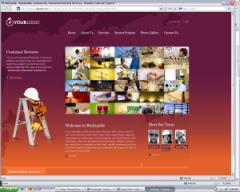 So take a look at your website and ask yourself the following questions about it?
Does Your Website Pass This Test?
1. Is your website design aesthetically pleasing?
2. How intuitive is your website to navigate?
3. Does your website have a clear statement of PURPOSE near the top of its homepage?
4. Content is King. Is your website copy concisely written and richly informative?
5. Do you update your website content REGULARLY to keep it fresh?
6. Does your website have a “call to action” on every page for customers to respond to?
7. Does your website’s index page draw visitors further into its content and to where you display and sell your products and contract your services?
8. Is your website designed to encourage future visits (i.e. is there a newsletter; a tell-a-friend feature; a blog with an RSS button to subscribe with?)
Electricians, you can definitely “short circuit” the process of Social Media and still get the business results you are looking for. You need to be smart in the ways you employ the Internet in order to be easily found and then, to be able to impress your target audience when they land at your website for their very first time. If your website passes the effectiveness test and if you have done all your homework with regard to geo-search, you’ll be very pleased at the additional phone calls you’ll be getting from local customers looking for a good electrician.

by tradespeopleinsights | Sep 2, 2010 | Marketing Tips, Traditional Marketing
You only have one chance to make a first impression!
Yes, I realize that some of you have major market shares in your respective industries. Yes, most contractors should know who you are and what you make. Yes, most of us have competitors that are trying to take share away from us.
So what’s the point? You only have one chance to make a first impression! The point is that we all have to continuously be “up” and be promoting our product.
If a contractor walks into a distributor’s open house event or counter days and meets someone representing you that is less than enthusiastic about being there or knowledgable about your products, wouldn’t you say you might have a problem?
I’ve asked Bill Via, President of CSV Marketing, to outline some tips on ways to not only make an impression on the contractors, but also on the distributors you sell through.
Here are 5 tips to help you set yourself apart at a counter day or open house event:
- Arrive early and be the last to leave. This says, I care more about your business than those that came late and left early.
- Take time during the slow periods to educate the distributor’s salespeople on the features and benefits of your offerings.
- 8′ Table cover with your company’s name $200. This creates a professional space and showcases your products. This is ideal for counter days and says to the customer, the products in this area are special.
- 10′ x 10′ Canopy $150. Space under the tent is always at a premium and often limits your ability to bring everything you want to show; bringing your own tent allows you to fill up your own space and most distributors love the fact that you’re a self sufficient.
- Demo Truck $15,000. Whether it’s a ½ ton van or a retired tool truck, pulling in with a completely self-contained marketing machine says that you’re willing to sell and market your products. The truck serves double duty when it’s time to do in-plant sales calls.
We all know that with open houses and counter days, degrees of success come with all kinds of variables, and regardless of attendance, you can make the difference. What are some things you demand from your Reps to make a lasting impression?
If you like this post, please share with a friend.
by tradespeopleinsights | Aug 31, 2010 | Marketing Tips, Social Marketing
Today we have a guest post by Marc D. LeVine, Director of Social Media for Riaenjolie Inc., a web development company that specializes in websites for contractors and other tradespeople. If you’re a contractor, look at his tips to help improve your site.
Darren Salyer of Total Home Remodeling in Wentzville, MO has been running FaceBook ads since December 2009. By March 2010, he had only spent a total of $125 dollars to gain some needed attention for his then struggling business.
As a result of his dabbling in Social Media Marketing (SMM), Darren’s Facebook fan page received eighty-four clicks over the three month period with about sixty-five of those visitors moving on to review his business website.
It would seem that the marketing effort paid off for Total Home Remodeling, which was rewarded with three nice jobs to bid on. The total value of the three bids was $87,000. Not bad for a $125 total investment.
Under the marketing blog where Darren Salyer posted the results of his online marketing strategy, he reported that “things look good” for getting all three of these contracts signed. Regardless of the final outcome, he snagged three promising opportunities that may not otherwise have come his way had he not given FaceBook’s pay-per-click advertising a try.
Hard Times Call For Hard and Fast Solutions
The current recession has taken its toll on the construction industry. Many independent contractors have been forced to close up shop; while those still hanging on have had to cut back and revise their marketing strategies as Darren Salyer may also been forced to do.
Strapped for cash, many small contractors have had to resort to lower-cost business marketing ideas to bring in more work. Social Media Marketing has proved to be rather effective in helping some of these builders and handymen reach out to a new audience of Web savvy consumers; many of whom live locally and are in need of quality home improvement services.
Local contractors are, for the most part, chasing the same limited pool of work in their area and should be seeking out marketing strategies and tactics to help them stand out among those in an increasingly competitive crowd. The Web offers these small business owners what may be the marketing equivalent of “low price flights” to the usual year long PennySaver ads, which come with recurring cost. Very often these kind of local ads offer little or no response during extended periods throughout the year.
Andy Gaur, CEO of RiaEnjolie Inc., a New Jersey web page design company specializing in professional looking and affordable websites for general contractors and other tradespeople, is very well attuned to the world of traditional and social media marketing. “It is much better to be preparing a well conceived and comprehensive marketing plan and getting ready to use an appropriate mix of outreach strategies rather than just sticking with just one or two that haven’t been working so well lately for most general contractors,” says Gaur. “If you don’t jump on different things – like Social Media – that show promise, you may end up in a struggle to retain your current customers and fail to gain new ones that are unaware of your business and what you can offer them in quality workmanship, good service and competitive pricing.”
Social Media Can Add Depth to Your Marketing Effort
You say you don’t get Social Media? You will not get ‘it’ until you have experimented with ‘it.’ We all engage in Social Media Networking and Marketing in ways that suit our own unique needs and personal styles. Some use it to promote their business. Some use it to research information. Some use it to create a network of friends and business people to communicate with. And, others use it to “lurk” and listen to the conversations of others. For them it is a way to better understand different points of view.
Your time is at a premium, so take some baby steps with social media. Reconcile the time spent on Social Media Marketing by accepting the value of the “conversations” you’ll be soon be engaging in with your existing and potential customers.
No matter what your approach is to social media marketing, you should have a strategy and goal that keeps you focused on your target audience and the ultimate prize – doing business with them. Rather than complicate things too much, here are three steps that apply to almost every small business engaged in Social Media Marketing:
Tip 1: Listen. Blogger Tania Yuki in her post on comscore.com shares the following advice:
“People are talking about your business, so you may as well get down in the weeds and know what’s going on.”
Tip 2: Engage. “Social media is the tool, social engagement is what you do to create awareness and earn sales.” This is according to Social Media Guru, Brian Solis, who has offered a number of bestselling books dealing with Social Media for business. Solis goes on to explain that “Creating a presence in social networks is mandatory, but it’s also not enough. Actively and thoughtfully engaging consumers in social networks is quickly becoming an expectation. It’s up to your business to develop a following.”
Tip 3: Respond. Great response begins with great listening. Lindsay Lebresco of Conversation, a Social Media agency recommends the basics like Google Alerts, Twitter, Technorati and search engines to search out key categories – using keywords – that will let you know what people are saying about you and your business. Carefully read and understand what is being said; (if the remarks are negative) take a few deep breaths and perhaps sleep on it; think of a positive way to frame your response and respond in an appropriate manner.
Before You Can Soar You Must Build A Place to Land
Oh, by the way, there is a preliminary step to these three. You won’t be successful in social media marketing without, first, having an effective website for your consumers to visit when they want to check you out. Most potential customers start their consideration process at your website. It must be professional looking, informative and able to bring them to whatever the next step is that you want them to take leading to doing business with you – a “call to action.”
So take a look at your website and ask yourself the following questions about it? Does Your Website Really Measure Up?
1. Is your website’s design aesthetically pleasing?
2. How intuitive is your website to navigate?
3. Does your website have a clear statement of PURPOSE near the top of its homepage?
4. Is your website copy concisely written and richly informative?
5. Do you update your website content REGULARLY?
6. Does your website have a “call to action” on every page for customers to respond to?
7. Does your website’s index page draw visitors further into its content and to where you display and sell your products and contract your services?
8. Is your website designed to encourage future visits (i.e. is there a newsletter; a tell-a-friend feature; a blog with an RSS button to subscribe with?)
Contractors, you can definitely “build some sweat equity” into the process of social media and most likely will get the business results you are looking for. You just need to be smart in the ways you employ the Internet in order to be easily found by consumers and then, be able to impress them when they land at your website for their very first time.
If your website passes the effectiveness test and if you have done all your homework with regard to local geo-search, you’ll be very pleased at the additional phone calls you’ll be getting from local customers looking for a reliable residential general contractor in the local area .
Marc LeVine – About the Author:
Marc LeVine is the Director of Social Media for RiaEnjolie, Inc. (http://www.riaenjolie.com/construction-websites.html) a NJ-based web development company specializing in professional looking and affordable websites for small businesses.
If you like this post, please pass it onto a friend.
by tradespeopleinsights | Aug 26, 2010 | Marketing Tips, Traditional Marketing
Your knowledge about your business, your niche and your industry is a great asset to your company and that knowledge is often sought after by industry media.
Interaction with the media benefits both parties. A reporter gains depth and substance to the piece they are working on, and you and your company gain priceless publicity.
Here are 6 tips from Rosemarie Ascherl, PR foreman at Sonnhalter, on how to make the most of the trade media:
For this partnering to work though, each party needs to understand how the other works. When you are interacting with a journalist, it is important to remember certain guidelines.
- Prepare – It is important to be prepared when you speak to the media. Before a scheduled interview, take some time to anticipate questions that a reporter might ask. Take some time to learn about the medium, reporter and the audience. By doing this, you can modify your responses to better fit the piece.
- Think before you speak – When talking to a journalist, you want to make sure you are in control and that you have a clear idea of what your agenda is. What do you want to accomplish? What do you want to say? And what don’t you want to say? First, don’t go off the record. If you’re not prepared to hear it, see it or read it in the article, just don’t say it. Second, make sure you take the time to think through your answer before it is spoken, because once something is out there, is no going back. You want to control your answers. If a reporter tries to pin you with a tough question or brings up something you don’t want to speak on, either say you have no comment or try rephrasing the question in terms that are more favorable to you. Whatever you do, don’t lie. Tell the truth. Third, make sure you don’t ramble. Make your point and move on. Reporters think concisely so try to answer the same way.
- Use layman’s terms – You don’t want to use company or industry jargon that might confuse the reader or sound too complicated. Keep it clear and concise for the best results.
- Journalists work on deadline – Editorial opportunities, especially interviews, are requested by a deadline. Often times, the editor calls at the last minute without very much lead time, and you have to be able to meet that deadline. Reporters will go to the next opportunity if they don’t get a response, and a lot of the time that means they will turn to your competitors. No one wants to miss out on a valuable and highly credible opportunity, so it is important to respect an editor’s deadline.
- What’s your message – When speaking with a reporter, try to make sure you get in your key points. Don’t simply answer the question, but try to bridge the questions to a key point you want the reporter to know about. This can open new opportunities to you as well. A reporter might expand your addition to the piece he/she is working on or may wish to contact you further on the new points you have spoken on.
- Time is of the Essence – Always make sure you provide information asked of you. If you tell a reporter that you are going to send him/her more information, make sure you do.
Adhering to a few simple guidelines can result in valuable publicity and gain trust between you and the journalist that can generate future editorial opportunities.

by tradespeopleinsights | Aug 25, 2010 | Marketing Tips, Social Marketing
We’ve all heard of this saying and most people at least try to follow that advice. In the social media world, this mantra is the rule not the exception. Many who jump into social media think of it as just another marketing tool and start SELLING right off the bat and can’t figure out why they aren’t getting anywhere.
There’s another saying – When in Rome, do as the Romans do. This couldn’t be more true than with the social space. You need to help people by giving info away. This flies directly in the face of traditional marketers who want to control the message and have the potential customer jump through some hoops to get information. That’s not how the Romans do it!
I was reading a post recently by Jay Baer, 5 Ways to Turn Helpfulness Into Marketing Greatness, and he outlined ways you could identify customer pain points in order to be helpful. Here are some highlights:
- Use your customer service department – Who talks more frequently to your customers than they do? Have them document every question they receive, and if a pattern develops, create content to answer the questions.
- Ask your customers directly – Web surveys, e-mail surveys, and focus groups are just a few ways to get feedback. Better yet, talk to your top 100 customers and ask them about issues of dealing with your company. You’ll not only come away with good info, you can get some goodwill by just asking.
- Internal search reports – If your website has a search engine, look at a report that tells you what people typed in. This should give you a clear indication of what’s on their minds.
- Get in the trenches – You can’t learn much about your customers’ experience by sitting in your office. Go out and buy your own product, call your customer service department, try to return something. You may be surprised as to how your company is really being perceived in the marketplace.
- Shop the competition – Repeat step 4 but with your competitors. Again, once you go through the experience first-hand, you’ll be able to tell your strong and weak points.
Those are some ideas on how to identify areas/ways to be helpful to customers. What are you doing?
by tradespeopleinsights | Aug 19, 2010 | Marketing Tips, Marketing Trends, Traditional Marketing
When doing an event, from a press conference to an open house or a new product launch, are you using social media to capitalize on it? Social is an inexpensive and cost-effective way to enhance the buzz around what you’re doing. I’m not suggesting that social replace traditional methods, instead use social to enhance them.
I recently read an article on Social Media Explorer.com by Rich Brooks on 12 Ways to Market Your Event with Social Media. Rich makes some good points and here are some highlights:
- Before the event – Market your event through Twitter. Even consider your own hashtag in all your tweets. If the event is large enough give it its own Twitter account. Use Facebook Events to attract fans. Use LinkedIn groups you belong to to promote the event. If you have a blog, use it to promote it. Forums, talk up your event and its benefits. Tell them about the agenda, speakers, etc.
- During the event – Use those hashtags to make your event more findable and searchable. If it’s a local or regional event, use Foursquare and Gowalla to promote it by announcing the event, link to a registration form, give updates. If you belong to Forums, talk up the event and its benefits. Live blogging from the event, let people know what they are missing. Share video and photos – a picture is worth a thousand words.
- After the event – Blog about highlights and possibly interviews with attendees. Post similar comments on Facebook, LinkedIn and Twitter and ask for feedback.
These are some great tips. What are you doing to capitalize on social?
If you like this post, please share it with a friend.


 Here is how geo local Internet searching can be of benefit to almost any small business, including electricians. If your small business has done all it can to be easily found, your target customers “land” right on your website and can see your phone number, front and center. If your website is all that it needs to be, they will pick up the phone and call you to come make electrical repairs in their home.