by tradespeopleinsights | Oct 28, 2010 | Marketing Tips, Social Marketing
Everybody is talking about it, but few are actually doing it, according to a new report out by Geoff Ramsey, CEO of eMarketer.com. According to a worldwide survey, only 16% measure their return on social media initiatives.

Main reasons given by marketers is that they think measuring is too difficult or there are too many options available.
What is interesting is that those who take the time to develop their social media strategies and tie them to bottom line results stand to gain significant competitive advantage.
You can download the report here. It’s worth the read and as always, eMarketer.com has done a good job developing these guidelines.

by tradespeopleinsights | Oct 21, 2010 | Marketing Tips, Social Marketing
According to new research from Sysomos, 92.4% of all retweets happen within the first hour. If you’re looking to be retweeted and nobody picks you up in the first hour, chances are slim to none that it will happen.

TIMING is crucial when sending out tweets. Jay Baer recently wrote a post, 6 Timely Tips for Twitter Success, where he outlines ways you can increase your odds. Here are some highlights:
- Find your influencers – These are the ones we want help with spreading your message.
- Repeat your tweets – If 94% of all retweets happen within the first hour, then it stands to reason the more times your message is out there, the better the chances of it getting picked up.
- Test your times – Depending on your audience, you may want to think about when you send them out. For example, contractors are early birds and if you want to get them, the best time is either between 6-7 in the morning or between 4-5 in the afternoon. You also need to take into condsideration time zones if you have customers across the country.
- Pay attention to structure and language – Are shorter ones better than longer ones? Is it better to put the link at the front or at the end?
- Manage expectations – Reality is 6% of all tweets are retweeted so be realistic.
Twitter is a great tool, but you need to do some homework to insure you’re getting the most out of it.
by tradespeopleinsights | Oct 20, 2010 | Marketing Tips, Social Marketing, Traditional Marketing
 We focus so much time and effort on making the sale that we sometimes forget about customer service if someone has a question or problem. Don’t let your customer service department be the weak link in the chain.
Most customers are repeat buyers, so you need to keep them happy. With the advent of social media, there are more ways that an unhappy customer can let the world know about a bad experience with your company. Here are a few things you can do:
- I’d suggest you go out and buy one of your own products and then go through the process of registering it for warranty and see how your system really works. Is it customer friendly?
- If you have repair centers, make a visit and see how they handle a warranty issue.
- Call your customer service deptartment and see how they handle a problem. And by the way, don’t be nice. See how they handle adversity.
You work so hard for the sale, let’s not forget about the next one. It’s a whole lot easier selling something to an existing customer than it is trying to get a new one.
by tradespeopleinsights | Oct 13, 2010 | Marketing Tips, Traditional Marketing
 Email marketing should be a major part of your traditional marketing communications plan. But do you have a plan on how you want to use it for maximum ROI? In the B-to-B world, even opt-in lists are only being opened on an average of 25%.
Today we’re all bombarded with emails and it’s estimated that the sheer volume will increase by up to 80% by 2013. So the challenge is how to stand out in this sea of emails and if you do get them to open it what’s next? Here are a few helpful suggestions you may want to consider:
- Keep your mesage simple – and to the point of (what’s in it for me). Folks aren’t going to read long emails.
- Give them a call to action – Use emails to “nudge” folks along. Link them to a website, video or coupon offer.
- How do your prospects like to be contacted – Is it traditional email or mobile marketing? Most contractors are on the jobsite most of the day and rely on their smart phones to stay in touch.
- Temper frequency of contacts – Yes they may love you, but they might not want to hear from you on a daily basis. Contact them when there’s something of value to share.
Those are a few hints that we use. Hope about you? What things do you do to make your email programs zing?
by tradespeopleinsights | Oct 12, 2010 | Marketing Tips, Social Marketing
Professional tradesmen, whether you’re an electrician, plumber or locksmith, are finally realizing that social media can play an important part in their new business effort. Here’s one example compliments of Marc LeVine from RiaEnjolie.
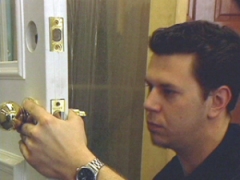
Locksmiths Use Social Media to Unlock Their Business Potential
Many people do not realize that professional locksmiths do much more than just resolve lockouts and make spare keys. In fact, they generally offer a wide range of services that include selling and installing electronic security systems, intercoms and even window bars and gates. Locksmiths are also responsible for many of the break-ins and robberies that never take place as a result of their theft-proofing devices and crime deterring advice. They can also be credited for helping the police identify successful burglars by way of the recordings on their customer’s CCTV surveillance equipment.
Every city and town has, at least, a few locksmiths on hand to serve the local populace. After all, if you suddenly get locked out of your home, you want a service you can call on 24 hours a day and not one that takes 24 hours to arrive at your door.
With the “Yellow Page” phone books on the way out, it is increasingly important for locksmiths to be easily searched for and found on the Web. This means that they must have a professional looking website with strong search engine optimization (SEO) characteristics. The locksmith’s website must offer prospective customers comprehensive and concisely written content explaining everything they might need to know about a business’ products, menu of services, operating hours and contact information.
Just having a website may not be enough to draw attention to a small, local business. Locksmiths and others are beginning to realize that traditional advertising methods are quite expensive and not as effective as they once were.
Many small businesses continue to run ads in weekly papers and Pennysavers, without ever calculating any return on investment (ROI). Several continue to rerun their ads week after week despite only receiving a few and often no customer inquiries at all. What a terrible waste of time and money for so many hard working people. They often feel compelled to advertise exactly the same way they and their parents always have prior to the age of the Internet. Most have never taken any quality time to consider less costly and often more effective alternatives to newspaper, direct mail, radio and CATV ads like Social Media.
This Locksmith May Have Found the Key for Success
Fidelity Locksmith Services has been serving the people of Los Angeles, California since 1975. Their customers include the general public, as well as many well known Hollywood celebrities that are often in need of much more sophisticated and expensive security systems for their magnificent homes and estates. Having a clientele of this type has enough PR value in its own right, but what good is it if these higher profile associations are not pitched and promoted.
During a rash of Hollywood celebrity burglaries in the fall of 2009, Fidelity Locksmith launched a special deadbolt giveaway program aimed at preventing a repeat of the rash of burglaries that plagued the rich and famous of Hollywood Hills.
“It doesn’t matter if you’re Hollywood royalty or a regular guy like me, living through a break-in is life changing. The lost sense of security that comes following a burglary is often even more devastating than the actual property loss,” said Roy Sivan, Fidelity Locksmith’s Chief of Celebrity Services. “We’re offering celebrities free deadbolts to let them know Fidelity understands what they’re going through and to encourage the public to think about beefing up their home security. No doubt such a high profile program gained the attention of those in traditional and social media.
While the celebrity deadbolt giveaway program was certainly attention getting, the company’s well documented advertising and marketing philosophy may even be more noteworthy. Fidelity Locksmith Services is not at all ashamed to share that it uses Social Media as an inexpensive way to reach their target audience. Through this cost savings approach they say they are more easily able to offer the consumer much better pricing than many of their industry competitors.
Indeed, Fidelity Locksmiths has an active social (media) life on Facebook, Twitter and YouTube, where they have created some very funny and memorable short commercials to capture their audience’s imagination along with their business.
http://www.youtube.com/watch?v=hXzT5APbUnw&feature=mfu_channel
http://www.youtube.com/watch?v=Sw0U2sYOmq4&feature=mfu_channel
http://www.youtube.com/watch?v=EmIMChrzIW0&feature=player_embedded
Finding the Right Blend of Marketing is a Cost Saver and Revenue Maker
While not every small company like Fidelity Locksmith operates in a Hollywood type of business environment, every business can embrace the same level of creativity to leverage whatever it is that their own community has to offer. If you can’t leverage the New York Yankees, you can always run promotions with your local minor league team. What you have available to work with (in your community) is much less important than what kind of marketing programs you – yourself – can create to inspire your target audience. Most importantly, doesn’t it really all come down to how well you execute your planning; attract and engage your audience; and convert them to paying customers?
Don’t forget to measure and analyze your activities and results, accordingly. This is so critical to a small business’ success. If your traditional marketing activities have been lackluster over the past six months, you can fairly well predict what they will bring you – if unchanged – throughout the remainder of your annual business cycle. At what cost to your business are such unnecessary shortcomings and why continue to finance them? Social Media is much less expensive (often Free) and often much more effective.
Try a modest combination of Social Media and traditional media to grow your business. Start with your main goals. Write them down and stick a note on your wall to refocus you each morning. Those goals are closely linked – to be easily found on the Web and to make a good first impression.
Accomplish these goals by creating a professional looking website reinforced with fundamentally sound Search Engine Optimization practices. With these goals accomplished, support your website with some basic URL promotional activities (make sure your business URL is all over the place) and engage your target audience at grassroots level on Facebook and, perhaps, Twitter for only a couple of hours each day. The results of this minimal activity just may surprise you.



