by tradespeopleinsights | Dec 22, 2021 | Tradespeople Insights

Happy Holidays from the Sonnhalter team! We are grateful for another successful year, and we couldn’t have done it without our wonderful clients, business partners and friends like you.
The Sonnhalter team will be taking some time off over the holidays from December 24th to January 2nd. We hope that you enjoy this holiday season and time with your family and friends!
We’ll see you in 2022!
Sonnhalter, your B2T partner – let’s build something together.
by tradespeopleinsights | Dec 16, 2021 | Tradespeople Insights
by Emma Jones, guest blogger
In just a few short years, LinkedIn has vastly outgrown its humble 2003 beginnings. From a small professional networking platform, it has evolved into a B2B marketing powerhouse with undeniable benefits toward business growth. Still, it does not suffice to approach it traditionally, especially as a manufacturer. So let’s see what are some best practices for using LinkedIn in B2B and industrial marketing.
What is LinkedIn, and is it effective for B2B marketing?
LinkedIn launched in 2003 and has largely remained a professional networking and career development platform. Since 2016, it has become a Microsoft subsidiary, but its B2B marketing beginnings had already preceded the acquisition. Indeed, by 2015, access to its users’ information had already become the platform’s primary revenue source.
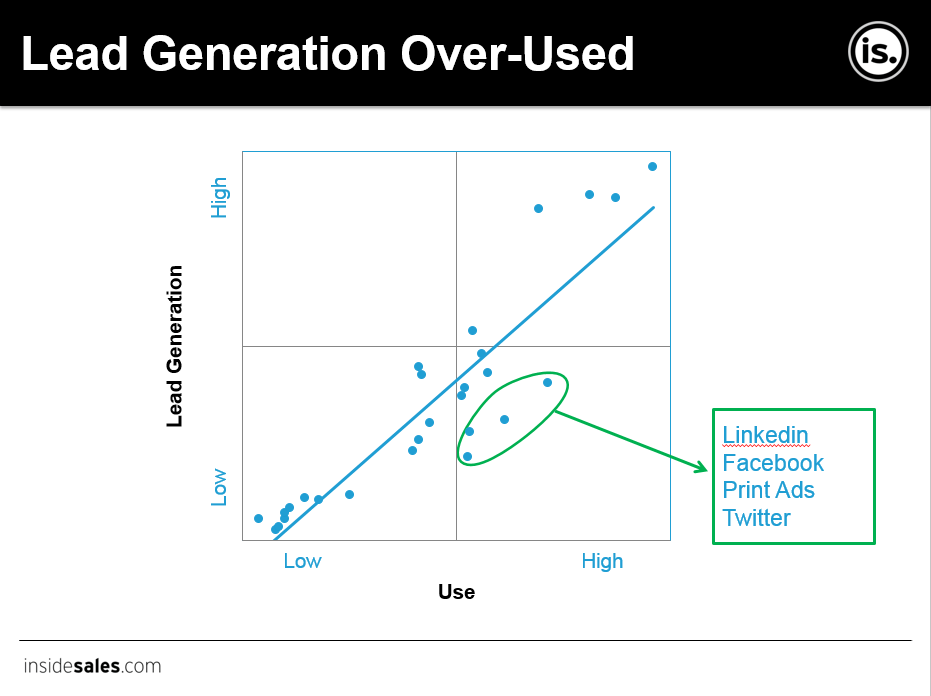
Today, it has proven itself to be an immensely powerful lead generation tool for B2B marketers, regardless of industry. Data by InsideSales outlines this in no uncertain terms; LinkedIn sits confidently among the best.
Alt. tag: A graph on the lead generation effectiveness of various social media platforms.
Source: https://neilpatel.com/wp-content/uploads/2014/11/1-lead-generation-over-used.png
LinkedIn marketing statistics
To illustrate this point, and LinkedIn’s value for manufacturers in particular, let us explore some data.
First, Neil Patel finds that “LinkedIn is responsible for 97% of a business’s social media leads”, a staggering statistic in itself. Hubspot confirms its subsequent appeal with B2B marketers, citing Statista and Wyzowl to assert that:
- In 2019, “LinkedIn [was] the second-most popular social media platform used by B2B marketers, ranking only behind Facebook.”
- “66% of video marketers in a 2019 survey said they would include LinkedIn in their 2020 video marketing strategy.”
- “In 2019, over 87% of video marketers on LinkedIn described the platform as an effective video marketing channel.”
Best Practices for Using LinkedIn in B2B and Industrial Marketing
All that said, however, approaching LinkedIn for B2B and industrial marketing requires planning and a thorough understanding of what the platform offers. It requires careful alignment with your other marketing tactics and assets, from your website to your social media activities. Finally, it requires effort and readjustments, as most B2B marketers will attest to, and absolute transparency. Indeed, misleading information alone is the primary deal-breaker for B2B buyers.
#1 Start with SEO
First and foremost, it should be undeniable that SEO is something worth investing in regarding B2B marketing. That’s because your company page, showcase pages, and even direct outreach will inevitably funnel traffic to your website.
Naturally, search engine visibility may not directly benefit your LinkedIn marketing efforts. However, it will help acquire traffic and leads from other practices, and SEO will optimize your website in other key regards to entice LinkedIn B2B leads. Among others, consider your website’s speed and responsiveness as examples. Both speed and responsiveness are crucial factors for lead generation, regardless of type or industry. Google/SOASTA research has correlated the former with higher bounce rates, and the latter spearheads Google’s Core Web Vitals.
#2 Define your goals
Next, with SEO foundations in order, you may begin defining your LinkedIn B2B marketing goals. For industrial marketing, manufacturers will typically aim for lead generation, attracting valuable prospects. You may, however, aim for brand awareness instead, depending on your overall marketing efforts. You may even seek to enhance engagement, which LinkedIn does facilitate as well.
To do so properly, you may adhere to SMART goal definitions, as Hubspot defines them:
- Specific – define your goals in as specific terms as possible.
- Measurable – set clear performance indicators to measure your goals’ success.
- Attainable – keep your goals realistic in relation to your resources and market position.
- Relevant – set relevant goals that complement your overall strategies.
- Time-bound – keep your goals strictly time-bound.
#3 Refine your company page
With your SEO and goals in order, you may now begin to delve into LinkedIn’s unique characteristics. The very first step should be to refine your company page, as it will often be your leads’ first contact with your brand.
A LinkedIn company page is, in many regards, similar to Google My Business (GMB) profiles. As such, many best practices for using LinkedIn in B2B and industrial marketing will follow similar steps.
- Claim your vanity URL. This will make your LinkedIn page more recognizable and easier to share. LinkedIn offers help with this step in this article.
- Optimize your About Us section. This will serve as your mission statement and highlight your history, achievements, and best offerings. As you do, remember to use your keywords for better visibility.
- Choose your specialty. Similarly, you may choose up to 20 specialties that best describe your business and skillsets. Here, you may pick ones most relevant to manufacturing, such as ones adjacent to the AEC industry.
- Add images and information fields. As with GMB, images will also work wonders toward establishing your brand’s visual identity. As you do, ensure you’ve added accurate Name, Address, and Phone number (NAP) information, and any other relevant information such as hashtags that you deem appropriate.
- Add links to your website and social media follow buttons. Finally, remember to link back to your website and social media profiles to align your marketing efforts more closely. For the latter, you may use LinkedIn’s or third-party plugins.
#4 Use Showcase pages
Showcase pages offer the next step toward effective B2B marketing. LinkedIn explains that “Showcase Pages are extensions of your LinkedIn Page, designed to spotlight individual brands, business units and initiatives. Once created, they’ll be listed under ‘Affiliated Pages’ on your main LinkedIn Page”.
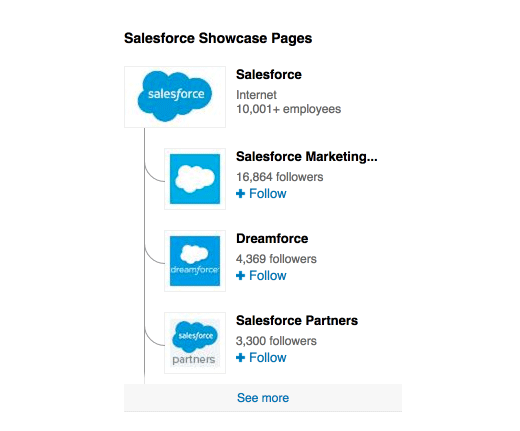
For example, SalesForce’s showcase pages list looks like this:

Alt. tag: SalesForce’s showcase pages on LinkedIn.
Source: https://neilpatel.com/wp-content/uploads/2014/11/8-salesforce-showcase-pages.png
LinkedIn continues to note that “Showcase Pages have the same posting options and analytics as your LinkedIn Page to help meet your growth objectives”. However, they rightly suggest against showcase pages for specific areas or regions.
Thus, to effectively leverage showcase pages, you may instead carefully choose which of your branches, initiatives, and affiliates warrant one. You may create up to 25, but you will be fragmenting your audience considerably if you exceed 10. Once you do, prime them for conversions and target specific B2B audience segments through them, including through keywords of choice. Finally, remember to apply the same refinements as you would for your company page, including links to your website.
#5 Post engaging content and leverage sponsored content
Finally, using LinkedIn in B2B and industrial marketing requires impeccable content. Unlike B2C, where emotional responses are easier to trigger, B2B marketing hinges on informational depth and quality. In industrial marketing specifically, you will be targeting decision-makers who cannot afford to make poor decisions.
The primary means of enticing said decision-makers, as with SEO and all inbound marketing, is content. Organic content should primarily depend on your own keyword research and your buyer personas, enriching their customer journey to you. Analytics tools for this practice include:
- LinkedIn’s built-in analytics tools for demographics and firmographics
- Buyer persona and customer journey mapping software
- Customer Relationship Management (CRM) software
Organic, inbound content is only one option, however. LinkedIn’s arguable strength lies in its outbound content, so you may also consider sponsored content. This primarily comes in two notable, different forms:
- Sponsored content. This includes sponsored posts, text ads, video ads, and image ads that will appear in your audiences’ feeds. For sponsored content, you may opt for Cost Per Click (CPC), paying for each click generated, or for Cost Per Thousand Impressions (CPM), paying for content views.
- Sponsored InMail. In contrast, InMail lands in your audiences’ inboxes. Here, you may include extensive body copy, tailored landing pages, Calls to Action (CTAs), and more. In all cases, to avoid having your messages discarded, you should ensure to present your audiences with clear, concise offers, timing your outreach appropriately. Sponsored InMail costs on a Cost Per Send (CPS) basis, so crafting the perfect message will also benefit your allocated budget.
With these practices in mind, will you shift your marketing efforts more towards LinkedIn, or at least implement some of the techniques we mentioned?
by tradespeopleinsights | Nov 12, 2021 | Tradespeople Insights
In marketing, we must take complex ideas and simplify them for our audiences. Sometimes it can be difficult in the midst of the chaos.
Following is a guest post from our friends over at Long & Short of It, masters of ideation, customer insights and market research. They like to say they “dig and find lots of data and then turn it into actionable insights.” Following is their guest post.
Your organization may be complex, with a wide variety of products and services, and you have a lot you want to say. However, too often in our excitement to tell the world about how awesome we are, we tend to say too much and only end up confusing people. Finding a way to simplify your message and distill what your company has to offer is important. 
THE FOREST THROUGH THE TREES
Why it’s important to simplify varies based on what you are trying to do. If you are advertising or posting on social media, you only have a few words or seconds to get your message across. Just look at any billboard. Most are an awful mess. They attempt to say too much – often, the font is too small and there are confusing images, and the result is a message that gets lost in the medium.
Or you may have a complex service with many offerings and need to find a way to summarize what you do and how it’s done, otherwise people will get overwhelmed. They won’t understand what sets you apart from your competition and why they should buy your product or service. Have you ever read through a website or a brochure and even after a few paragraphs, you still aren’t sure what they do or the simple thing you think should be easy to find is just not evident? Yeah – sad because these are just all lost opportunities.
SO HOW DO YOU MAKE THE COMPLEX SIMPLE?
There are many way to do this, though one of our favorite exercises to conduct with a client is taking them through a value attribute map or process.
-
Begin with listing out your product or service features. Write them out in a horizontal row. Keep it to the most important 5 to 7 to start with. For each feature, identify the benefit to the user, and write that above your row of features. For example, my travel mug (S’well for Sue/Yeti for Dean) is thermally insulated. That’s a feature. The benefit is it keeps my coffee or tea hot for a long time. Keep in mind, a feature can have more than one benefit.
-
The next step is the most important – keep laddering up. For each benefit, describe why you believe that benefit is important to your target audience. What value do they attribute to that benefit? You have to look at this from your target audience’s perspective – an outside-in approach. Following through from the travel mug example, the reason I value my drink staying hot for a long time is because it tastes better hot, saves me time from having to re-heat, and it’s one less thing to worry about through my crazy day.
-
Do this for every feature. You may and should find that many features end up having the same benefit and end-value. And that’s the key. It’s laddering up to what is most important to your target audience.
-
Think about those end values – your key message is in there. It won’t say everything you may want to, but it’s the perfect way to get the initial message across and break through the clutter of competing messages. You don’t have to tell them everything at once, just enough to help them understand what makes your product/service meaningful to them and unique enough that it gets them to want to learn more. And then that’s your opportunity to then tell them more.
Using a value attribute map is just one way to help bring clarity from chaos. There are other methods, and they have many things in common such as getting organized, creating hierarchies, and thinking about what is important from the perspective of your target audience. Because in the end, it’s about the audience, not about you.
by tradespeopleinsights | Oct 19, 2021 | Tradespeople Insights
By Matt Sonnhalter, Vision Architect
Digital channels play an important role when it comes to advertising. I’m sure this is no surprise to most marketers given the pandemic the world has been facing the past 18 months.
According to Emarketer, the forecast for this year is expected to grow almost 25% and by 2023, the total B2B digital spend is forecasted to almost double to be close to the 15 billion mark.
Another stat that surprised me was that LinkedIn is forecasted to account for nea rly one-third of the total B2B display ad spending in 2021. And I’m sure a majority of these ads are for job openings, but there are still plenty of promoted posts I’m seeing on LinkedIn.
On the other hand, digital ad investment accounts for 32% of total B2B digital ad spend. This is mostly due to Technology Products and Service companies. With digital channels being vital when marketing to your customers, B2B marketers are investing more in digital ads than display.
How has your company’s digital advertising grown over the past year?

by tradespeopleinsights | Oct 15, 2021 | Tradespeople Insights
By: Matt Sonnhalter, Vision Architect
Entering 2021, companies anticipated to have budget growth of more than 5% as they expected to have a swift recovery. A recent report from Gartner reveals that the share of company revenues allocated to marketing expense budgets has fallen drastically this year.
The survey of 400 marketing leaders across 5 global markets found that marketing budgets as a portion of revenue have fallen to 6.4% this year. The previous lowest year was 10.2% back in 2014. From the results we can see five trends happening.
Trend Number One:
The first trend that reflects this decrease is from the downward pressure on marketing spend induced by the pandemic. When budgets are getting cut, marketing budgets are usually the first ones to be on the chopping block.
Trend Number Two:
All nine industries analyzed had cuts in budget as a portion of revenue. Manufacturing experienced the biggest percentage-point drop in revenue allocated to marketing…12.7% in 2020, but only 5.8% for 2021! With the digital enterprise accelerating investments, spending priorities began to shift.
Trend Number Three:
With digital commerce dominating, marketing budgets started to spread across all different channels. 72.2% of investments were split between marketing channels like websites, digital ads and social channels.
Trend Number Four:
A lot of external agency capabilities are now moving to in-house strategic tactics. The three that have moved focus are brand strategy, innovation and technology and marketing strategy development.
Trend Number Five:
Lastly, with the shift to digital commerce that meant companies needed to change their spending on analytics. With having to invest in online programs to fuel digital success, this ended up taking 12.3% of the total budget.
I know manufacturers across the board are struggling with supply chain, labor shortages and other issues, but hard to believe marketing spending dropped so much in just one year.
Where is your company’s marketing budget share trending as a percentage of the company’s revenue?

by tradespeopleinsights | Sep 20, 2021 | Events/Trade Shows, Tradespeople Insights
By: Matt Sonnhalter, Vision Architect
In 2020, companies and businesses turned to online events as an alternative to in-person events due to COVID-19. With those who previously held face-to-face events, 4 in 5 or 78% of people converted to online. Although online events were successful, people are starting to feel burnt out from them.
According to Activate Marketing Services in partnership with MarketingCharts, 9 in 10 or 90% of Demand Gen marketers agree that buyers are becoming fatigued with online events.

We all had to pivot last year to replace in-person events (tradeshows, association and industry meetings) … and most of us tried to fill the gap by replacing them with some sort of online/virtual event. With buyers becoming fatigued, and that will only be growing, companies are starting to redirect their focus. Instead, high-quality lead programs have risen up the ranks when respondents were asked to choose their top 3 options. That being said, companies are starting to focus more on content and engagement with their audience.
This doesn’t mean virtual events are going away anytime soon. Although I don’t know about you, but most of the online events I attended were pretty much busts.
What does your company have planned for the remainder of the year? Any in-person events? I know I’m scheduled to attend at least half a dozen trade shows between now and the end of the year and I can’t wait to continue to see people “live” and in person!