by tradespeopleinsights | Jun 6, 2013 | Public Relations
Today we have a post from Rachel Kerstetter, Sonnhalter’s PR Engineer.
Working in public relations gives me the opportunity to tell stories. I get to tell stories about company histories, professional successes, how products came into being, etc.
Stories are a powerful tool in getting messages across. I’ve been thinking about safety since June is National Safety Month and one powerful story stood out to me. Here’s the headline:
Laborer Dies in Trench Collapse and Lives to Tell the Tale
It compelled me to read further and it brought me to a more in-depth account of Eric Giguere’s story about how not focusing on safety cost him his life and the tough decisions that those around him had to make, which ultimately brought him back.
That article is here.
Basically his team had been working in an unsupported trench without incident for quite some time, then it unexpectedly collapsed and buried him. The people around him had to make tough decisions about how to dig him out and then administered CPR.
One of Eric’s statements about safety stuck with me: “I’m a guy who got comfortable doing things the wrong way.”
By not taking the proper safety precautions, they were saving time on the project. But the cost was great.
Eric’s story is powerful and carries more weight than statistics can. It’s not a horror story to scare people into following the rules rather, it’s a lesson in consequences for taking short cuts and an example of tough decisions, made quickly in a time of crisis.
by tradespeopleinsights | Jun 5, 2013 | Marketing Tips, Marketing Tools, Marketing Trends

I’m just back from one of the most intense 48 hours I’ve ever spent at a marketing event. The BMA’s International Conference, “BLAZE” just ended in Chicago where nearly 800 marketing professionals gathered to talk about and learn ways to deal with the ever-changing challenges facing all of us.
The overall theme was no matter what we do, we need to focus on our customers and their needs. B-to-B industry thought leaders gave us practical examples of what’s happening in the market and how we might deal with them. Of particular interest to me was a study just being released that was done by Forrester on industry trends. Here are some highlights:
- Marketing role continues to get broader
- New skills are needed by 97% of marketers
- 70% are concerned about brand integrity
- 45% can find people with the right skill sets
- 97% are doing things they’ve never done before
- Budgets are not keeping up with the demands that are being put on marketing
The general consensus was that we need better collaboration between marketing, sales and IT. We need to tear down the silos and have a common strategy, better integration and customer insights.
They also challenged us on where to find growth over the next five years. How do you compete with the likes of Amazon (who’s growing 25% a year)? 40% of all online sales are coming from mobile devices. What are you doing in this area?
If you’re not familiar with the BMA, you should look into it. They are the only game in town that focuses on B-to-B. Along with their international conference, they have 10 regional events and those cities that have chapters hold monthly meetings.
by tradespeopleinsights | Jun 4, 2013 | Marketing Tips, Marketing Tools, Marketing Trends, Social Marketing
 Are you looking for ways to get in front of tradesmen? If you’re a manufacturer and don’t have anything on YouTube, you’re missing a great opportunity. What better way to show a customer or prospect how to use your product, highlight features and benefits or even have a customer testimonial.
Next to Google (who by the way owns YouTube), YouTube is the highest searched. The numbers are staggering:
- YouTube has 1 Billion unique visitors each month and sees four billion video views every day.
- 1 hour of video is uploaded every second – that’s 60 hours a minute!
- Users on YouTube spend a total of 2.9 billion hours per month (326,294 years) watching video.
- integrated into Google Results.
When considering content, here are some suggestions. Tell the story first and don’t worry about the length. Shorter is always better and you should focus on the first 15 seconds. If you get their attention, you have a better chance of them viewing the entire video. They need to determine up front that the video will help them. When telling a story, your goals are:
- Engage the customer
- Educate the customer
- Make points of differentiation
- Entertain customers
- Be different
Rich Brooks in Social Media Explorer explored ways to maximize your YouTube presence. Here are some of the highlights:
- Create compelling content – Address the needs of your customers.
- Make it findable – both in and out of YouTube. Your Title, Description and Tags are important.
- Brand your channel – Create a custom background that goes along with your branding . Use “Player View” as your layout and select autoplay feature.
- Post a bulletin and alert your friends and subscribers – Create a link and put it on your home pages.
- Leverage other social media platforms – Blog about it, Tweet it, post it on Facebook and submit it to StumbleUpon.
What are you doing to leverage your YouTube videos?
by tradespeopleinsights | May 30, 2013 | Marketing Tips, Social Marketing
Mile Free, Director of Industry Research and Technology for the Precision Machined Products Association, is posting today with advice for connecting on social media. Miles blogs regularly on PMPA’s blog, Speaking of Precision.
As tradesmen, advertising used to be pretty easy to figure out. A yellow pages ad in the local phone book, small display advertisements in the newspaper and maybe some classified advertisements in the weekly as well. Near a big city? Maybe you would have bit the bullet for a display ad in their yellow pages too. As a customer, in the old days, that’s how I would have found you…
So who uses a phone book these days?
Who still has a land line phone?
How many folks with smartphones walk around carrying a phone book?

My latest phone book is still on the front porch
That’s a trick question. While no one is carrying a phone book, the fact is that when they need to find something, they go search for it. On their smart phone or web device. How easy are you to find on search? For what kind of things are you on Google’s page one?
I’m not suggesting that you need to pay for advertisements on Google to get to page one, but if you use social media tools correctly, you can be found on Google for the services that you provide, and that your customers want.
While I am a staff director for a trade association of precision machining companies, the lessons I learned about how to increase visibility in online search are just as applicable to tradesmen to build your credibility, and thus your visibility online.
Here are 5 steps to increasing your online visibility:
- Make sure that your website covers the products and services that you provide. Having an up-to-date website with photos is key to engaging your potential customers and audience. Think of it as your online showroom. Make it look like a showroom, a place where people would like to shop. Nice photos on your website and in your blog get you found on Google too.
- Create a blog to share your expertise. It will only take an hour or two a week to create some modest posts about your specialty, or show pictures and discuss a job you just completed, or why you should use a professional to do ____. Share it on both your business and personal Facebook pages.
- Use LinkedIn Groups and Facebook to increase your credibility in Google and other search engines. LinkedIn Groups are where you can post your blog posts as news items to get wider viewership. As Google finds your content on places other than your blog and website, it boosts your trust factor and credibility. Find them for your trade, your customers and your locale. Facebook provides a great way to have a conversation with your “natural market”- the folks you already know- and gives them material to help generate word of mouth. Even Twitter can have a role in your tradesman marketing.
- Repurpose what you already have. If you already have a sales brochure, repost sections of it as stand-alone blog content. Take photos from your jobs completed book, repost them telling a bit about the back story- How by doing it with your approach, you saved the owner $XXX in time or dollars. Or why these materials instead of XYZ…
- Share your expertise. Keeping your expertise hidden doesn’t help anyone. “3 things that can go wrong when you pour Liquid Fire ™ down your toilets instead of getting professional help” may just save someone’s eyesight, as well as help people think about what is really important when trying to solve their problem.
You are an expert. You don’t have to tell anyone why you use 1-1/4” fasteners instead of the 1” ones …but what’s the harm in pointing out that as a professional you use the right fastener for the job, as opposed to just buying the cheapest ones down at the depot store? And then showing them a photo of a job you had to fix because the other guy didn’t use the right fastener?
As you share more and more of your wisdom and experience online, if you tag it properly, you will soon discover that Google has put you on page one for some of products and services in your area that you offer. Because you blogged about them with credibility. And it happened without an ad buy- because to Google, you have become the credible expert in your area.
by tradespeopleinsights | May 29, 2013 | Events/Trade Shows
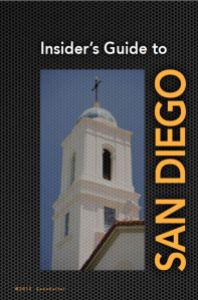
For those of you that are going to San Diego next week for the ISA Show, Sonnhalter has put together an Insider’s Guide to San Diego by asking friends and business associates about gems in the city that you might not be aware of. It includes Restaurants, Nightlife, Events and more. It’s available here.
by tradespeopleinsights | May 28, 2013 | Marketing Tips, Marketing Tools, Marketing Trends, Traditional Marketing
Most of the manufacturers we deal with sell through various distribution channels. The relationships range from true partnerships to a necessary evil. Most manufacturers have missed an opportunity to build relationships by not utilizing an old technique called a distributor council. We did a survey to a group of manufacturers who sell through distribution and 85% of them haven’t used this marketing tool.
 I think with the market changes after 2008 and the rise of social media, that some of the old traditional ways of building relationships were put on the back burner. If your goal is to build lasting relationships with key distribution partners, you might want to consider a distributor council.
The group has several purposes:
▪ Reinforce your commitment to the industry
▪ Discuss industry trends
▪ Identify ways you can better serve them
▪ Identify new product opportunities
It’s a great way to say thanks to those who have been loyal to you and a way to build loyalty with some distributors that have you on as a supplier but is splitting the business with one of your competitors. I can’t tell you the number of times that I’ve seen those kinds of distributors come to a meeting like this, and after hearing stories from your brand-loyal distributors on how you really bring value to the table that orders start increasing.
Here are the basic items for you to consider for a distributor council:
- Identify 10-12 key distributors. Ask them for a 3-year commitment (rotating 3 off each year to be replaced by new ones). Make sure they know this just isn’t a social event.
- Have two meetings a year. One at your facility so they can interact with other members of your team, and one somewhere nice and warm in the winter.
- You pick up all expenses.
- During the course of the year, if a new opportunity surfaces or you want feedback on a possible new product, get their input.
Possible Topic Areas to cover in meetings:
1. Product Training
▪ What kind of training are they looking for?
▪ What are other manufacturers doing?
2. Sales Force
▪ How can they help you sell more product?
▪ How do you rate our salesmen (weak/strong points)?
3. EDI
▪ How important is it to you?
▪ What systems are you currently working on?
▪ How many of your other manufacturers offer EDI?
4. Marketing Support
▪ What can we do to help you sell more products?
▪ What kind of support do your other manufacturers offer?
▪ Review and evaluate marketing support we currently have.
▪ How important is the Web in your sales operation?
▪ Would you use direct mail programs targeted at end users if we supply them?
▪ What do other manufacturers do that work well for you?
5. New Products
▪ Ideas on new products?
▪ Ideas on improvements to current products?
6. Pricing/Service
▪ How do we stack up against the competitor?
▪ What are our strengths and weaknesses?
▪ What are our competitor’s strengths and weaknesses?
The key is to put together an action item list coming out of the meeting and get back to them on items you will be taking action on. This will show them that their input has been heard and is valuable. Let them know upfront that anything can be on the table, but that doesn’t mean that all items will be acted upon.
Distributor council meetings can be worth their weight in gold if handled properly. Have you had an opportunity to participate in any? I’d like to hear your thoughts.



