by tradespeopleinsights | Jun 12, 2014 | Events/Trade Shows, Marketing Trends
By Matt Sonnhalter, Vision Architect

I recently attended the Business Marketing Association (BMA) global conference which was held in Chicago May 28-30, 2014. The largest B2B marketing conference in the world, BMA14 was attended by a record 950 B2B marketers from 450 firms, 33 states and 12 nations.
The 2014 BMA conference also deployed two digital platforms—Livecube and ISEBOX—to enable speakers to take polls and attendees to ask questions, follow tweets, share photos and access conference content. If you are in charge of planning live events/conferences, I would suggest checking out these two resources.
The 3-day conference was jam packed with content – featuring 79 speakers and presenters leading 41 sessions—three pre-conference programs, nine panels, 12 keynotes and 17 firestarters. These sessions covered a wide array of topics and trends of critical interest and importance to B2B marketers today. Someone at the conference referenced the amount of information presented was like drinking from a fire hydrant!
Here are a few themes I saw throughout the entire conference:
Big Data

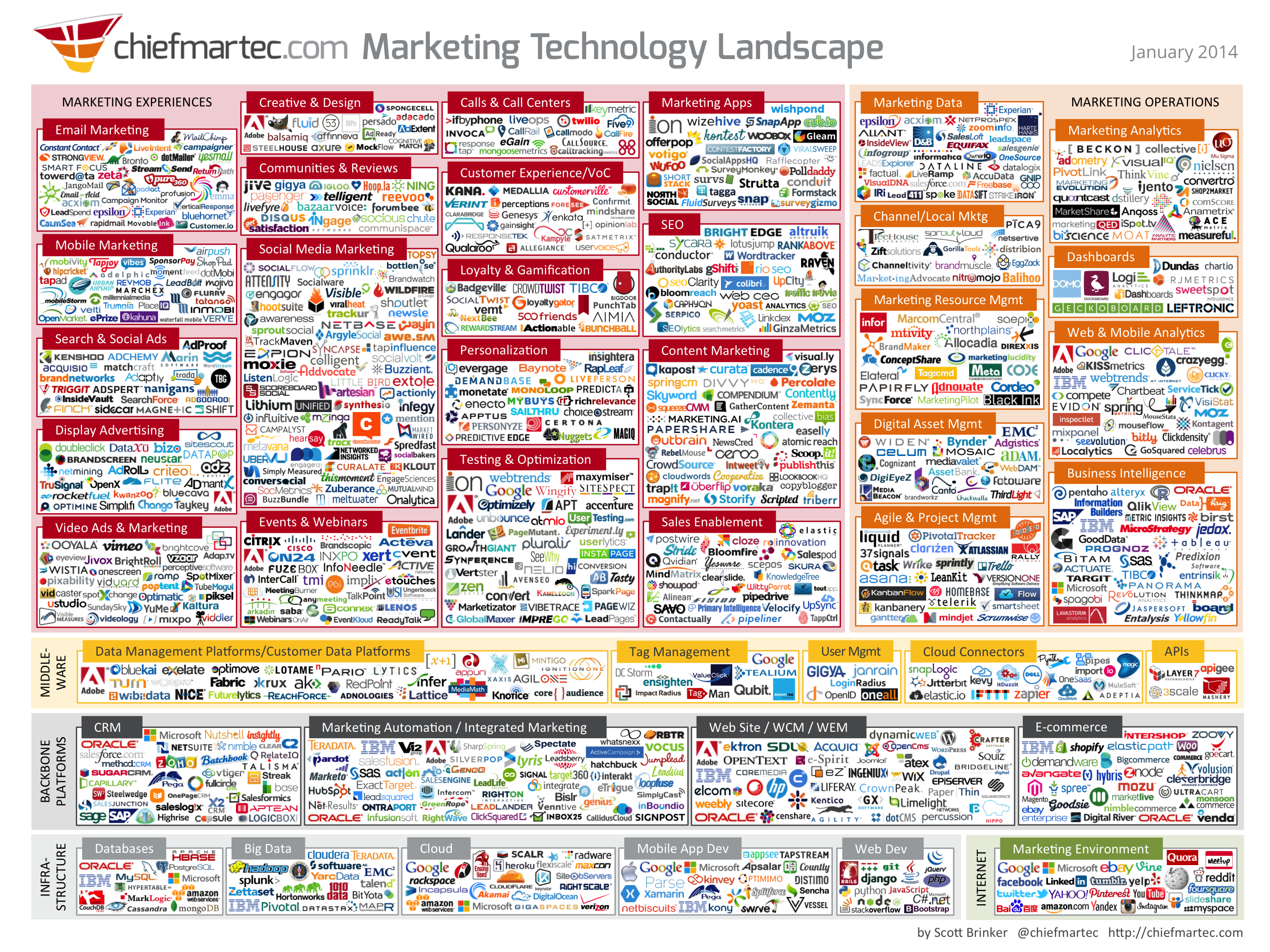
It’s becoming more and more difficult for marketers in today’s environment and I thought one illustration that did a great job of representing our challenge was the Marketing Technology Landscape graphic by ChiefMartec.com. We are surrounded by data, but starved for insights; that is, data does not automatically equal insight. Today’s marketers need to solve both analytical and creative issues as we continue to trend toward extreme personalization…segments of one.
Mobile
Since mobile devices are the predominant way people globally access the web and information, mobile is a critical factor when planning future marketing efforts. Here are a few stats from the conference that help reinforce the importance of mobile:
- Mobile data usage doubled in 2013
- In the US, 1 of every 5 minutes spent on mobile are on either Facebook or Instagram
- More Facebook users globally now engage the site via their mobile device compared to their desktop
- 78% access Twitter via a mobile device
Social Media
Social media continues to be a key component of the B2B marketing mix, with Facebook, LinkedIn, Twitter and YouTube still being the main ones utilized by B2B marketers. There was a great session by Tim Washer from CISCO on “How to bring humor to B2B storytelling.” Just because you work in B2B marketing does not mean you need to be devoid of humor…check out some of these examples shared by Tim:
You can view/download videos and documents from the entire conference here: http://bma.isebox.net/.
by tradespeopleinsights | Jun 11, 2014 | Marketing Tips, Marketing Tools, Marketing Trends
Traditional marketers are still, for the most part, selling the features and benefits of their products and why they are better than the competition.
Look at any trade magazine for example, and look at the headlines. I’ll bet 80% of them are promoting just that fact.
To stand out in the crowd and really get some traction in the market, we need to put the WHY before the HOW. The reader wants to know or is searching for solutions to his problems. Ways to make his life better. Here’s an example of someone doing it right (disclaimer, they are a former client of ours).

Osborn is a global manufacturer of surface treatment solutions. In other words, they make stuff to remove and polish metal parts. They are one of the major players in the world, but like everyone else, they have a ton of competition.
A typical method of selling these types of products is on price since most users can differentiate the different levels of quality. It’s hard to make any margin if price is the topic of conversation. So what Osborn did was ask the WHY question to find out what kind of pain points their users are having. One identified they can help in the production process to get the most productivity out of their processes. Whether it’s in their facility or Osborn’s test lab, they can help find a solution.
It’s ironic that many of the performance issues aren’t with the product, but how they are running it on the equipment. Even though they are in the brush business, their ultimate goal is to help the customer. Thus their value proposition isn’t selling grinding wheels, but selling solutions. Do you think price comes into the selling equation now? Nope.
Their program identifies and talks to different end-user groups as well as a different message to their distribution partners. All directing them to specific landing pages.
So if you put the WHY before the HOW, chances are you’ll be noticed more, get more interaction and sell more stuff with price not being the leading topic of conversation.
by tradespeopleinsights | Jun 10, 2014 | Marketing Tips, Marketing Trends, Traditional Marketing

I recently did a series of interviews and podcasts of contractors. The main focus was on what manufacturers could do to better support them in the field. These contractors were electricians, plumbers, HVAC and general contractors. There were some common issues from them that I thought would be useful to manufacturers:
- Quick response to questions – access to knowledgeable tech people for problem solving.
- Regular site visits – have your salesman make regular visits. Most contractors say they very rarely see the manufacturers. Great way to build relationships and identify possible product problems or shortcomings.
- Application training – quick tips on doing a process better/quicker. If not in person, via email.
- Best way to communicate with them – mobile phone or email.
- Don’t use/look at social media (Twitter, Facebook).
- Recognize that they are professionals.
It looks like there are some opportunities for manufacturers to up their game. There wasn’t a contractor I talked to that would turn away a visit from you. That sounds like an opportunity to me.
by tradespeopleinsights | Jun 4, 2014 | Marketing Tips
I think we all struggle with understanding ways to match content with the sales process to help the prospect through the sales funnel.
I recently read an article by Paul Gustafson about mastering effective B-to-B content. His points are thought leadership, content that’s easy to consume and the ability to listen to what the customer is saying.
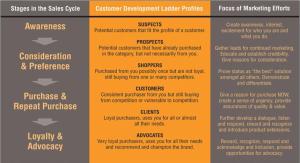
B-to-B audiences can be demanding and we need to help the prospect through the sales funnel. At each stage we have the appropriate content to move them down the line.
Thought leadership – you need to focus on 3 components:
Expertise
Original
Comprehensive
Teaser content – pique the interest to refine audience, and then when you have them hooked, you can engage them with more meaningful content.
Listening and engaging – give your audience an opportunity to respond. Then listen and react. More comments mean more discussions.
Paul leaves us with a final thought:
“Effective B-to-B social content starts and ends with thought leadership. The resulting social engagement can refine that voice, strengthen your future content and expand your audience base.”
by tradespeopleinsights | May 29, 2014 | Uncategorized
By Rachel Kerstetter, PR Engineer
National Safety Month kicks off next week with the start of June.
The National Safety Council identifies topics for each week of National Safety Month, giving companies like yours a framework for refocusing on safety practices and helping equip employees for safe behavior both on and off of the job.
Here are the weekly safety topics for June:
- Week 1: Prevent prescription drug abuse
- Week 2: Stop slips, trips and falls
- Week 3: Be aware of your surroundings
- Week 4: Put an end to distracted driving
- Bonus Week 5: Summer safety
Safety is a top priority for everyone serving the construction, industrial and MRO industries, whether you’re a manufacturer, contractor, distributor or marketing communications agency. You’re probably already aware that safety is important and should be practiced all year long, but take June to refocus and improve your safety initiatives.
To follow or join the conversation on social media, use the hashtag #NSM14.
Check out nsc.org to learn more or request materials.
Have a safe June (and beyond)!